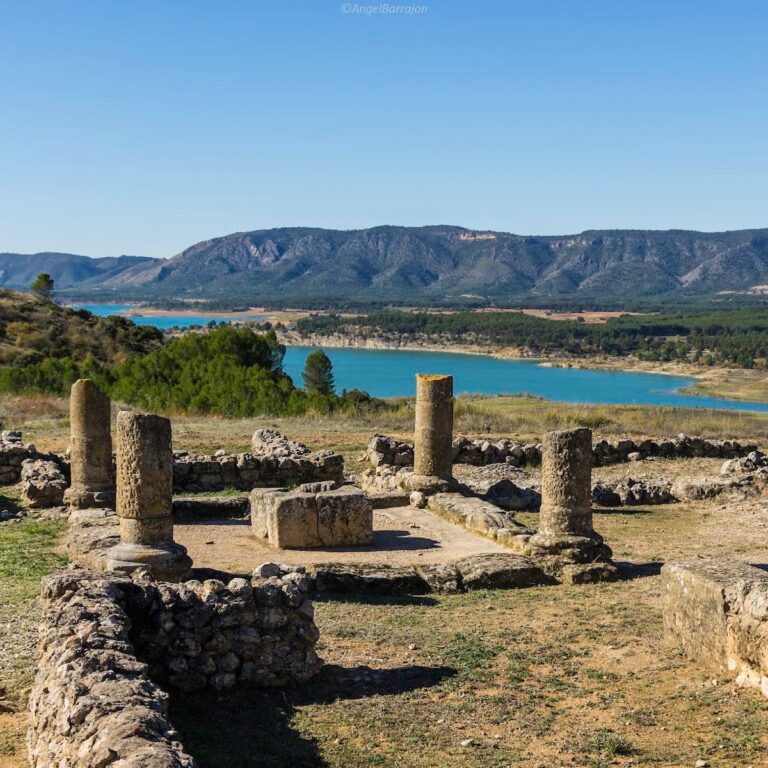
Castle of Huete: A Hilltop Fortress in Spain


Site at a Glance
- Rating
- 3.9
- Popularity
- Very Low
- Country
- Spain
- Primary era
- Medieval
- Eras represented
- Medieval
- Civilizations
- Crown of Castile, Taifa Kingdoms, Taifa of Seville
- Site type
- Military
- Remains
- Castle
On this page11 sections
History
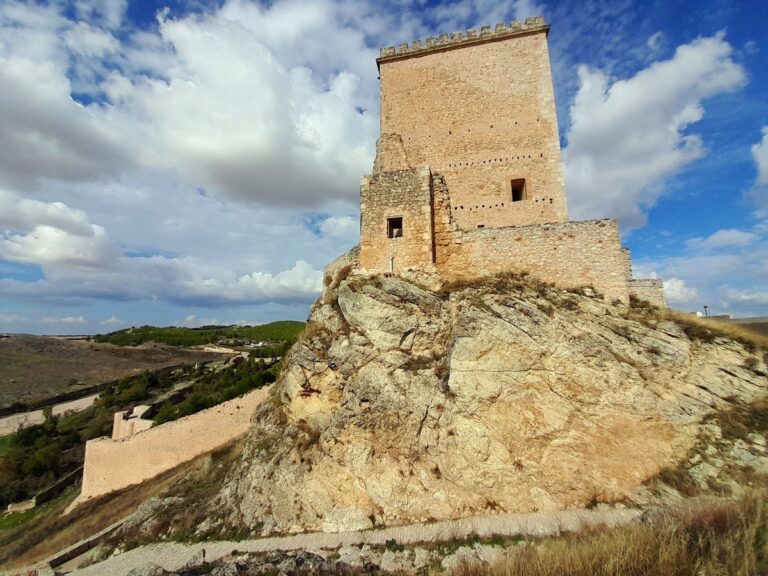
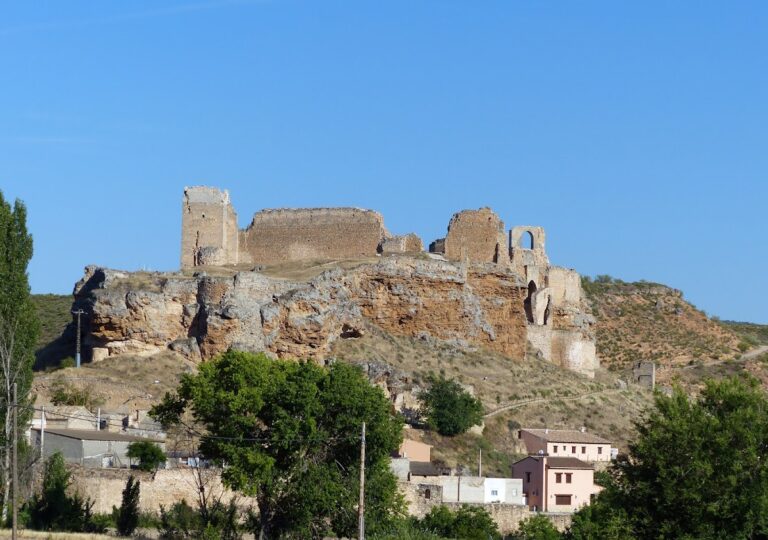
The Castle of Huete is a hilltop fortress in Spain, on the crest of Álvar Fáñez hill northwest of Huete. Its summit was occupied by a fortified Roman settlement called Julia Opta, dated to the sixth century BC, and later became the site of an Islamic alcazaba, or fortified citadel, rebuilt in the ninth century. The position controlled a broad area and its importance was linked partly to the region’s abundant gypsum stone.
Before and during Roman rule
Bronze Age remains found in the area point to a possible settlement before Roman rule. The geographer Claudius Ptolemy mentioned a Celtiberian settlement called Istonium. The Celtiberians were Iron Age communities of the Iberian Peninsula that combined Celtic and local cultural traditions, and Álvar Fáñez hill is one of the locations proposed for Istonium.
A fortified settlement known as Julia Opta was established on the summit in the sixth century BC according to the site’s historical dating. Its importance was connected in part with the exploitation of gypsum stone in the surrounding region. After Roman rule declined, the Visigoths governed the area from the late fifth century AD. The Visigoths were a Germanic people who established a kingdom in parts of the Iberian Peninsula, but little surviving legacy from their rule remains at the former Julia Opta.
Islamic and Christian phases
Berber settlers reached the former Roman site in the eighth century. During the Islamic period, Al-Mutamid, ruler of the Taifa of Seville, is credited with establishing Wabda and building the hilltop alcazaba. A taifa was an independent Muslim principality in al-Andalus, while Al-Mutamid was a prominent ruler of Islamic Iberia. The reconstruction of the citadel is dated to the ninth century.
Christian forces led by Alfonso VII of Castile conquered Wabda on July 19, 1150. The conquest led to the development of the present location of Huete. In 1164, control of Huete was contested by the Castro and Lara families, with victory going to the Laras. The alcazaba was later reformed during the medieval period and became known as the Castle of Luna.
In 1174, the Almohads besieged Huete at the castle. The Almohads were a North African Islamic dynasty that ruled parts of the Maghreb and al-Andalus during the twelfth and thirteenth centuries. The population resisted the siege, and the besiegers withdrew. As the Christian-Muslim frontier moved southward, the castle lost strategic usefulness and was eventually abandoned.
Later condition
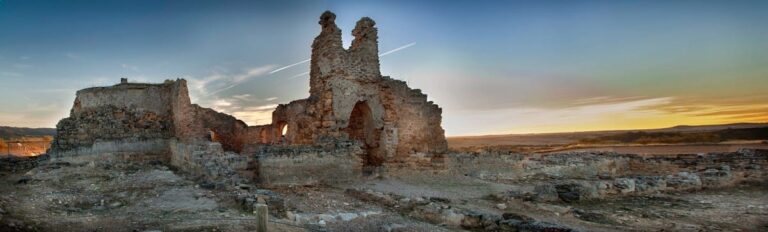
The Castle of Huete is municipally owned, unused, and in ruins. It is designated as an Asset of Cultural Interest. The hilltop’s historical importance also reflects its wide field of control, extending toward the Altomira range to the west, the Mayor valley and Sacedón uplands to the north, the entrance to the Cuenca mountain region to the east, and the first hills of La Manchuela to the south.
Remains
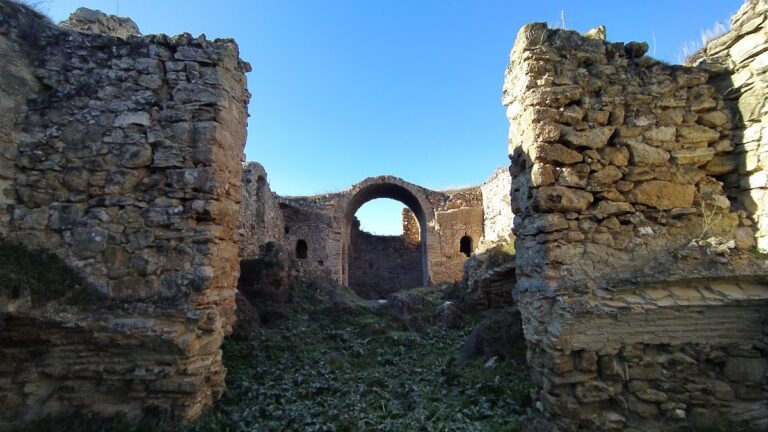
The surviving fortress follows the crest of the hill in a very elongated rectangular plan, running from north to south. It is an alcazaba whose roughly dressed stone walls may incorporate material from the former Roman city of Opta on Albaráñez Hill. Parts of the fortress walls remain standing, together with sections of the wall that enclosed the town and a partly reconstructed southeastern tower.
Walls and towers
Outer walls and tower system
Fifteen towers surrounded the fortress, while a sixteenth stood within the enclosure. The southeastern tower was the largest, measuring approximately 12 metres high and 22 metres in diameter. Part of this tower was restored during the twentieth century. Smaller towers associated with the main tower are attributed to the ninth-century emirate and the tenth-century caliphate. They were approximately 4 metres high and 3 metres deep, with header stones and lower sections shaped in a three-step battered profile.
Wall around the settlement
A wall apparently extended from the northern tower and ran around the settlement. It incorporated five towers before joining the southern end of the castle, linking the fortress with the wider defended area.
Internal installations and summit monument
Storage and water installations
Inside the fortress are five silos used as storage installations and a cistern of approximately 25 square metres divided into two compartments. A cistern is a structure for collecting and storing water. Remains of channels and other internal installations also survive within the enclosure.
Sacred Heart monument
A monument to the Sacred Heart of Jesus stands on a large pillar at the summit. The pillar was built with stones taken from the castle, incorporating material from the fortress into the later monument.