Castle of Vállaga: A Ruined Fortification in Spain


Site at a Glance
- Rating
- 3.6
- Popularity
- Very Low
- Country
- Spain
- Primary era
- Medieval
- Eras represented
- Medieval
- Civilizations
- Unclassified
- Site type
- Military
- Remains
- Castle
On this page5 sections
History
Castle of Vállaga is a ruined Andalusi fortification in Spain, located beside the Tagus River at the depopulated settlement of Vállega within the municipality of Illana, Guadalajara. It probably originated during the Andalusi period, when Al-Andalus was the name used for the territories of the Iberian Peninsula under Muslim rule, and may have defended the agricultural plains along the river.
Castilian and Calatravan Rule
After the Kingdom of Castile conquered Castilian Extremadura, Vállega became part of the lands of Anguix. In 1136, Alfonso VII, the twelfth-century king of León and Castile, donated those lands to his vassal Martín Ordóñez. The territory later passed to the Order of Calatrava, a Catholic military order founded in medieval Castile, which established a commandery at Vállega within the province of Zorita.
Under the Order of Calatrava, the castle probably served both as the commander’s residence and as a lookout over the bridge across the Tagus. The bridge stood on the road linking Madrid with Huete and Cuenca, giving the fortification a role in observing movement along this route.
Conversion into Wine Cellars
In 1605, Philip III sold Vállega and Illana to the Marquis of Almonacid. Juan de Goyeneche bought the two places from the marquis’s descendants in 1718. Goyeneche, an eighteenth-century Spanish entrepreneur and property owner, established a textile factory at Illana and substantially remodeled the castle at Vállega for use as wine cellars.
The site later acquired the name Marquis’s Caves because Goyeneche’s descendants assumed the title Marquis of Belzunce. The former castle is now in ruins and is no longer in use. In Spain, it is designated as a cultural-interest property, a heritage classification for places valued for their historical, artistic, archaeological, or cultural importance.
Remains
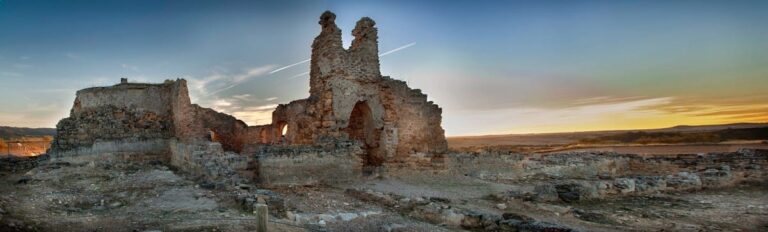
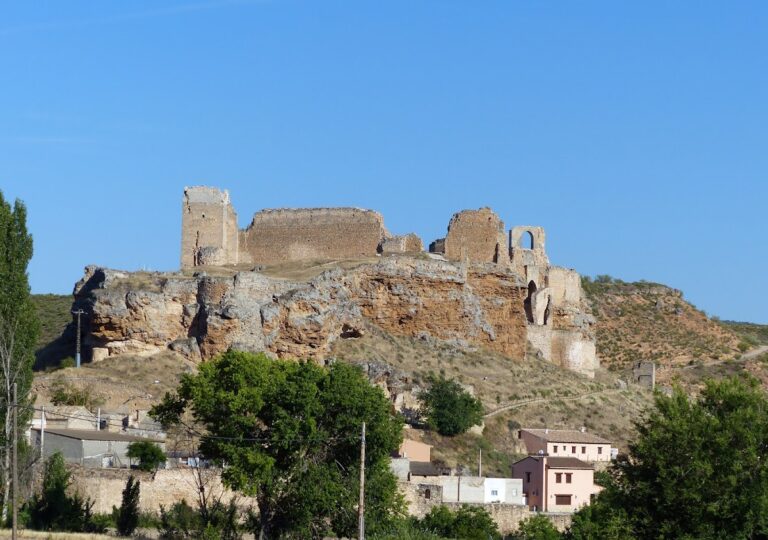
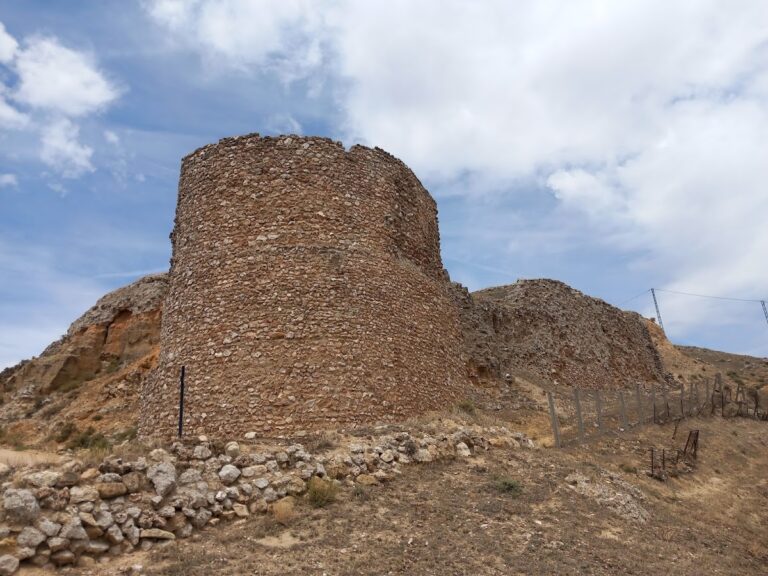
The castle occupies a mountainous position beside the Tagus River. Its elongated rectangular plan has a perimeter of 146 metres. The long northern wall faces the river, while the southern side is supported by the hillside, giving the surviving structure a clear relationship to both the watercourse and the rising ground.
Fortification and Cellar Interior
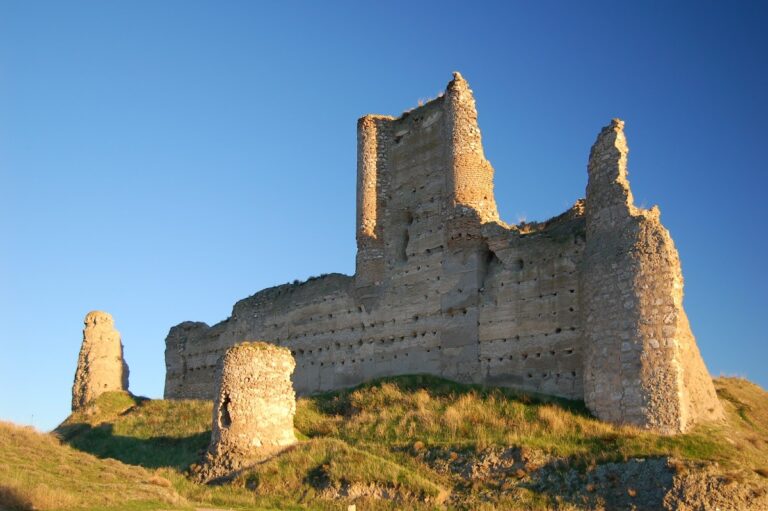
The entire structure was built from roughly dressed stone masonry. Inside, semicircular arches divide the building into eight compartments and originally supported the roof. The westernmost compartment retains one complete arch together with its roof, while the rest of the structure reflects the extensive transformation carried out when the castle was adapted as a wine cellar.
The remodeling altered almost the whole internal and structural arrangement for cellar use. These surviving masonry walls, the arched divisions, and the preserved western compartment together express the building’s change from a medieval defensive position and residence into an agricultural storage complex.