Uxama Argaela: A Celtiberian and Roman City in Spain



Site at a Glance
- Rating
- 4.3
- Popularity
- Low
- Country
- Spain
- Primary era
- Classical
- External website
- Open
- Eras represented
- Iron Age, Classical, Medieval
- Civilizations
- Celtiberian, Roman
- Site type
- City
On this page16 sections
History
Uxama Argaela was a Celtiberian city in Spain, occupying El Castro hill above the present town of El Burgo de Osma. Built by the Arevaci, a Celtiberian people whose principal settlements included Uxama and Numantia, it became involved in the Celtiberian Wars of 153–133 BC and aided Numantia against Rome in 153 BC.
Celtiberian and Roman Conquest
Rome conquered Uxama in 99 BC. The city later supported Quintus Sertorius, a Roman commander who led a major revolt against Rome in Hispania. Pompey the Great, the Roman commander who defeated the Sertorian movement, destroyed Uxama in 72 BC. It was rebuilt soon afterward and became known as Uxama Argaela.
Roman Municipium
Uxama was mentioned by Pliny the Elder and Ptolemy and belonged to the Conventus Iuridicus Cluniensis, a Roman judicial and administrative district centered on Clunia, within the province of Hispania Citerior Tarraconensis. Its principal period of Roman prosperity came during the first and second centuries AD. Under the emperor Tiberius, the city became a municipium, a Roman town incorporated into the imperial civic system while retaining some local self-government. This change accompanied major building works, including a forum, large residences, city walls, and an industrial district beside the Ucero River.
In the third century, Uxama was a mansio, an official stopping place on a Roman imperial road, on the route between Caesaraugusta and Asturica Augusta through the Duero valley. Other roads connected it with Tarraco. The city declined during the wider contraction of Roman urban centers on the northern Spanish plateau, but it continued to exist during this period.
Visigothic and Islamic Periods
During the sixth century, Uxama became the seat of the Oxomense bishopric, the Christian diocese associated with the city. Its bishops attended the Councils of Toledo, major assemblies of bishops in Visigothic Spain that addressed religious and political affairs.
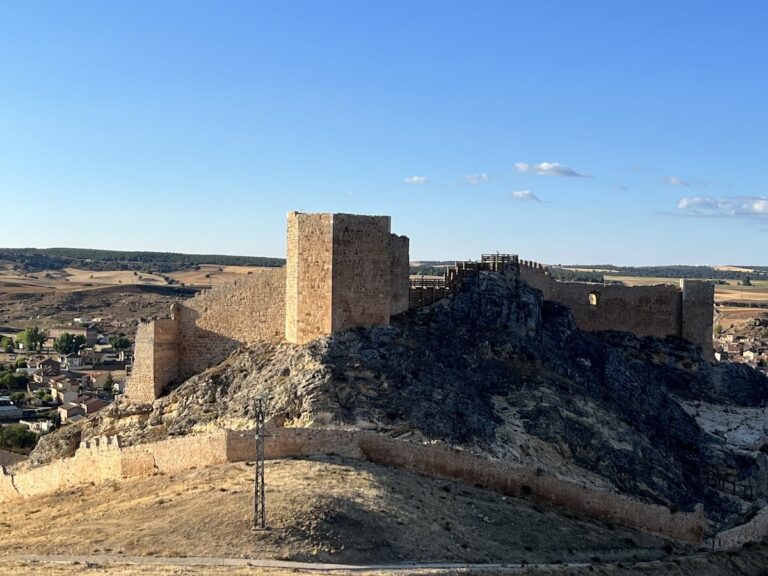
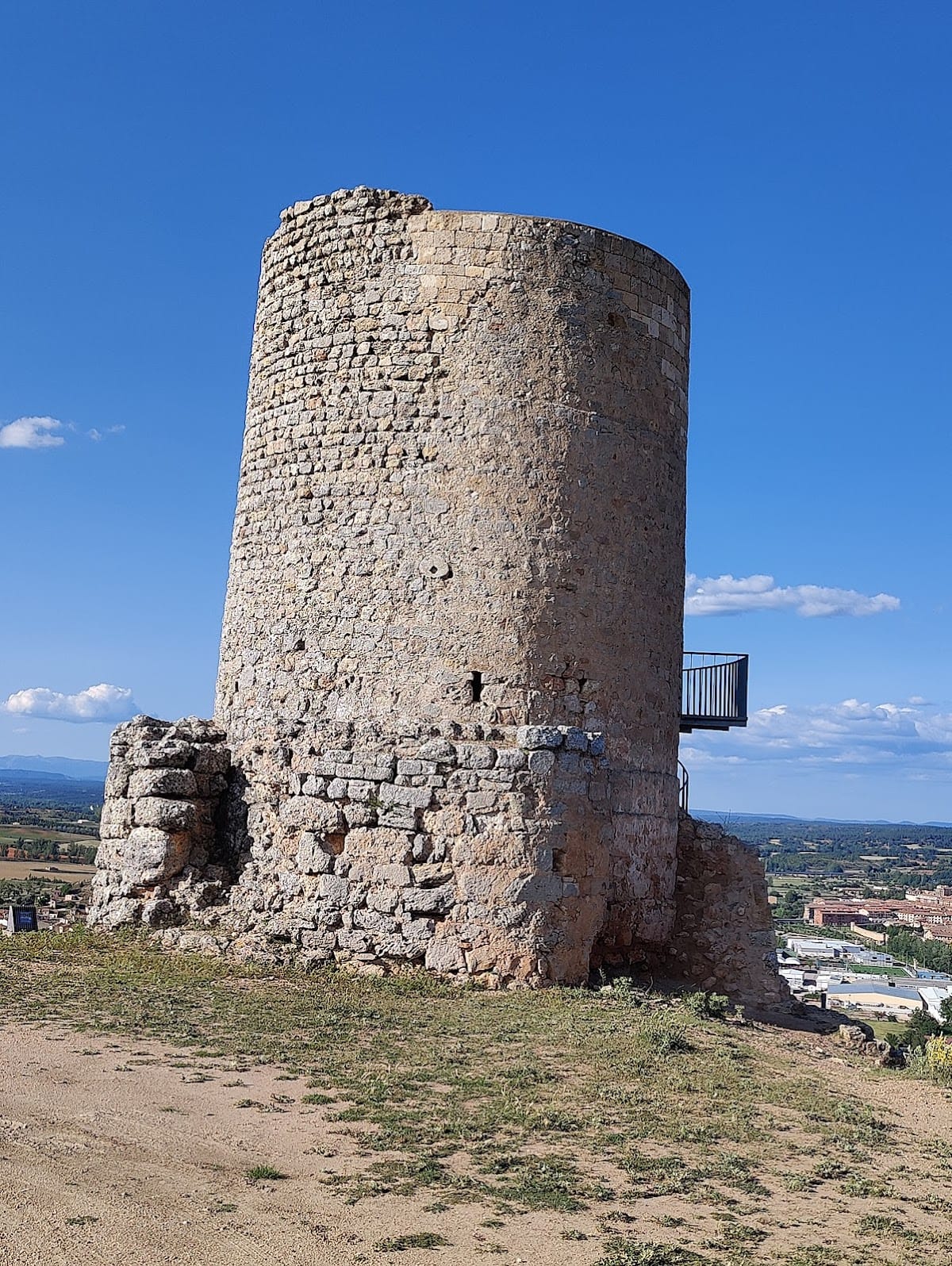
After the Muslim conquest in the eighth century, Uxama was abandoned. It was repopulated in 912. During the Islamic period, a watchtower was built beside the abandoned city as part of frontier surveillance along the Duero.
Archaeological Investigation and Preservation
Investigations of the forum took place between 1975 and 1985, and annual summer excavation campaigns have been carried out jointly with the archaeological site of Tiermes. The site is protected by the Culture Department of the Government of Castile and León. Reconstructions are displayed at the San Agustín Cultural Center in El Burgo de Osma, while finds from Uxama are held or exhibited at the National Archaeological Museum in Madrid, the Numantine Museum in Soria, and the National Army Museum in Toledo.
Remains
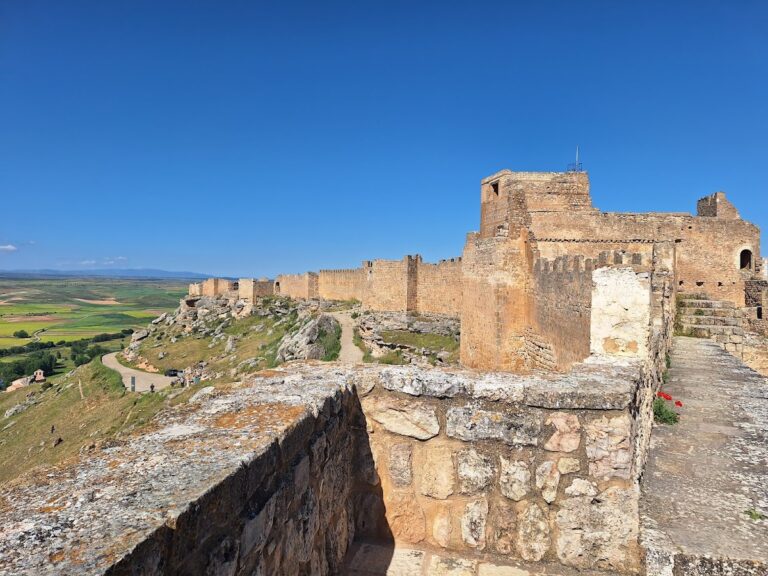
The archaeological site covers approximately 28 hectares across two plateaus on El Castro hill, including the urban area and its suburbs. The steep slopes shaped the Roman plan, which was arranged on a series of terraces. Walls enclosed the city, with rectangular towers protecting them. Visible sections survive on the northeastern and southern sides.
Public and Residential Buildings
The Forum
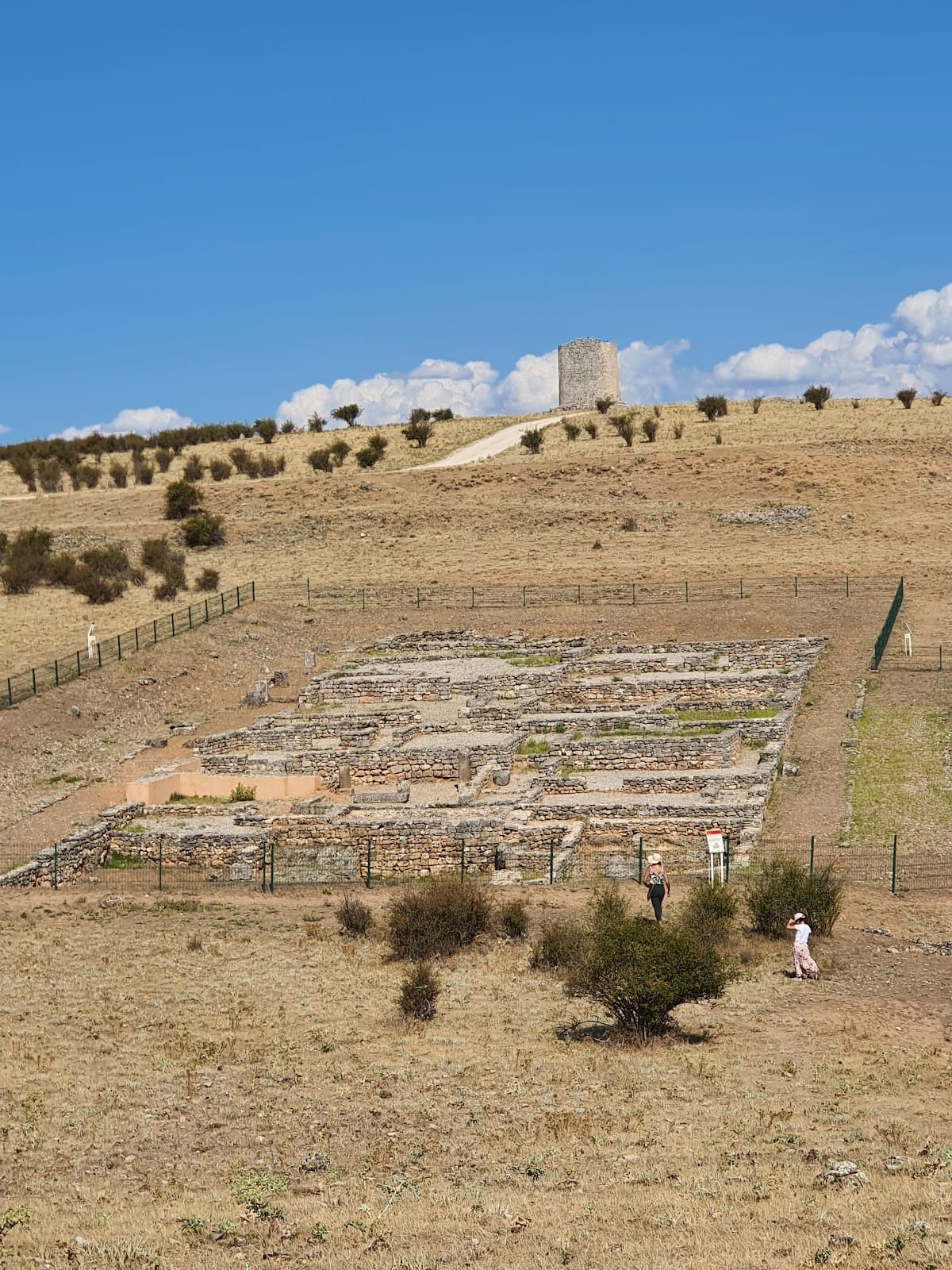
The rectangular forum occupied an artificially created terrace at the highest point of the hill. Built in the middle of the first century AD, it was surrounded by a colonnade with storage rooms beneath it. A temple associated with the imperial cult, the Roman system of honoring emperors and their families through religious rites, is thought to have stood beside the forum. Its remains remain visible in the landscape.
Casa de los Plintos
Casa de los Plintos was a luxury residence belonging to a wealthy citizen. Covering more than 1,000 square metres, it occupied almost an entire city block. The house contained two courtyards, a portico along its northern facade, and a cellar cut into the rock. Built in the first century AD over earlier Celtiberian houses, it was renovated several times before fire destroyed it in the middle of the third century.
Other Roman Structures
Other Roman remains include the Mina, part of a drain, cisterns, baths, a basilica with mosaics, and an industrial district beside the Ucero River. Together, these features represent public, domestic, water-management, and productive areas within the ancient city.
Water Infrastructure
Underground Aqueducts
Several underground aqueducts supplied water to Uxama. Their surviving sections appear as tunnels cut through solid rock at the edge of the ancient city. One aqueduct carried water from the source of the Ucero for more than 18 kilometres.
Rainwater Cisterns
More than 20 above-ground cisterns stored rainwater. The largest was built in the first century AD and measured 32 metres in circumference and 5 metres in height, with a capacity of 300 cubic metres.
Celtiberian Cemetery and Archaeological Finds
Portugui Cemetery
Part of an extensive Celtiberian cemetery was excavated in the Portugui vineyards. The graves contained cremated remains and date from the third and second centuries BC, providing evidence of burial practices before the Roman rebuilding of the city.
Objects and Architectural Fragments
Excavated material includes inscriptions, Republican and imperial coins, ceramics, glass and metal objects, sculptures, Roman capitals, iron weapons, and a group of bronze horse figures. These finds are preserved or displayed in museums in Madrid, Soria, and Toledo.