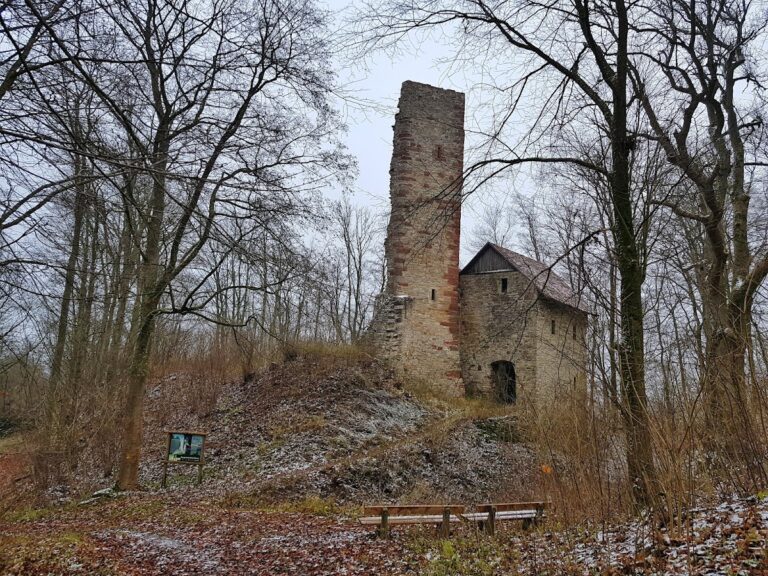
Burg Reichenbach: A Romanesque Hilltop Castle Ruin in Germany


Site at a Glance
- Rating
- 4.6
- Popularity
- Very Low
- Country
- Germany
- Primary era
- Medieval
- External website
- Open
- Eras represented
- Medieval, Modern
- Civilizations
- German, Holy Roman Empire
- Site type
- Military
- Remains
- Castle
On this page9 sections
History
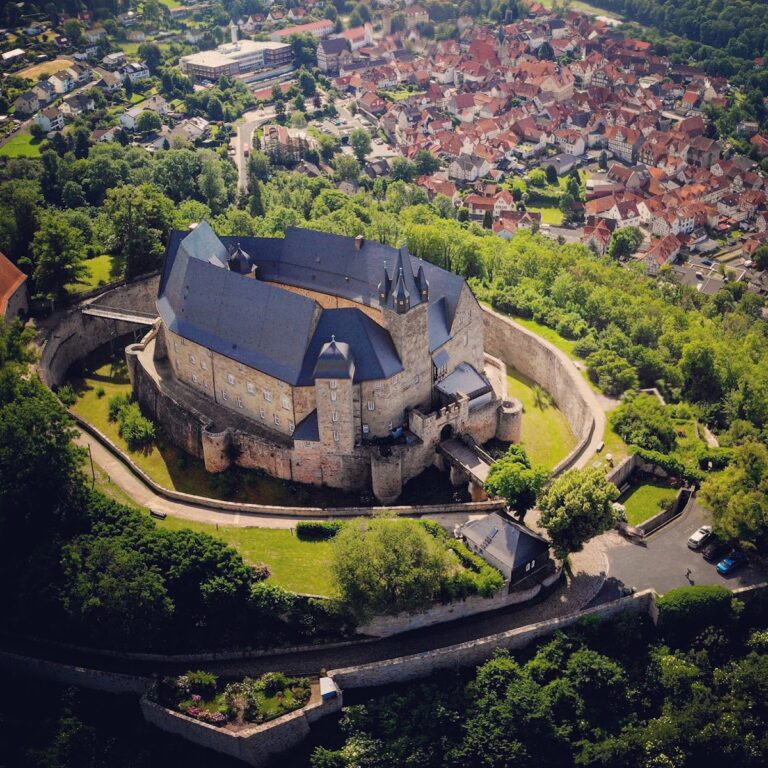
Burg Reichenbach is a Romanesque hilltop castle ruin in Germany near Hessisch Lichtenau, built in the mid-eleventh century on the Schlossberg. Its Romanesque architecture belongs to a medieval European style known for massive masonry, rounded arches, and relatively small openings. The fortress developed under the Counts of Gozmar and later the Counts of Reichenbach, becoming an important stronghold in the border region between Hesse and Thuringia.
Counts of Gozmar and Reichenbach
A branch of the Counts of Gozmar probably held the fortified mountain from about 750 to 1219. Tradition says that the family’s ancestors had already served as counts at an earlier fortress during the Frankish conquest under Pippin the Younger, the eighth-century Frankish king and father of Charlemagne. A castle was built at Reichenbach in the mid-eleventh century, and members of the family began using the title Counts of Reichenbach from 1089.
The first securely documented reference concerns Count Gozmar II of Reichenbach, who served as high bailiff of Fulda Abbey from 1117 to 1139. A high bailiff was a senior lay representative who could exercise administrative or judicial authority for an ecclesiastical institution. Members of the Reichenbach and later Ziegenhain families continued to hold the office until 1279. In the eleventh century, the counts also founded Reichenbach Nunnery.
Dynastic Possession and Territorial Conflict
In August 1207, Count Heinrich III of Reichenbach and representatives of the Reichenbach, Wegebach, and Ziegenhain branches donated the nunnery and all its associated property to the Teutonic Order. This medieval religious and military order established its first settlement in Germany at Reichenbach.
The castle entered Ludowinger possession after the 1185 marriage of Friedrich, son of Landgrave Ludwig II of Thuringia, to Luitgard, heiress of Count Gozmar III of Ziegenhain-Reichenbach. The Ludowingers were a ruling dynasty whose landgraves governed Thuringia and at times held substantial power in Hesse. Their growing influence led Archbishop Konrad I of Mainz to purchase half of the castle in 1189 or 1190.
Reichenbach’s position on the Hessian-Thuringian border repeatedly drew it into military conflict. Landgrave Ludwig III of Thuringia captured the castle after a lengthy siege around 1220 during an inheritance dispute. His brother, Konrad of Thuringia, who was also Count of Hesse, besieged it in 1225 and acquired it by treaty in 1233. In 1249, during the War of the Thuringian-Hessian Succession, forces of Sophie of Brabant captured the castle for her son Heinrich I, who later became the first Landgrave of Hesse.
Hessian Administration and Decline
The castle thereafter remained Hessian, although it was repeatedly pledged and redeemed. Sophie of Brabant first pledged it to Thilo von Elben and Eckhard von Kappel. The Teutonic Order received it as a pledge in 1330 and again in 1350, while the Lords of Hanstein held it by pledge in 1403. A Reichenbach administrative office belonging to the landgraviate is documented from at least 1315, and the landgraves also used the castle as a hunting lodge.
Landgrave Hermann III of Hesse used Burg Reichenbach during the Sterner War from 1376 to 1380. This late-fourteenth-century conflict involved Hessian and neighboring territorial rulers and their allies. Hermann opposed a coalition led by Archbishop Adolf I of Mainz, Abbot Berthold II of Hersfeld, Duke Otto I of Brunswick-Göttingen, and Landgrave Balthasar of Thuringia.
Landgrave Ludwig II of Hesse died unexpectedly at the castle on 4 November 1471, probably from poisoning. The castle remained inhabited until 1490, when the Reichenbach administrative seat moved to Lichtenau and a landgravial court was established there. The buildings were then used as a tithe barn until 1540. Landgrave Philipp I was the last prince to stay at Burg Reichenbach.
Destruction and Conservation
Around 1550, after the Schmalkaldic War, Emperor Charles V ordered the castle’s destruction. The Schmalkaldic War was the 1546 to 1547 conflict between Charles V, the Habsburg ruler of the Holy Roman Empire, and the Schmalkaldic League, a Protestant alliance of German princes and cities. Both towers were still described as intact in 1697. Daniel Meisner, a seventeenth-century German engraver and publisher, depicted the castle in a topographical work, but deterioration later accelerated as people from neighboring villages used the ruin as a stone quarry. The southeast tower collapsed on 12 December 1820.
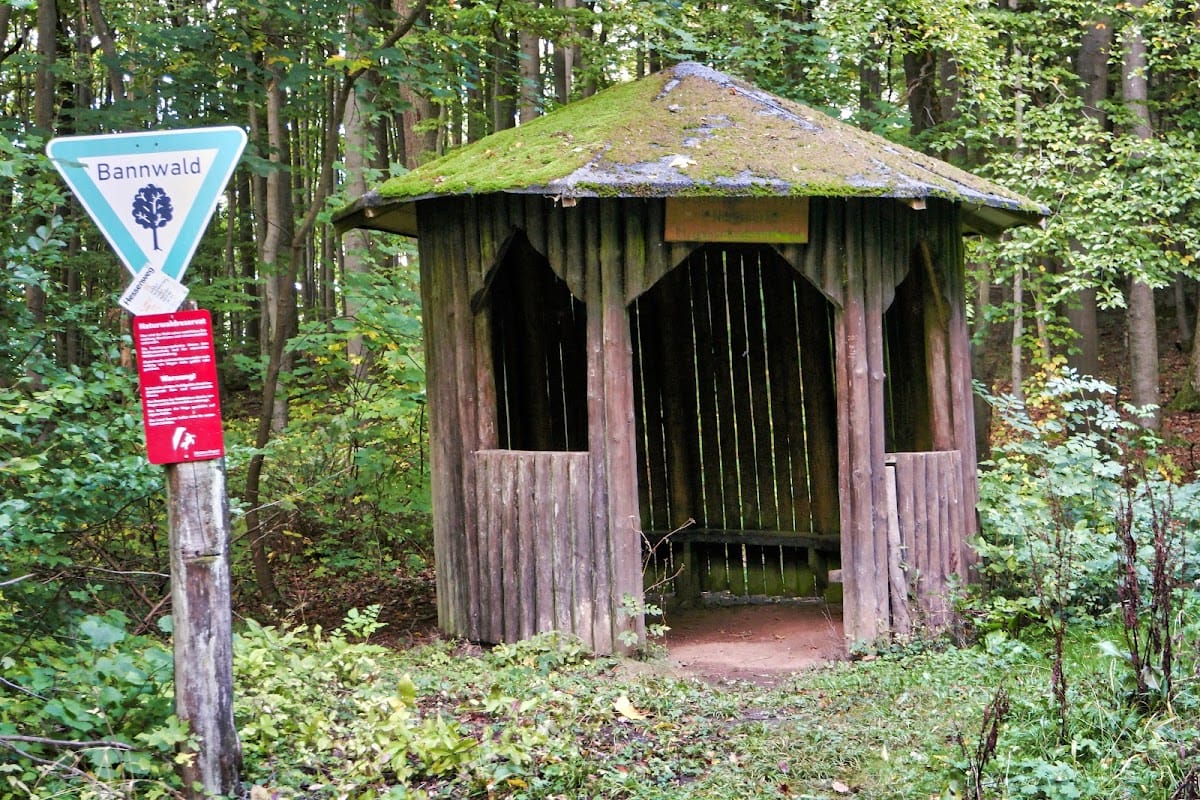
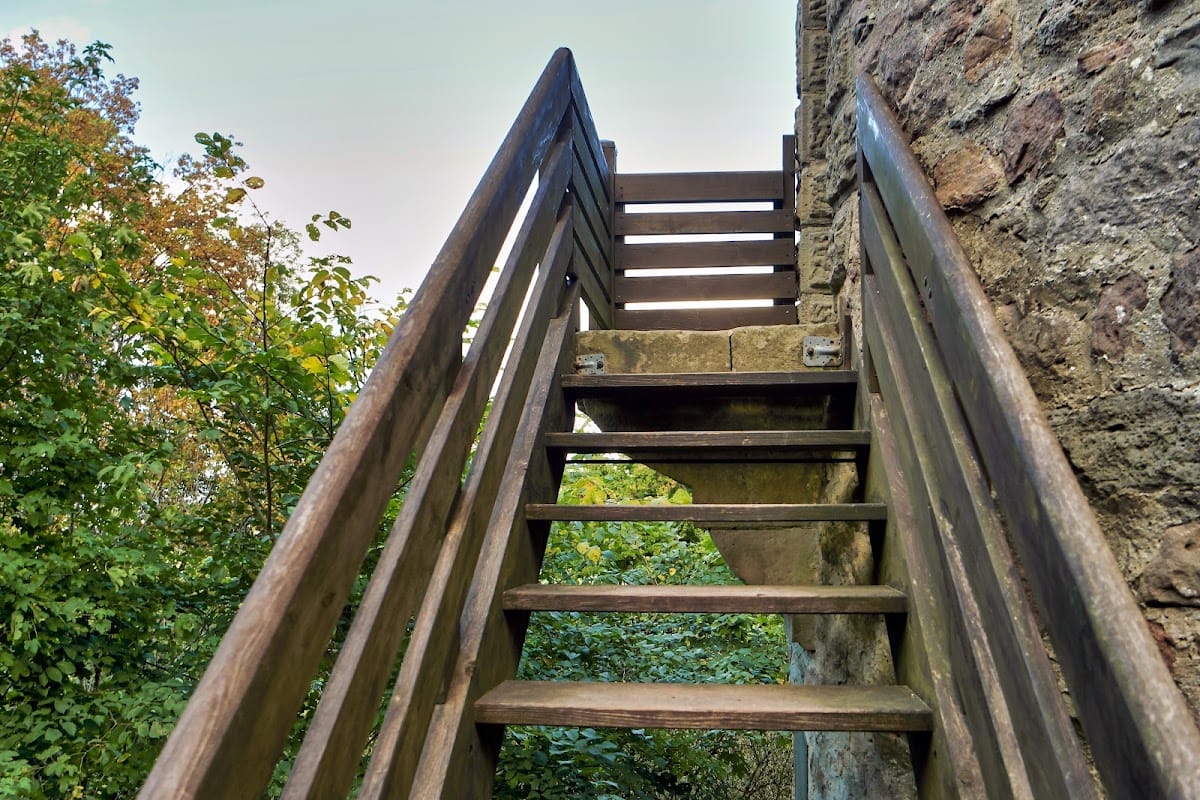
The principal tower, or bergfried, was converted into a lookout tower between 1899 and 1901. It was renovated in 1934 and 1935, when its battlements were bricked up. Monument conservator Gottfried Ganßauge excavated the castle. Serious masonry damage was identified in 1948, followed by extensive frost damage in 1955 and 1956. The tower was closed, and further repairs took place from 1977 to 1980. The Burgverein Reichenbach, founded on 9 May 1966, has worked to preserve the complex, and a new external staircase was added in 2004. The ruin is designated as a cultural heritage monument in Hesse and stands within the Reichenbach Limestone Mountains nature reserve, established in 1996.
Remains
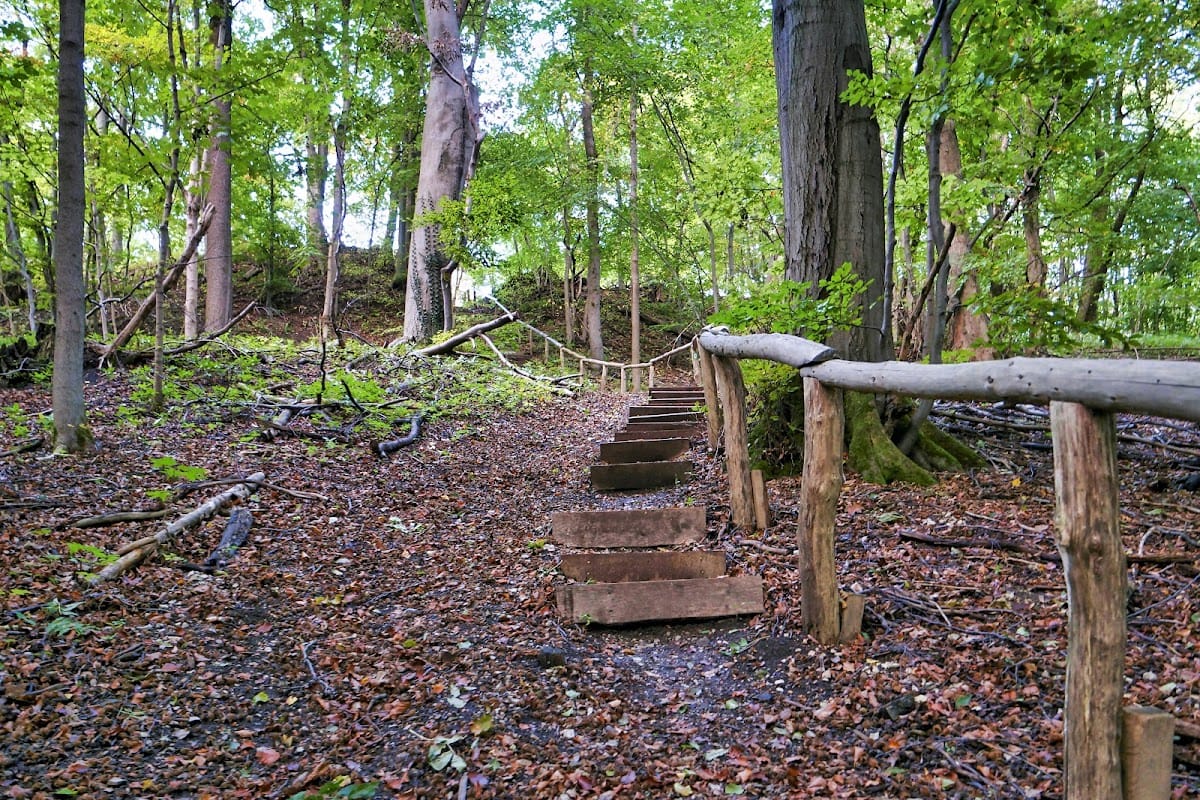
Burg Reichenbach occupies the summit of the Schlossberg at 522.3 meters above sea level, about four kilometers southeast of central Hessisch Lichtenau, between the districts of Reichenbach and Retterode. The mountain slopes toward the Losse Valley in the northwest, the Hollsteine Valley in the northeast, the Vockebach Valley to the south, and the Essebach Valley to the west. The surviving fortress is centered on the principal tower, with remnants of a shield wall and two defensive ditches forming the main visible elements of the hilltop layout.
Defensive Structures
Bergfried
The bergfried is the principal tower of a medieval castle, generally intended for defense and representation rather than primarily for residence. At Reichenbach, the surviving tower was adapted into a lookout tower in 1899 to 1901. Its battlements were bricked up during the renovation of 1934 to 1935, and an external staircase added in 2004 provides its current access arrangement. Repairs followed masonry and frost damage identified in the mid-twentieth century.
Shield Wall and Neck Ditches
The remaining defensive works include the shield wall and a small and a large neck ditch. A shield wall is a massive barrier protecting the most vulnerable side of a fortress, while a neck ditch is a defensive trench cut across the approach to a hilltop stronghold. Together with the surviving tower, these elements preserve the principal defensive organization of the castle. The southeast tower, which formed part of the former two-tower arrangement, collapsed in 1820 after the ruin had suffered deterioration through local stone quarrying.