Cafarlet: A Medieval Coastal Fortress in Israel


Site at a Glance
- Rating
- 4.2
- Popularity
- Very Low
- Country
- Israel
- Primary era
- Medieval
- Eras represented
- Medieval
- Civilizations
- Crusader, Kingdom of Jerusalem, Umayyad
- Site type
- Military
- Remains
- Fort
On this page8 sections
History
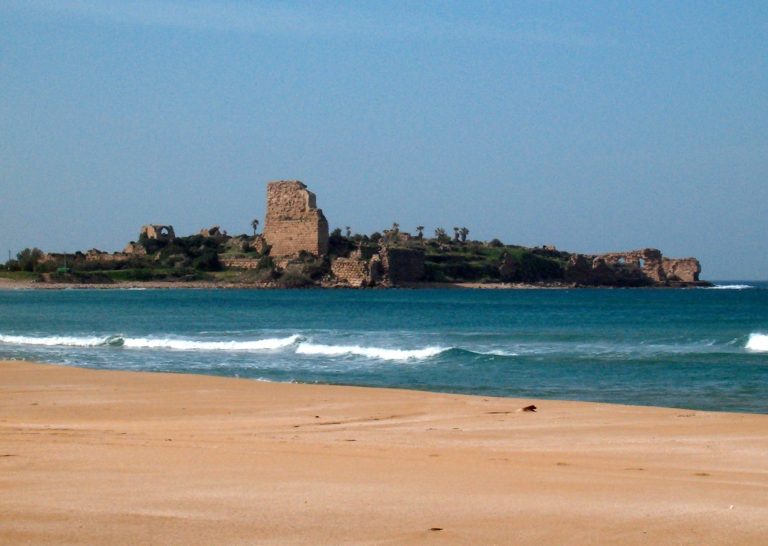
Cafarlet is a medieval coastal fortress in Israel, probably founded as a Muslim stronghold and later strengthened under Crusader rule. Its construction date remains uncertain, with proposals ranging from the eighth or ninth century to the late eleventh century. The fortress stands at HaBonim on the site of the former Arab village of Kafr Lam, between Haifa and Caesarea, and reflects the strategic importance of the Mediterranean coast during successive periods of conflict.
Muslim origins
Cafarlet is also known by the names Kaferlatum and Kafr Lam. It probably began as a Muslim coastal stronghold, or ribat, a fortified religious and military establishment often placed near a frontier or coastline. Its purpose was likely to guard possible Byzantine landing points and deter renewed Byzantine attacks after the Muslim conquest of Palestine. The exposed coastline and the weakness of Muslim naval power made defensive positions on land especially important.
The coastal plain had suffered extensive destruction after the conquest and became sparsely inhabited in places, with some areas turning marshy. Late first-millennium Arab historians state that the Umayyad caliph Abd al-Malik began building a settlement called Kafr Lam near Caesarea. The Umayyad Caliphate was the early Islamic dynasty that ruled much of the Middle East, including Palestine, during the seventh and eighth centuries. This settlement is generally identified with the fortified estate associated with Cafarlet, although the precise date and circumstances of the fortress’s construction remain unresolved.
Crusader transformation
The Crusaders captured Cafarlet after conquering the coastal plain at the end of the eleventh century. They did not necessarily establish the original stronghold, but they extensively reinforced and remodeled it. Under Crusader rule, Cafarlet belonged to the lordship of Caesarea, a fief of the Kingdom of Jerusalem, the principal Crusader state established in the Levant after the First Crusade. Its position helped secure the coastal road between Haifa and Caesarea and connected with the wider strategic network linking the northern Crusader states to Jerusalem.
Medieval records provide only scattered information about Cafarlet. The site was sometimes treated as a civilian village or estate belonging to the lords of Caesarea rather than described primarily as a fortress. After the Battle of Hattin in 1187, when Saladin defeated the Crusader army and captured Jerusalem, Cafarlet was probably occupied by Saladin. The Third Crusade, the European campaign launched in response to those defeats and the loss of Jerusalem, brought the Crusaders back to the region, and they apparently recaptured the site.
Hospitaller and Templar ownership
In October 1213, the lord of Caesarea pledged Cafarlet and two other estates to the Hospitallers as security for a loan of 1,000 besants. A besant was a gold coin used in the medieval eastern Mediterranean. In 1232, the lord sold Cafarlet to the Hospitallers for 16,000 besants. The high price may have been connected with an enlargement of the fortress after a Damascus raid on the lordship of Caesarea in 1227.
The Hospitallers transferred Cafarlet to the Templars in 1255, and the Templars still held it in 1256. It may have returned to Templar control around 1283 under a treaty between the Crusaders and the Mamluks. The Hospitallers and Templars were military-religious orders that combined religious duties with warfare and the management of estates in the Crusader states.
Mamluk conquest and later settlement
The Mamluk commander Baybars conquered Cafarlet in 1265. The Crusaders apparently recovered it soon afterward, but Muslim forces finally captured the fortress in 1291 and destroyed it. The Mamluks were a military ruling elite whose sultanate controlled Egypt, Syria, and much of the Levant after the decline of the Crusader states. Baybars was one of their leading commanders and later became sultan.
Following the later Mamluk conquest, both the fortress and the nearby settlement ceased to function. A small Arab village called Kafr Lam subsequently developed at the site. It had about 300 inhabitants until the 1948 War. On 16 July 1948, during operations against Arab villages on the Carmel coast, the vessels Hannah Szenes and Tikvah attacked Kafr Lam. The village was captured shortly afterward, after most of its inhabitants had left. The moshav of HaBonim was established at the site in 1949, and Cafarlet now lies within its territory.
Only limited archaeological excavation has taken place. As a result, the history of the fortress’s interior and some stages of its development remain difficult to reconstruct.
Remains
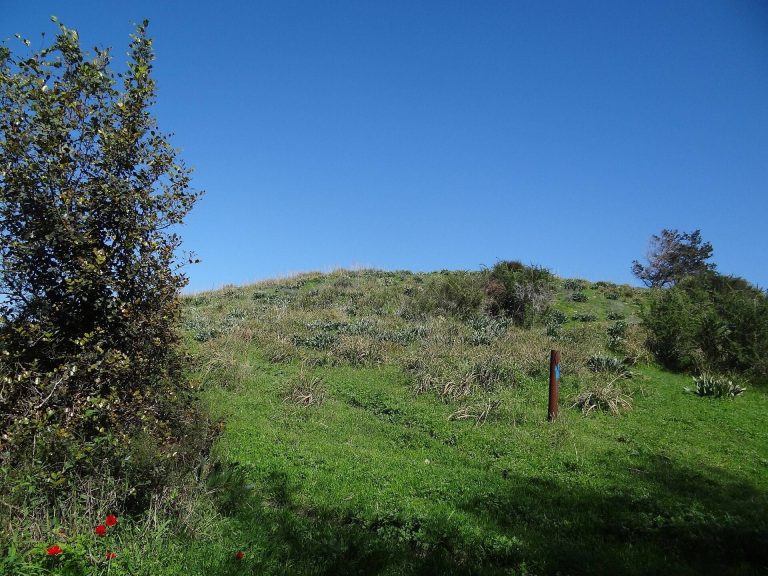
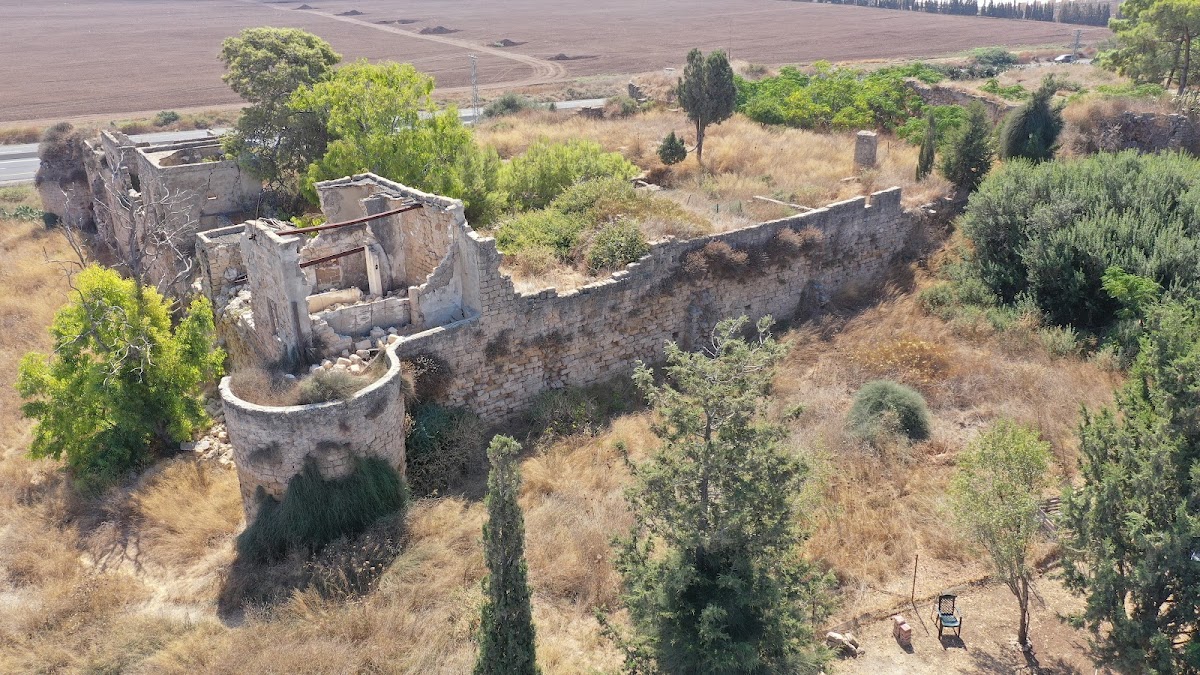
Cafarlet survives as a ruined rectangular enclosure on a kurkar hill approximately 27 to 30 metres high. Kurkar is a local coastal sandstone formed from windblown sand deposits. The fortress stands about 800 metres to one kilometre east of the Mediterranean coast, roughly eight kilometres south of Atlit and about fifteen kilometres north of Caesarea. Its castrum-type plan consists of a regular enclosure measuring approximately 50 by 58 metres, with projecting towers at the corners.
Walls and entrances
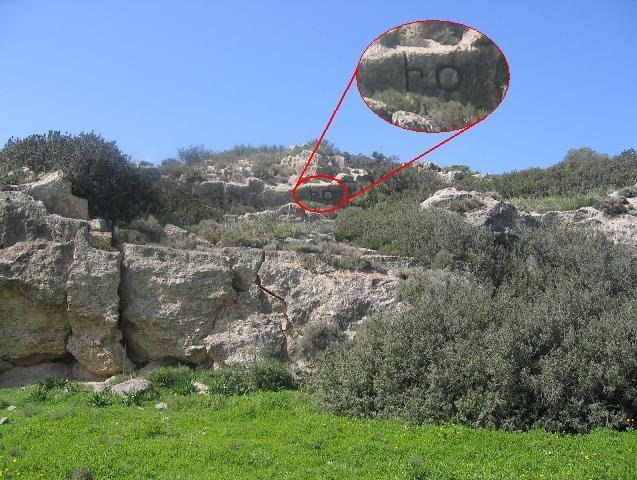
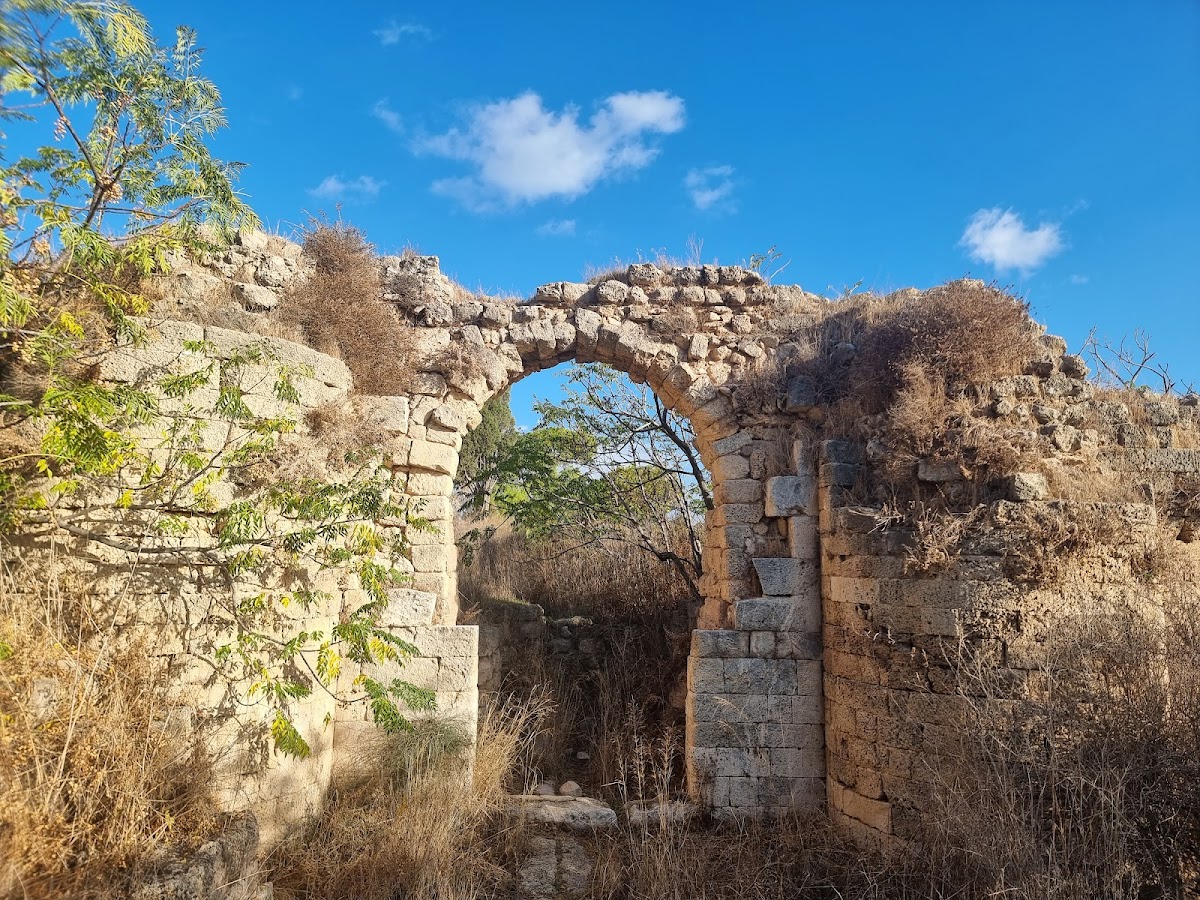
The fortress was built from locally available kurkar sandstone. Its walls rise to approximately five metres and are reinforced on the exterior by buttresses. A single entrance pierces the southern wall, with a round tower on each side. These entrance towers are similar in size to the corner towers and form part of the fortress’s defensive arrangement.
Most of the corner and entrance towers are round, a form that is unusual among surviving ancient fortifications in Israel, where rectangular towers are more common in Crusader-period construction. The plan, measurements, internal arrangement, and placement of the corner towers closely resemble those of Ashdod-Yam Fortress. These similarities help frame Cafarlet within a broader tradition of regularly planned coastal fortifications, while its uncertain construction date leaves the relationship between its Muslim and Crusader phases unresolved.
Interior spaces
Within the enclosure are arched vaulted spaces, most positioned below the level of the surrounding ground outside the walls and therefore resembling cellars. Their arrangement and functions are not well understood because excavation inside the fortress has been very limited. The surviving remains consequently present the outer enclosure and its defensive organization more clearly than the internal history of the site.