Castle of Valongo: A Medieval Fortress in Portugal



Site at a Glance
- Rating
- 4.2
- Popularity
- Low
- Country
- Portugal
- Primary era
- Medieval
- Eras represented
- Medieval, Early Modern
- Civilizations
- Portuguese
- Site type
- Military
- Remains
- Castle
On this page8 sections
History
Castle of Valongo is a ruined medieval fortress in Portugal, located in the civil parish of Nossa Senhora de Machede in the municipality and district of Évora. Human occupation began during the Roman period, followed by Visigothic settlement and Muslim occupation. The Muslims fortified the site, as shown by Islamic inscriptions found inside the castle.
Roman and Muslim Occupation
The Portuguese archaeologist and historian Jorge Alarcão attributed the original foundation to the Romans and prepared an exact plan of the property, although few surviving remains support that interpretation. A primitive tower or castle existed before the building known as Castelo Velho, which stood on the opposite bank of the Ribeira de Valongo, beside the margins of Alcorovisca. That earlier site was identified as a Roman mansion beside a road.
The Muslim phase followed the earlier occupation and included the fortification of the site. Islamic inscriptions inside the castle provide evidence of this period and preserve a material link to the centuries when Muslim powers governed parts of the Iberian Peninsula.
Medieval Christian Reconstruction
The castle was first documented in 1283, in sale letters involving Infanta Leonor Afonso, a daughter of King Afonso III of Portugal. The documents were discovered by her descendants, Pero Anes and João Peres Aboim.
During the Reconquista, the long Christian reconquest of territories in the Iberian Peninsula governed by Muslim powers, the castle was reconstructed in the late fourteenth century or possibly the early fifteenth century. Its loopholes, narrow openings used for observation or defense, indicate a rebuilding phase associated with the fourteenth and fifteenth centuries.
The keep, the principal fortified tower of a castle, was repaired during the fifteenth or sixteenth century. These works included pointed tiled roofs, a brick staircase, and bay windows. In the nineteenth century, the castle was acquired from the Marquesses of Valada.
Protection and Conservation
Castle of Valongo has been a National Monument since 1910, when the designation was confirmed by a decree published on 23 June. The property is owned by the Portuguese Republic. Cracks and structural faults in the fortifications were cleaned and repaired in 1989, with the fractures consolidated and reconstructed. In November 2004, the Directorate General for Buildings and National Monuments prepared a map and report assessing the risk of deterioration. The castle is now described as being in ruins.
Remains
Enclosure and Defensive Walls
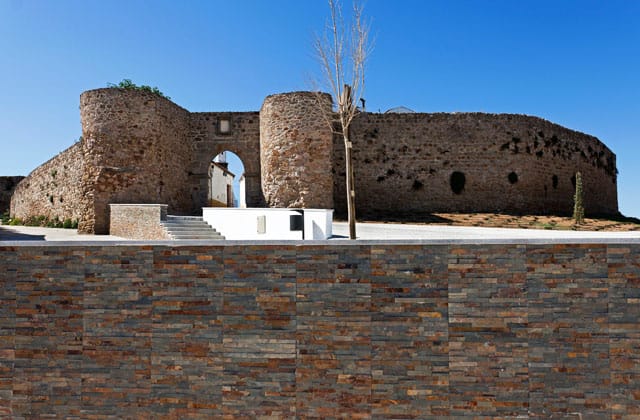
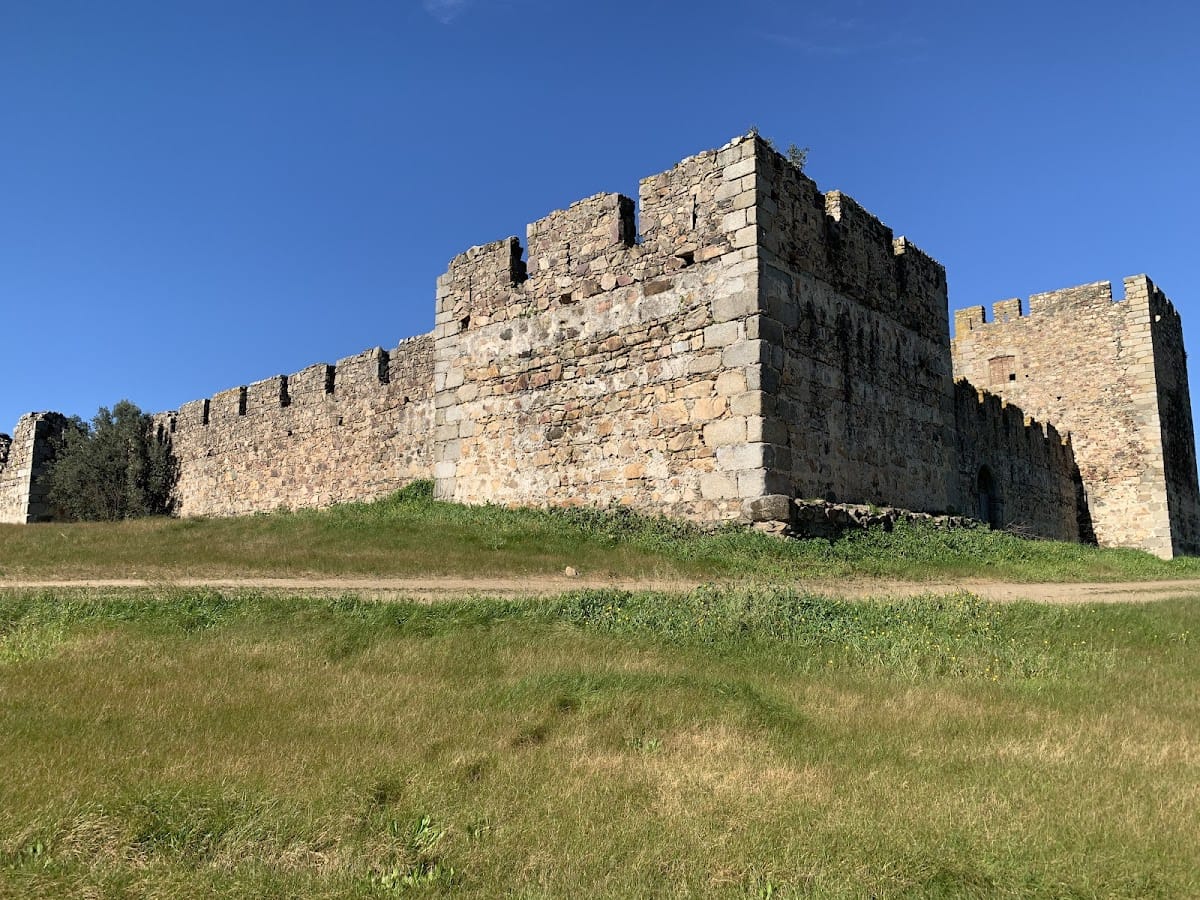
The castle occupies a raised position on a small platform above a gentle slope within Herdade da Grã, near the Ribeira de Valongo, a tributary of the Ribeira do Degebe. Its square enclosure is reinforced by four quadrangular corner towers at the northeast, southeast, southwest, and northwest. The walls are crowned by parapets and a wall walk, a defensive passage along the top of a fortification, protected by square-section battlements. The battlements follow the contours of the ground, while corbels, projecting supports for architectural elements, appear at the angles of the parapets.
The principal facade faces east and contains a large portico with an arched doorway. A corbel is positioned at the southeast, while the keep occupies the northeast corner. The recorded construction materials include granite, masonry, rammed earth, marble, tile, zinc, and mortar.
Keep and Towers
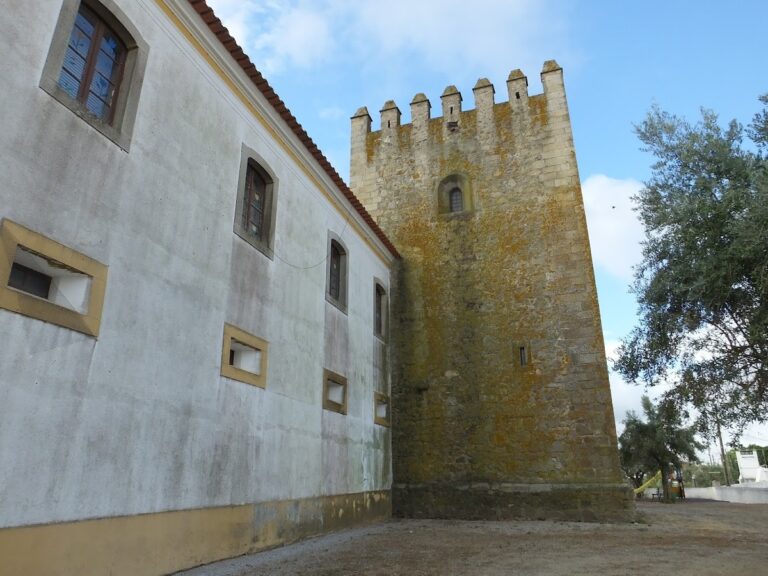
The keep is oriented toward the west, and its entrance is reached by a staircase. A smaller tower is attached to the western wall and contains a lateral entrance. Narrow openings and medieval-style loopholes remain among the castle’s defensive elements.
Inside the keep, three floors are supported by brick cross-vaults with ogival ribs, which are ribs formed by intersecting pointed arches. The upper level has battlements and supports three large halls lit by narrow openings. A staircase winds around the keep, particularly along its southwestern side.
Surrounding Landscape
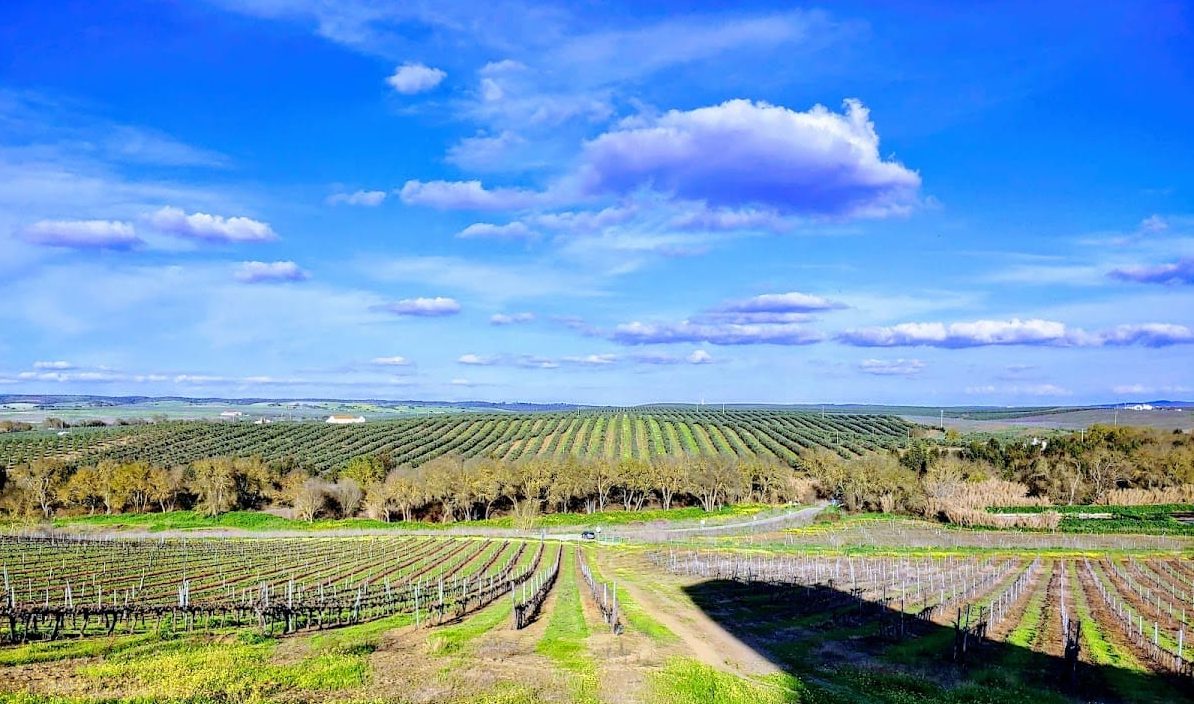
The castle stands amid cork oaks, holm oaks, wheat fields, and sunflower fields. It overlooks Herdade da Grã to the southeast and Herdade de Morjoannes to the northeast. The Vigia Dam and Monte Novo lie to the east, while olive groves and vineyards associated with Herdade de Castelo Real extend to the south. Monte da Igreja and the former Ferro de Valongo station are situated to the southeast.