Sivý Kameň Castle: A Medieval Royal Guard Post in Slovakia
Site at a Glance
- Rating
- 4.8
- Popularity
- Low
- Country
- Slovakia
- Primary era
- Medieval
- Eras represented
- Medieval, Early Modern
- Civilizations
- Hungarian
- Site type
- Military
- Remains
- Castle
On this page7 sections
History
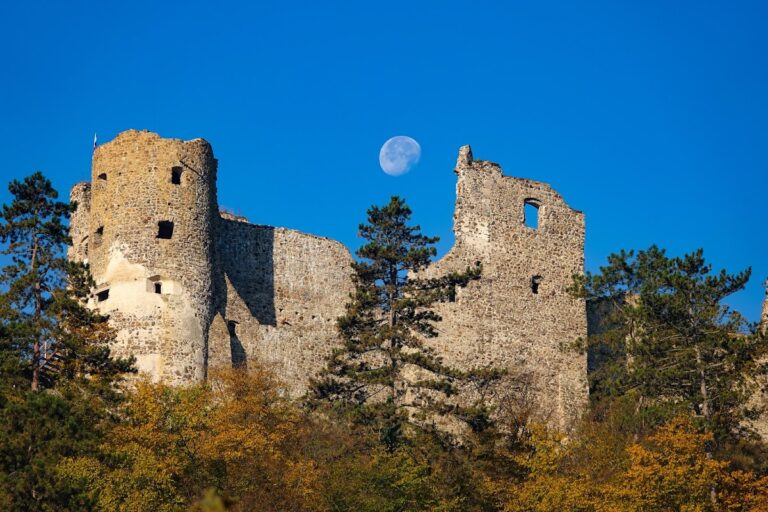
Sivý Kameň Castle is a medieval castle ruin above Podhradie in Slovakia, probably founded in the second half of the thirteenth century as a royal guard post. Some accounts place its construction between 1320 and 1352. The stronghold protected the trade route running up the Nitra valley toward the Turiec Basin and onward to the Polish frontier.
Royal stronghold and feudal estate
A settlement formed below the castle and was already recorded as a village in the fourteenth century. The castle first appears in written records in 1352, when the castellans of Bojnice were also described as castellans of Kesselőkő. A castellan was an official who administered and defended a castle for a ruler or higher-ranking lord. The Hungarian name Kesselőkő meant “Vulture Stone,” while the present Slovak name probably refers to the light-gray color of the castle walls.
Until 1388, Sivý Kameň was administered by the castellans of Bojnice. It then passed through several changes of ownership. In 1434, King Sigismund of Luxembourg granted the castle as a hereditary possession to Gregor Majthényi of Demandice, a Hungarian nobleman, and it became the center of a small feudal estate.
Destruction and abandonment
The castle was burned in 1524. The Majthényi family rebuilt it during the second half of the sixteenth century and enlarged the complex by adding a lower castle. During Gabriel Bethlen’s anti-Habsburg uprising, a revolt against Habsburg rule led by the Transylvanian prince, Sivý Kameň was destroyed again in 1626. Troops commanded by General Mansfeld captured it, and nearby inhabitants from Prievidza heavily looted it after the soldiers left. The owners subsequently moved their residence to the manor house in Nováky.
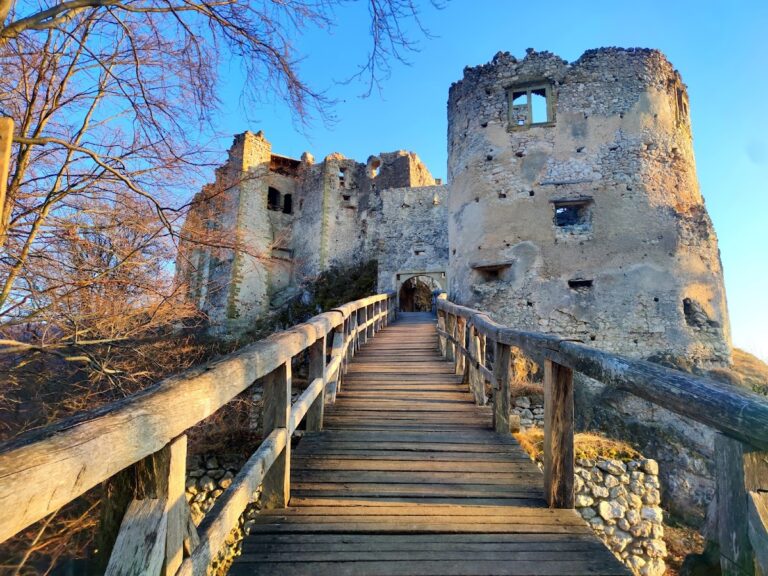
At the beginning of the eighteenth century, the castle was occupied by the kuruc, insurgent forces opposed to Habsburg rule in the Kingdom of Hungary. Imperial troops captured and burned it in 1708, destroying the Majthényi family archive kept there. Sivý Kameň has remained in ruins since that event. The ruins lie within the Sivý kameň Nature Monument and have been protected as a national cultural monument of the Slovak Republic since 1973. A program to secure the remains has been underway since 2013.
Remains
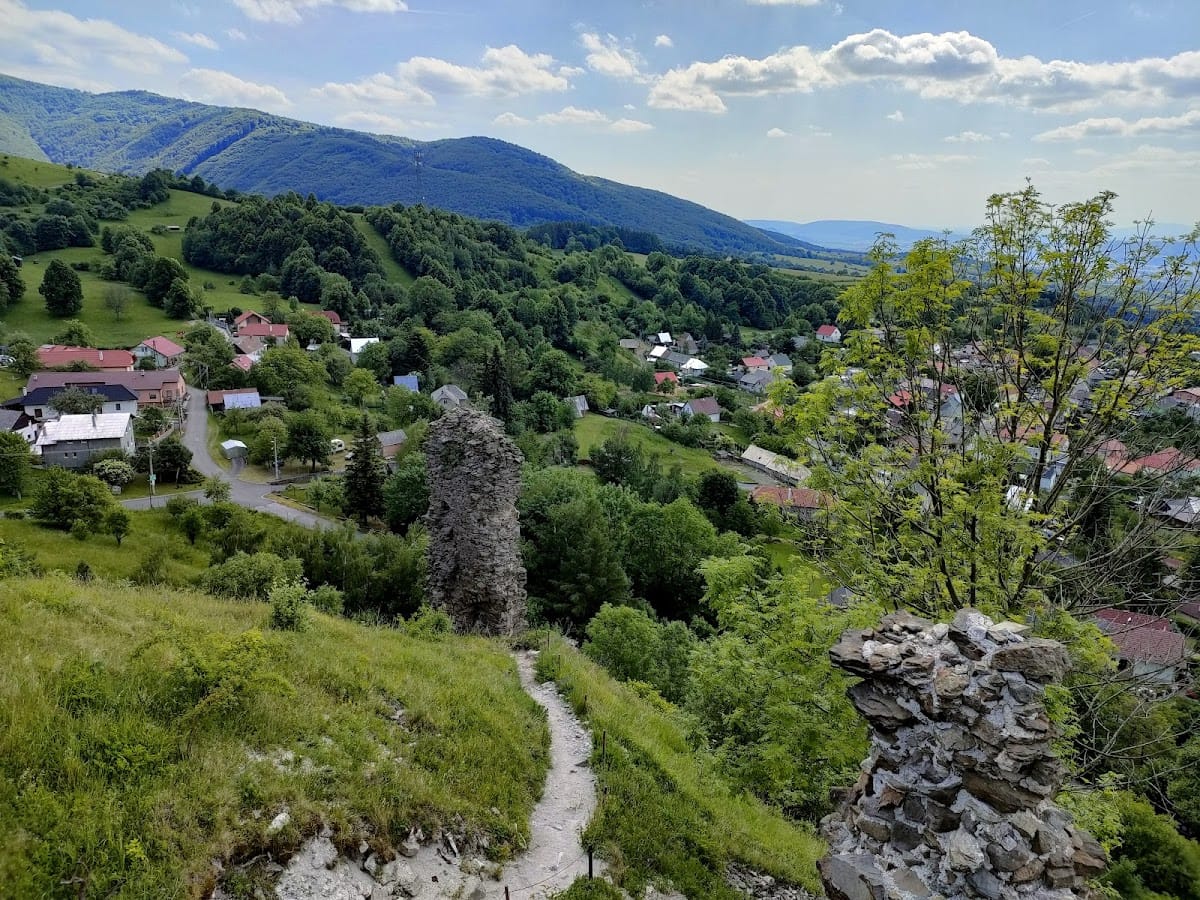
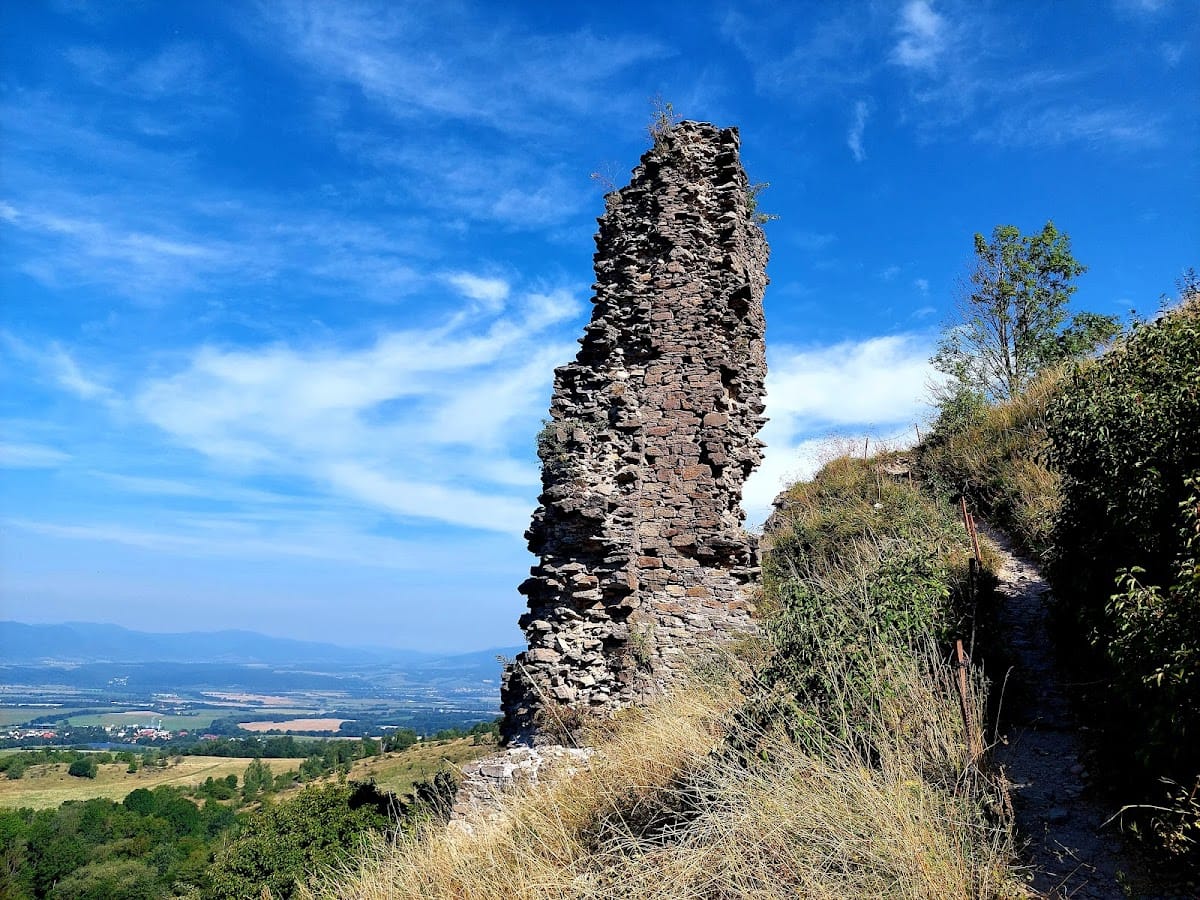
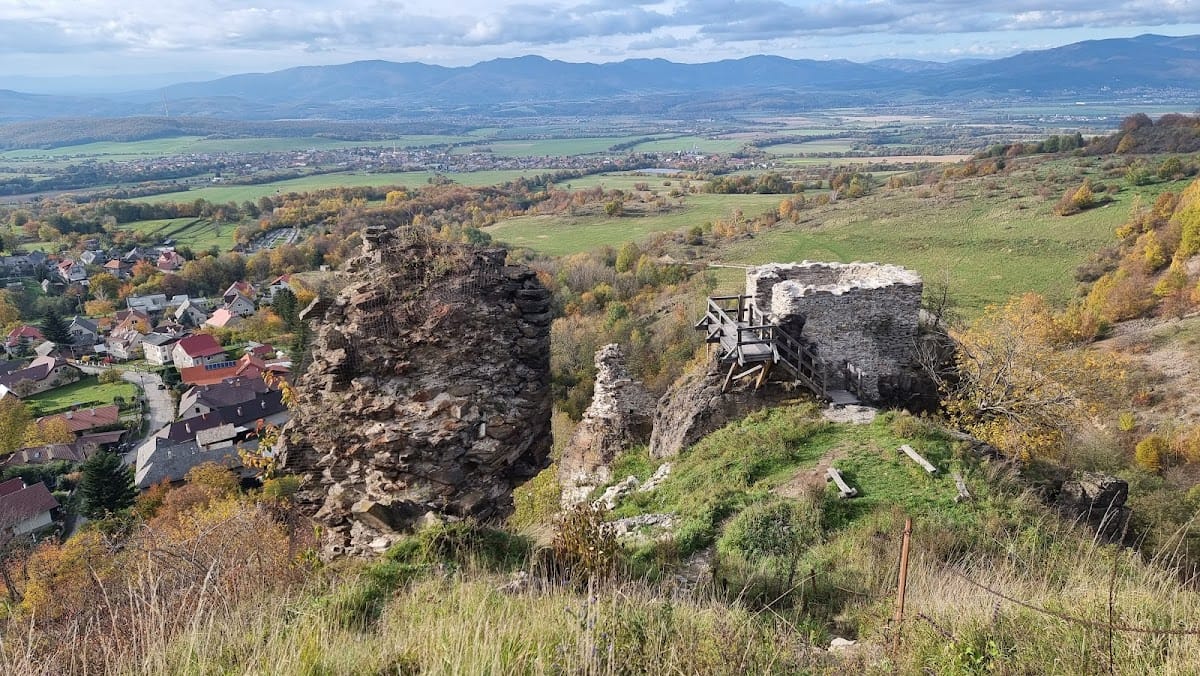
The ruin stands above the eastern edge of Podhradie on an andesite hill shaped by the Ťapkov stream, at the boundary between the Upper Nitra Basin and the Vtáčnik mountain group. Andesite is a dark volcanic rock commonly used as a local building material in mountainous regions. The castle developed in an upper part and later-added structures at a lower level, but the original arrangement is now difficult to distinguish.
Castle core and later enlargement
Original castle
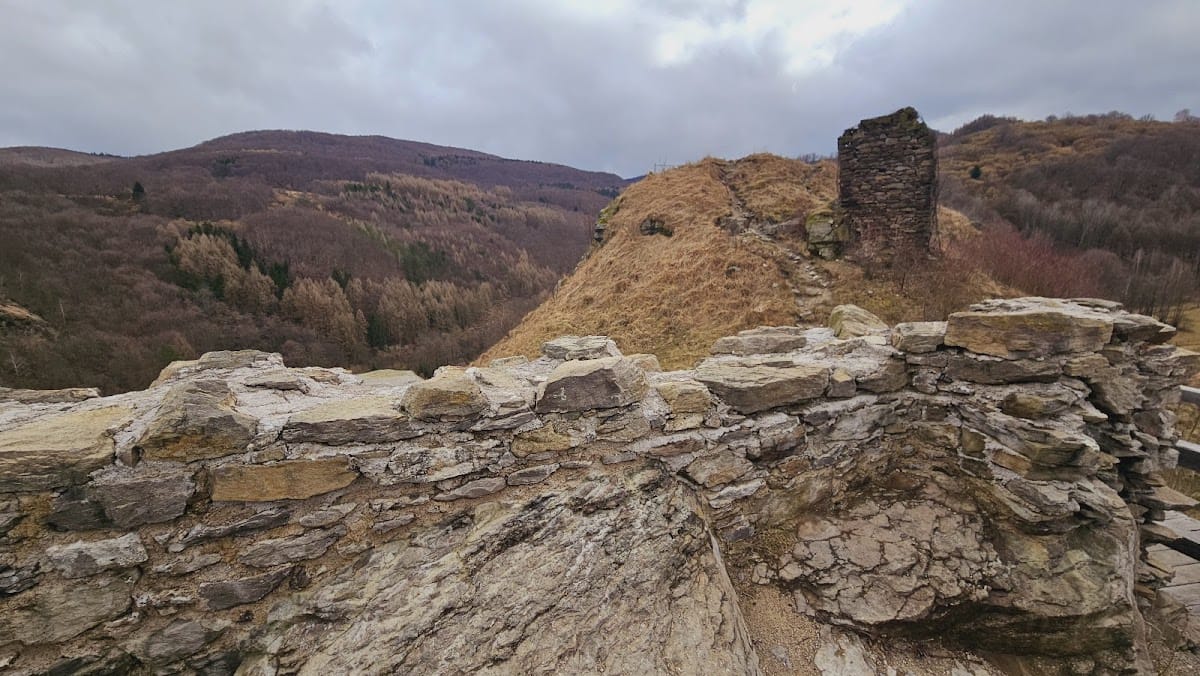
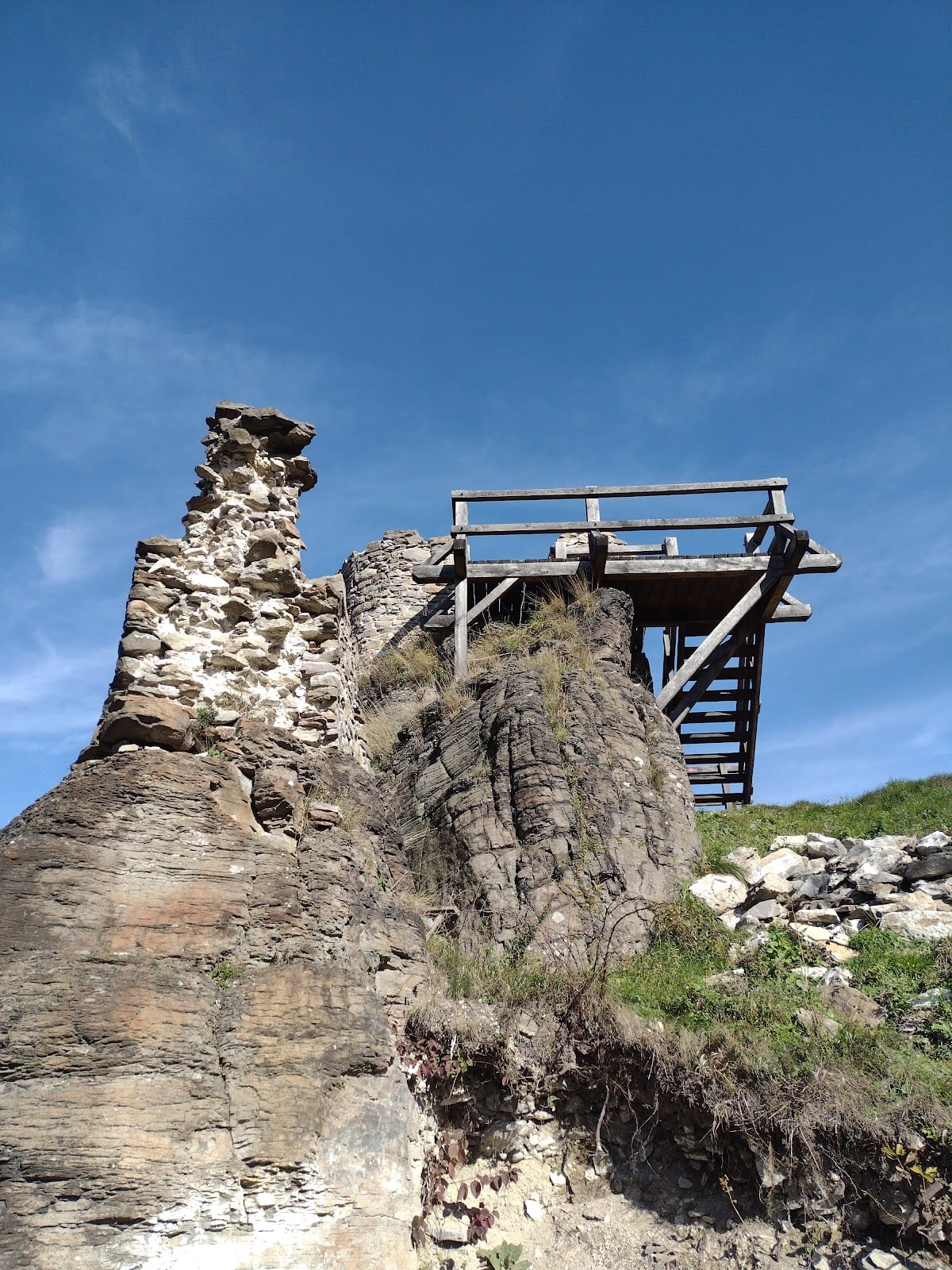
The first castle probably comprised a quadrangular defensive tower, a residential building, and a small courtyard enclosed by a defensive wall. These elements formed the initial fortified core of the stronghold. The surviving fabric is fragmentary, and parts of the walls were dismantled over time by inhabitants of Podhradie for building material.
Lower castle
The complex was enlarged at a lower level during the rebuilding carried out by the Majthényi family in the second half of the sixteenth century. This lower castle added to the earlier fortified group and expanded the physical extent of the residence and defenses. The site now survives as a ruin within the protected natural area of Sivý kameň.