Castle of Chora of Kalymnos: A Byzantine and Hospitaller Fortified Town
Site at a Glance
- Rating
- 4.4
- Popularity
- Low
- Country
- Greece
- Primary era
- Medieval
- External website
- Open
- Eras represented
- Medieval, Early Modern
- Civilizations
- Byzantine, Knights Hospitaller, Ottoman
- Site type
- Military
- Remains
- Fortified Town
On this page9 sections
History
The Castle of Chora of Kalymnos is a Byzantine-period fortress in Greece, first built in the eleventh century by the Byzantine Empire, the medieval Roman state centered on Constantinople. It was established to counter raids attributed to Tzachas, an eleventh-century Turkish military leader and naval raider active in the Aegean, and monitored the sea together with watchtowers on neighboring hills.
Earlier activity and Byzantine foundation
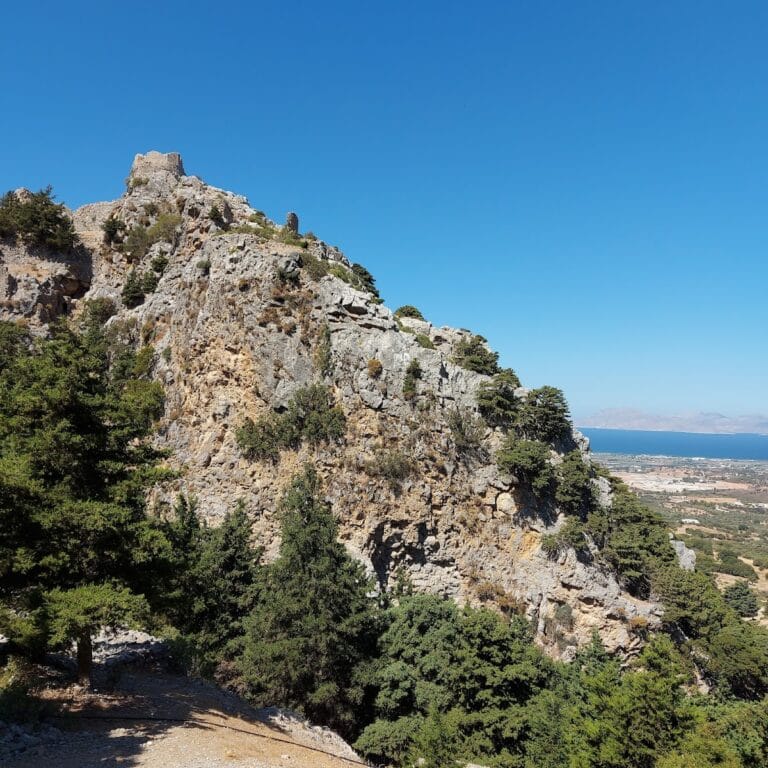
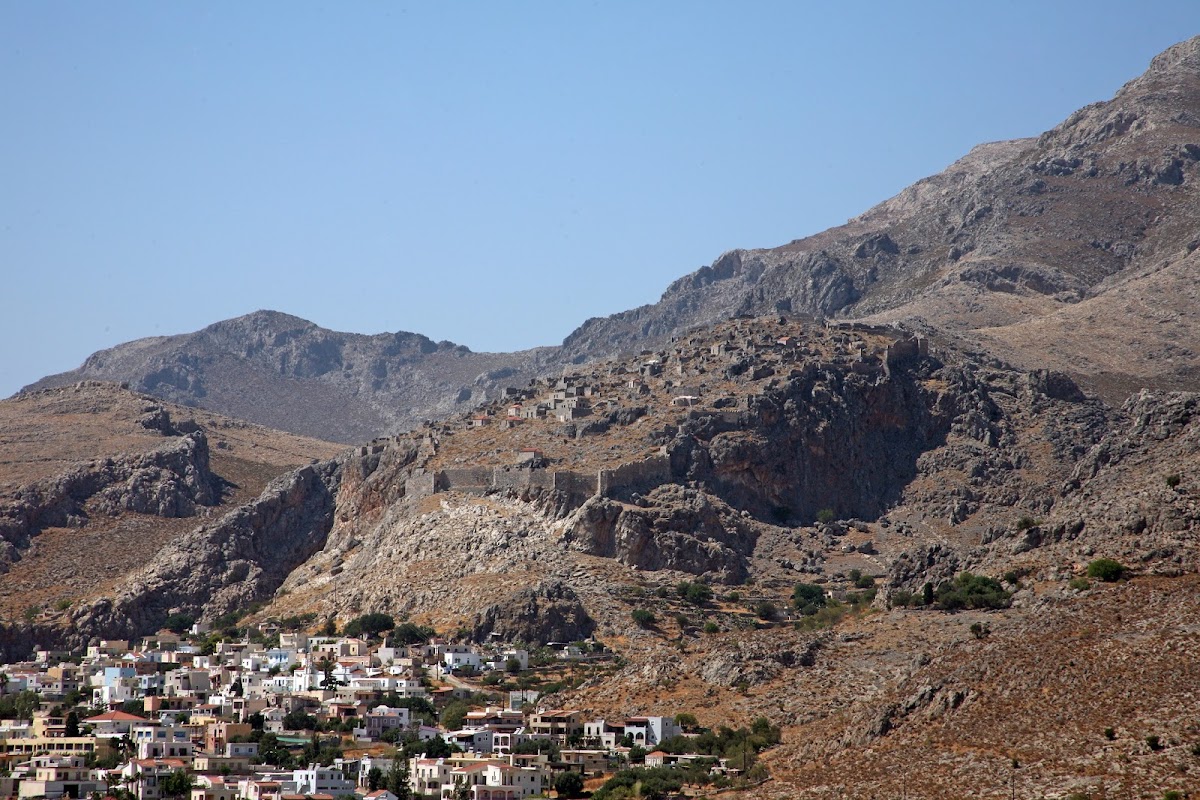
Archaeological finds from the Classical, Hellenistic, and Roman Imperial periods indicate that the site was active before the medieval fortress was built. The castle stood at the foot of Prophet Elias Hill, at an elevation of 255 metres, in Chora, the former capital of Kalymnos, opposite the nearby Castle of Chrysocheria.
Hospitaller expansion
The fortress was expanded under the knight Fantino Querini between 1433 and 1453. A major earthquake damaged it in 1492. The Hospitaller Knights, also known as the Knights of Rhodes, controlled Kalymnos at the time and repaired and modernized the castle within three years.
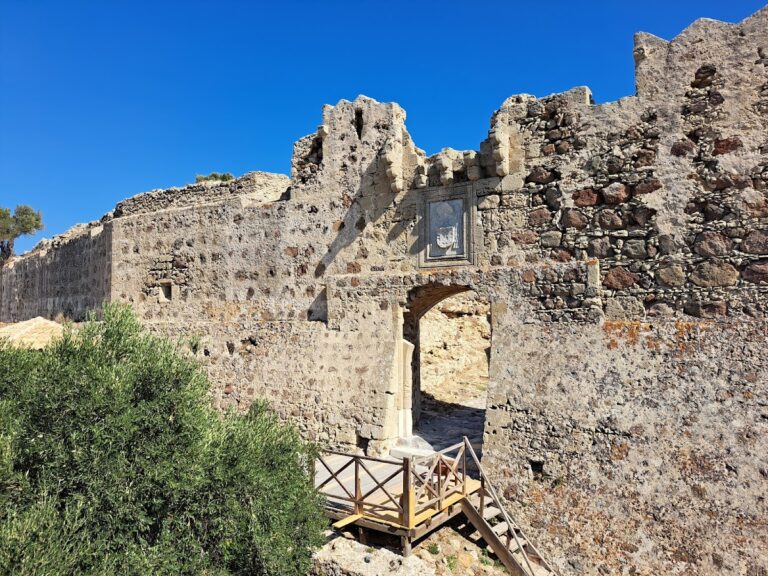
During the rule of Grand Master Fabrizio del Carretto from 1513 to 1521, the eastern wall received a defensive tower and two large water reservoirs were constructed at the center of the castle. Marble Hospitaller coats of arms dated 1514 and 1519 remain on the walls, reflecting the strong influence of this period on the fortress’s appearance.
Settlement and Ottoman period
The castle enclosed a medieval settlement and functioned as a fortified town rather than only as a military stronghold. Residents were permitted to build houses inside the fortress in return for payments to the castellan, the official responsible for the castle. This arrangement encouraged rapid settlement and the construction of homes and churches. The population has been estimated at 1,200 to 1,500 inhabitants.
The Ottomans controlled the castle from 1523 until 1912. It remained inhabited during Ottoman rule, although residents gradually moved from the seventeenth century onward to the surrounding settlements of Chora and Pothia. The last inhabitants had left by 1912. The site is now designated as an archaeological site and includes a building protected under Greek heritage law.
Remains
Fortified enclosure
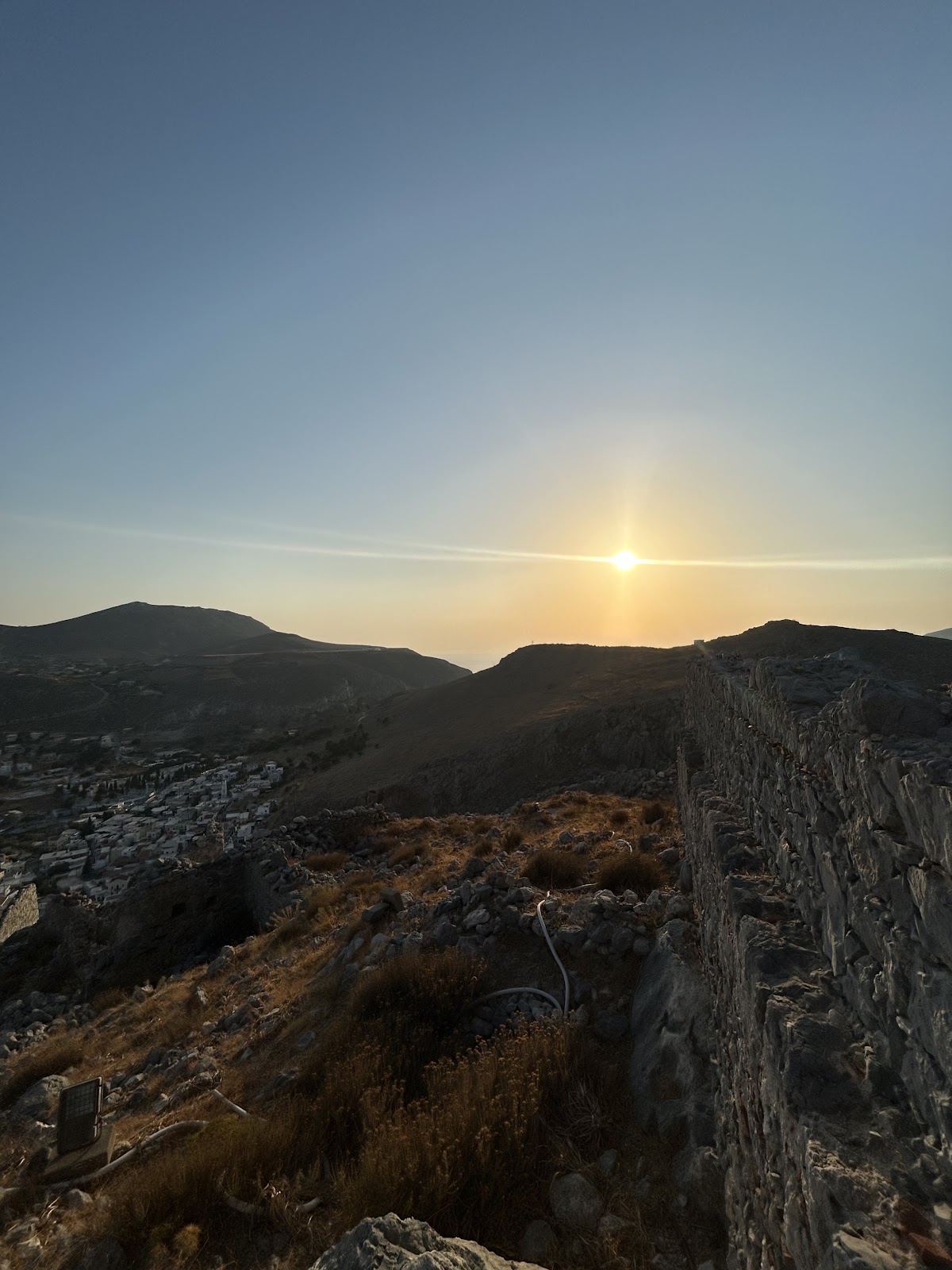
The fortified settlement covers approximately 30,450 square metres and is enclosed by substantial walls about 1.5 metres thick. Their height varies with the terrain. On the western side, protected by an inaccessible cliff, the walls are about 1 metre high, while on the southern side they reach approximately 7 to 7.5 metres. The enclosure forms part of the hilltop landscape opposite the Castle of Chrysocheria.
Gates and defensive walls
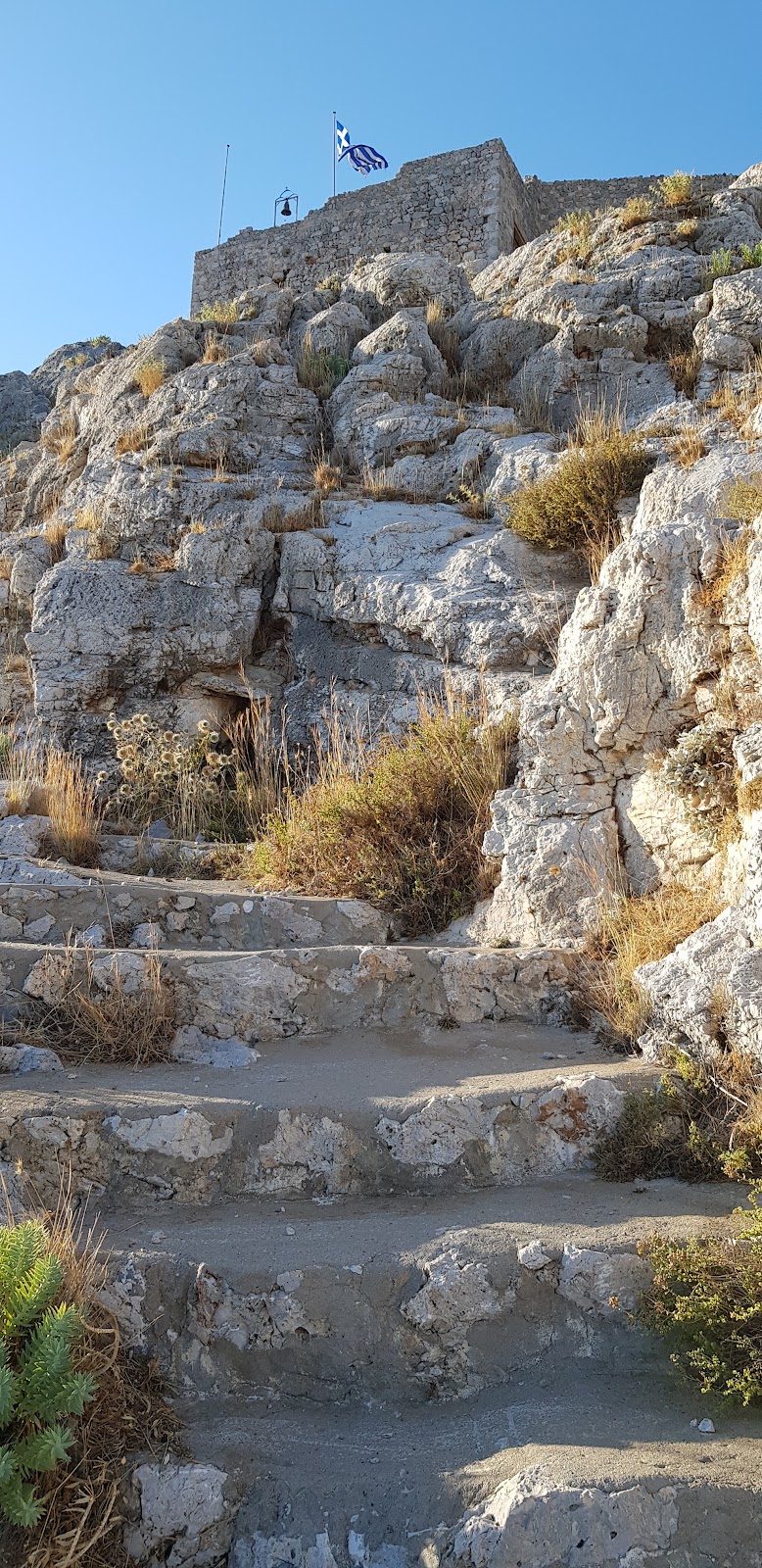
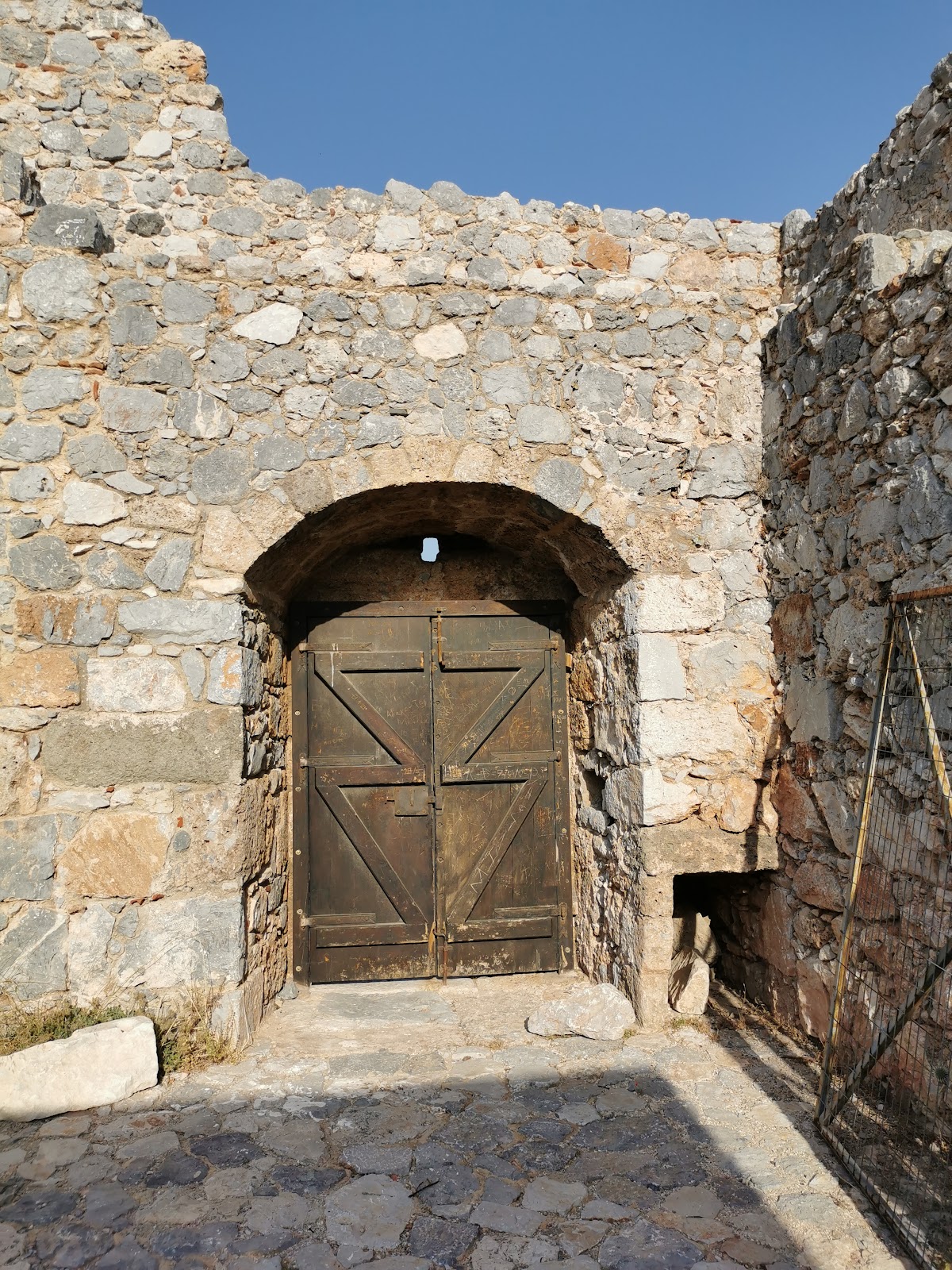
Access was concentrated on the southern side, where the ground rises above the surrounding area. The main entrance consisted of a double gate with a drawbridge operated by chains. A second eastern passage is blocked with stone. Towers stood along the southern and eastern sides, which were also strengthened with cannons. The walls retain loopholes for musket fire and crenellations, the raised sections of a battlement.
Water and domestic structures
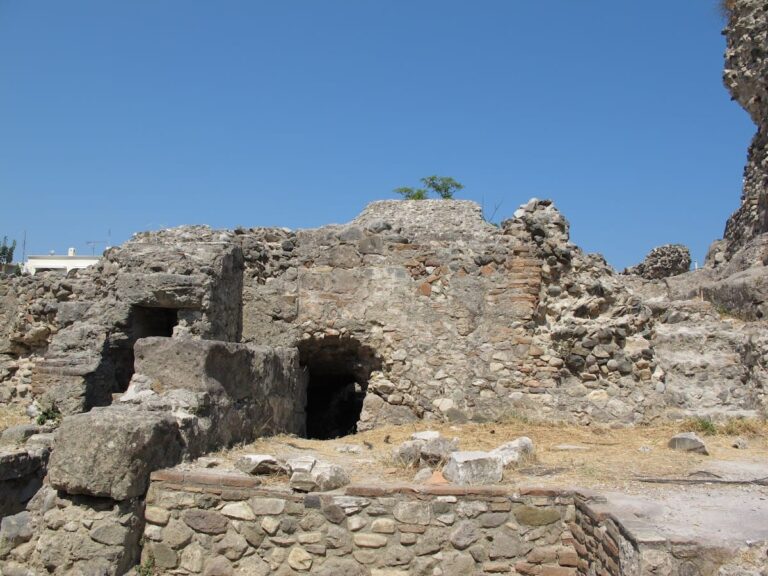
At the center of the castle are two large water reservoirs built during the rule of Fabrizio del Carretto. The remains also include cisterns, which helped supply the fortified settlement, together with numerous small residential houses. A ruined mill for producing olive oil reflects the domestic and economic activities carried out within the enclosure.
Churches and surviving details
Ten churches survive among the remains of the settlement. The walls also preserve marble Hospitaller coats of arms dated 1514 and 1519. Together with the towers, gates, houses, water installations, and churches, these features present the castle as the remains of an inhabited fortified town shaped chiefly during the Hospitaller period and modified in smaller ways under Ottoman rule.