Maynooth Castle: A Norman-Style FitzGerald Stronghold in Ireland

Site at a Glance
- Rating
- 4.4
- Popularity
- Low
- Country
- Ireland
- Primary era
- Early Modern
- External website
- Open
- Eras represented
- Medieval, Early Modern
- Civilizations
- English, Norman
- Site type
- Military
- Remains
- Castle
On this page10 sections
History
Maynooth Castle is a Norman-style medieval castle in Maynooth, Ireland, built by the Anglo-Norman FitzGeralds from the late twelfth century. Established first as a defensive stronghold and later developed as the principal residence of the Kildare FitzGerald family, it became one of the most important centres of political and military power in medieval Ireland.
Norman foundations and FitzGerald power
Before the arrival of the Normans, the area formed part of the kingdom of Uí Fáeláin, controlled by the Branach. In 1172, Henry II granted the Lordship of Leinster to Strongbow, an Anglo-Norman lord involved in the English conquest of Ireland. Strongbow granted land in County Kildare to Maurice FitzGerald in 1176. Maurice became the ancestor of the Kildare FitzGeralds and the Earls of Desmond.
A wooden defensive building was probably established at Maynooth around 1176. The first stone castle followed around 1200, with the original keep more specifically dated to about 1203. Gerald FitzMaurice, 1st Lord of Offaly, built the castle at the junction of two streams. Its position helped establish a durable FitzGerald stronghold in County Kildare.
Maynooth became the principal residence of the Kildare FitzGerald family and a major power centre. By the late thirteenth century, the FitzGeralds were among the leading Anglo-Norman families in Ireland. Their descendants became Earls of Kildare and Earls of Leinster, and held the office of Lord Deputy of Ireland, the English Crown’s senior representative and governor in Ireland.
The earldom and the sixteenth-century crisis
In May 1316, Edward II made John FitzGerald Earl of Kildare in recognition of his military leadership against Edward Bruce’s invasion of County Kildare. Maynooth Castle was then described as one of the largest residences of an earl in Ireland. The family’s position was strengthened further in 1478, when Gerald FitzGerald, known as “Gerald the Great,” became Earl of Kildare. Henry VII regarded him as the only lord capable of governing Ireland effectively on the English Crown’s behalf.
During Gerald FitzGerald’s tenure, the castle was luxuriously fitted out and remodelled. It contained a substantial library with books in Latin, Irish, English, and French. At the beginning of the sixteenth century, the castle stood within a manor exceeding 550 acres, or approximately 220 hectares. The manor included one of only two deer parks then known in Ireland.
The castle stood within the Pale, the area of English colonial administration centred on Dublin. Its location, combined with the FitzGeralds’ influence, gave Maynooth major political and military importance. Tensions between the family and the English Crown culminated in the rebellion of Thomas FitzGerald, known in English as “Silken Thomas.”
After his father, Gerald FitzGerald, the ninth Earl of Kildare, was summoned to England, Thomas rejected the king’s authority and policies on 11 June 1534. He later besieged Dublin Castle. In March 1535, an English army led by Sir William Skeffington besieged and bombarded Maynooth. The castle fell after a siege lasting ten days, apparently aided by an internal betrayal. Twenty-five defenders were put to death, while another was hanged in an episode remembered as the “Maynooth Pardon.”
Thomas FitzGerald surrendered soon afterwards and was imprisoned in the Tower of London. After two years in captivity, he and five of his uncles were executed for treason at Tyburn on 3 February 1537. The Crown confiscated the FitzGerald titles, estates, and castles, ending the Kildare FitzGerald dynasty’s control of Maynooth. The earldom was not granted again until 1552.
Rebuilding, warfare, and abandonment
By the beginning of the seventeenth century, Maynooth Castle was in poor condition. In 1629, Richard Boyle, 1st Earl of Cork, acquired guardianship of George FitzGerald, the sixteenth Earl of Kildare, and substantially redeveloped the old castle. Most of the visible fabric dates from this rebuilding, carried out around 1630 to 1635.
The castle again became a scene of fighting during the Irish Confederate Wars, also called the Eleven Years’ War, which began in 1641 and continued through the 1640s and early 1650s. Catholic forces under the Irish military commander Owen Roe O’Neill captured the castle, after which it was destroyed. No one lived there after the death of the sixteenth Earl of Kildare in 1656, and the ruins deteriorated further.
Around 1707, the nineteenth Earl of Kildare considered restoring the castle but found the damage too extensive for restoration to be worthwhile. He instead established a new principal residence at Carton, west of Maynooth. The family had previously used Kilkea Castle as its seat before moving to Carton House, and the decision at Maynooth ended FitzGerald residence at the castle.
Protection and partial restoration
The ruins came under state protection in 1991 and are now a national monument of Ireland. The Office of Public Works began restoration in February 2000. The work resulted in a partial restoration and development of the surviving remains as a heritage site.
Remains
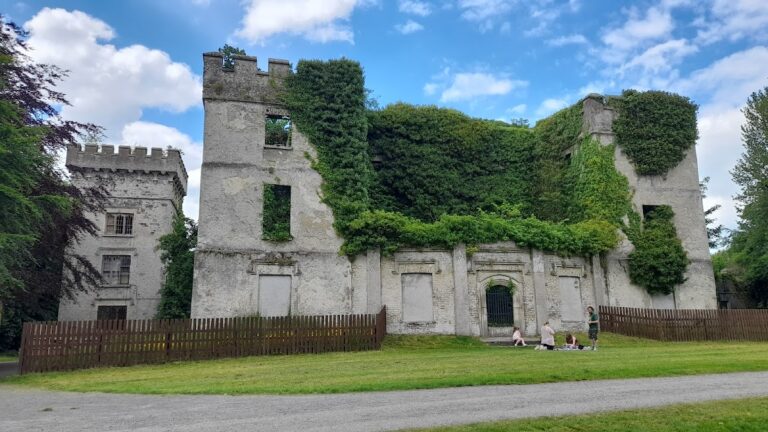
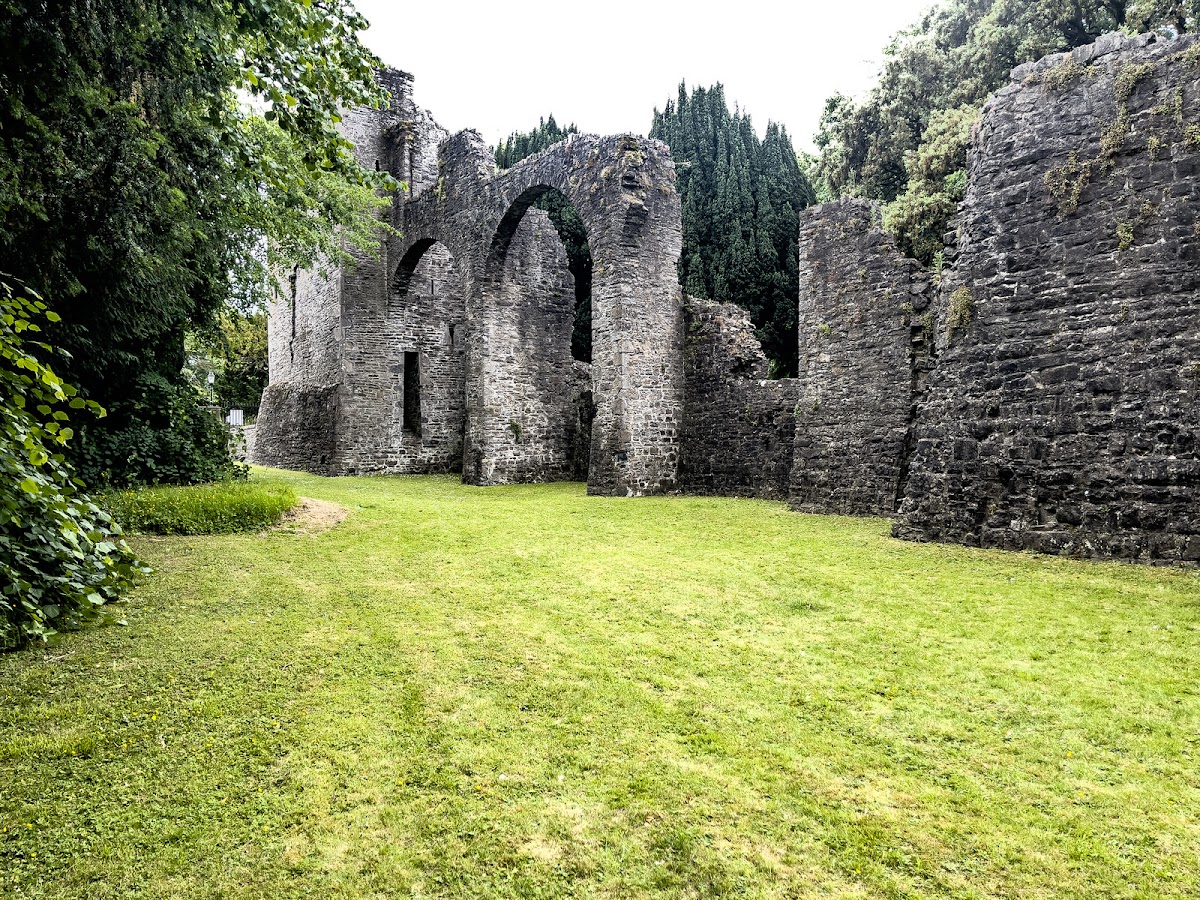
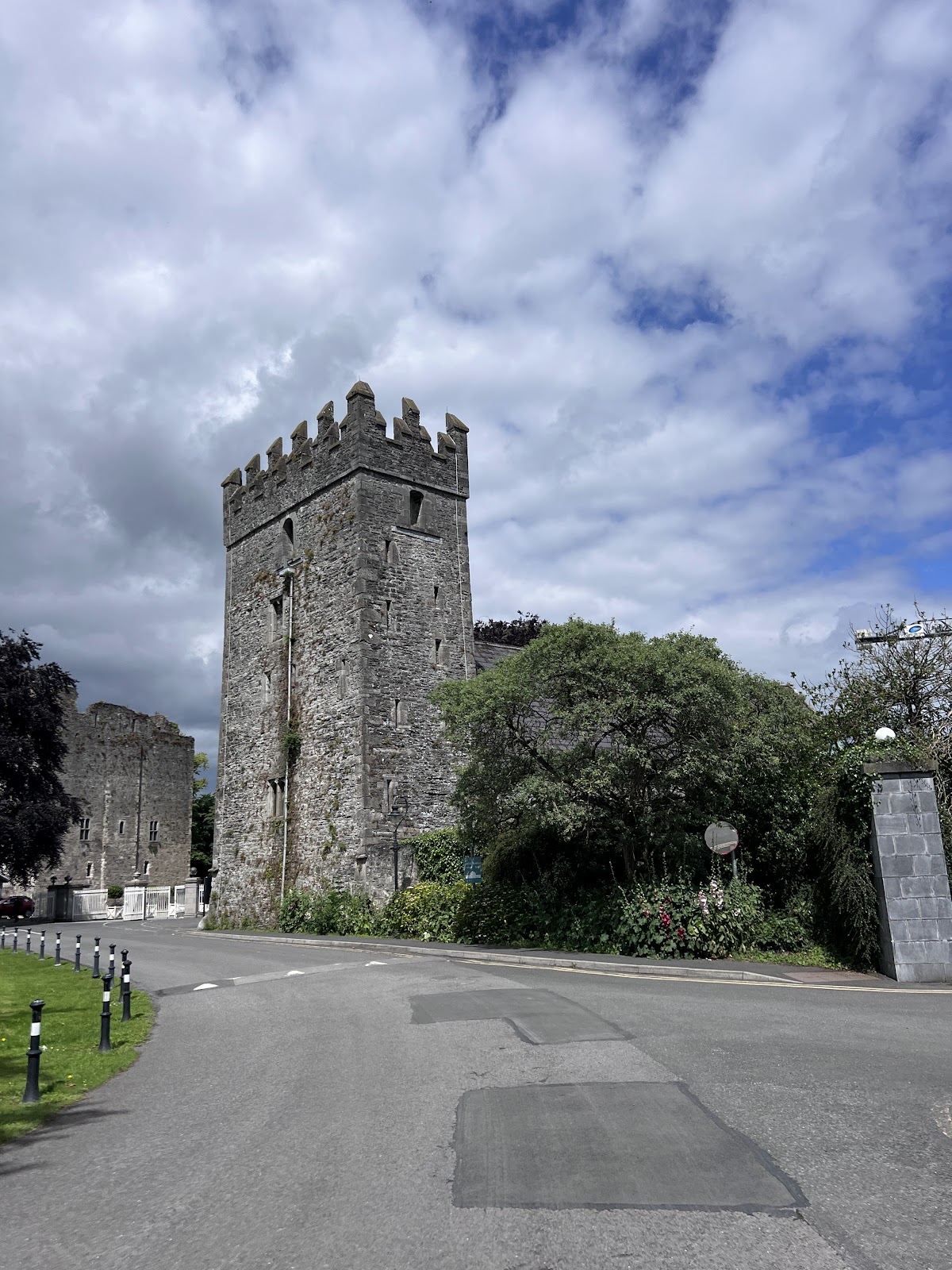
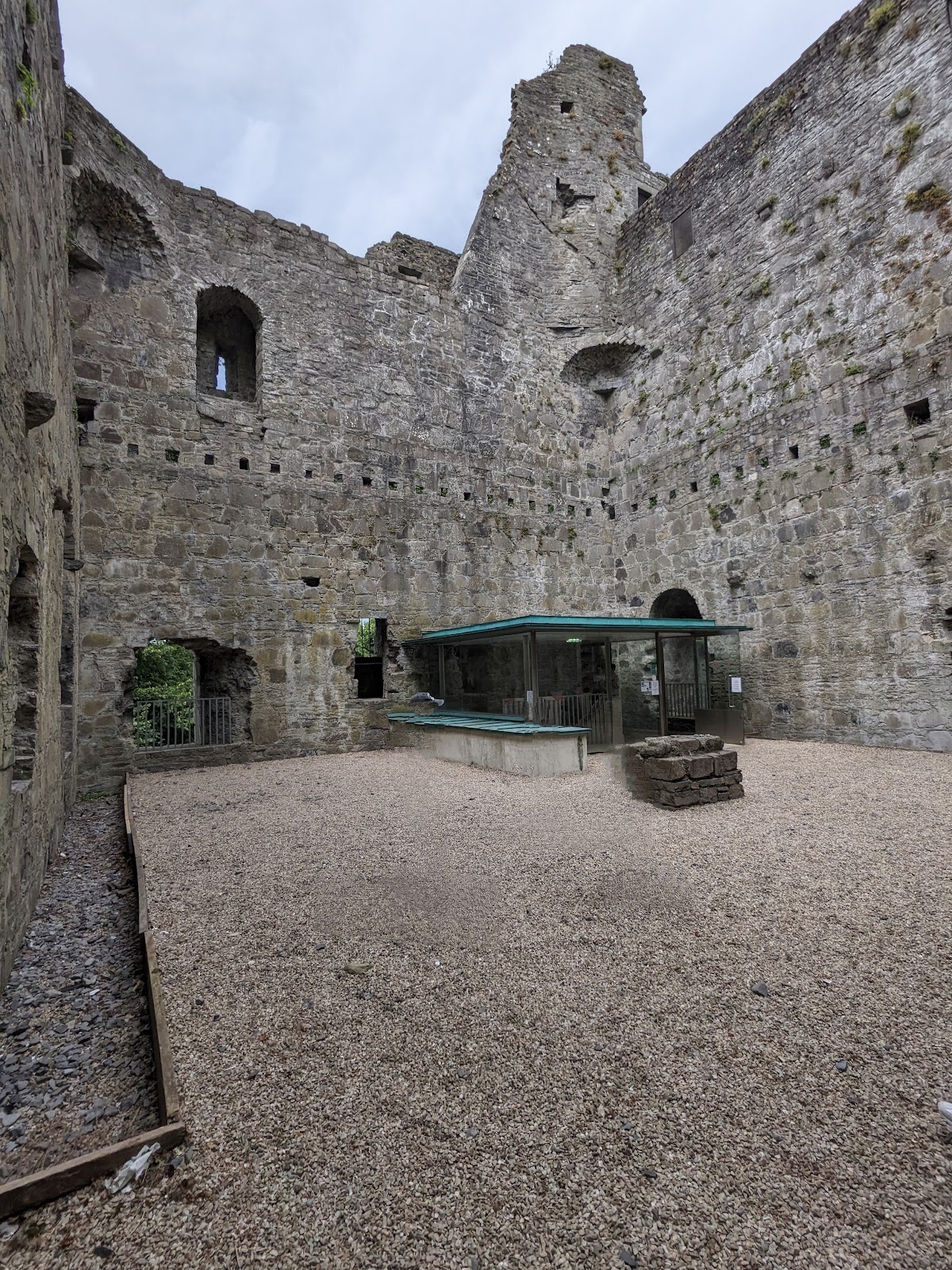
Maynooth Castle is a Norman-style fortified complex built at the junction of two streams in the centre of Maynooth, at the entrance to the South Campus of Maynooth University. Its fabric reflects several building phases, beginning with a probable wooden defence, followed by the first stone castle around 1200 and the original keep around 1203. Later additions continued through the seventeenth century. The medieval complex was heavily damaged by artillery in March 1535, while the rebuilding of about 1630 to 1635 produced much of the material visible today. Fighting in the 1640s destroyed much of that later work, leaving the gatehouse and Solar Tower as the principal surviving remains.
Principal surviving structures
Gatehouse
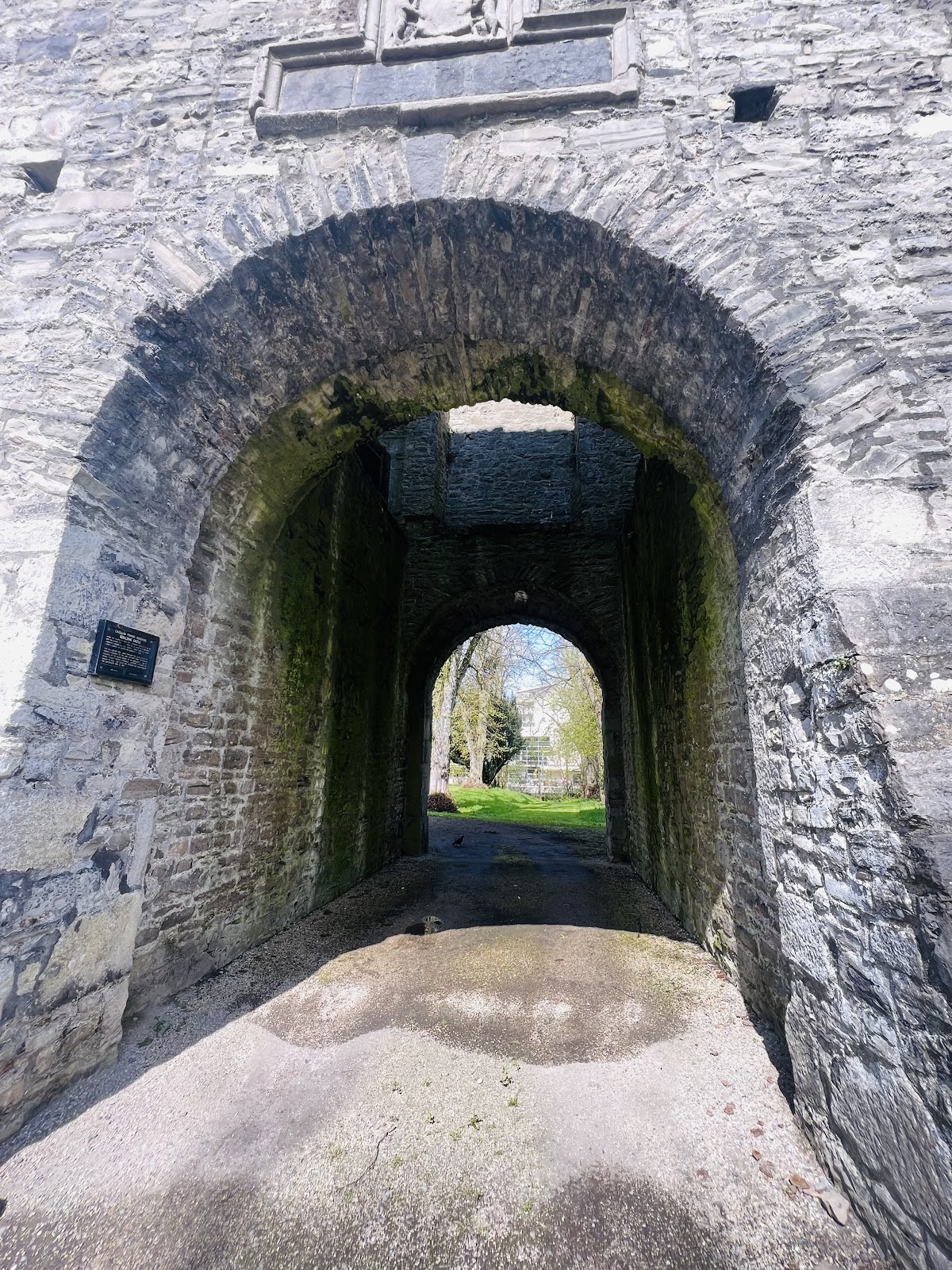
The gatehouse forms one of the principal surviving elements of the fortified complex. It belongs to a site whose medieval structures were heavily damaged during the English bombardment of March 1535, and whose later rebuilding under Richard Boyle supplied much of the visible fabric. The gatehouse retains the united arms of the Boyle and FitzGerald families, preserving a direct reminder of the relationship between the FitzGerald residence and the seventeenth-century remodelling associated with Boyle.
Solar Tower
The Solar Tower is the other principal surviving structure. A solar was a principal private living room, usually placed in an upper part of a medieval residence. At Maynooth, the tower forms part of the surviving remains of the castle’s residential and defensive complex, whose fabric developed through successive phases from the early stone castle to the seventeenth-century rebuilding. The tower survives within the partly restored ruins.
Manor landscape
In the early sixteenth century, the castle stood at the centre of a manor exceeding 550 acres, or approximately 220 hectares. This managed estate included one of the two deer parks then known in Ireland. The scale of the manor helps define the wider setting of the castle during the period when it served as the FitzGerald family’s principal residence.