Château Guillaume de Lignac: A Medieval Fortified Castle in France



Site at a Glance
- Rating
- 4.3
- Popularity
- Low
- Country
- France
- Primary era
- Medieval
- External website
- Open
- Eras represented
- Medieval, Early Modern
- Civilizations
- Duchy of Aquitaine, French
- Site type
- Military
- Remains
- Castle
On this page10 sections
History
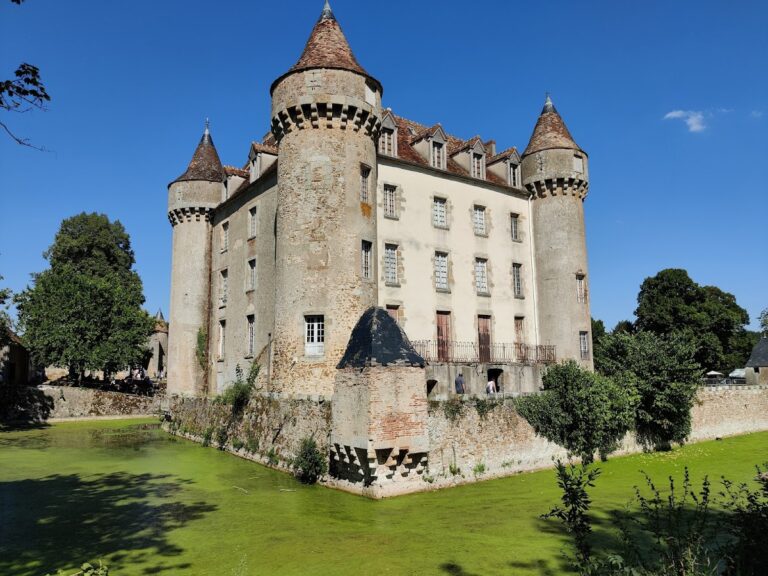
Château Guillaume de Lignac is a medieval fortified castle in France, located at Chateauguillaume near Lignac, in the valley of the Allemette. Its first construction campaign and keep date from the twelfth century. Tradition attributes its construction to William IX, Duke of Aquitaine, after his return from a crusade, a medieval Western European military expedition to the eastern Mediterranean, around 1103; the tradition also says that his son William X continued the work. This traditional attribution is distinct from the architectural dating of the castle.
From Château-Guillaume to the La Trémoille family
The castle gave its name to the former French commune of Château-Guillaume. During the French Revolution, the commune was temporarily called Guillaume-Tell, before it was annexed to Lignac in 1819.
Around 1200, Mathilde de Château-Guillaume brought the castle by marriage to Humbert de La Trémoille, lord of La Trémoïlle and Lussac. Château-Guillaume then remained associated with the La Trémoille family through successive lords, including Amiel III, Guy II, Guy III, Guy IV, Guy V, Guy VI, Georges de La Trémoille, Louis de La Trémoïlle, and Georges II de La Trémoïlle.
Guy VI was lord of Château-Guillaume, whose captains in 1397 were Guillaume Maistrier and his nephew. Georges de La Trémoille, Baron of Sully-sur-Loire and Viscount of Thouars, served as a minister to Charles VI and Charles VII and as superintendent of finance while also holding the lordship of Château-Guillaume. Louis de La Trémoïlle, Count of Guînes and Benon, was lord of the castle from the fifteenth century. Georges II de La Trémoïlle later held the castle and served as chamberlain to Louis XII and Francis I.
The Gouffier marriage and later owners
In 1526, Jacqueline de La Trémoïlle brought Château-Guillaume by marriage to Claude Gouffier, Duke of Roannais, Marquis of Boissy, and grand equerry. That year, the keep and the La Trémouille tower were given roofs, and a newly arranged apartment was occupied within the castle. Their daughter, also named Claude Gouffier, became lady-in-waiting to Catherine de’ Medici and lady of Château-Guillaume. She married Léonor Chabot, Count of Charny, in 1549.
Pierre Riffault was lord of Château-Guillaume in 1612. The property subsequently passed through François Riffaud and his daughter Françoise de Rifaud, who married Jean de La Faire on 16 February 1629. In 1692, Château-Guillaume entered the La Faire family through the marriage of Jacques de La Faire and Marie-Louise de Roffignac. Later holders included François de La Faire and Pierre-François de La Faire, who married Marie-Thaïs des Colards des Hommes in 1789.
Dismantling and restoration
The castle was dismantled under Cardinal Richelieu, the seventeenth-century French churchman and statesman who served as chief minister to Louis XIII. Its later history included formal recognition as a French historic monument in 1862. Between 1879 and 1883, it was restored by Charles Cazaux, a disciple of Eugène Viollet-le-Duc, the nineteenth-century French architect and architectural theorist known for historically styled restorations of medieval buildings. Château Guillaume de Lignac remains privately owned.
Remains
Fortified core and defensive towers
Twelfth-century keep
The surviving keep forms the medieval core of Château Guillaume de Lignac. It dates from the twelfth century and stands within the fortified castle in the valley of the Allemette, a small river in the Anglin valley. Its architectural date belongs to the castle’s first construction campaign, while the tradition linking the building to William IX and William X provides a separate account of its origins.
Cylindrical towers and machicolations
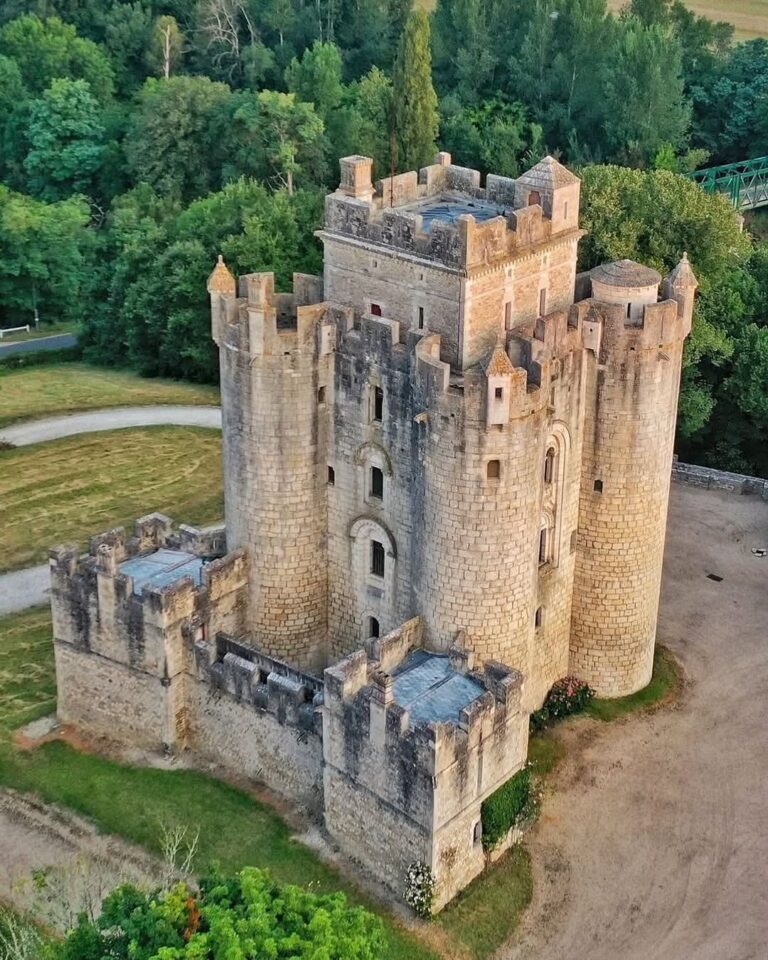
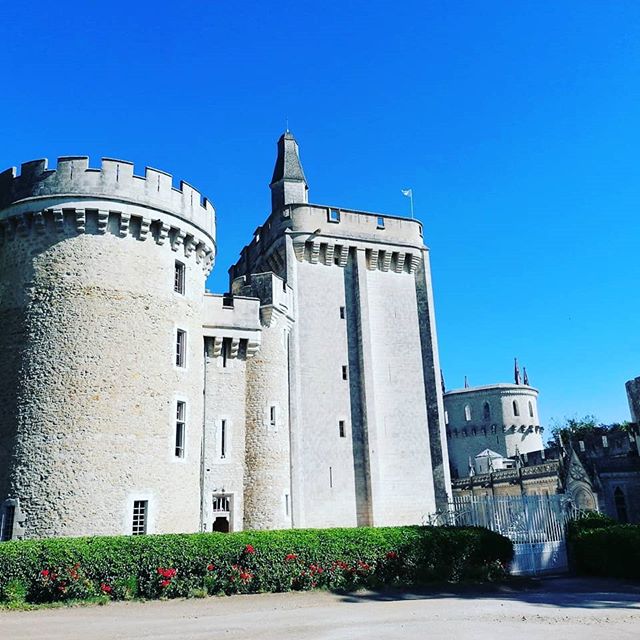
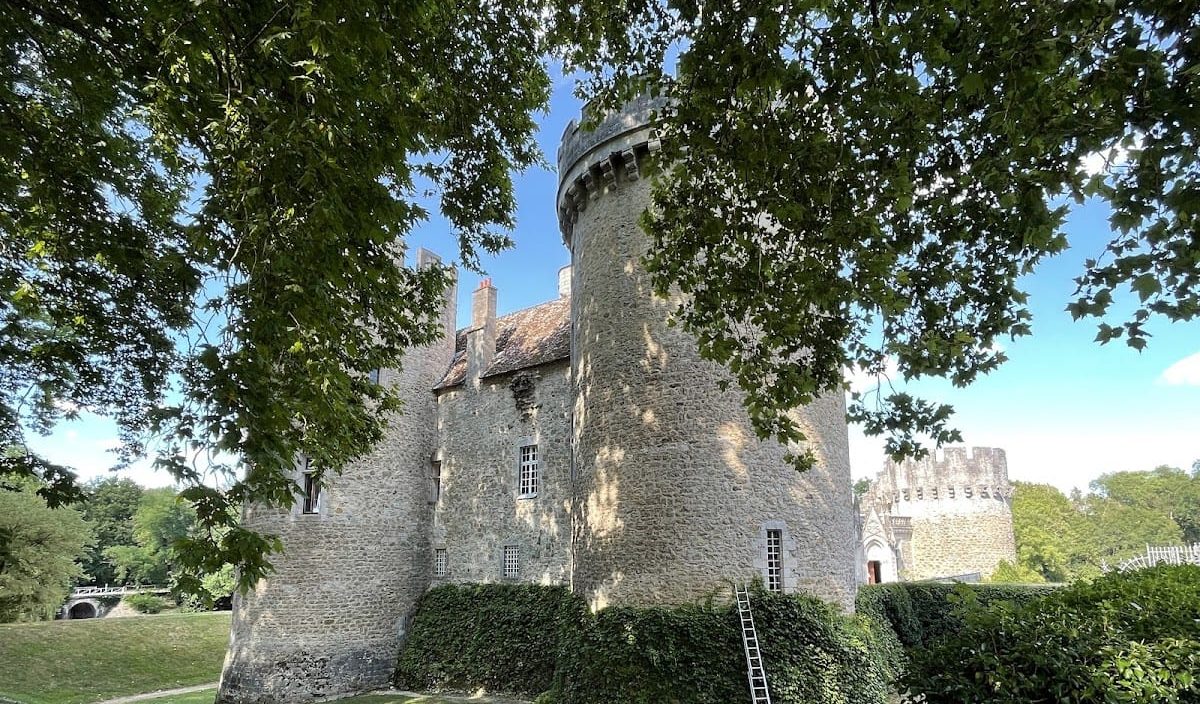
During the fourteenth century, the keep was enclosed by four large cylindrical towers. The castle was crowned with machicolations, projecting defensive structures with openings through which defenders could observe or attack enemies below the walls. These towers and upper defenses established the principal surviving form of the fortified complex.
Sixteenth-century alterations
La Trémouille tower and apartment
In 1526, the keep and the La Trémouille tower were fitted with roofs. A newly arranged apartment was also created inside the castle during the same campaign. These changes adapted parts of the medieval fortress for continued residence while retaining its principal fortified elements.