Château de Chabenet: A Fortified Residence in France


Site at a Glance
- Rating
- 4.6
- Popularity
- Low
- Country
- France
- Primary era
- Medieval
- External website
- Open
- Eras represented
- Medieval
- Civilizations
- French
- Site type
- Military
- Remains
- Castle
On this page8 sections
History
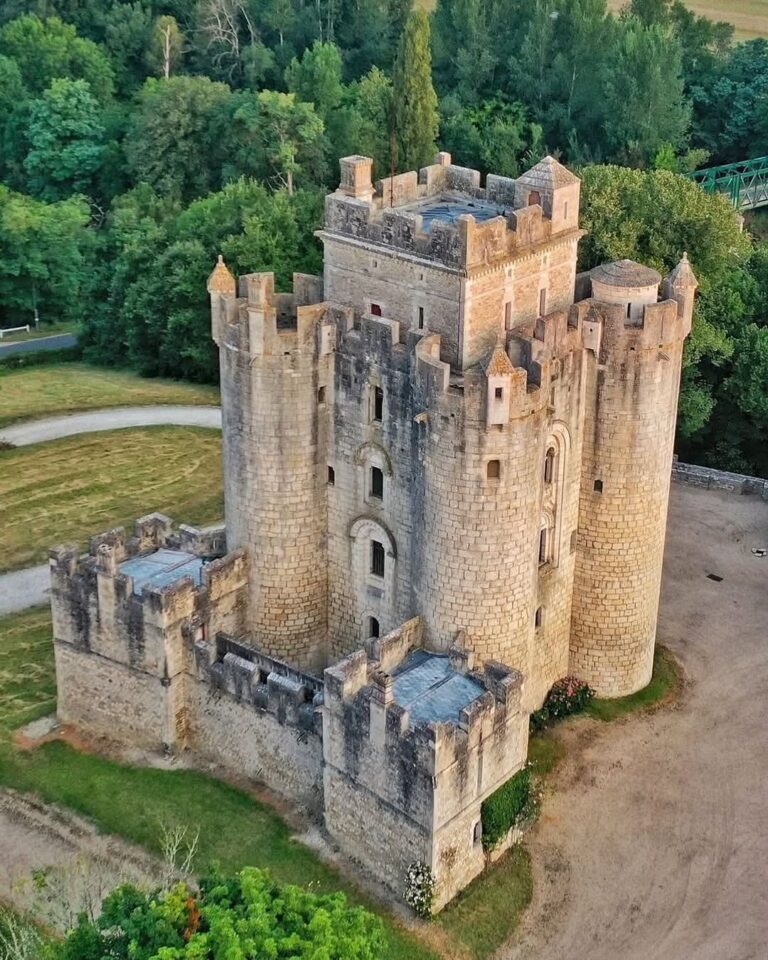
Château de Chabenet is a medieval fortified residence in France, built on the left bank of the Creuse during the reign of Louis XI. Josselin du Bois, lord of Montmorillon, commissioned it as a country residence, and construction was completed in 1471. Its fifteenth-century form combined domestic grandeur with extensive defenses.
From noble residence to Protestant stronghold
In 1544, Josselin du Bois’s grandson, Jean du Bois, known as “the Red,” abducted the daughter of the prosecutor for royal cases in Poitiers. Condemned to death, he sought refuge with Aubert de Montjohan, who later acquired the château.
During the French Wars of Religion, the conflicts between Catholics and Protestants in sixteenth-century France, Château de Chabenet belonged to the Protestant Pierre-Buffière family, barons of Prunget and Tendu. It sheltered opponents of the Catholics from those two areas, and the château with its surrounding lands remained Protestant property from 1585 to 1735.
Royal intervention and changing functions
Louis XIII visited the château in 1632. Three years later, Cardinal Richelieu, the king’s chief minister and a leading figure in the royal campaign to reduce the military power of Protestant strongholds, ordered part of its fortifications to be dismantled. In the eighteenth century, the residence lost its military importance. Its moats were filled in, and a park was established around the building.
The château survived the French Revolution without being sold as the supposedly vacant property of émigré “traitors,” although its owners, Louis Vincent de Poix and his wife Marie Charlotte, were imprisoned. Marie-Louise-Marthe de Pierre-Buffière, Marie Charlotte’s sister, lived at Chabenet and repeatedly secured a residence certificate from the mayor of Saint-Marcel, then called “Cote Franche.” She remained there until 1794, helping preserve the property for her family.
The nineteenth-century estate
In 1802, Marie-Louise-Marthe’s estate was divided between her sisters Catherine Charlotte, the wife of Guyot d’Asnières, and Marie Charlotte, the wife of Vincent François de Poix. Château de Chabenet passed to the d’Asnières family and was sold by Catherine Charlotte to Thomas-Louis-Benjamin, comte de Poix, on 20 June 1809.
Thomas-Louis-Benjamin died on 1 March 1814 from a malignant fever contracted while caring for Spanish prisoners held at the château. He was buried at Saint-Lactencin. His son, Louis-Thomas-Benjamin, was born on 9 November 1814 and formally inherited the property in 1845.
In 1850, Louis-Thomas-Benjamin, comte de Poix, arranged a restoration following the advice of Eugène Viollet-le-Duc, the French architect known for historically styled restorations of medieval buildings. His positions as mayor of Saint-Marcel, member of its church-factory council, a local body administering church property and finances, and administrator and influential shareholder of the Paris–Orléans railway company gave him the means to undertake an extensive campaign.
Louis-Thomas-Benjamin died unmarried in 1878 and left the château and its lands to his niece Joséphine de Boisé, the daughter of Marie-Louise-Léontine de Poix and Stanislas de Boisé de Courcenay. The estate then extended across 2,077 hectares in Saint-Marcel, Chasseneuil, Tendu, and Argenton. It included Chabenet, Prunget, and La Rocherolle, together with numerous farms and extensive forests on the slopes of the Bouzanne valley. Wolves were reported in those forests into the early twentieth century.
Inheritance, war, and modern restoration
Joséphine de Boisé died unmarried and childless on 4 July 1924. She left the estate to the marquis de Nicolaï and his sister, the marquise d’Armaillé, whom she had adopted and named as universal legatees. In February 1926, descendants of Joséphine’s uncles challenged the circumstances of the adoption, which had taken place only weeks before her death, but the court rejected their claim. Château de Chabenet was registered as a French historic monument in 1927.
After the inheritance, the estate was divided and sold to different purchasers. The church and presbytery of Pont-Chrétien, formerly owned by the marquise de Nicolaï, passed to the commune for a symbolic sum. A Parisian food merchant named Leclerc acquired the château, and Louis Willème, an industrialist from Nanterre, became its owner in 1940.
During the Second World War, Château de Chabenet concealed works from the Louvre, including the collections of the Duke of Harcourt, as well as several works from the Rouen Museum of Fine Arts. It later belonged to an industrialist named Billon, who occupied it as a private residence for about twenty years while pursuing businesses involving plastic fabrics, coffee roasting, metal wheelbarrow assembly, and air freight.
By the late 1980s, years without repairs had left the château in serious disrepair. Parisian businessman Philippe Marec, then chief executive of Formalangues, acquired it and carried out a meticulous restoration. He planned to make the building a center for the study of French language, culture, and history for foreign businesspeople, but the financial crisis of 1991 prevented the project from being fully realized. The château was subsequently converted into a hotel and is now owned and operated by the Swiss group Hapimag.
Remains
Fortified residence
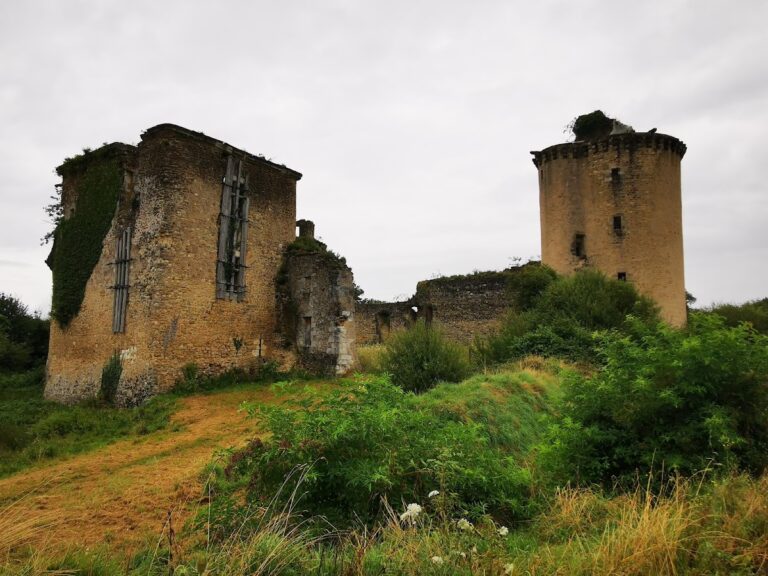
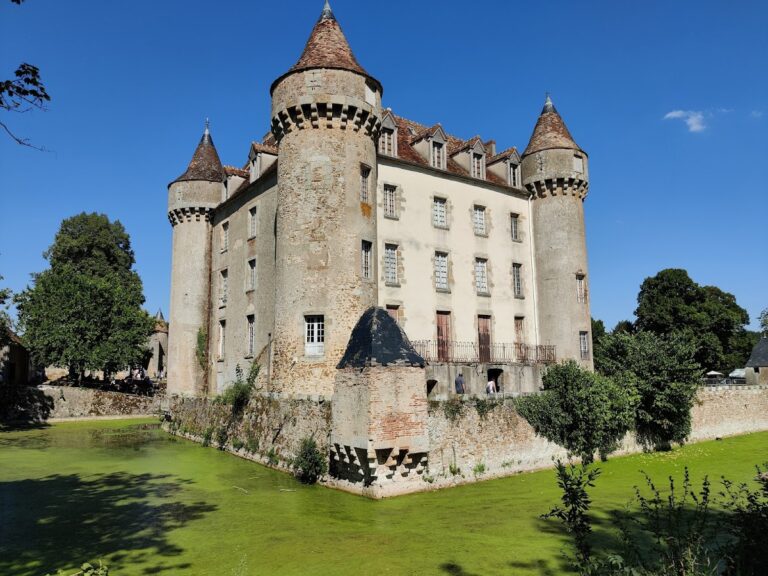
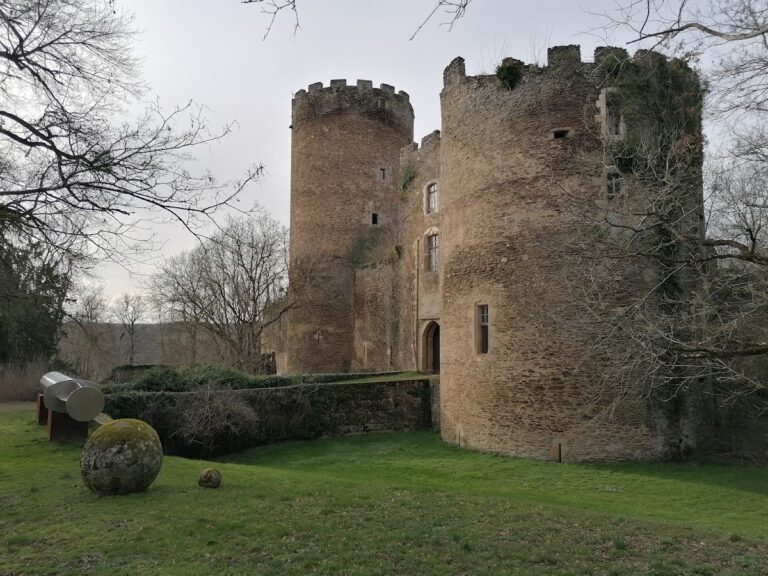
Château de Chabenet stands north of the village of Chabenet on the left bank of the Creuse. Built principally of stone and brick, it retains the character of a medieval fortified residence with Renaissance features. The original complex joined a palatial dwelling to fourteen towers, a donjon, or principal fortified tower, workshops, storerooms, and a prison.
The main entrance occupied the southern side and was protected by two substantial round towers. A drawbridge provided access across the surrounding water defenses. In 1471, an enterprise from Saint-Gaultier excavated the moats, which measured approximately 15.50 metres in width. The nineteenth-century restoration sought to reproduce the fifteenth-century appearance as closely as possible, while a later campaign adapted the restored building for hotel use.
Park and former estate
A partially preserved park of several hectares extends north of the château. It contains paths and natural terraces used for outdoor concerts, and an open-air swimming pool has been installed near the complex. The wider estate formerly comprised forests, farmland, gardens, pastures, farms, and the associated châteaux of Prunget and La Rocherolle.
A mistletoe-bearing oak once stood at the Grosses Roches estate. It had been felled by 1930 because it occupied the path of a high-voltage line. The château and its domain now form a residential luxury-hotel complex managed by Hapimag.