Bowes Castle: A Medieval Royal Fortress in County Durham


Site at a Glance
- Rating
- 4.4
- Popularity
- Low
- Country
- United Kingdom
- Primary era
- Medieval
- External website
- Open
- Eras represented
- Classical, Medieval
- Civilizations
- English, Roman
- Site type
- Military
- Remains
- Castle
On this page12 sections
History
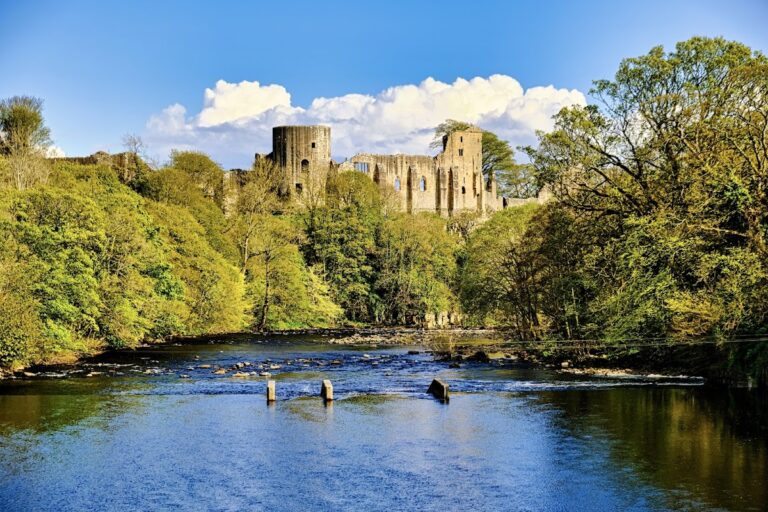
Bowes Castle is a medieval castle in Bowes, United Kingdom, built within the former Roman fort of Lavatrae during the twelfth century. It stood on an upland route across the Pennines linking England and Scotland, and its position gave it strategic value during the medieval period.
Roman foundations and the first castle
Lavatrae had been a Roman waystation on the northern branch of the road equivalent to Watling Street. This route connected Carlisle with York and settlements farther south, while the fort controlled the Stainmore Pass across the Pennines. The later castle therefore occupied a place whose military importance predated the medieval settlement by many centuries.
In the twelfth century, the site formed part of the Honour of Richmond, a medieval feudal territorial grouping centred on Richmond and traditionally associated with the Counts of Brittany. The estate itself remained a Crown demesne, meaning that it was directly owned by the Crown. Around 1136, Alan de Bretagne, Count of Brittany, built a timber castle in the north-west corner of the Roman fort. His son Conan inherited it, but after Conan died in 1171, Henry II claimed the castle.
Henry II’s stone rebuilding
Henry II, the Angevin king of England from 1154 to 1189, ordered the timber fortification to be replaced with a substantial stone castle between 1170 and 1174. The work responded to security concerns and to the military threat from Scotland before and during the Great Revolt of 1173–1174, a major rebellion against Henry involving some of his barons, William the Lion of Scotland, and European allies. Nearly £600 was spent on Bowes Castle between 1170 and 1187, most of it in the early years of rebuilding.
Local tenants of the Count of Brittany, Torfin, Osbert, and Stephen of Barningham, supervised the construction. The creation of a new royal castle in this part of England was unusual during the twelfth century. The castle was damaged by Scottish raids in 1173, after which the chamber and gates were repaired and bulwarks were built around the keep in preparation for further attacks.
William the Lion besieged Bowes Castle in the following year. He withdrew when a relief force led by Geoffrey, Henry II’s illegitimate son and then Bishop of Lincoln, arrived. After Henry suppressed the revolt, William was captured at the Second Battle of Alnwick and imprisoned until a peace treaty was concluded. Henry’s resulting extension of authority northward into Scotland improved the security of northern England.
Royal custody and declining fortunes
In 1203, King John placed Bowes Castle under the control of Robert de Vieuxpont, an important northern administrator who retained it until 1228. John stayed there in 1206 and 1212. During Vieuxpont’s custody, the castle also briefly held John’s niece Eleanor of Brittany.
Henry III later granted the castle for short periods to William de Blockley and Gilbert de Kirketon. In 1232 it was given to Duke Peter of Brittany, followed by William de Valence. Peter II, Count of Savoy, became Earl of Richmond in 1241 and subsequently received Bowes from the king. The castle remained with the Earls of Richmond until 1322, although it had by then fallen into poor repair.
Edward II granted Bowes to John de Scargill in 1322. This decision provoked local tenants of the Earl of Richmond, who rebelled and attacked the castle while its lord was away. They partly burned a hall, drank four tuns of wine, and carried off armour, springalds, and other goods. A springald was a medieval engine for launching large bolts or stones.
Further conflict with Scotland brought additional raids against the castle and its manor. Neighbouring fields were abandoned, and by about 1340 the castle was ruinous while the manor had no value. The Crown reclaimed the site in 1361. The Neville family controlled it from 1444 to 1471, after which it returned to the Crown.
Sale, dismantling, and preservation
James I sold Bowes Castle in the early seventeenth century. Most of its remaining fortifications were dismantled in the mid-seventeenth century, after the English Civil War. By 1928, the castle was in poor condition and attracted little local or owner interest. In 1931, Lady Lorna Curzon-Howe, facing estate death duties, agreed to place it in the care of the Office of Works.
English Heritage controls and manages the ruins in the twenty-first century. Bowes Castle was listed in 1915 and received Grade I status in 1986. It is also a scheduled monument, a legally protected archaeological or historic site of national importance in England. Grade I is the highest category of protection for a listed building.
Remains
Fortifications and hall-keep
Outer and inner baileys
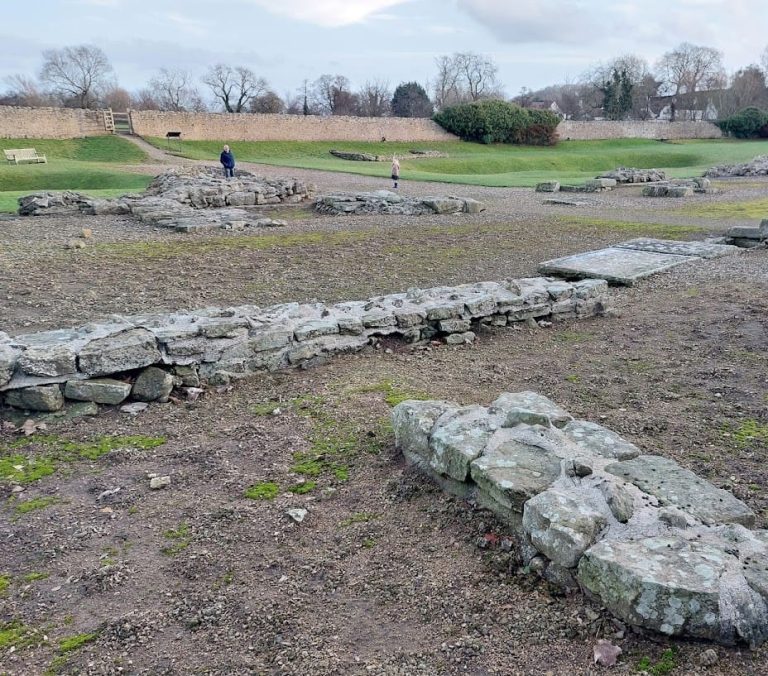
The castle occupies part of the former Roman fort of Lavatrae. The Roman ramparts were incorporated into a larger outer bailey, the castle’s principal enclosed area. A ditch formed an inner defensive bailey around the medieval keep, creating a second zone of protection within the older fort boundary.
Stone hall-keep
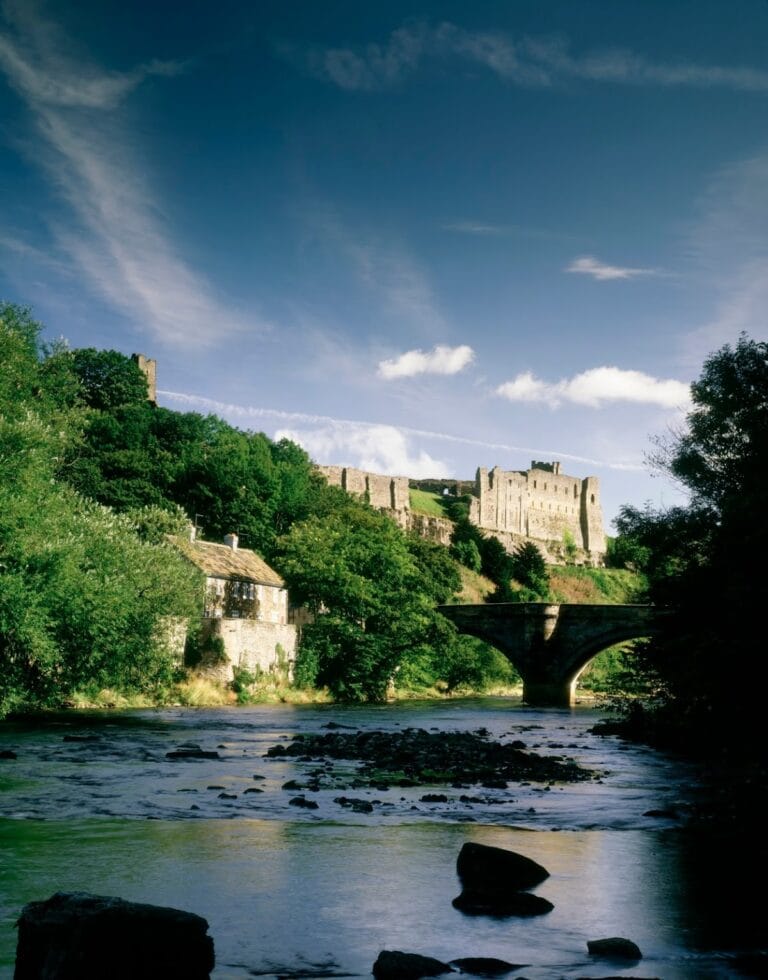
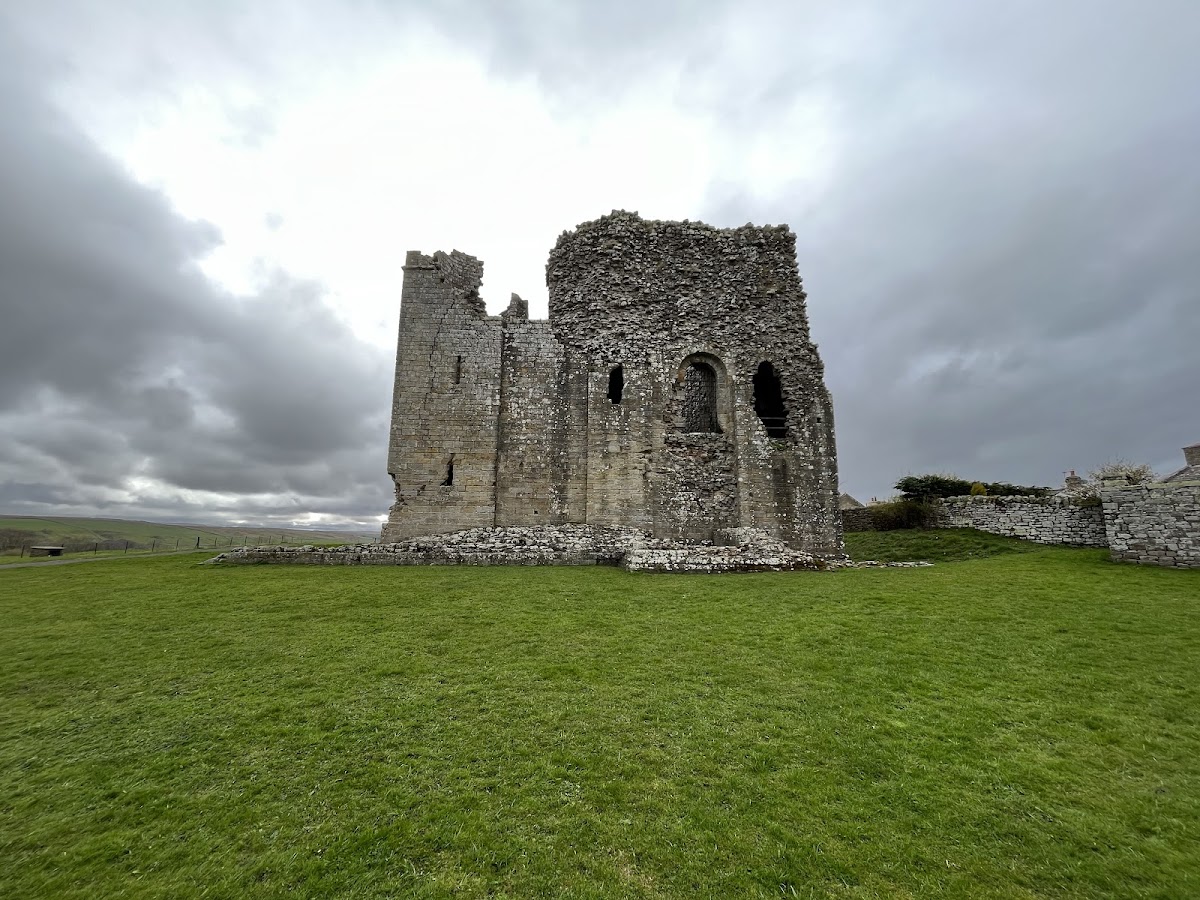
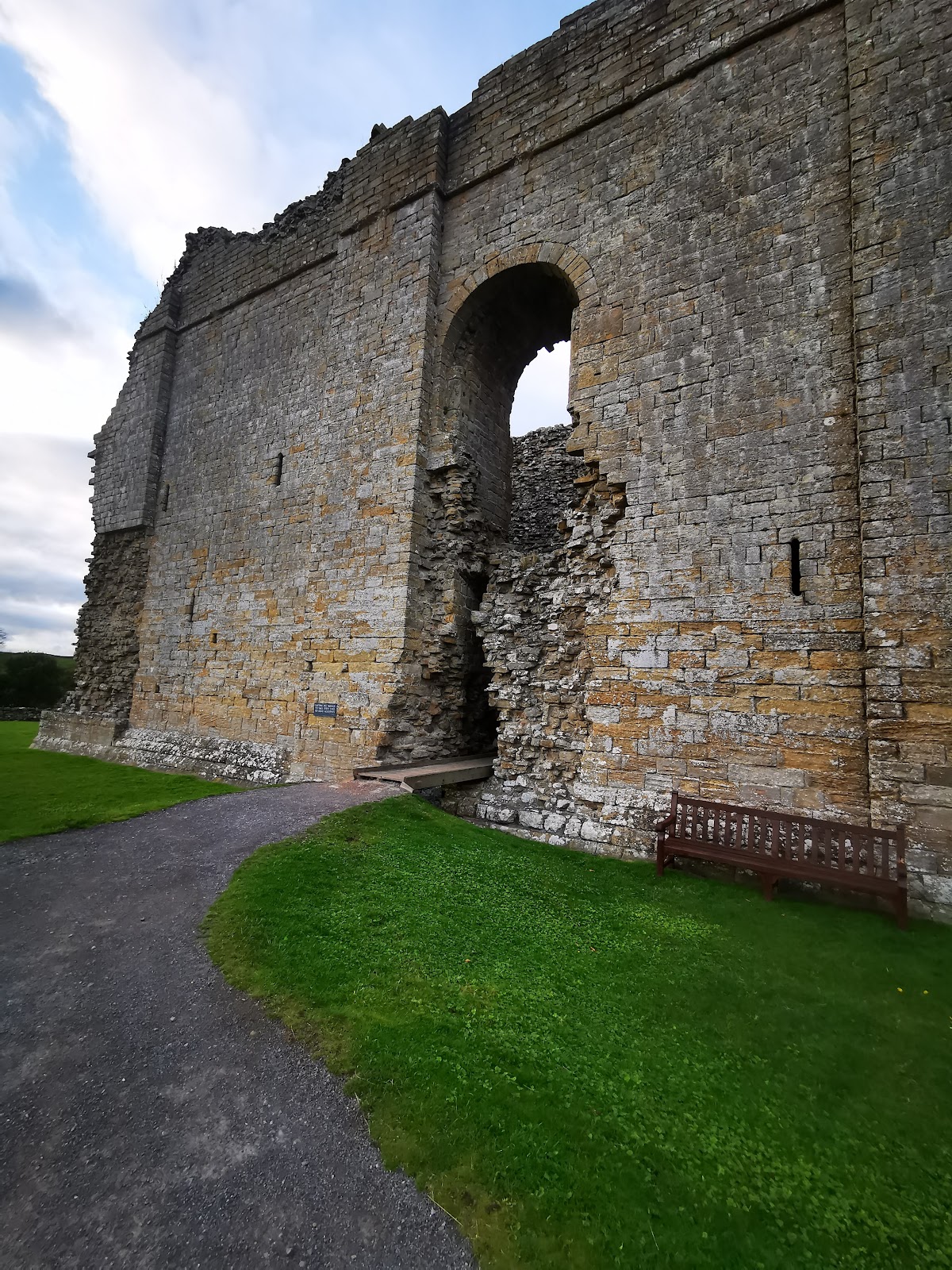
The rebuilt castle centred on a three-storey stone hall-keep, a fortified keep that also contained the principal residential hall. It measures approximately 25 metres in length, 18 metres in width, and 15 metres in height. Inside, the building was divided into a long hall and a solar, a private upper chamber for the lord and household. Large rounded windows provided light. This hall-keep was an uncommon form in English castles, with architectural similarities to Middleham Castle and Pendragon Castle at Outhgill.
The surviving keep ruins remain largely intact, while the wider castle was substantially dismantled after the English Civil War. The surviving stone structure consequently provides the clearest physical expression of the twelfth-century rebuilding within the earlier Roman enclosure.
Mill and planned settlement
Mill beside the River Greta
A mill was built beside the River Greta to produce flour for the castle garrison. Its position connected the castle’s defenses with an installation supporting the practical needs of the people stationed there.
Bowes village
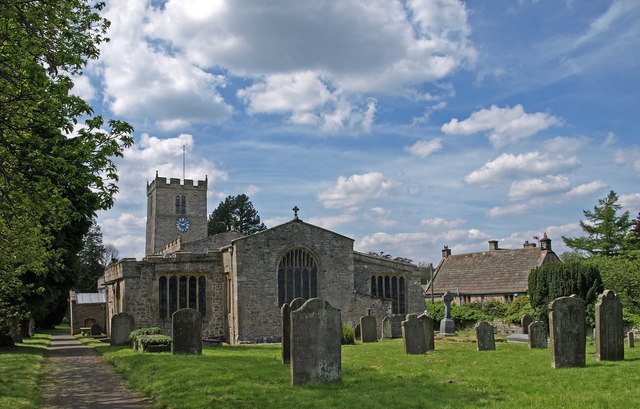
Bowes village was laid out after the castle as a planned settlement extending toward it. The settlement included a church and a market place, an arrangement described as unusual in England. These elements formed part of the community that developed around the medieval stronghold.