Skiathos Castle: A Byzantine-Era Island Fortress in Greece
Site at a Glance
- Rating
- 4.7
- Popularity
- Low
- Country
- Greece
- Primary era
- Medieval
- External website
- Open
- Eras represented
- Medieval, Early Modern
- Civilizations
- Byzantine, Ottoman
- Site type
- Military
- Remains
- Fortified Town
On this page9 sections
History
Skiathos Castle is a medieval fortress in Greece, established around 1360 by the island’s inhabitants during the Byzantine period. They abandoned their earlier main settlement, on the site of the modern town of Skiathos, because of attacks by Turkish pirates. The new stronghold became Skiathos’s principal settlement and remained in use until 1829.
Byzantine and Venetian rule
The castle remained under Byzantine rule until the fall of Constantinople in 1453, when the remaining Byzantine territories were progressively taken by other powers. Venice then assumed control of Skiathos as part of its eastern Mediterranean possessions. Venetian rule was oppressive, and in 1518 the inhabitants rebelled against Governor Vicenzo Baffo. Their anger was partly caused by his failure to protect the island from Ottoman corsairs, maritime raiders associated with Ottoman power.
In 1538, the Ottoman admiral Hayreddin Barbarossa besieged the castle. The inhabitants killed the Venetian governor and opened the settlement to the Ottomans, hoping for lenient treatment. Instead, many people were killed and others were enslaved.
Ottoman and later conflicts
The Ottomans repaired the castle in 1619. Venetian forces raided Skiathos in 1655, and in 1660 the Venetian commander Francesco Morosini captured the stronghold. This occupation was brief and harsh. Many inhabitants were executed or forced to row in Venetian galleys, low oared warships used by Mediterranean powers.
During the Greek War of Independence, the nineteenth-century revolt that led to the creation of an independent Greek state, Greek rebels from Mount Olympus repeatedly raided the island. On 14 July 1826, forces led by the revolutionary leader Tsamis Karatasos captured and looted the castle.
Abandonment and preservation
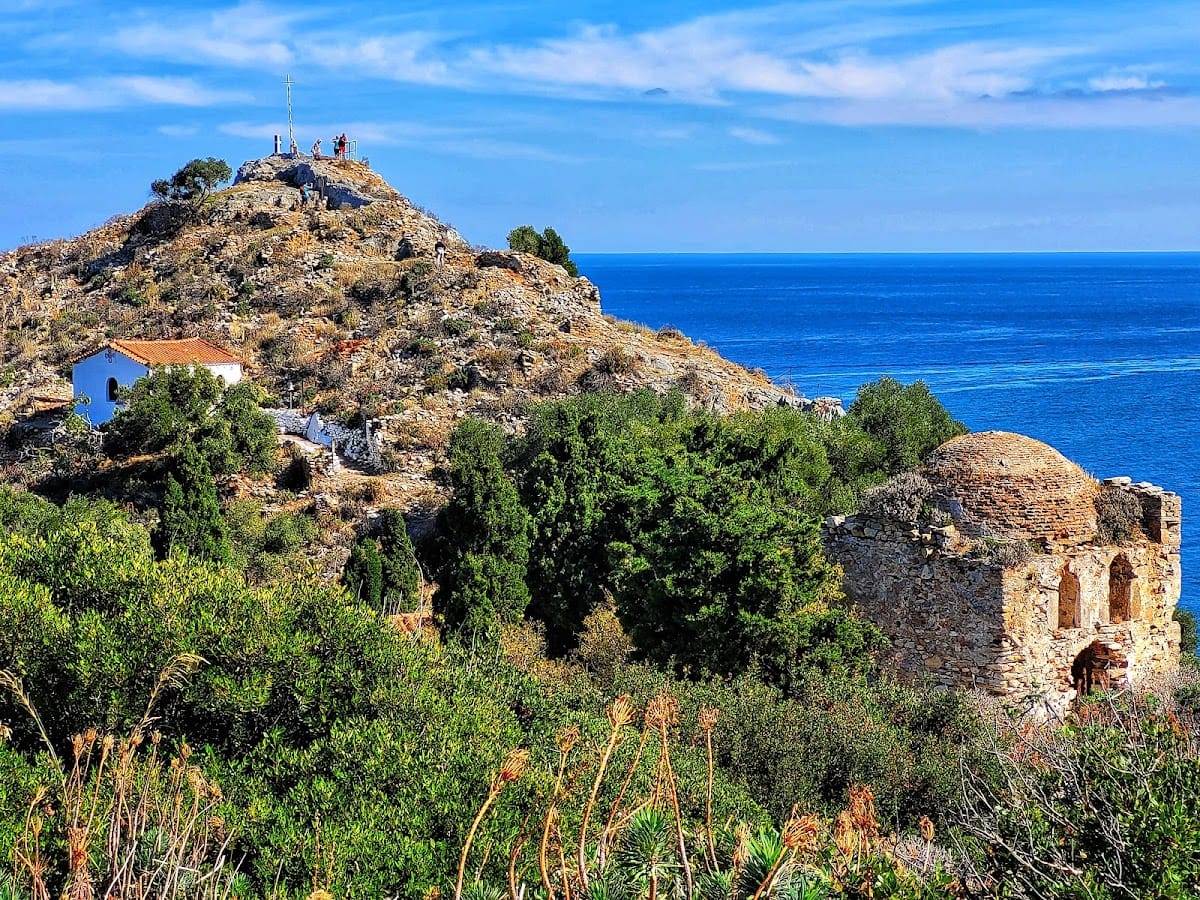
In 1829, after Skiathos became part of the newly independent Greek state, the castle was abandoned. The ancient and early medieval settlement was then reoccupied. The churches of Saint Nicholas and the Nativity continued in use after the abandonment, while Saint Marina, Saint Basil, two cisterns, the Ottoman mosque, the entrance complex, and sections of the walls have been restored in recent years. Skiathos Castle is protected in Greece as an archaeological site and as a historic building.
Remains
Fortifications and settlement
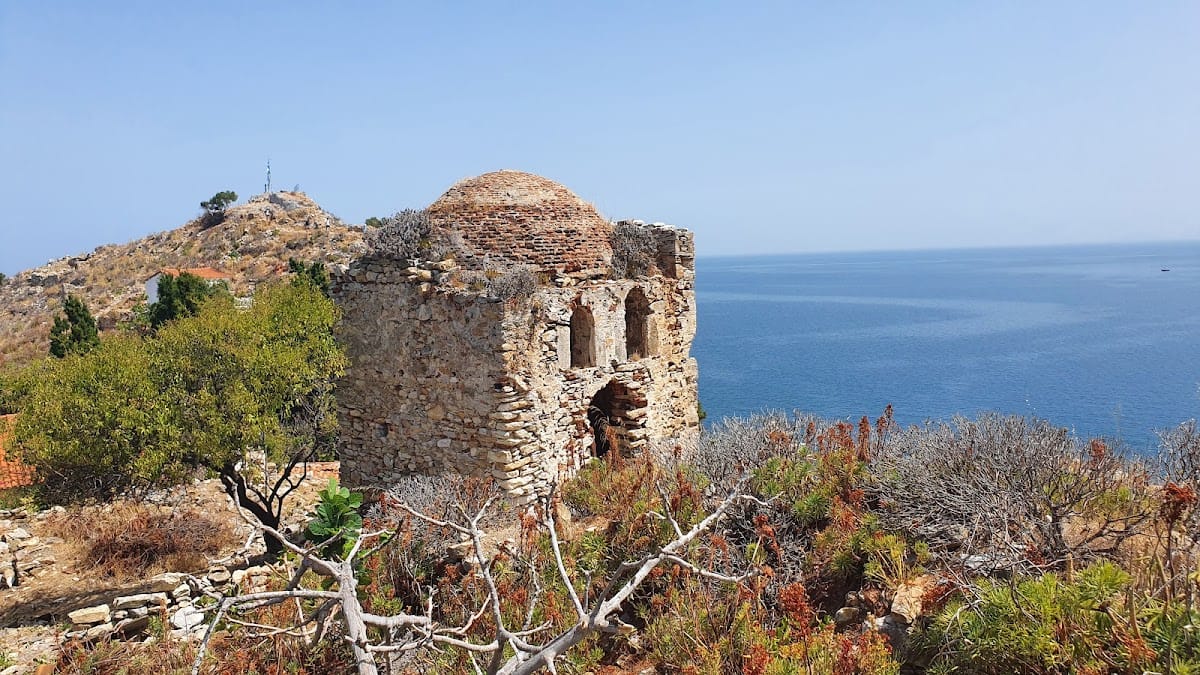
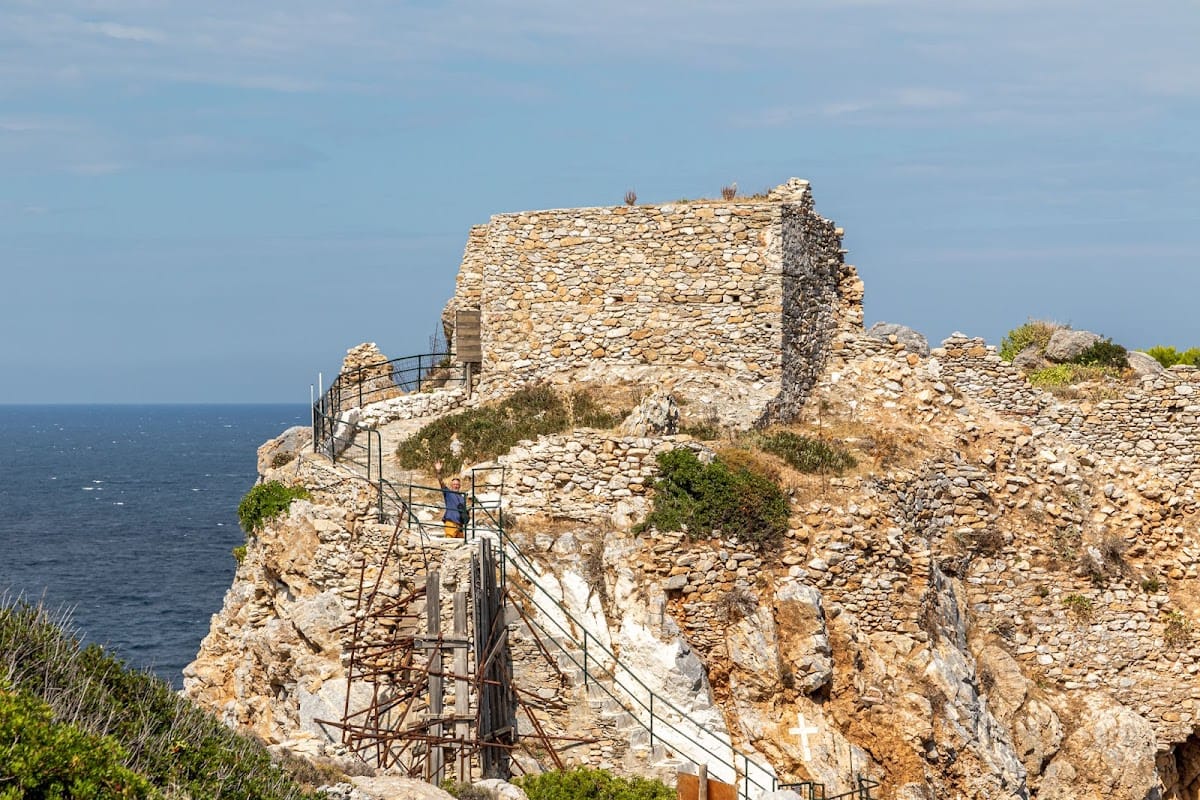
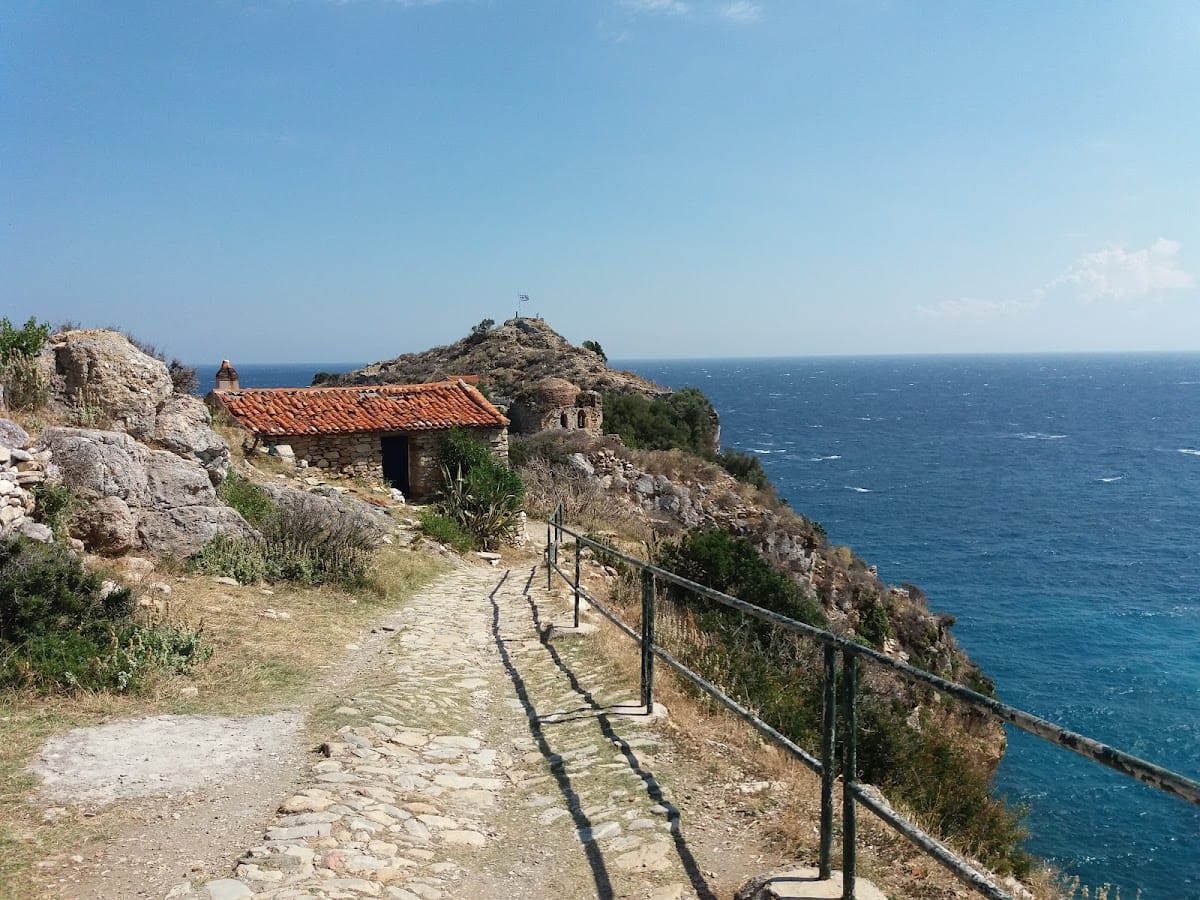
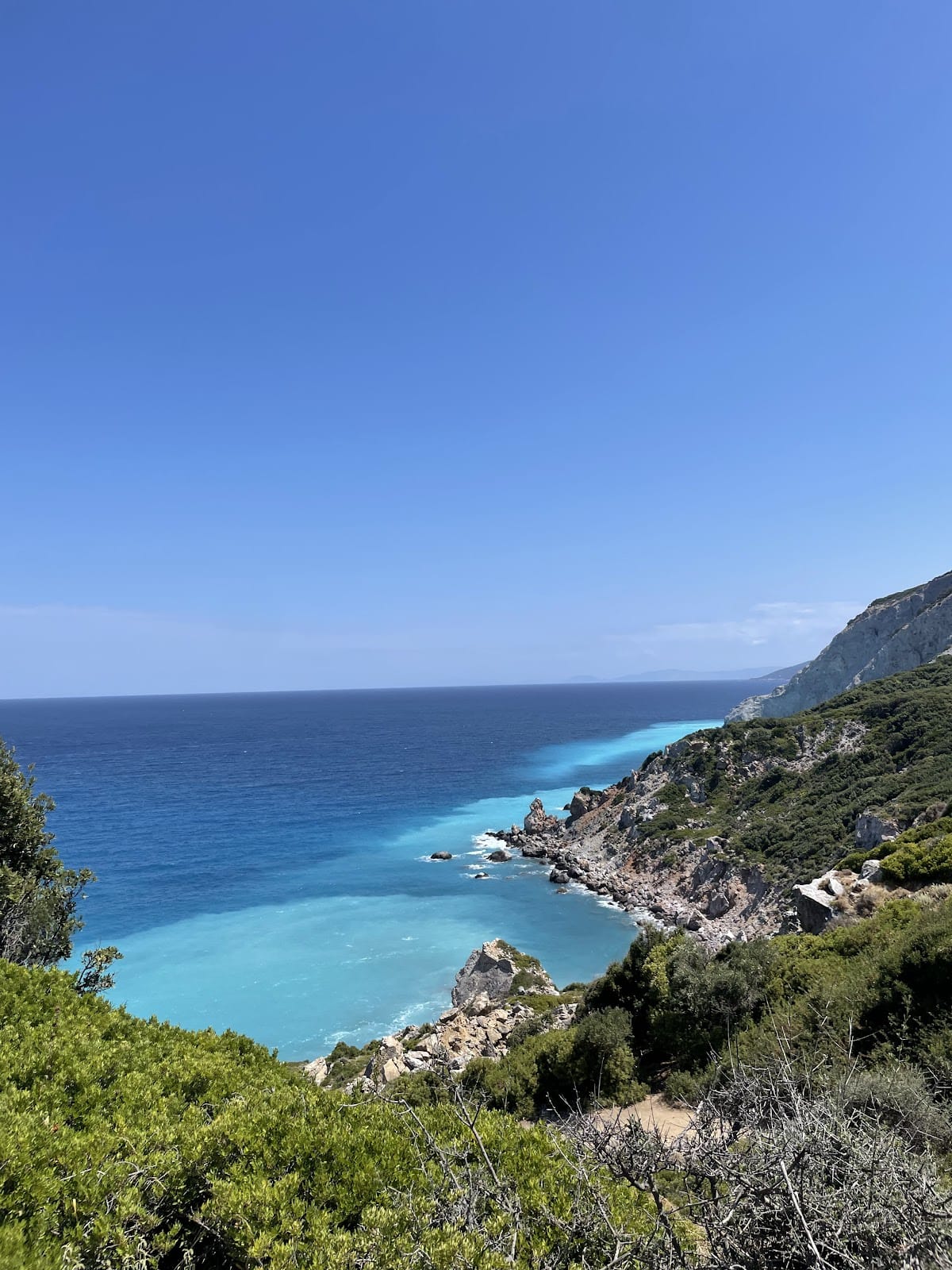
The castle occupies a rocky promontory at the northernmost point of Skiathos. Steep cliffs on the seaward sides protect the site, allowing only low walls there, while the principal fortifications face south. A narrow southern entrance formed the settlement’s sole gate. It was defended by a wooden drawbridge and a cauldron of boiling oil, and openings in the walls served as gun embrasures for cannons.
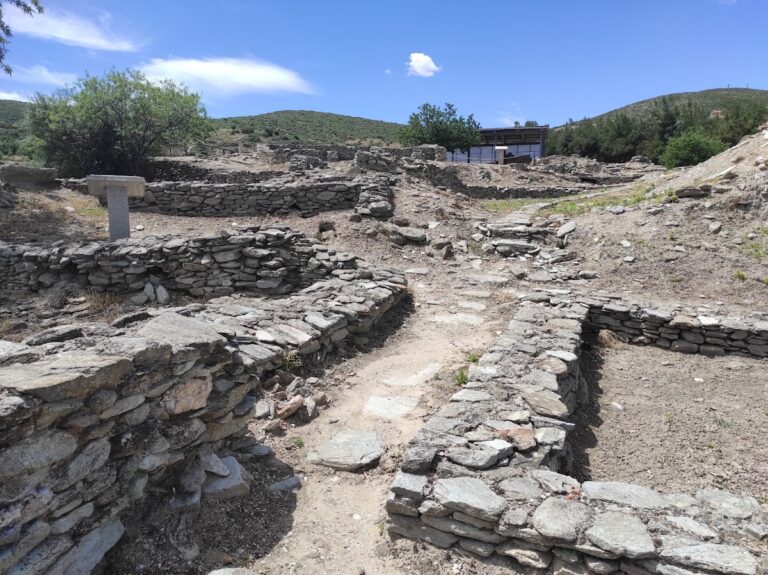
Within the defenses, densely packed houses accommodated approximately 500 to 1,500 people. The settlement also contained 20 churches arranged among four parishes, a chancellery, which was an administrative office, and several cisterns, reservoirs used to collect and store water.
Religious and Ottoman buildings
Churches
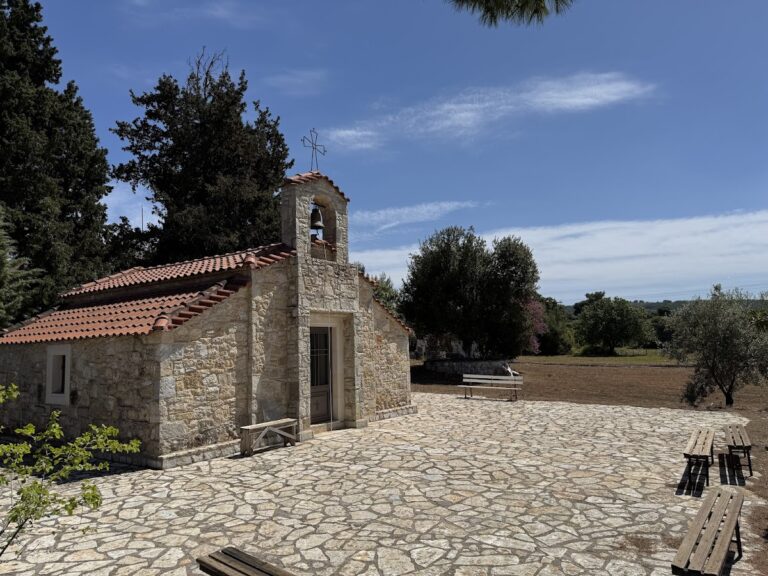
The churches formed a substantial part of the settlement’s internal organization. Saint Nicholas and the Church of the Nativity continued to be used after the castle was abandoned. Saint Marina and Saint Basil are among the restored religious buildings within the site.
Ottoman structures
During Ottoman rule, a mosque and a governor’s residence were constructed for the small Turkish garrison. The mosque has since been restored, as have two cisterns, the gate complex, and sections of the surrounding walls.