Château de Kerguéhennec: An Eighteenth-Century Estate and Contemporary Sculpture Garden


Site at a Glance
- Rating
- 4.5
- Popularity
- Low
- Country
- France
- Primary era
- Classical
- External website
- Open
- Eras represented
- Classical, Modern
- Civilizations
- French
- Site type
- Domestic
- Remains
- Castle
On this page10 sections
History
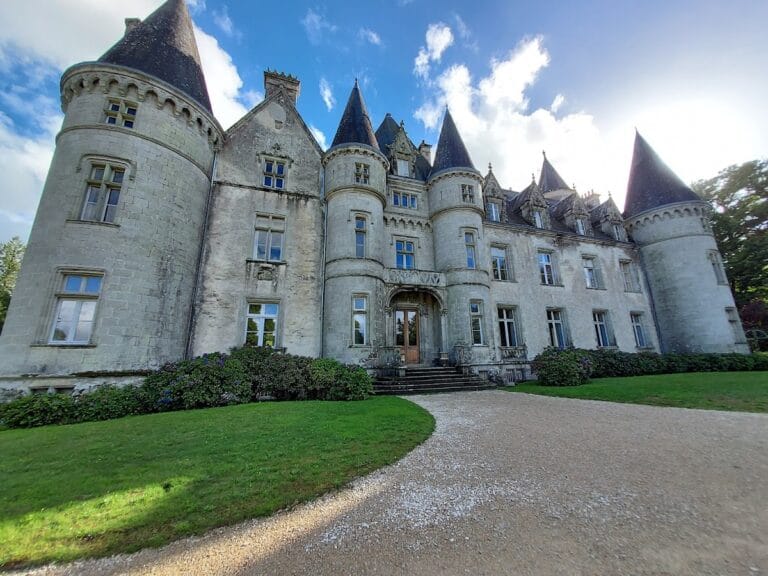
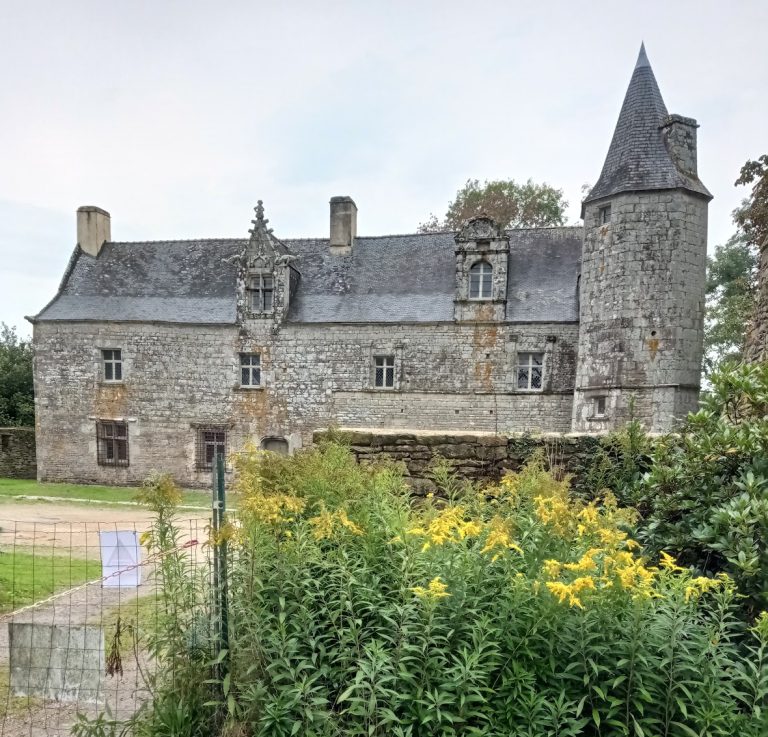
Château de Kerguéhennec is an eighteenth-century château in Bignan, France, built in 1710 by the architect Olivier Delourme for the Hogguer brothers, wealthy Swiss financiers from St. Gallen who had settled in Paris. Known as the “Breton Versailles,” it was established during a period when prosperous financiers and aristocratic families developed substantial country estates.
Origins and eighteenth-century ownership
The Hogguer brothers were shareholders in the French East India Company, a state-chartered trading company involved in France’s overseas commerce, including trade with the Indian Ocean and Asia. In 1732, Guy-Auguste de Rohan-Chabot, Comte de Chabot, acquired Kerguéhennec as agricultural and forest land. He did not live at the estate. His son, Louis-Antoine de Rohan-Chabot, Duke of Rohan, relinquished it shortly after the French Revolution, when the political and social order of the French monarchy had been overturned.
Nineteenth-century transformation
Count Louis de Janzé acquired the estate in 1802. It later passed to his grandson, Count Louis Albert Henri de Janzé, who sold it in 1872 to his cousin Paul-Henri de Lanjuinais. Lanjuinais served first as a deputy and later as president of the General Council of Morbihan, combining public responsibilities with the redevelopment of his family estate.
Under Paul-Henri de Lanjuinais, the château underwent a lavish restoration directed by the Parisian architect Ernest Trilhe. In the same year, the 170-hectare park was laid out by the Swiss landscape architect Denis Bühler. This work reshaped the estate as a carefully composed landscape around the restored building, while retaining its agricultural and woodland extent.
Inheritance and public cultural use
The estate passed by inheritance to Marie Louise Marguerite Lanjuinais, daughter of Paul-Henri de Lanjuinais and wife of Arthur Espivent de La Villeboisnet. Their eldest daughter, Elisabeth Anne Marie Espivent de la Villesboisnet, married Count Pierre d’Humières in 1933 and inherited the estate when the undivided inheritance ended on 12 July 1943. She sold the château and estate to the Morbihan department on 19 January 1972, and the department remains the owner.
A new cultural phase began in the 1980s. In 1986, the Regional Directorate of Cultural Affairs and the Regional Contemporary Art Fund initiated the creation of an open-air sculpture garden in the park. A contemporary-art centre was established in the château’s outbuildings in 1988, and its annual programme later expanded to the first floor of the château. The estate also houses a cultural encounter centre, an institution that combines cultural programming with opportunities for artists or researchers to work in residence. Since 2010, it has presented a permanent exhibition devoted to Pierre Tal-Coat, a modern French painter associated with abstract art.
Since October 1988, the château and its outbuildings have been classified as historic monuments, while the park has been listed under the same heritage legislation. These protections recognize the estate as both an architectural complex and a designed landscape whose historic layers now include contemporary cultural uses.
Remains
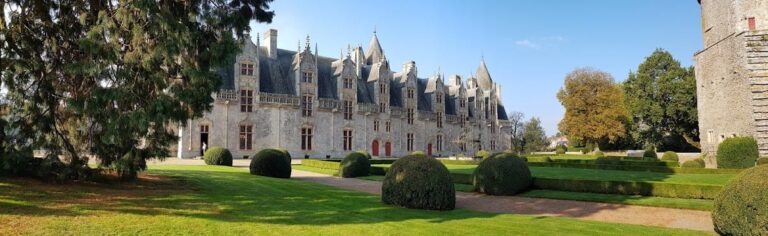
Château de Kerguéhennec survives as a château set within a 170-hectare park containing formal grounds, a northern section arranged in the English landscape style, and an arboretum, a landscaped collection devoted mainly to trees and other woody plants. The area immediately around the building follows the geometry of a formal French garden, while later landscape design and contemporary artworks extend the estate’s physical composition beyond the château itself.
Château and formal grounds
The approach to the château is organized around a levelled entrance court and a regular eighteenth-century-style layout. A central basin, balustrades, staircases, and a wrought-iron main gate form part of this ordered setting. The landscaping was designed to create a major visual composition around the south façade, following principles associated with Denis Bühler and Édouard André. The gardener Jarry gave particular attention to floral compositions intended to bring colour and elegance to the grounds and the château interiors.
Park landscape
The park combines several landscape treatments rather than presenting a single uniform design. The formal grounds near the château use symmetrical paths, architectural ornament, and controlled water features, characteristics of the French formal garden. The northern section uses the more naturalistic arrangements and irregular views associated with the English-style landscape garden. The arboretum adds a distinct tree-focused area to the estate’s designed landscape.
Open-air sculpture garden
Works across the park
The open-air sculpture garden contains approximately thirty contemporary sculptures. Its works include Étienne Hajdu’s Sept Colonnes à Mallarmé (1967–1971), Ulrich Rückriem’s Bild Stock (1985), Markus Raetz’s concrete Mimi (1985–1986), Richard Long’s Un cercle en Bretagne (1986), François Bouillon’s Cène d’extérieur (1986–1987), Ian Hamilton Finlay’s Noms de plaques, noms d’arbres (1986), and Giuseppe Penone’s Sentier de Charme (1986). Richard Long, Giuseppe Penone, Toni Grand, and Dan Graham are among the artists represented in the garden.
Later additions include Maria Nordman’s Fragment pour une cité future (1987–1989), Keith Sonnier’s Porte-vue (1987), Toni Grand’s Sans-titre (1988), Tony Cragg’s Gastéropodes (1988), Carel Visser’s L’Oiseau Phénix (1989), François Morellet’s Le Naufrage de Malévitch (1990), Marina Abramovic’s Crystal cinéma (1992), Malachi Farrell’s Bubbles (air-survival) (1993), and Élisabeth Ballet’s Trait pour trait (1993). The collection also includes works by Pierre Tual, Harald Klingelhöller, Richard Artschwager, Hreinn Friðfinnsson, Rainer Gross, Pierre-Alexandre Remy, Julien Laforge, Marcel Dupertuis, Jean-François Feuillant, Julien Perrier, Nicolas Fedorenko, Roland Cognet, Matthieu Pilaud, Simon Augade, and Marc Didou, with dates extending to 2020.
Greenhouse and water installations
Jean-Pierre Raynaud’s 1000 pots bétonnés pour une serre ancienne, an installation of one thousand red pots, occupies the former greenhouse. Marta Pan created Parcours flottant no. 1 et 2, a water parcours in the grounds. The lake, originally designed as a reflecting pool, also contains Malachi Farrell’s permanent bubbling effect. These installations use existing elements of the historic park while making them part of the estate’s contemporary artistic programme.