Huntly Castle: A Gordon Stronghold in Scotland


Site at a Glance
- Rating
- 4.6
- Popularity
- Low
- Country
- United Kingdom
- Primary era
- Early Modern
- External website
- Open
- Eras represented
- Medieval, Early Modern
- Civilizations
- Kingdom of Scotland
- Site type
- Military
- Remains
- Castle
On this page16 sections
History
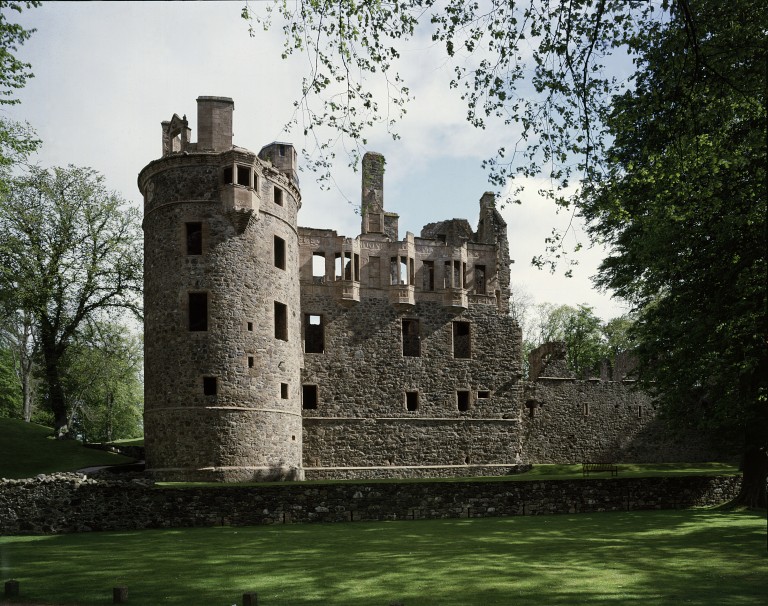
Huntly Castle is a ruined castle in Scotland, United Kingdom, whose surviving form was shaped mainly during the fifteenth and sixteenth centuries by the Gordon family. It stands near the meeting of the Rivers Deveron and Bogie, north of Huntly, beside an important route through northern Scotland. Four successive castles on or near the site were known at different times as Huntly Castle, Strathbogie Castle, or the Peel of Strathbogie.
The Strathbogie estate
Duncan II, Earl of Fife, established the first castle on the Strathbogie estate around 1180 to 1190. This timber fortification occupied a raised motte, an artificial mound used for a stronghold, and guarded an important north to south route. Around 1204, Duncan’s third son, David, inherited the Strathbogie lands and made them his principal seat. The family later acquired the earldom of Atholl, extending its position among Scotland’s leading nobles.
The family’s political fortunes changed during the Wars of Scottish Independence. John de Strathbogie supported Robert the Bruce, the king of Scots from 1306 to 1329 who led resistance to English claims over Scotland, and was executed in London in 1306. David of Strathbogie transferred his allegiance to the English shortly before Bruce’s victory at Bannockburn in 1314. Bruce confiscated the Strathbogie lands and granted the castle and estate to Sir Adam Gordon of Huntly, beginning the site’s long association with the Gordons.
The Gordon succession
In 1408, the last male Gordon heir, John Gordon, died. His sister Elizabeth married Alexander Seton, who was made Lord Gordon around 1437. Alexander built a stone tower within the earlier castle, and his son became Earl of Gordon around 1445. The family adopted the surname Gordon around 1457, reinforcing the connection between the castle, the estate, and the northern Gordon lineage.
Alexander Gordon supported James II of Scotland during the struggle against the Black Douglases, a powerful rival noble family. Around 1452, Archibald Douglas, Earl of Moray, attacked and burned the castle. It was rebuilt after the assault, with the work completed by Alexander’s son George Gordon following Alexander’s death in 1470. In 1506, Alexander Gordon, third Earl of Gordon, received permission from James IV to change the residence’s name from Strathbogie to Huntly Castle.
A Renaissance aristocratic residence
George Gordon, fourth Earl of Huntly, extensively refitted the castle and turned it into a wealthy aristocratic residence. His daughter Lady Catherine Gordon married Perkin Warbeck, a claimant to the English throne, in 1496. James IV witnessed the ceremony at Edinburgh, linking the household to the royal and international politics of the period.
James IV visited Huntly Castle in October 1501, October 1503, and October 1505, and gave money to the masons working there. During the 1503 visit he took part in a shooting contest. In 1504 he travelled with four Italian minstrels and an African drummer, while on 10 October 1505 he played cards at the castle and tipped the masons. These journeys formed part of his annual pilgrimage to the shrine of Saint Duthac at Tain.
Royal conflict under Mary, Queen of Scots
During the reign of Mary, Queen of Scots, George Gordon, fourth Earl of Huntly, became the queen’s lieutenant in the north. His authority also made him a perceived threat to the crown. William Mackintosh was executed at Castle Strathbogie on 23 August 1550 as a conspirator against Huntly. Tradition attributes the order to Elizabeth Keith, Countess of Huntly.
Regent Arran visited Huntly in 1552, and in August 1553 Huntly wrote to Mary of Guise from the castle. Mary of Guise visited in 1555 or 1556 and was reportedly impressed by the quantities of food held in the cellars and larders. The French diplomat Henri Cleutin, however, warned that Huntly had become too powerful.
Thomas Randolph, an English diplomat, stayed at the castle for two nights in September 1562 and described it as the finest and best-furnished house he had seen in Scotland. Later that year Mary ordered the arrest of George Gordon, partly because he had withheld a royal cannon lent to him by Regent Arran.
In October 1562, royal forces approached Huntly Castle. A watchman saw the troops from the tower and warned the earl, who escaped over a low wall and found a horse. Elizabeth Keith admitted the queen’s men, fed them, and showed them the castle, while retaining a chapel furnished for Roman Catholic worship. George Gordon was defeated at the Battle of Corrichie on 28 October 1562 and died shortly afterward. The castle was garrisoned for the queen by Charles Crawfurd and twenty soldiers. Beds and forty-five tapestries were removed to Aberdeen and then sent to Edinburgh for the royal collection and refurbishment by Servais de Condé.
Refuge, household life, and Catholic allegiance
Huntly Castle continued to serve as a place of protection within the Gordon network. In 1569, fifteen-year-old Alexander Gordon, heir to the earldom of Sutherland, escaped from the Sinclair family and took refuge there. He remained at Huntly until coming of age in 1573. After the death of his first wife, Barbara Sinclair, he married Jean Gordon on 13 December 1573. Jean, formerly the wife of the Earl of Bothwell, had also found refuge at Huntly.
George Gordon, fifth Earl of Huntly, died at the castle in 1576 after becoming ill while playing football on the Green following a day of hunting. Contemporary descriptions place his body first in the bedchamber of the round tower and then in the Great Chamber. It was embalmed by the Aberdeen surgeon William Urquhart and taken to the chapel.
The same 1576 account describes the Great Chamber, Low Chamber, Auld Hall, Gallery, and a room used for storing spices. It also reports alleged collapses and unexplained sounds after the earl’s death, presenting them as supernatural events. The account is hostile toward the Gordon family, so these stories belong to the hostile tradition surrounding the household rather than to the castle’s documented structural history.
Sir Thomas Gerard of Bryn, an English recusant Catholic, was sent to Huntly in 1584 to seek refuge. George Gordon, sixth Earl of Huntly, remained Catholic and came into conflict with James VI, who sought to reduce Gordon power in northern Scotland. The family’s religious allegiance became increasingly controversial after the Scottish Reformation.
Demolition threats and rebuilding
James VI arrived at Huntly on 26 April 1589 after the sixth earl had fled and stripped the house of its furniture. The king brought 100 workmen to demolish the castle, but Huntly surrendered after offering to spare the house. In 1593, a royal garrison of sixteen men under Archie Carmichael was assigned to Huntly Castle. In May that year, Huntly executed a prisoner named Pedder and displayed the dismembered remains on poles at Huntly.
After the Battle of Glenlivet in 1594, James VI again planned to demolish Huntly Castle, including the great old tower, which had reportedly taken fourteen years to build. Gunpowder, masons, and other workmen were assembled, but the royal council decided to retain the remaining buildings for possible royal garrisons. Sir John Gordon of Pitlurg became keeper of the surviving structures.
Huntly then spent large sums restoring and enlarging the castle from 1597. George Gordon, sixth Earl of Huntly, was created Marquess of Huntly by James VI in 1599, and his son, George, second Marquess of Huntly, continued the building programme. A planned royal visit by James VI and Anne of Denmark in 1603 did not take place because Elizabeth I’s death brought about the Union of the Crowns.
Civil Wars and the end of residence
The first Marquess of Huntly’s continued Catholicism led to his excommunication and imprisonment in 1608 for celebrating Mass in his residence. During the Scottish Civil Wars, the Covenanters, Scottish Presbyterians who opposed royal religious policies and supported the National Covenant of 1638, occupied Huntly Castle in 1640 under Major-General Robert Monro.
In that year, Captain James Wallace ordered the destruction of religious emblems and imagery on the castle frontispiece because they appeared too Catholic or superstitious. The Gordon heraldic shield and the rest of the facade were left intact. James Graham, first Marquess of Montrose, captured the castle in October 1644. In 1647, Lord Charles Gordon defended it against General David Leslie, but the garrison surrendered after starvation. The soldiers were hanged and the officers beheaded. Later that year, the Marquess of Huntly was captured and detained in his own mansion while being taken to execution in Edinburgh, and members of his escort were shot against the castle walls.
An inventory made by the garrison on 10 November 1648 shows that the state rooms remained furnished. It lists portraits of Charles I, James VI, Anne of Denmark, and Robert Maxwell, first Earl of Nithsdale. An ammunition house contained eighty-one muskets, match cord, and ten cannon. Charles II visited the castle briefly in 1650 while travelling toward the Battle of Worcester. The Civil Wars ended the Gordon family’s long residence at Huntly Castle.
Jacobite occupation and preservation
During the first Jacobite rising in 1689, the castle briefly served as the headquarters of Viscount Dundee and his Jacobite army. The Jacobites supported the restoration of the Stuart monarchy after the deposition of James VII and II. By the early eighteenth century, Huntly Castle had fallen into decay and was being quarried by local builders for construction material. Government troops occupied it during the Jacobite rising of 1745 to 1746, by which time it was no longer used as a residence.
The castle remained in Gordon ownership until 1923, when the Duke of Richmond and Gordon transferred it to state care. It had been legally designated as a scheduled monument on 31 December 1921 and has since been cared for by Historic Environment Scotland.
Remains
The motte and early castle
Huntly Castle occupies the eastern side of the earlier fortification, near the crossing of the Rivers Deveron and Bogie. The earliest defensive work was a timber motte-and-bailey castle, combining a raised mound with an enclosed area for buildings, storage, and supporting activities. The surviving motte lies west of the present castle and measures approximately 24 metres across. The second, stone castle occupied the northern end of the bailey.
The stone tower and L-shaped complex
A stone tower, or donjon, was built in the early fifteenth century to replace the original motte stronghold. A donjon was the principal fortified tower, often combining residential, defensive, and administrative functions. Together with associated buildings such as a brewery and bakehouse, the tower formed an L-shaped plan, with a principal block and an adjoining wing set at right angles. The tower was burned during the conflict with the Black Douglases around 1452. Rebuilt after the attack, parts of the earlier structure were later incorporated into the palace cellars.
The palace buildings
The main surviving structure is a well-preserved five-storey tower adjoining a great hall and other supporting buildings. Wings were added during the sixteenth and seventeenth centuries, while the palace was substantially reconstructed and refitted around the middle of the sixteenth century. Ornate sections of the facade and finely worked interior stonework survive within the ruined complex. The palace’s fabric reflects both the transformation of a fortified residence and the later damage caused by military occupation, deliberate alteration, and quarrying.
Decorated facade and entrance
Work around 1600 added elaborately decorated fireplaces, including one dated 1606, decorative oriel windows, and an inscription on the upper facade. An oriel window projects outward from a building on brackets or other supports. The inscription names George Gordon, first Marquess of Huntly, and Henrietta Stewart, Marchioness of Huntly, while its figures refer to 1602, the year when the decoration was carried out.
A sculpted frontispiece, an ornamental facade placed above an entrance, was set over the principal entrance from the courtyard. It is described as unique in Britain. Grotesque animals and heraldic symbols decorated the entrance, with the arms of the marquess and marchioness directly above it and those of James VI and Anne of Denmark above them.
The upper panels originally depicted the Passion and Second Coming of Christ together with the Arma Christi, the symbolic objects associated with Christ’s suffering and crucifixion. A roundel at the top showed the risen Christ, and the composition was crowned by the archangel Michael defeating Satan on the Day of Judgment. Covenanters destroyed this religious imagery in 1640, while much of the heraldic decoration survived.
Loggia and cellar graffiti
The second Marquess of Huntly added a loggia, an open-sided gallery or covered space connected to a building. Its foundations survive within the castle complex, and loggias are relatively rare in Scotland.
The cellars contain graffiti depicting texts, knights, and ships. The marks may have been made by servants or their children, although their authorship remains uncertain. Together with the surviving motte, tower, palace fabric, decorated facade, and loggia foundations, these traces preserve evidence of the castle’s changing use from medieval stronghold to aristocratic residence and military position.
Recorded rooms and military equipment
Sixteenth-century descriptions identify the chapel, the round-tower bedchamber known as the New Work of Strathbogie, the Great Chamber or Chamber of Dais, the Low Chamber or common hall beneath a stair, the Auld Hall, and a Gallery near the upper part of the New Work. The Gallery also served for storing valuable spices, while the chapel retained furnishings for Roman Catholic worship during the sixteenth century.
The 1648 inventory records furnished state rooms, including a “chapel bed,” and a separate ammunition house containing eighty-one muskets, match cord, and ten cannon. It also lists portraits of Charles I, James VI, Anne of Denmark, and Robert Maxwell, first Earl of Nithsdale. These details complement the surviving masonry by showing how the castle’s rooms and fortified spaces were equipped during the period of Civil War.