Drégely Castle: A Medieval Border Fortress in Hungary


Site at a Glance
- Rating
- 4.8
- Popularity
- Medium
- Country
- Hungary
- Primary era
- Medieval
- Eras represented
- Medieval
- Civilizations
- Hungarian
- Site type
- Military
- Remains
- Castle
On this page7 sections
History
Drégely Castle is a medieval Hungarian fortress in Drégelypalánk, Hungary, probably built by the Bozók branch of the Hunt-Poznan noble family in the second half of the thirteenth century, before 1285. Its construction belonged to the period of castle building after the Mongol withdrawal during the reign of Béla IV, a medieval Hungarian king of the Árpád dynasty. The castle later became a county prison, an archiepiscopal residence, and a frontier stronghold before its celebrated defence against the Ottoman army in 1552.
Medieval foundation and royal control
The first surviving reference to Drégely appears in 1285 under the name Castrum Dragul. At that time it belonged to Demeter of the Hunt-Poznan family, who lived there with his household and servants. During the political conflicts of the early fourteenth century, the castle’s owners submitted to Máté Csák III, a powerful regional lord, in 1311.
After Máté Csák died in 1321, the army of King Charles I of Hungary took Drégely. The castle then served as the prison of Hont County and housed the county archives. After 1321, a royal castellan, the military commander responsible for the castle, directed it.
King Sigismund transferred Drégely to the Tary family in 1390 in exchange for lands in Somogy County. The grant rewarded László Tary for his loyalty during the struggles surrounding Sigismund’s accession. The king later took the castle back because of the despotic conduct of the Tary family and its castellan.
Archiepiscopal residence and frontier fortress
During the fifteenth century, Drégely came into the possession of the Archbishop of Esztergom. The archbishop transformed the medieval fortress into a richly furnished hunting residence, and the site remained under archiepiscopal ownership for about a century.
Its military role returned after the Ottoman capture of Buda in 1541. Drégely became part of the Hungarian border-castle system, a chain of fortified positions established against Ottoman expansion. The fortress helped protect the German-speaking mining towns of Upper Hungary and served as a base for a small garrison that repeatedly clashed with Ottoman raiders attacking nearby villages. After Esztergom fell in 1543, followed by Vác and Nógrád in 1544, Drégely stood on the kingdom’s first line of defence.
Archbishop Pál Várday spent heavily to strengthen the increasingly outdated fortress. In 1544 he appointed György Szondy as castellan and governor of the Drégely estate. Szondy worked to improve its defences against an Ottoman attack. Following Várday’s death in 1549, however, the local guards were no longer paid regularly. A lightning strike that year caused little damage to the walls or the gunpowder depot.
The siege of 1552
Hadim Ali Pasha, the Ottoman governor of Buda, besieged Drégely in July 1552 with approximately 10,000 to 12,000 troops. The defenders numbered 146 men, including 120 soldiers hired by King Ferdinand and 26 sent by Banská Štiavnica, a historic mining town in present-day Slovakia. The siege began on 6 July and lasted three days. A royal army of approximately 8,000 men camped at Levice but did not come to the castle’s aid.
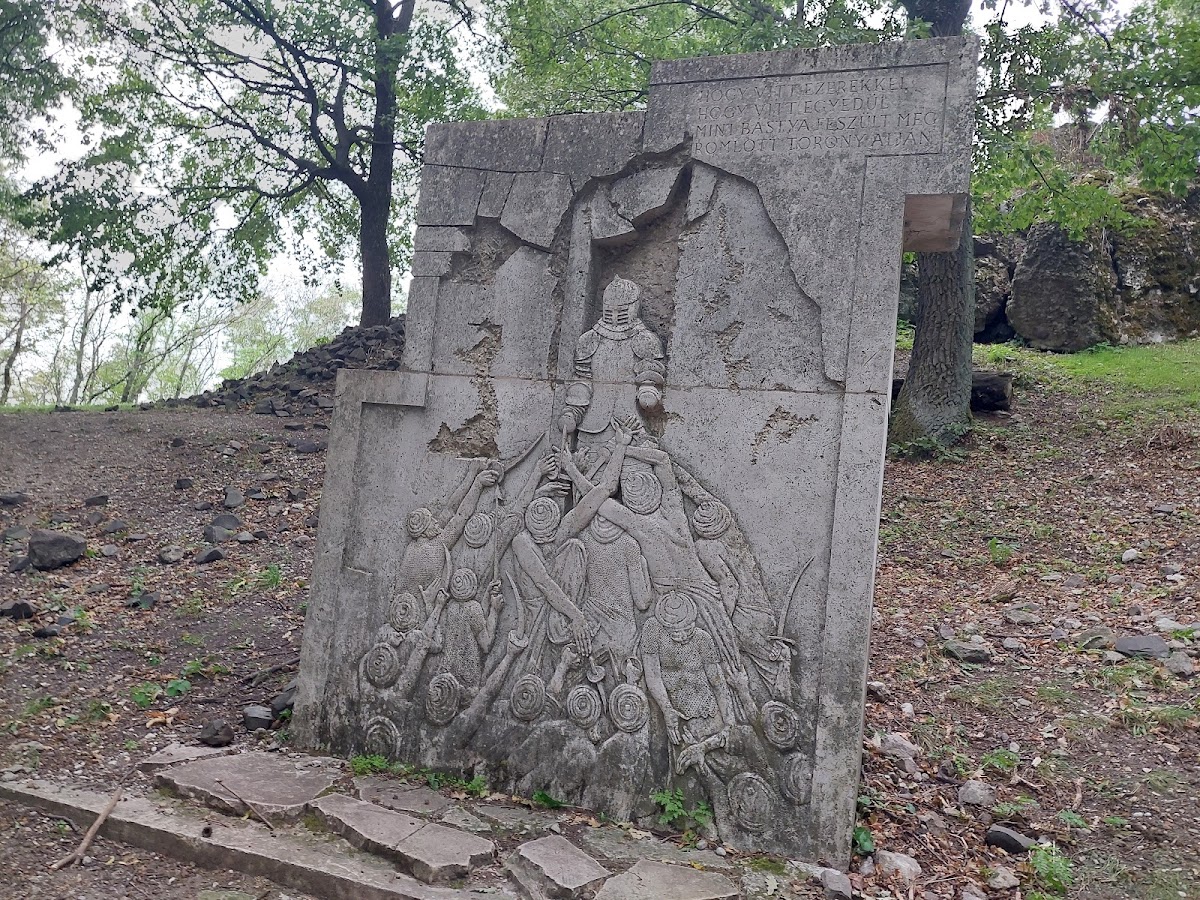
Ottoman forces burned the lower palisaded fort, a defensive enclosure made largely of timber and earth, forcing the defenders into the upper stone castle. Artillery destroyed the gate tower, while the remaining defenders resisted repeated infantry assaults. On the third day, Szondy led a final sortie. He and the defenders were killed in the fighting, while his two pages, Libárdy and Sebestyén, survived after being sent to Ali Pasha.
Szondy had asked Ali to care for and educate the two pages and to grant him an honourable burial. He also sent two captured Ottoman nobles with them. Szondy’s defence made him a celebrated figure in Hungarian historical memory. The fall of Drégely contributed to the rapid defeat of other castles in Hont and Nógrád Counties.
Ottoman occupation and later preservation
Ottoman forces retained the mountain castle for military use for a time, restoring parts of it and maintaining a garrison or watch-post. The stone fortress was not fully rebuilt. Ottoman control lasted until 1593, after which Drégely returned to Hungarian use. By the second half of the seventeenth century, the mountain castle was no longer in use.
In 1575, the Ottomans built a new earth-and-timber fortress in the valley settlement of Palánk, later called Bügürdelen. It could accommodate cavalry, guarded a crossing of the Ipoly, and threatened the mining towns of Lower Hungary. This lower fortress remained in Ottoman and subsequently Hungarian use until the second half of the seventeenth century.
From the eighteenth century onward, Drégely Castle deteriorated. Rescue efforts began in 1989 through the Börzsöny Friends’ Circle. Forester Károly Teszári helped prepare the restoration and organized excavation and preservation work. The Drégelyvár Foundation, established in 1991, became the project’s coordinating institution. By 2002, 711 cubic metres of wall had been rebuilt, and by 2008 the reconstructed wall volume had reached 1,083 cubic metres.
Remains
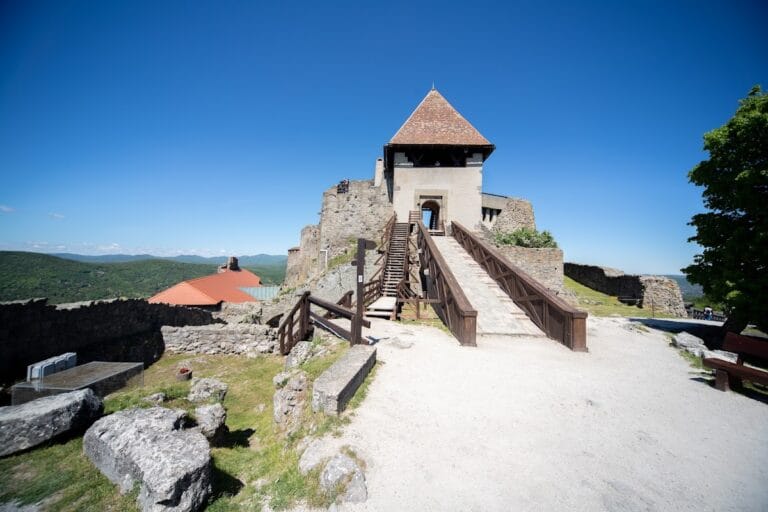
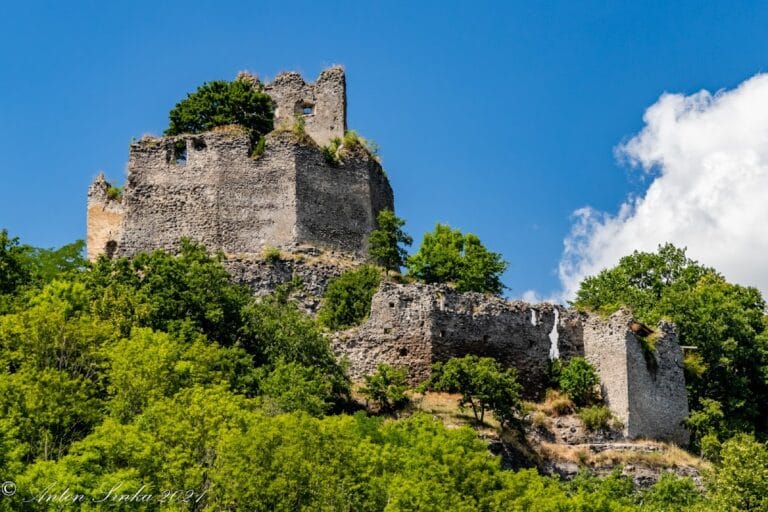
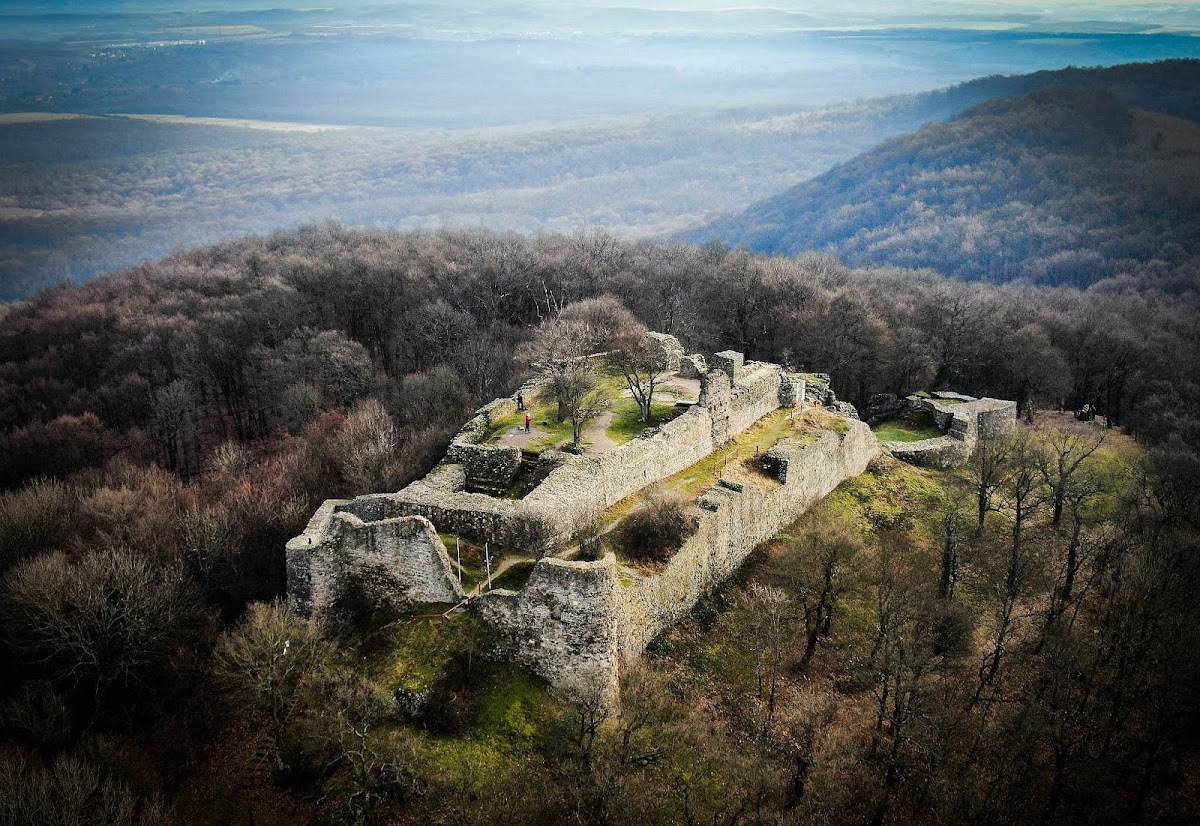
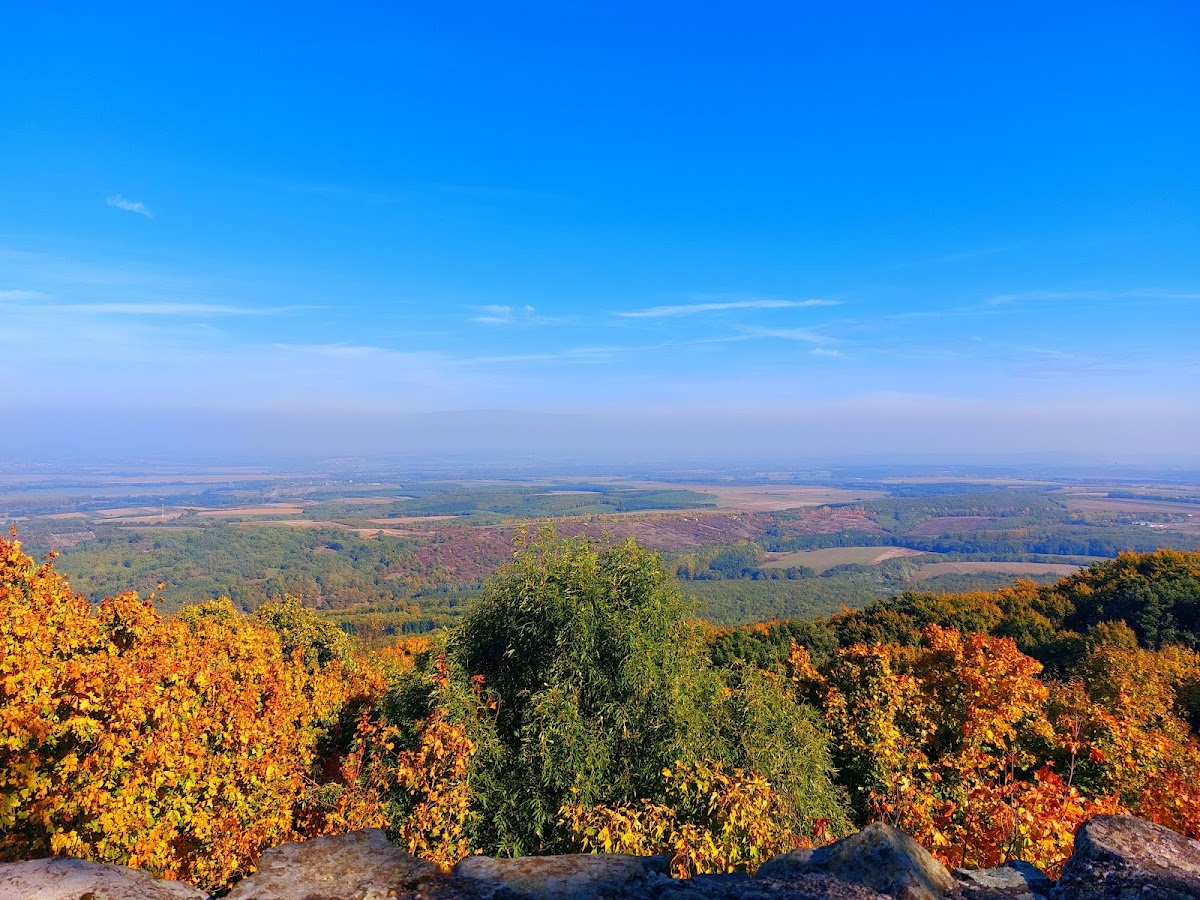
Drégely Castle occupies a volcanic rocky summit in the northern Börzsöny Mountains, approximately 440 to 444 metres above sea level. The ruins lie within the administrative territory of Drégelypalánk, roughly equidistant from Drégelypalánk and Nagyoroszi, in the area of the Danube–Ipoly National Park. The small stone hilltop castle consisted of a lower palisaded enclosure on a plateau and an upper stone castle on the rocky summit. Returning forest has gradually obscured the building lines of the outer castle, making its ground plan only partly recoverable.
Outer enclosure and summit fortress
The lower part of the fortification was a palisaded enclosure built largely from earth and timber. During the siege of 1552, Ottoman troops burned it, and the defenders withdrew to the upper castle. The upper fortress was constructed principally of stone and included a gate tower. Its surviving remains form a ruin, with sections of the walls reconstructed during modern preservation work.
The gate was attacked from a counterfort at Várbérc, a supporting defensive earthwork that provided a platform for military operations. Ottoman artillery placed there fired three cannons and six howitzers at the gate for two days. The gate and its tower then collapsed to ground level. The castle also contained a gunpowder depot, which was struck by lightning in 1549 but suffered little damage.