Castle of Somló: A Medieval Fortress in Hungary


Site at a Glance
- Rating
- 4.7
- Popularity
- Medium
- Country
- Hungary
- Primary era
- Medieval
- Eras represented
- Medieval, Early Modern
- Civilizations
- Hungarian
- Site type
- Military
- Remains
- Castle
On this page10 sections
History
Castle of Somló is a medieval Hungarian fortress in Hungary, standing on Somló Mountain above Doba. Construction probably began in the late thirteenth or early fourteenth century, in the period after the Mongol invasion, and the castle was first mentioned in writing in 1352. The charter calls it castrum Somlo, a Latin term for a fortified place or castle. In that year, King Louis I, also known as Louis the Great, took the castle from János, son of Csenik, and granted it to Benedek, son of Heim. Somló later became a royal castle and developed into an important regional stronghold.
Royal castle and noble ownership
Somló belonged to the crown between 1370 and 1380. Its documented holders included Zámbó Miklós from 1383 to 1389 and Miklós Garai from 1389. Garai was a powerful nobleman who served as palatine, the kingdom’s senior royal official, under King Sigismund. The Rozgonyi family held the castle from 1443 to 1463, followed by the Tapsonyi Anthimi family before 1464. After a royal judgment, Somló passed to László Kanizsai in 1464, but it returned to the Garai family by 1470. Further transfers followed, and King Matthias, or Matthias Corvinus, granted the castle to Pál Kinizsi, a celebrated military commander and royal official. Kinizsi was recorded as its owner by 1479.
Financial difficulties and pledging shaped Somló’s history during the late fifteenth century. The castle came into the possession of the Szapolyai family in the 1490s, before Tamás Bakócz acquired it in the middle of that decade for 12,000 contemporary gold forints. Bakócz was a powerful churchman who later became archbishop of Esztergom and a cardinal. His purchase began the period in which Somló gained major regional importance.
Bakócz’s Renaissance transformation
Bakócz extensively repaired and remodelled the former watch fortress as an Italian Renaissance castle. He added a chapel, which had not previously formed part of the complex, and strengthened its military equipment and defenses. The Renaissance rebuilding is reflected in the carved door and window frames and in the chapel tower that survive among the ruins. Bakócz later left Somló to his nephew, Péter Erdődy. The Erdődy family continued to develop the estate and kept a permanent garrison at the castle.
Somló’s armament in 1498 included two large cannon, several smaller cannon, and two guns designed to break formations. These weapons formed part of the castle’s military provisions as its defensive role grew. The fortress was also connected to the interests of powerful noble families who controlled land and settlements in the surrounding region.
Ottoman frontier fortress
After the Battle of Mohács in 1526, when the Hungarian army was defeated by the Ottoman Empire and the kingdom entered a prolonged period of political and military crisis, Somló was regarded as strategically threatened. The castle resisted attacks by smaller Ottoman forces. A major Ottoman-Hungarian battle took place below the fortress in 1543 and ended with the slaughter of 3,000 Ottoman soldiers. Somló subsequently became the strongest Hungarian-held fortress in the surrounding region.
In 1548, Péter Erdődy pledged Somló to András Csoron to finance the repurchase of Vörösvár, and he later sold the castle to him. Csoron was a Hungarian nobleman and military landholder who developed Somló together with his castle at Devecser as a linked defensive system against Ottoman forces. The construction work and supply of military matériel placed severe burdens on the local serf population. Habsburg authorities also objected after members of the Csoron family harassed nuns and forced them to manufacture war matériel.
Listi ownership and the Rákóczi War
After Csoron’s death, the castle passed to his daughters and, through Anna Csoron, to the Listi family in 1597. A prolonged inheritance dispute with the royal court followed while Somló deteriorated and remained exposed to danger. Many members of the Listi family died fighting the Ottomans. The later owner László Listi, who was also a poet, strengthened the castle in 1638 and published a two-volume verse chronicle of the Battle of Mohács in 1653. The Habsburg authorities later sentenced him to death for murder, arson, counterfeiting, and robbery.
During the Rákóczi War of Independence, an uprising led by Francis II Rákóczi against Habsburg rule in Hungary from 1703 to 1711, Somló remained in imperial hands for much of the conflict because of its northern position. Vak Bottyán, a commander of the Kuruc forces opposing the Habsburgs, captured the castle in 1707. He repaired it and secured supplies of military matériel because of its strategic location. This was the last recorded mention of Somló in written records. After the war, the fortress lost its strategic function and entered a prolonged decline.
Decline and later ownership
Once Sümeg assumed the region’s principal military role, Somló was largely neglected. A postwar inventory lists only two small cannon at the castle, and specialists sent from Sümeg occasionally dealt with its maintenance. By 1721, the condition of the fortress was described as extremely poor.
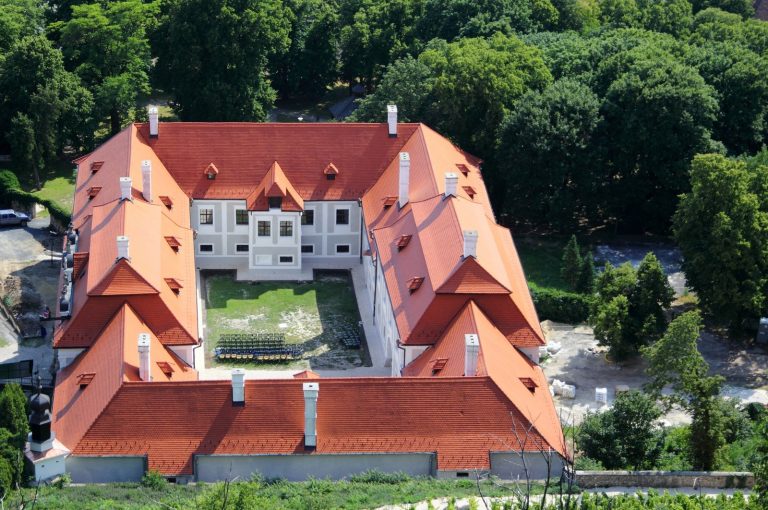
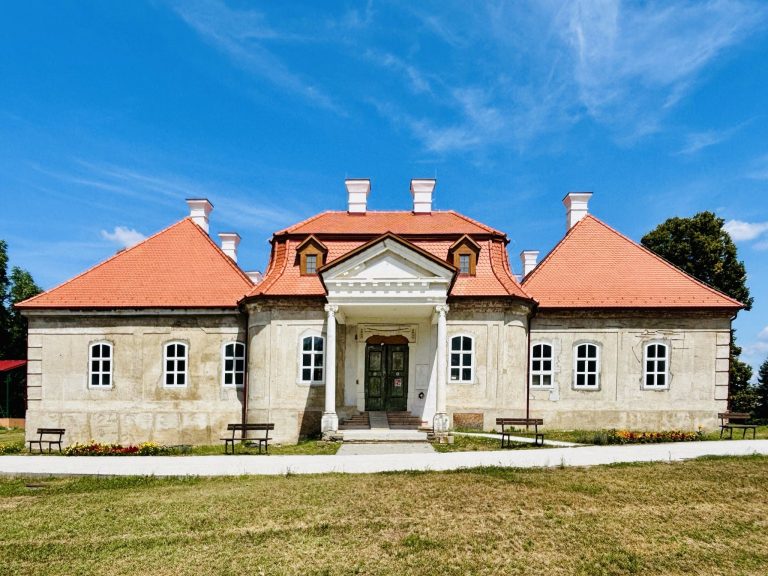
After the Rákóczi War, the Erdődy family sued to recover Somló from the nominal Csoron and Listi ownership. They invoked an earlier deed of gift associated with Bakócz. Following the litigation, the Erdődys spent money securing the property in 1735 and gradually acquired several surrounding settlements. By 1820, the castle ruin and the wider area were in their possession. Rather than rebuild the mountain fortress, the family constructed a new Somló Castle at Doba below the mountain. Building material was later removed from the ruin for use in the lower castle.
The Erdődy family owned the castle grounds until 1945, when Soviet occupying troops took possession. The ownership list records the Gróf family from 1945 onward. Since 2017, the ruin has undergone renovation through the Hungarian National Castle Programme. It is state-owned and registered as a protected monument under number 9845.
Remains
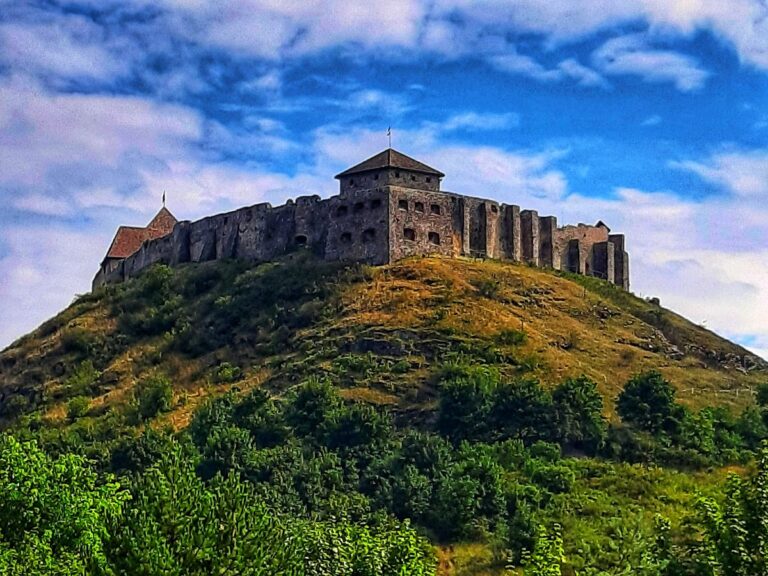
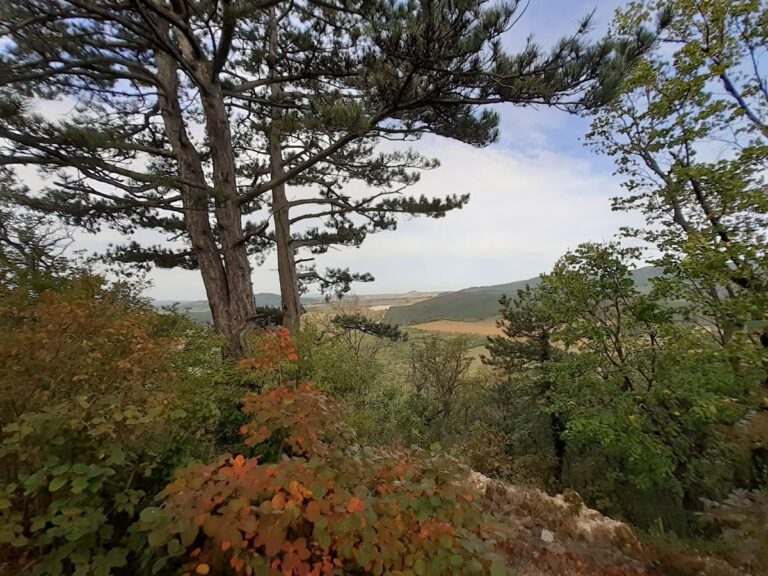
The surviving castle occupies the northern side of basaltic Somló Mountain, an extinct volcano that rises to 431 metres and lies about 15 kilometres west of Ajka. Dense woodland surrounds the remains. Built of stone, the fortress has an irregular plan with interior towers and several courtyards. Its former approaches were difficult to negotiate, and the surviving defenses still show how access was controlled across the mountain site.
Outer defenses and forecourt
An approximately eight-metre-wide dry ditch runs along the southern side of the castle. This defensive trench, which contained no water, ends at one side in a ravine and at the other against the mountain. A preserved drawbridge crosses the ravine. The bridge leads into a narrow alley and then to the forecourt, whose western side is bordered by the guard’s barrel-vaulted accommodation. Loopholes line the southern and eastern walls, providing openings for defense. The arrangement of the ditch, ravine, bridge, alley, and guarded forecourt created a controlled approach to the main part of the fortress.
Inner courtyard and Renaissance features
A second drawbridge and another narrow passage connect the forecourt with the inner courtyard. The courtyard contains the castle’s distinctive hexagonal tower. Older written descriptions place the kitchen in this tower, although the space is now considered possibly to have served as a chapel. The tower is associated with Bakócz’s rebuilding programme, as are the carved door and window frames visible in the ruins and the chapel tower. Together, these features show the changes made when the earlier watch fortress was transformed into a Renaissance residence and fortified stronghold.
Ruin and Kinizsi Rock
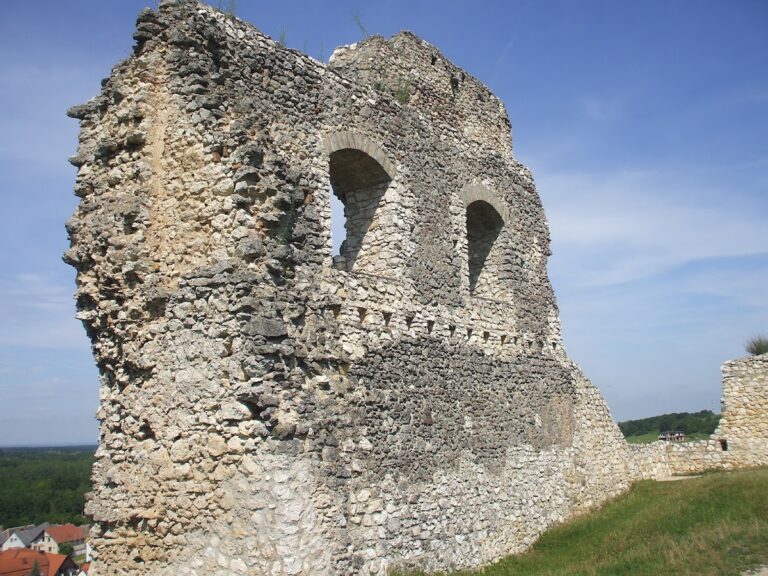
Castle of Somló survives as a ruin. Its later deterioration was accompanied by the removal of building material for the construction of the lower castle at Doba. Beside the route ascending toward the fortress lies a basalt boulder known as Kinizsi Rock. A saddle-shaped depression marks its upper surface. Local tradition holds that Pál Kinizsi rested there while climbing to inspect the castle after receiving it from King Matthias.