Castel Beseno: A Medieval Hilltop Fortress in Italy



Site at a Glance
- Rating
- 4.8
- Popularity
- Medium
- Country
- Italy
- Primary era
- Medieval
- External website
- Open
- Eras represented
- Medieval, Early Modern
- Civilizations
- Holy Roman Empire
- Site type
- Military
- Remains
- Castle
On this page11 sections
History
Castel Beseno is a medieval hilltop fortress in Besenello, Italy, first documented in the twelfth century. Its position above the Vallagarina and the route toward Folgaria allowed it to control movement through the valley and along the Via Imperii, a major north-south route through the medieval and early modern German lands and Alpine region associated with journeys toward Rome for imperial coronations.
Medieval Lords and Divided Control
The fortress was a fief of the Counts of Appiano and was occupied by their vassals, the Da Beseno family. In 1170, parts of Castel Beseno were held by Friedrich von Wangen. Around 1200, the Church of Trento acquired much of the property through purchases and donations, but authority remained divided between the Da Beseno branches led by Enghelberto and Odolrico. Rivalry between these factions contributed to the early decline of Castel Beseno and Castel Pietra, where both families held rights.
About a century later, Guglielmo II da Castelbarco took control of the castle and restored a substantial part of it. The Castelbarco family thereafter became associated with a later phase in the fortress’s medieval history. In the fifteenth century, Marcabruno II Castelbarco became involved in the conflict between Venetian and Tyrolean forces.
War and Renaissance Transformation
During the Battle of Calliano in 1487, 1,500 Venetian soldiers were killed or captured, and the Venetian commander Roberto Sanseverino d’Aragona died by drowning in the Adige. After a fire in the sixteenth century, Castel Beseno was rebuilt and renewed. The complex changed from a medieval castle into a more residential-looking fortress, while retaining its role as a heavily armed defensive stronghold. During the early sixteenth-century renovation by the Trapp family, new structures were adapted for firearms, giving the castle the character of a Renaissance fortress. The Renaissance was the European cultural and architectural period that followed the Middle Ages, including military designs adapted to gunpowder weapons and artillery.
Siege, Decline, and Conservation
At the end of the eighteenth century, Napoleonic troops besieged Castel Beseno for several days. Napoleon was the French ruler whose forces conducted the attack, but an Austrian relief force defeated them and they failed to capture the fortress. As the political situation became more peaceful, Castel Beseno lost military importance and entered a prolonged decline. It was abandoned during the nineteenth century, and its roofs were removed to avoid property taxes.
In 1957, before the main restoration campaign, the province demolished a tower with dynamite because it was considered dangerous to traffic on the road below. The Von Trapp family, which also owned Castel Coira, donated Castel Beseno to the Autonomous Province of Trento in the early 1970s. The province restored the fortress and incorporated it into the Buonconsiglio Castle provincial museum complex. Since 1988, it has served as a museum branch. In 2000, it hosted the exhibition Around 1500: On the Threshold of the Empire, which reconstructed the historical period of the Battle of Calliano. The restored fortress is owned by the Autonomous Province of Trento and is the largest fortified complex in Trentino-Alto Adige and the largest fortification in the region.
Remains
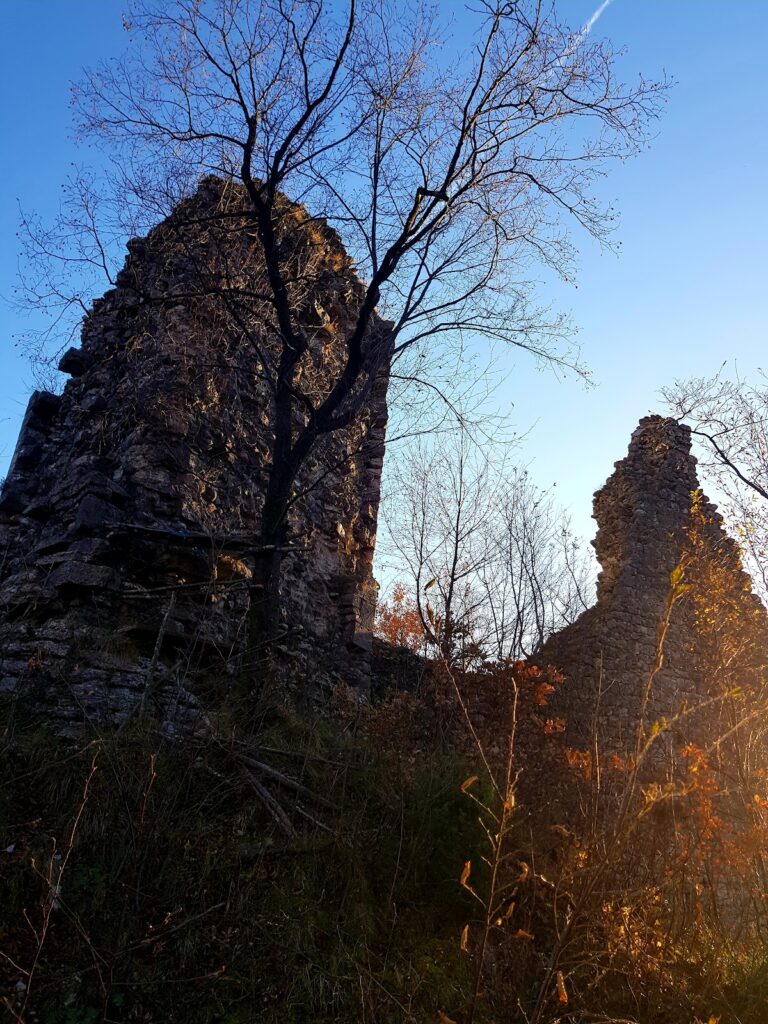
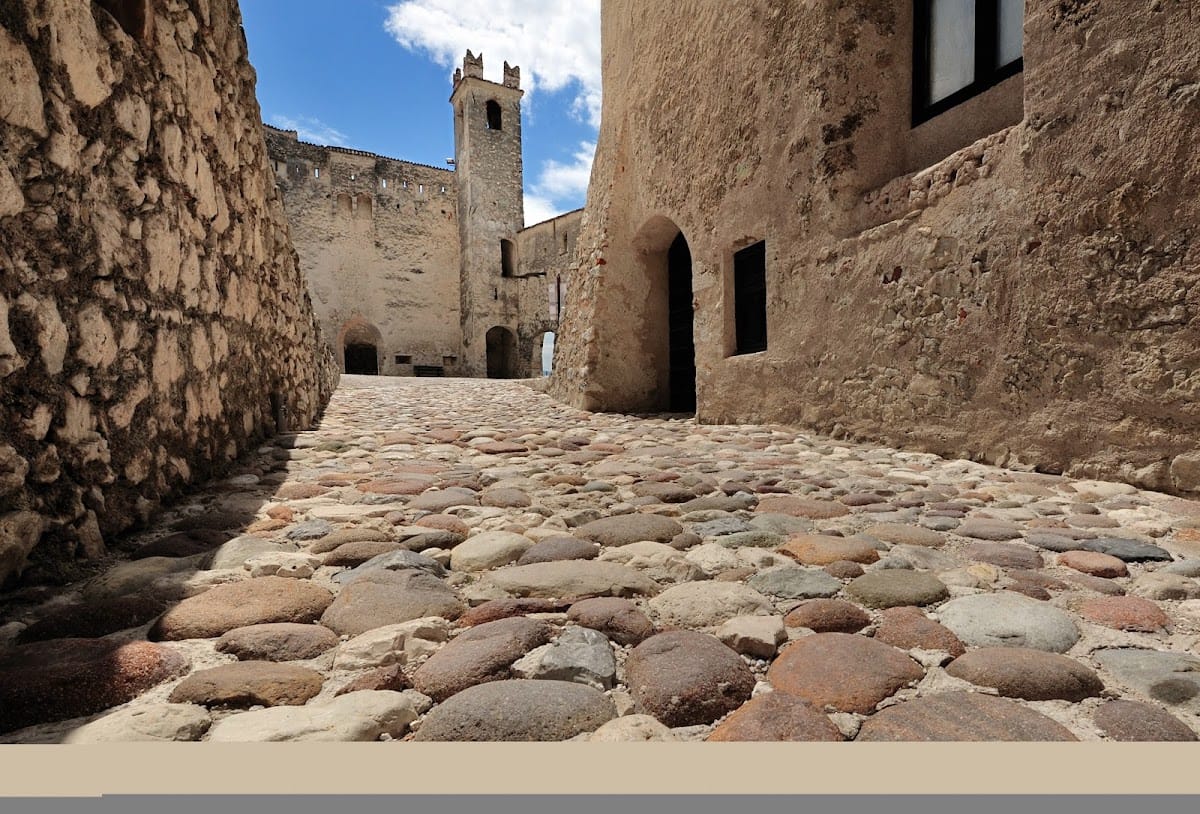
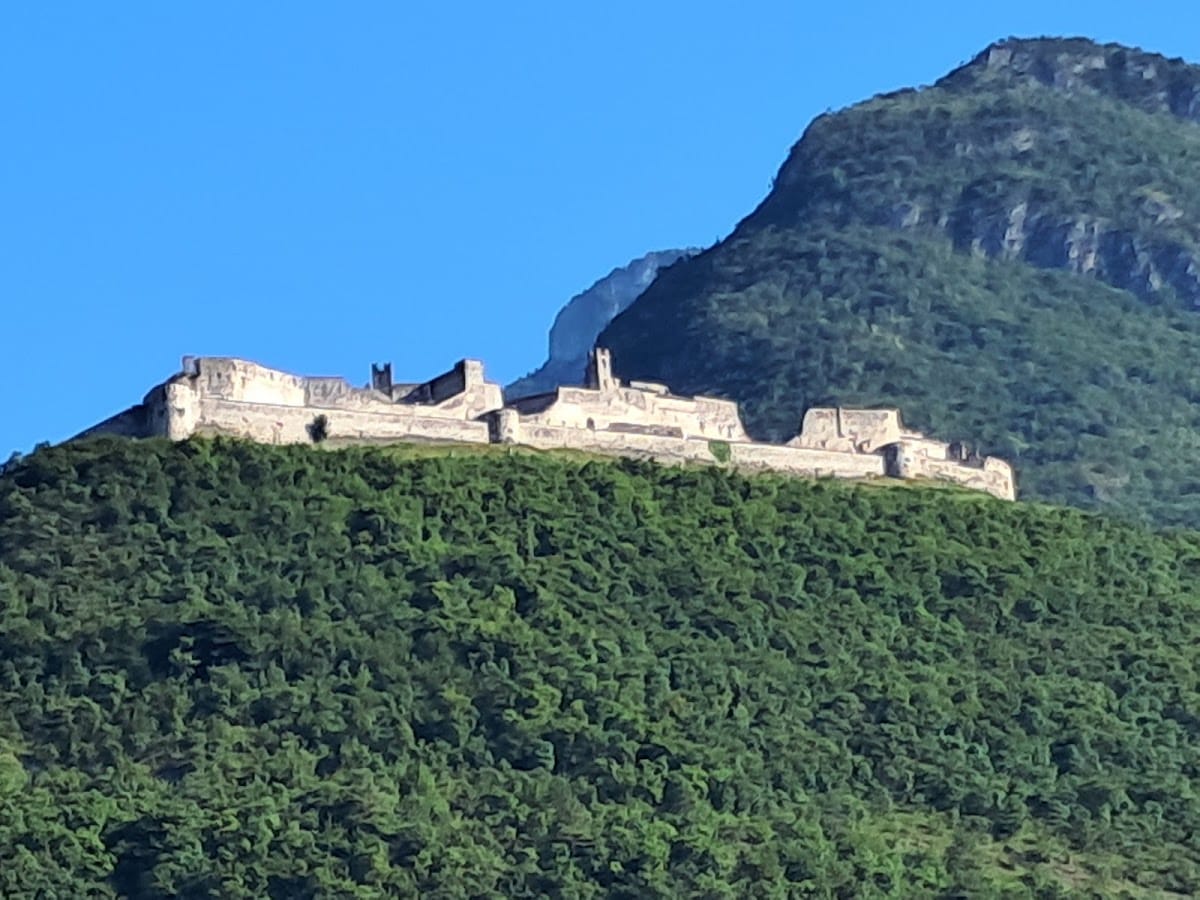
Castel Beseno occupies the summit of a limestone hill above the Adige Valley and the Rio Cavallo valley. The restored ruin covers approximately 1.6 hectares, extends about 250 metres in length, and is approximately 50 metres wide at an elevation of 425 metres above sea level. Its plan is approximately triangular, with three projecting bastions forming the points of the complex. These bastions were designed to provide defensive fire along the faces of adjoining walls and to protect the fortress from attack in different directions. A tournament ground lies outside one side of the enclosure.
Fortified Layout
Bastions and Defenses
The fortress’s defensive arrangement combines massive walls, fortified gates, and bastions with broad internal spaces. The early sixteenth-century renovation equipped the rubble-masonry complex with structures suited to firearms, altering the character of the medieval stronghold while preserving its defensive purpose. The surviving walls and projecting defenses express the transformation into a Renaissance fortress.
Courtyards and Water Storage
Within the enclosure are courtyards, cellars, and cisterns. A cistern is a tank or underground structure for collecting and storing water, an essential installation for a fortified site that could be isolated during a siege. These spaces form part of the broad internal arrangement preserved within the restored ruin.
Interior Decoration and Setting
Frescoes
Numerous frescoes survive inside the complex. Many have been severely damaged by exposure to the weather, but they remain part of the fortress’s interior remains and reflect the residential character acquired after its rebuilding.
Hilltop Position
The fortress stands above the Rio Cavallo and overlooks the Vallagarina. Its elevated position, together with the triangular enclosure, defensive gates, walls, bastions, courtyards, cellars, and cisterns, defines the physical form of the restored ruin.