Parga Castle: A Venetian Fortress and Hilltop Citadel in Greece


Site at a Glance
- Rating
- 4.6
- Popularity
- Medium
- Country
- Greece
- Primary era
- Early Modern
- Eras represented
- Early Modern, Modern
- Civilizations
- French, Ottoman, Venetian
- Site type
- Military
- Remains
- Castle
On this page8 sections
History
Parga Castle is a medieval hilltop citadel in Parga, Greece, built and repeatedly rebuilt to protect the settlement from attacks by land and sea. Its importance as a fortified landmark extends from the fifteenth century through the changing Venetian and Ottoman control of Epirus.
Early fortifications and medieval Parga
The surrounding area was inhabited in antiquity by the Thesprotians, an ancient Greek people associated with Epirus, and the ancient town of Toryne was probably located here. Before the present castle took shape, Parga’s inhabitants fortified their settlement on the coast. Norman assistance helped establish the first defenses in the eleventh century, initially against pirate raids and later against Ottoman attacks.
In the fourteenth century, Nicholas Orsini, the Despot of Epirus, a ruler of the medieval Despotate of Epirus, unsuccessfully offered Parga and its castle to Venice in return for help against the Byzantine Empire. Parga remained loyal to Emperor Andronikos III Palaiologos during the Epirote rebellion of 1338–39. In the 1390s, the settlement was ruled by Gjin Bua Shpata, lord of Arta.
Venetian control and repeated destruction
Parga passed under Venetian control in 1401 and was governed by a castellan, the military commander responsible for a castle. It became a mainland exclave of Venice’s possessions on Corfu. The Ottoman–Venetian treaty of 1419 confirmed Venetian control, which continued, apart from brief Ottoman occupations, until the fall of the Venetian Republic in 1797.
As Ottoman control over the region expanded during the fifteenth century, the Venetians rebuilt the castle and strengthened its defenses. Hatzi Bey occupied Parga and its fortified position from 1452 to 1454, and part of the castle was demolished during that period. In 1537, the Ottoman admiral Hayreddin Barbarossa burned and destroyed the fortress and the houses within it. Ottoman forces demolished the castle again before the Venetian reconstruction of 1572, and destroyed it once more before that rebuilding was complete.
An inscription above the outer gate dates the construction of that section of the wall to 1707 and attributes it to Count Marco Teotochi, governor and captain of Parga. The Venetians began building the third and final fortress in 1792. French authorities completed the work in 1808 while administering the wider region from 1797 to 1814.
From French and British administration to Ottoman rule
The castle remained unconquered until 1819, despite attacks and a siege led mainly by Ali Pasha of Ioannina, the Ottoman provincial ruler who controlled much of Epirus in the late eighteenth and early nineteenth centuries. During his administration, the fortress also supported the Souliotes, inhabitants of the mountainous Souli region who resisted his rule.
After French power declined, Parga’s citizens revolted against French rule in 1815 and sought British protection. In 1819, Britain sold the town to Ali Pasha under Ottoman suzerainty. About 4,000 inhabitants were exiled to Corfu, carrying the ashes of their ancestors, their flags, and handfuls of soil from their homeland.
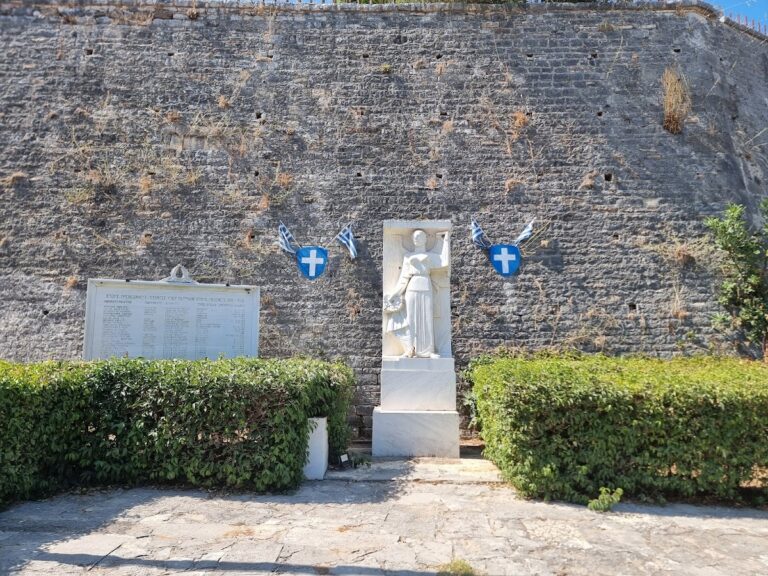
Ali Pasha strengthened the existing walls, installed his harem, built a hammam, or heated bathhouse, and radically remodeled the castle grounds. After his assassination in the early 1820s, the fortress passed to direct Ottoman rule. Ottoman rule in Parga and the rest of Epirus ended in 1913 after Greece’s victory in the Balkan Wars, bringing the town and castle under the control of the Greek state. Parga Castle is now a protected monument owned by the Greek Ministry of Culture.
Conservation and continuing use
Cleaning and restoration took place in 2020 under the supervision of the Ephorate of Antiquities of Preveza, in cooperation with the Municipality and Municipal Community of Parga. The work contributed to the preservation and renewed interpretation of the fortress, while the reconstructed central buildings support theatrical performances and exhibitions.
Remains
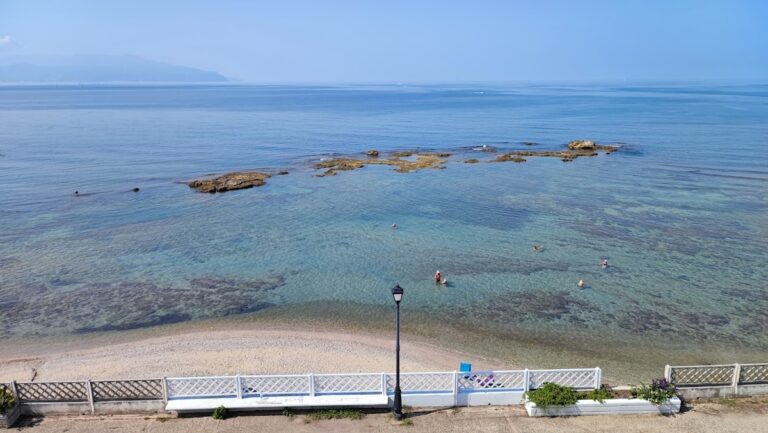
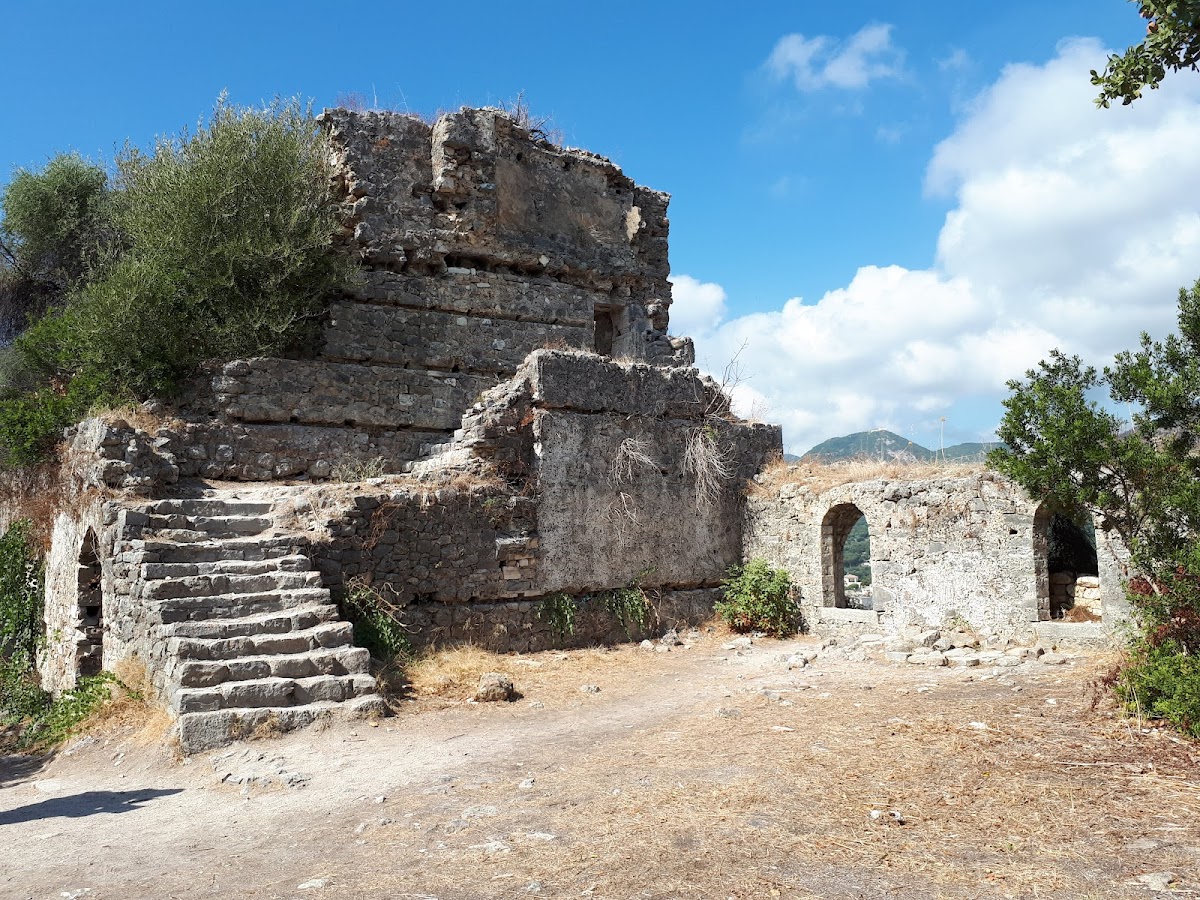
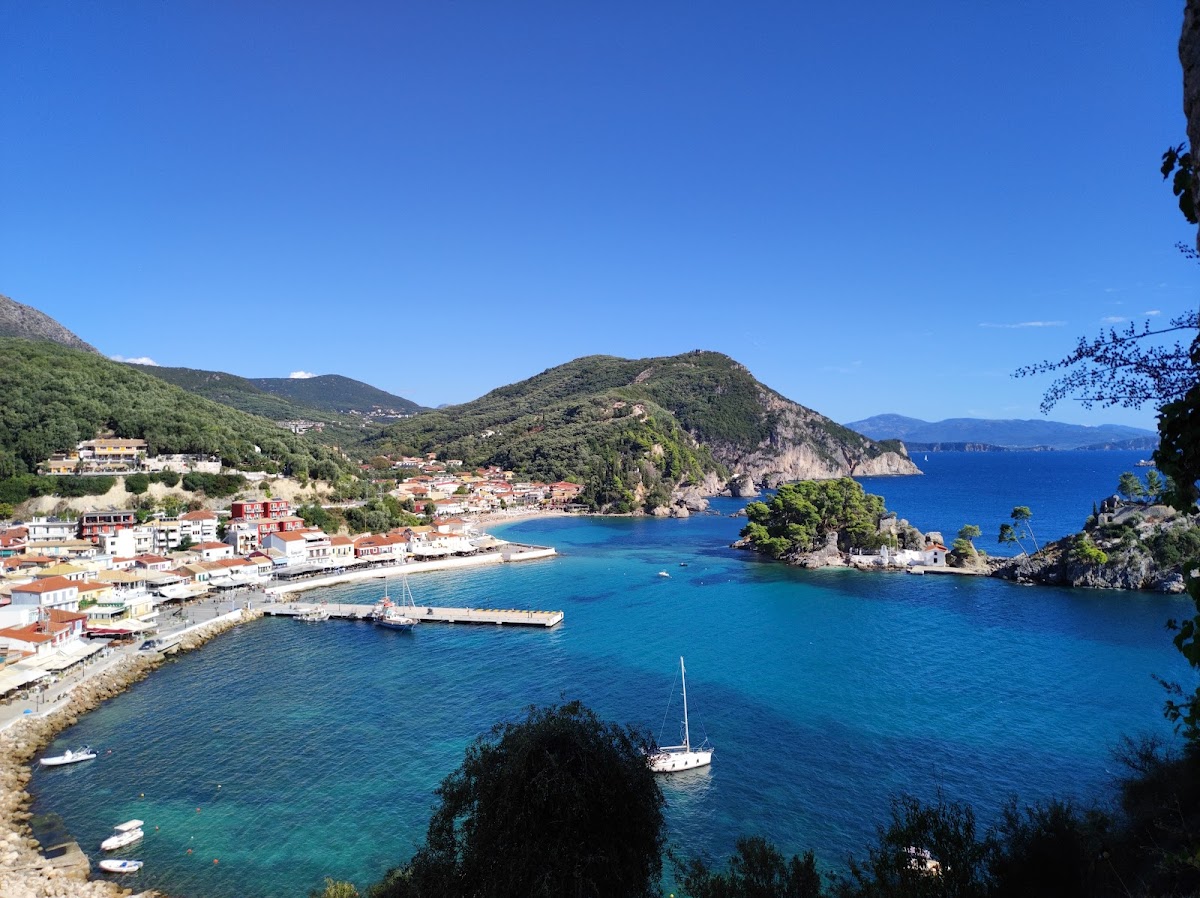
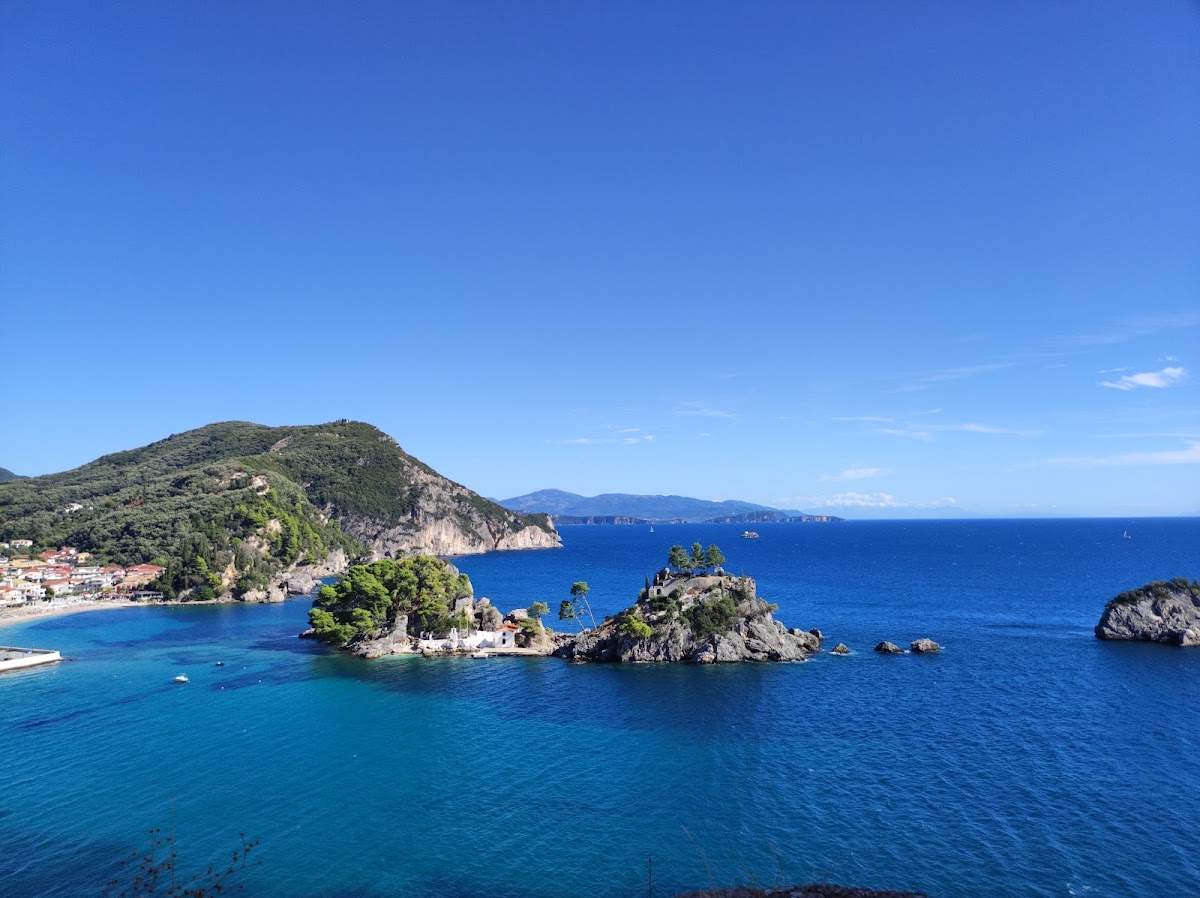
The citadel occupies a rocky peninsula at the top of a hill, with the sea on three sides and the town on the fourth. Its natural position reinforced the defensive plan developed by the Venetians. Hewn stone, or ashlar, was used in the construction, and eight towers outside the main castle complemented the fortifications.
Fortifications and entrance
Approximately 400 houses were tightly packed within the restricted area enclosed by the walls. The surviving defenses include strong bastions, projecting structures that allowed fire along the faces of the walls, as well as vaulted corridors, shooting rooms, supply galleries, barracks, prisons, warehouses, and a powder magazine used to store gunpowder. Two forts formed a final defensive line. The arched entrance gate carries a winged lion of Saint Mark, the inscription “ANTONIO CERVASS 1764,” emblems associated with Ali Pasha, double-headed eagles, and related inscriptions.
Water, supplies, and central buildings
Water reached the castle from the Kremasma spring and was directed to tanks and houses. Two cisterns stored additional supplies within the fortress. The bays of Valtos and Pogonia served the castle’s provisioning system, with supplies transported through these coastal inlets.
The inscription above a stone door beside the powder magazine reads “Défense de la Patrie A.D. 1808.” Two principal buildings in the central area have been reconstructed, and the castle contains an exhibition space with a photographic exhibition. A passage to the sea is traditionally said to have existed, although its status remains uncertain.