Čokešina Monastery: A Serbian Orthodox Monastery in Serbia
Site at a Glance
- Rating
- 4.9
- Popularity
- High
- Country
- Serbia
- Primary era
- Modern
- Eras represented
- Medieval, Modern
- Civilizations
- Ottoman, Serbian, Serbian Despotate
- Site type
- Religious
- Remains
- Monastery
On this page8 sections
History
Čokešina Monastery is a Serbian Orthodox monastery near Prnjavor, Serbia, at the foot of Vidojevica on Mount Cer. Tradition places its origins in the fourteenth century and credits Miloš Obilić, a legendary Serbian hero associated with the Battle of Kosovo, with its foundation. The traditional account says construction stopped after the 1389 battle between Serbian forces and the Ottoman Empire, then resumed under Bogdan Čokeša, a landowner in Mačva. The monastery and the village took their names from him.
Medieval origins and monastic school
In 1458, the monastery became the property of Stefan Ratković, a grand logothete, a senior court and administrative official. During the eighteenth century, it was repeatedly destroyed and rebuilt under Ottoman rule. A school operated there from 1707 to 1732, following the Great Migration, a major movement of Serbs led by Patriarch Arsenije Čarnojević. Abbot Vasilije headed the school.
A major reconstruction took place in 1785 under Joakim, bishop of the Diocese of Valjevo. The following year, a new church was built on the old foundations.
The uprising and nineteenth-century rebuilding
In 1804, during the First Serbian Uprising, a revolt against Ottoman rule that began that year, Serbian and Ottoman forces fought at Čokešina. The church was demolished again. In 1805, the senior Orthodox priest and political leader Mateja Nenadović used the monastery’s carved cross at the first government council of revolutionary Serbia.
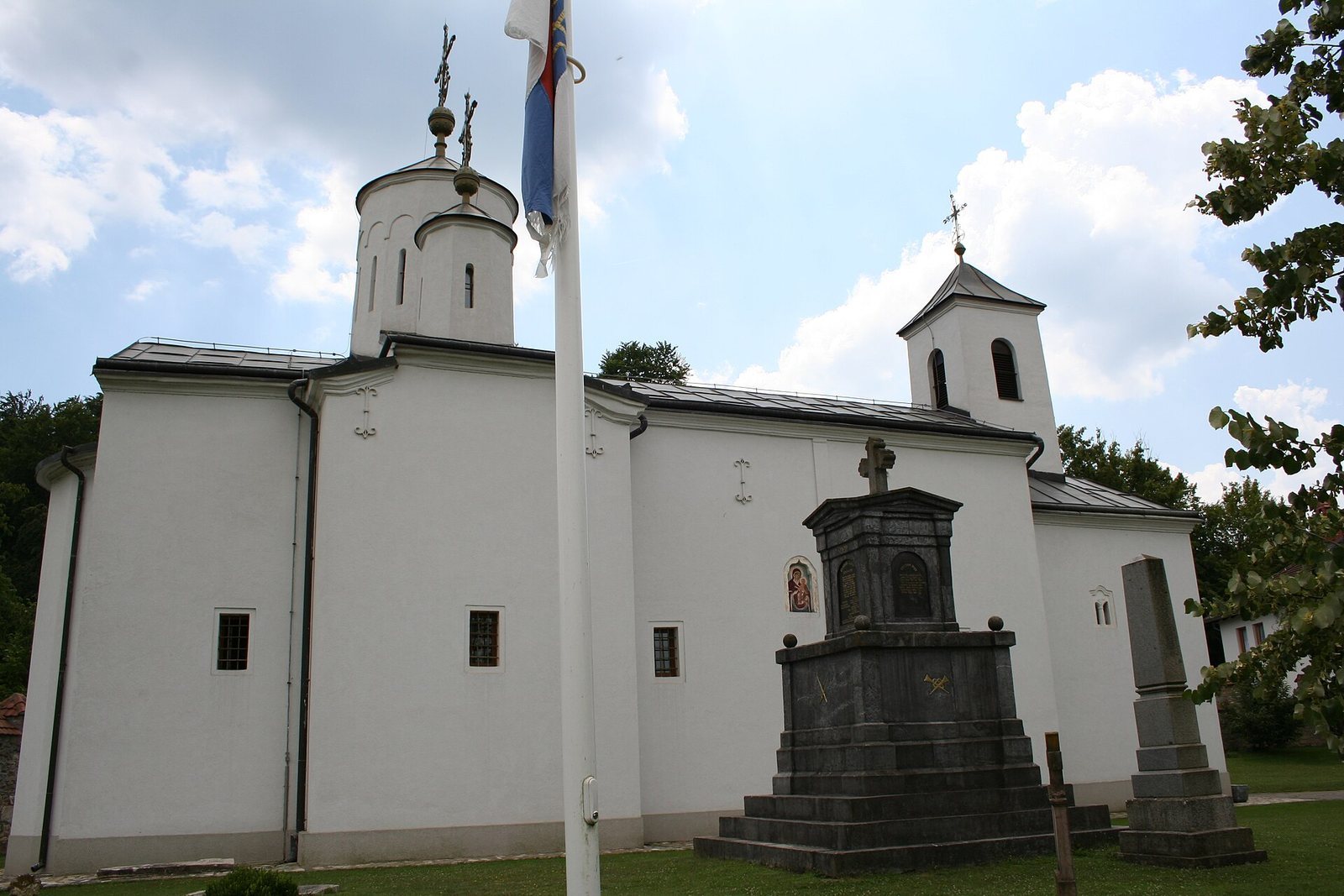
The present church was built between 1820 and 1823, during the leadership of hegumen Hadži Konstantin Vujanić, the monastery’s head. Prince Miloš Obrenović and his brother Jevrem supported the work. In 1890, a memorial with an ossuary and tomb was erected in the monastery grounds for Serbian insurgents killed in the Battle of Čokešina, including brothers Gligorije and Dimitrije Nedić.
Destruction and later use
Bombing destroyed the monastery in September 1941. Mitrofan Matić, then its head, was killed that year and buried at the monastery. The complex was rebuilt in 1962. For a time, it served as a hospital and as a home for poor children from different parts of the country.
Čokešina is now a women’s monastery of the Serbian Orthodox Church within the Diocese of Šabac. It is dedicated to the Nativity of the Mother of God. Serbia protects it as a cultural monument of great importance and recognizes it as an immovable cultural asset.
Remains
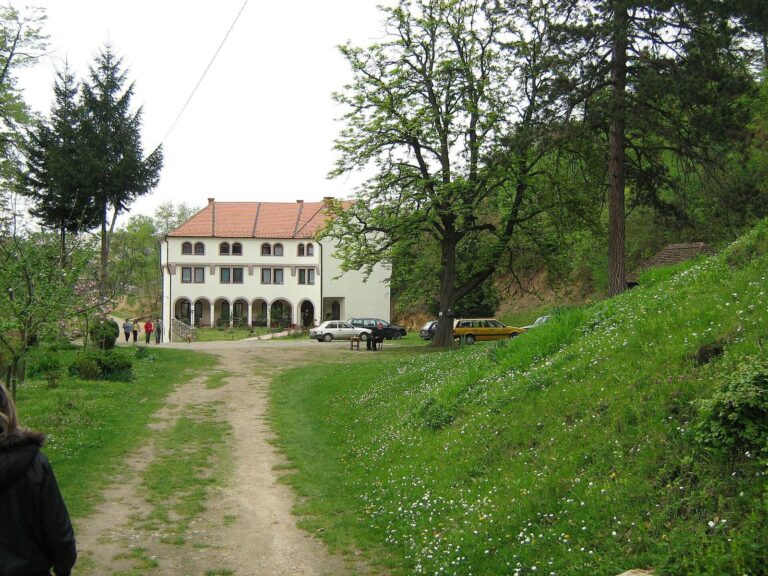
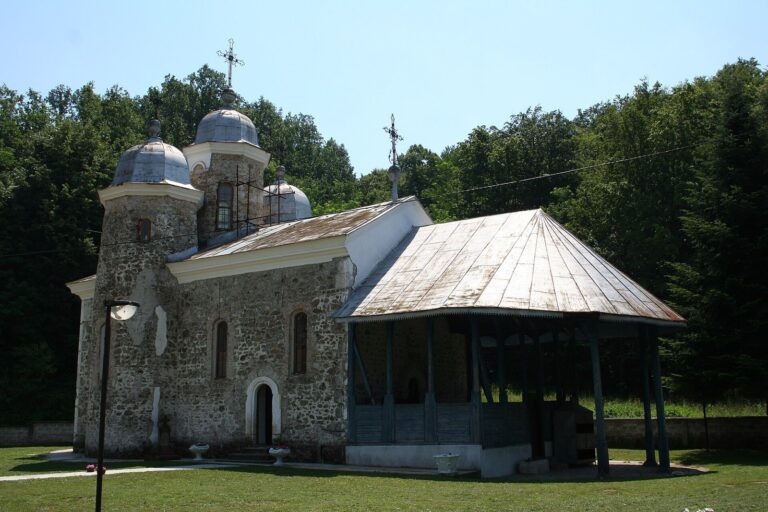
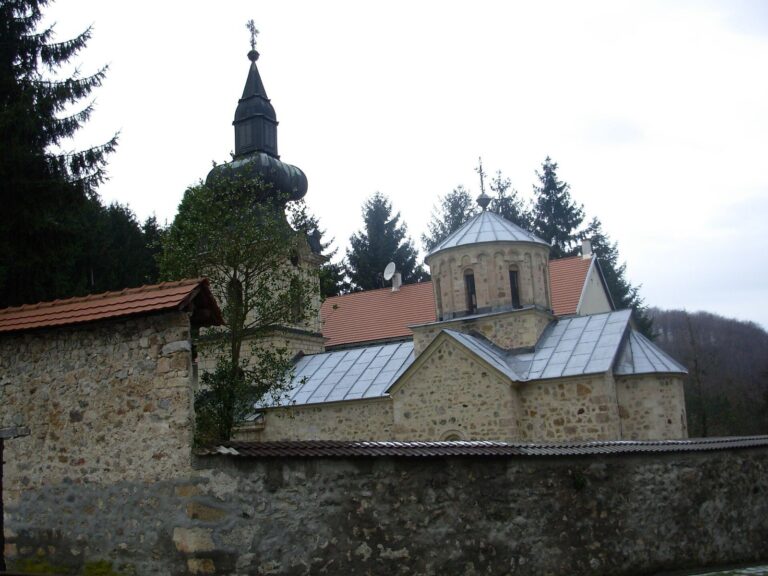
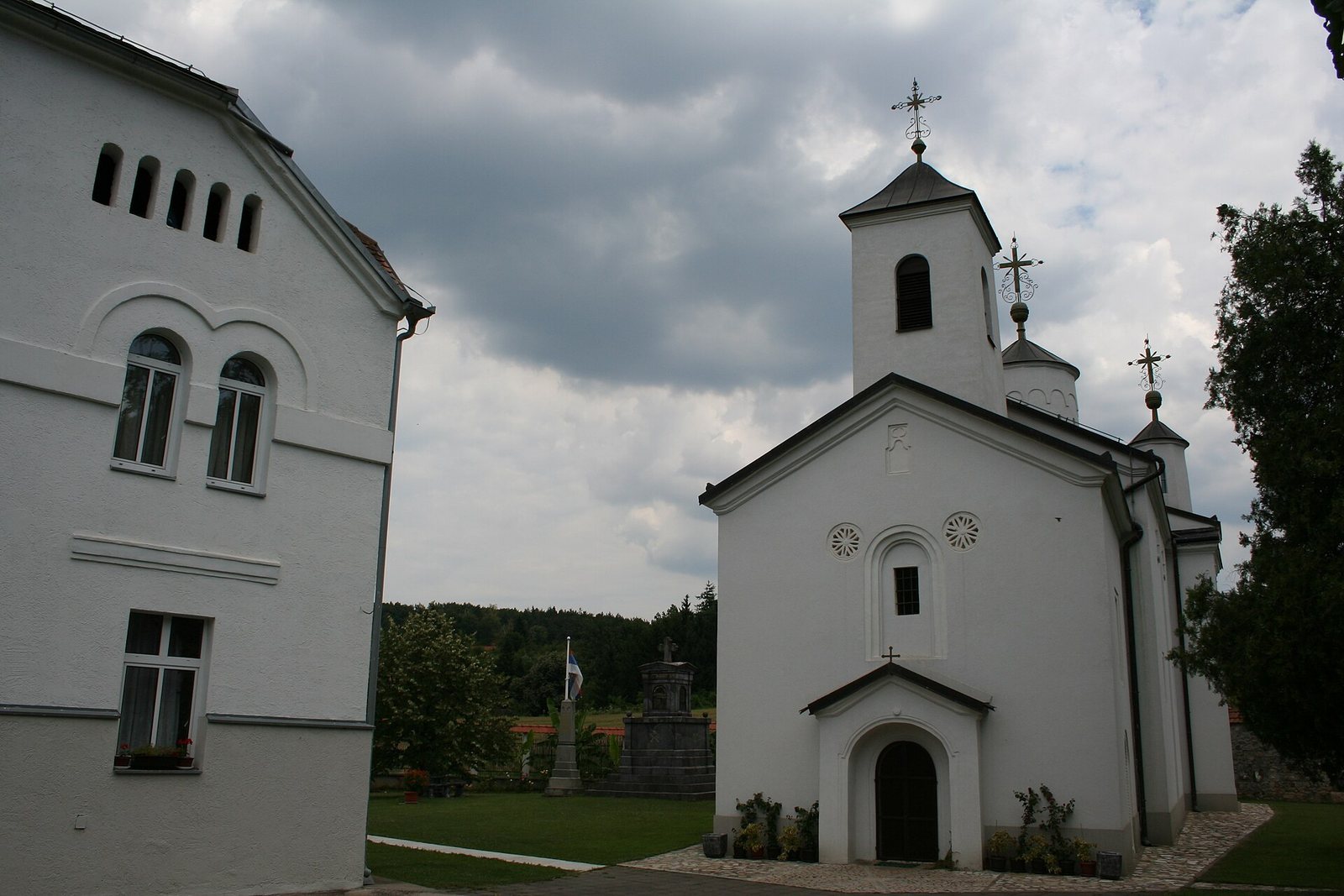
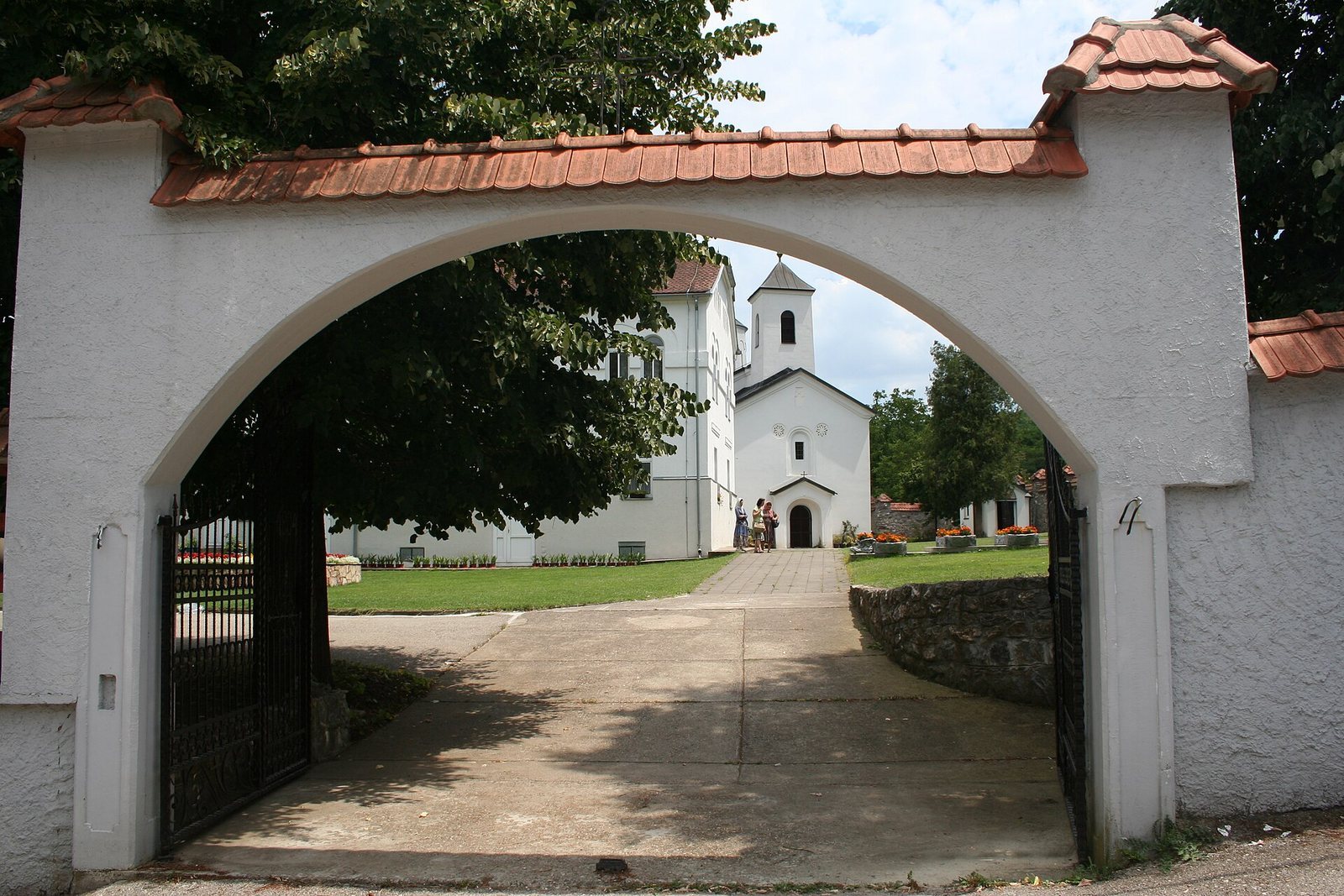
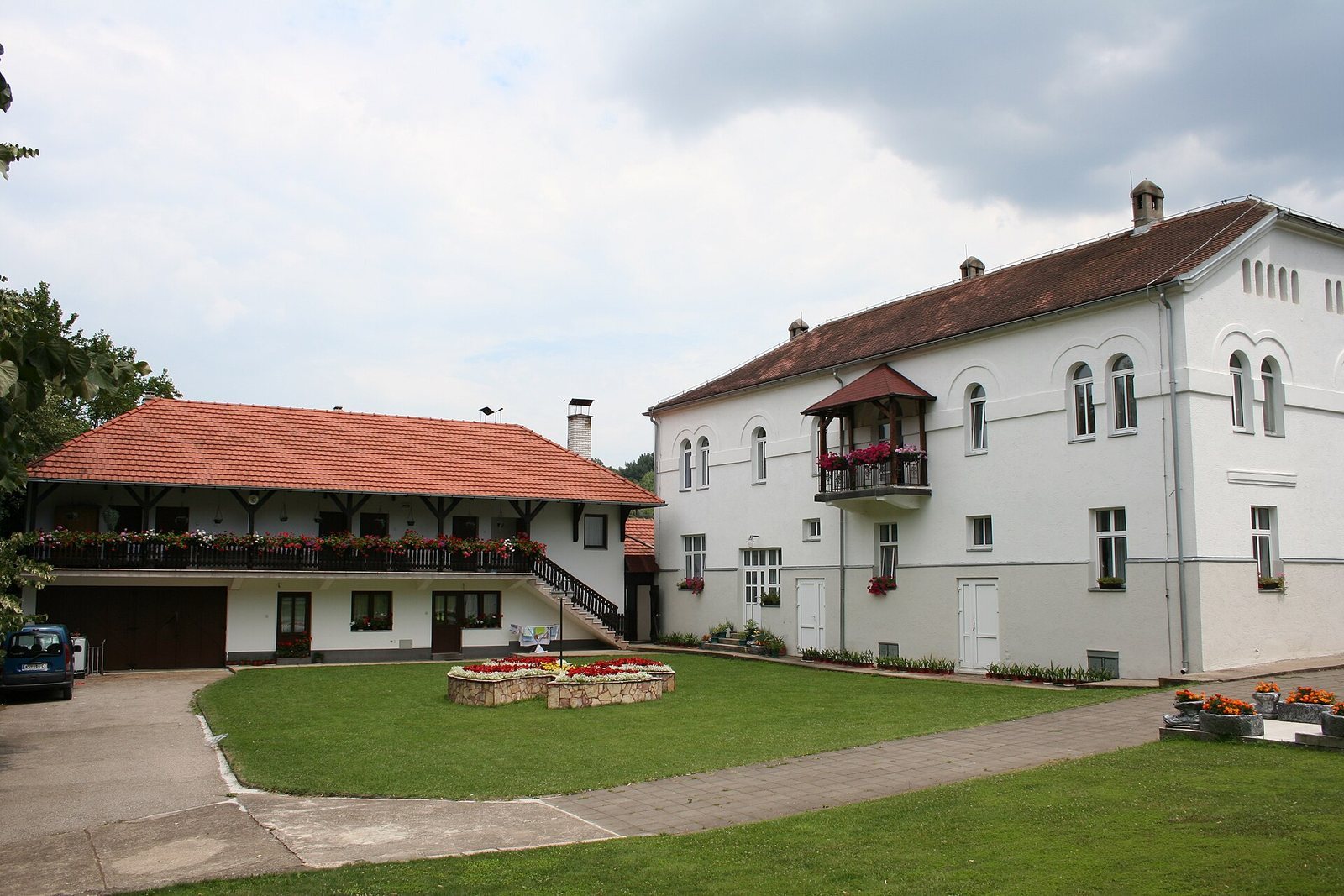
The monastery stands at the foot of Vidojevica on Mount Cer, and its grounds include the church, memorial, and residential buildings. The church has a trefoil plan, meaning it is arranged in three lobed parts, and a central polygonal dome.
Church
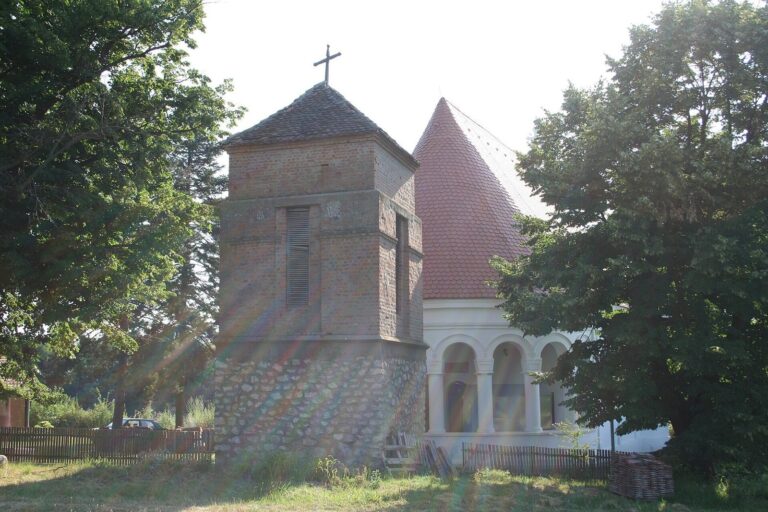
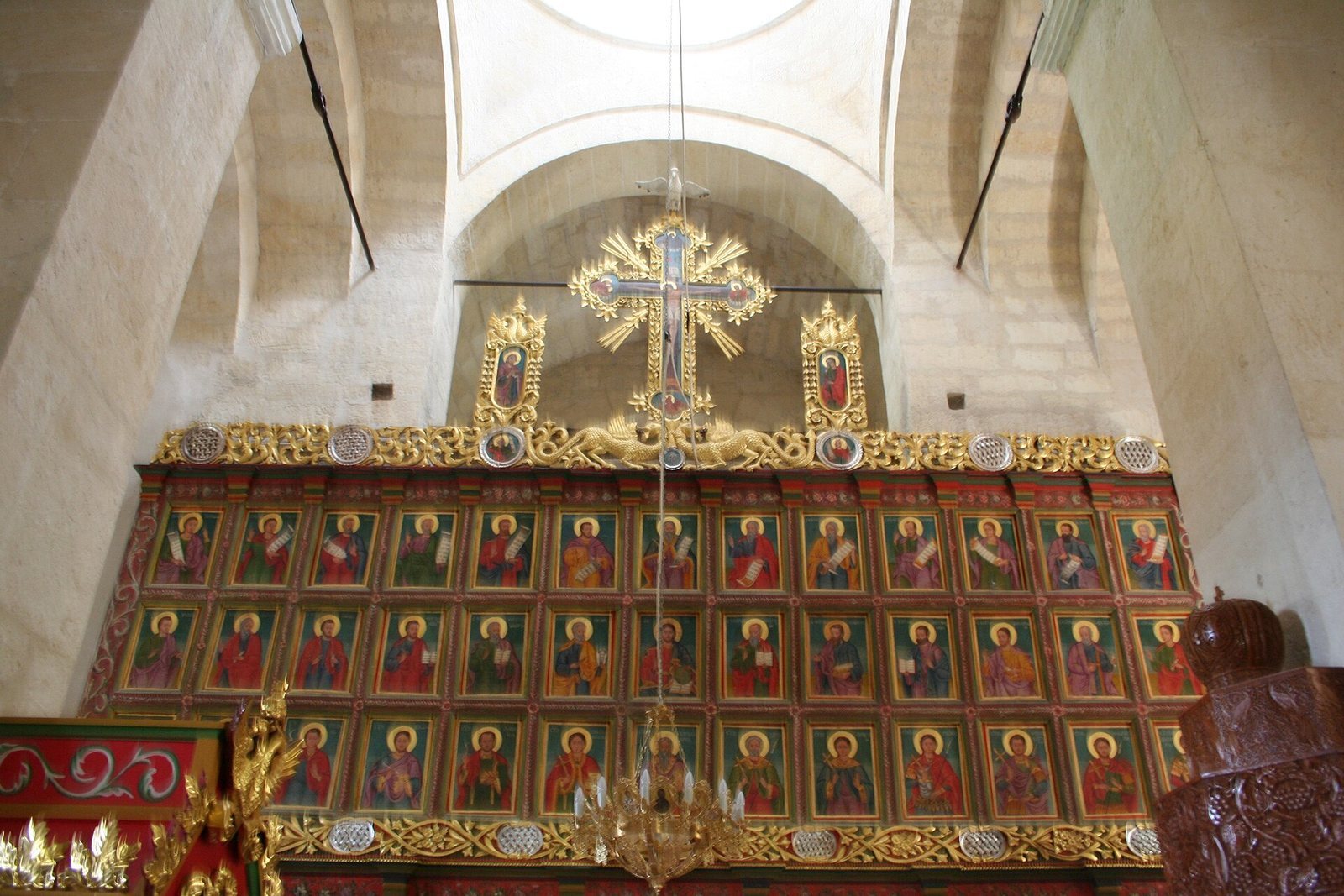
Two chapels flank the choir, projecting from the side walls as rectangular forms and each topped by a smaller dome. A square bell tower rises over the western narthex, the church’s entrance vestibule. The exterior has restrained decoration, with a cornice beneath the roof. Inside, the iconostasis, an icon-bearing screen separating the sanctuary from the main worship space, was painted in 1834 by Mihailo Konstantinović of Bitola and Nikola Janković of Ohrid. Two stone slabs set into the floor date from 1458, when the monastery became Stefan Ratković’s property.
Memorial and ossuary
The grounds contain a memorial and ossuary, a repository for human bones, with a tomb commemorating Serbian insurgents killed at the Battle of Čokešina, including the Nedić brothers.
Residential buildings and carved cross
The complex includes monastic residences. One two-storey building dates to 1918, while other residential buildings were constructed in 1962. The monastery also houses the Cross of Hadži-Ruvim, one of the crosses carved by Archimandrite Hadži-Ruvim, a senior monastic cleric.