Sha’ar HaGolan: A Yarmukian Neolithic Settlement in Israel
Site at a Glance
- Popularity
- Medium
- Country
- Israel
- Primary era
- Stone Age
- Eras represented
- Stone Age
- Civilizations
- Unclassified
- Site type
- Settlement
On this page13 sections
History
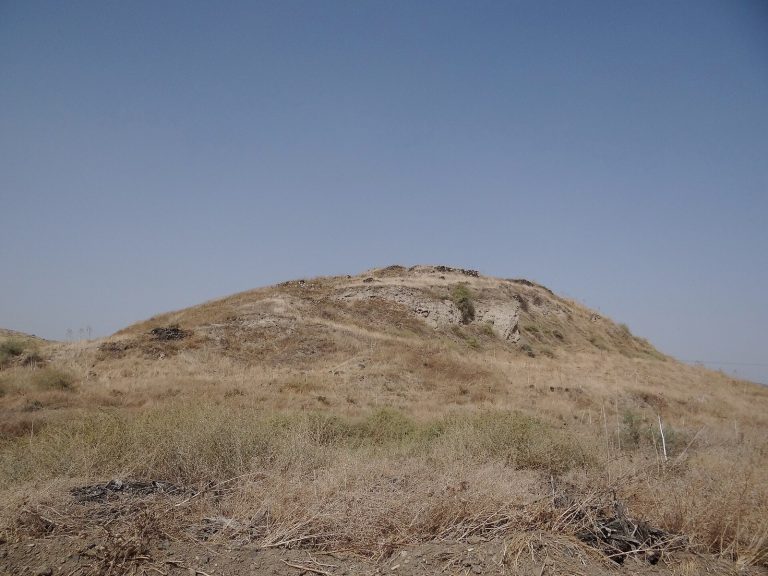
Sha’ar HaGolan is a settlement of the Yarmukian culture on the northern bank of the Yarmouk River in Israel’s central Jordan Valley. It dates to about 6400 to 6000 BC, calibrated to calendar years, during the Pottery Neolithic, a period marked by the use and manufacture of pottery. Yarmukian communities lived in parts of what are now Israel and Jordan. Covering about 20 hectares, Sha’ar HaGolan was one of the largest settlements of its time and is the largest identified Yarmukian site. Its size probably indicates that it served as a cultural center.
Obsidian blades, made from natural volcanic glass, found at the site came from Turkey and point to connections extending more than 700 kilometres.
Recognition and Excavation
An earlier Yarmukian settlement at Tel Megiddo was uncovered in the 1930s, but its cultural identity was not recognized at the time. In 1949, Israeli archaeologist Moshe Stekelis identified the Yarmukian as a distinct culture on the basis of discoveries at Sha’ar HaGolan.
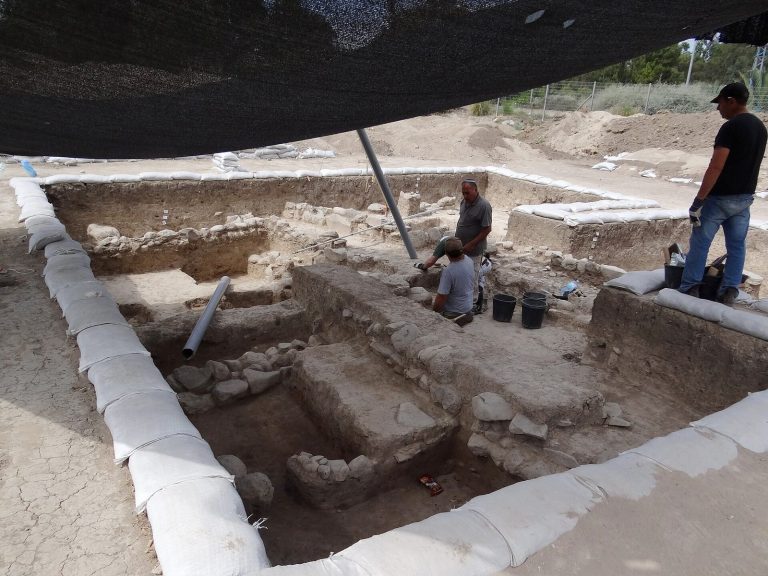
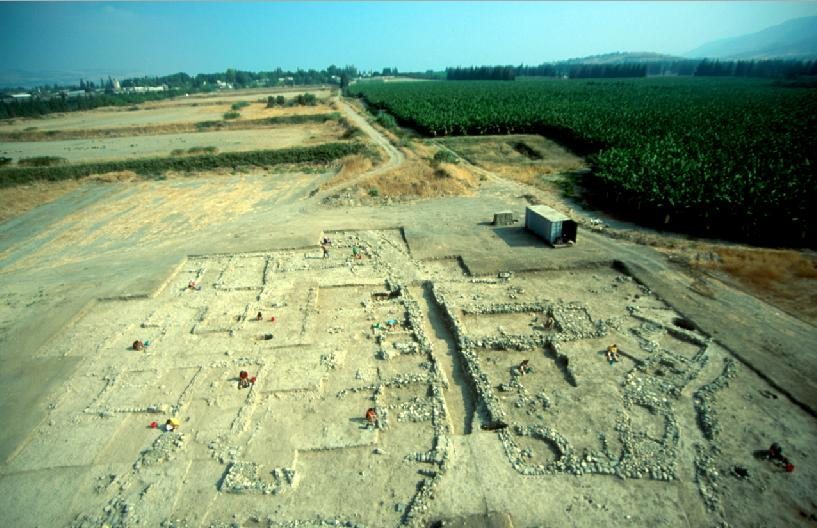
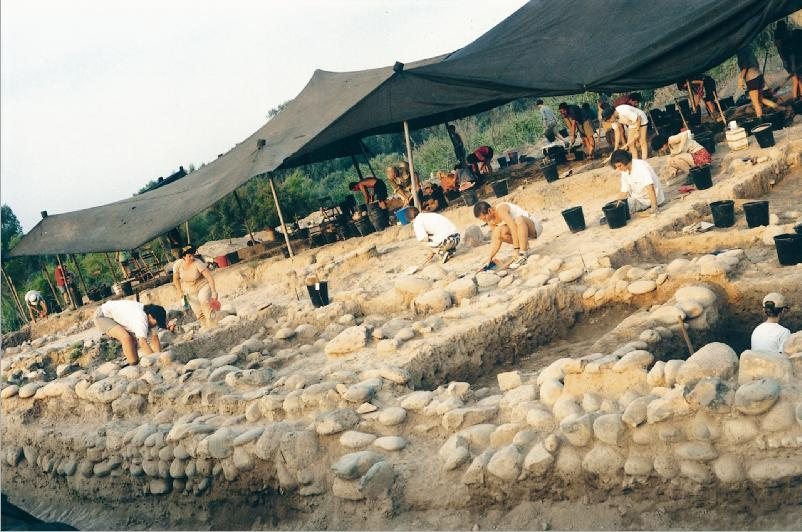
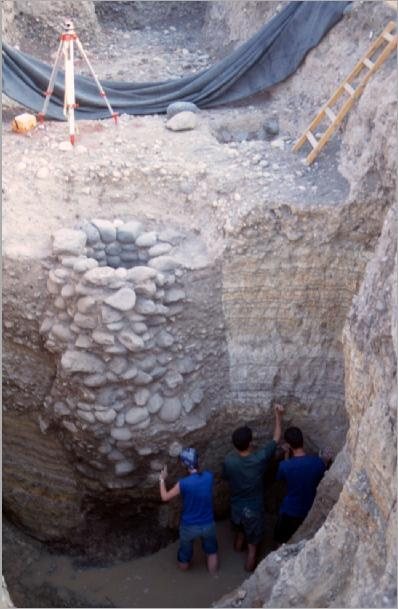
Stekelis led Hebrew University of Jerusalem excavations from 1949 to 1952. A later team, led by Yosef Garfinkel, worked from 1989 to 1990 and again from 1996 to 2004. Michele A. Miller co-directed excavations with Garfinkel from 1998 to 2000. The later work revealed large courtyard houses, the first of this kind identified at a Yarmukian site.
Members of the nearby Kibbutz Sha’ar HaGolan, a communal settlement, established a museum displaying finds from the site. Some figurines have been exhibited at the Metropolitan Museum of Art in New York and the Louvre in Paris in ten-year exhibitions; others are displayed at the Israel Museum in Jerusalem. The site takes its name from the kibbutz.
Remains
The settlement lies close to Kibbutz Sha’ar HaGolan and not far from Lake Tiberias. Excavations have revealed houses, streets, a water well and a range of pottery and other objects.
Settlement Layout
Courtyard Houses
The excavated houses measure approximately 250 to 700 square metres. Each has a central courtyard surrounded by several small rooms. This plan represents an early appearance of a form that continues in traditional Mediterranean societies. Monumental construction on a comparable scale is not known elsewhere from this period.
Streets and Alley
Streets separated the houses. One central street, about three metres wide, was paved with pebbles set in mud; a winding alley was about one metre wide. These routes are among the earliest known streets built by people, and the streets at Sha’ar HaGolan have been described as the earliest discovered in Israel.
Well
A well dug 4.15 metres deep reached the local water table. Its construction reflects knowledge of water management.
Pottery and Other Finds
Pottery
Sha’ar HaGolan has yielded some of the earliest pottery in the southern Levant, the southern part of the eastern Mediterranean region. Pottery making was a major technological innovation there, and the site provides the earliest known appearance of pottery in Israel. The vessels vary in shape and size and were used for domestic purposes.
Objects and Materials
Finds include Mediterranean seashells, polished stone vessels made of alabaster, a stone used for carving, or possibly marble, and obsidian blades. A flint arrowhead and a flint axe were also found.
Figurines and Art Objects
Figurines
About 300 art objects have been found at the settlement. One house contained approximately 70 stone or fired-clay figurines, more than have been found in any other single Neolithic building. The human-form figures are either made of fired clay or carved from pebbles. Most depict female figures and have been interpreted as representations of a goddess. The clay examples carry elaborate details, while the pebble figures are minimalist and abstract.
Figurine Found in 2022
In July 2022, archaeologists announced the discovery of a figurine about 8,000 years old. It was found broken into two pieces and measures about 20 centimetres long. The seated figure has large hips, a distinctive pointed hat, eyes shaped like coffee beans and a large nose. It was also described as having a bracelet and a red lower section.