Hôtel des Trésoriers de France: A Historic Mansion in Montpellier
Site at a Glance
- Popularity
- Medium
- Country
- France
- Primary era
- Early Modern
- Eras represented
- Medieval, Early Modern
- Civilizations
- French
- Site type
- Domestic
- Remains
- Elite Residence
On this page8 sections
History
The Hôtel des Trésoriers de France is a private mansion in Montpellier, France, begun in the mid-15th century for Jacques Cœur, a prominent merchant and royal financier under Charles VII. It is among the city’s oldest private residences and was established to support Cœur’s commercial activity in Montpellier. The mansion is also known as the hôtel de Lunaret and the Palais Jacques-Cœur de Montpellier.
Fifteenth- and sixteenth-century roles
During the 15th and 16th centuries, the mansion housed the Court of Aids, which handled royal taxation and related financial matters, and later the Chamber of Accounts, which audited royal finances. It also provided lodging for rulers visiting Languedoc. Francis I stayed there in 1537, and Anne of Austria, queen consort to Louis XIII, was among its other royal guests.
Seventeenth-century ownership and rebuilding
After the siege of Montpellier, the Marquis of Valençay, governor of Languedoc from 1622 to 1626, made the mansion his residence. The Gaudette family, including Jean Gaudette, lord of Urcières and Castelnau, held the property for a long period. It later passed through marriage to the royal councillor Pierre Dampmartin. Royal treasurers and chief road officials acquired it in 1632.
That year, Louis XIII stayed at the mansion for 12 days before travelling to Toulouse to suppress a revolt involving his brother, the Duke of Orléans, and Henri II de Rohan, a French nobleman and military leader. Beginning in 1676, the mansion was almost entirely rebuilt by a royal engineer and inspector of work on the Royal Canal of Languedoc.
From private residence to museum
After the French Revolution, Jean-Jacques Tandon bought the mansion and transferred it in 1826 to François-Xavier de Lunaret. It remained with the Lunaret family during the 19th and early 20th centuries. Henri de Lunaret bequeathed it in 1910 to the Société archéologique de Montpellier, a learned association devoted to archaeological and historical study. The society has owned the building since.
In 1931, the mansion received statutory protection as a French historic monument, with the attic excluded from the classification. The society established the Musée Languedocien in the building in 1992. Its collections, assembled since the society’s foundation in 1833, span prehistory to the 19th century.
Remains
Plan and courtyard architecture
Urban layout and lower façade
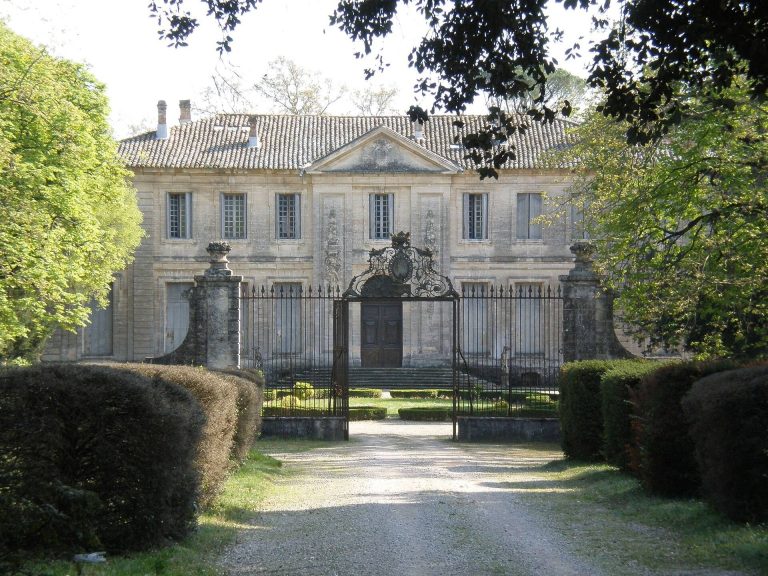
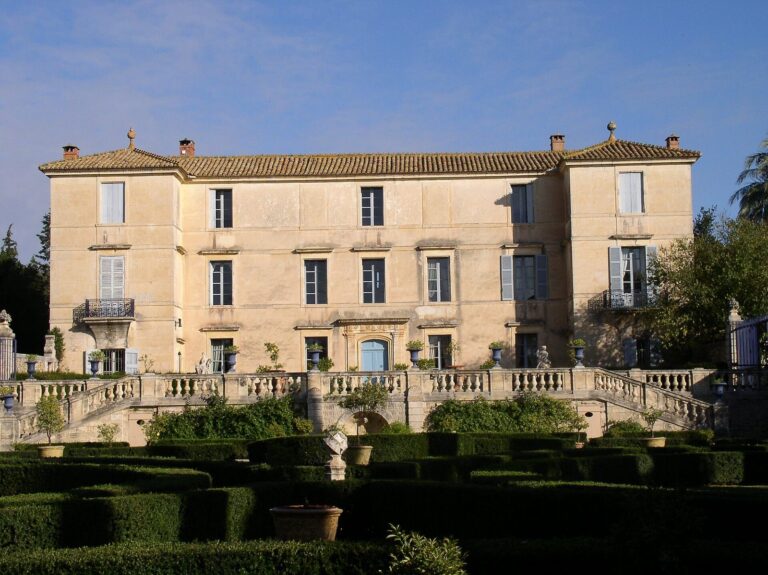
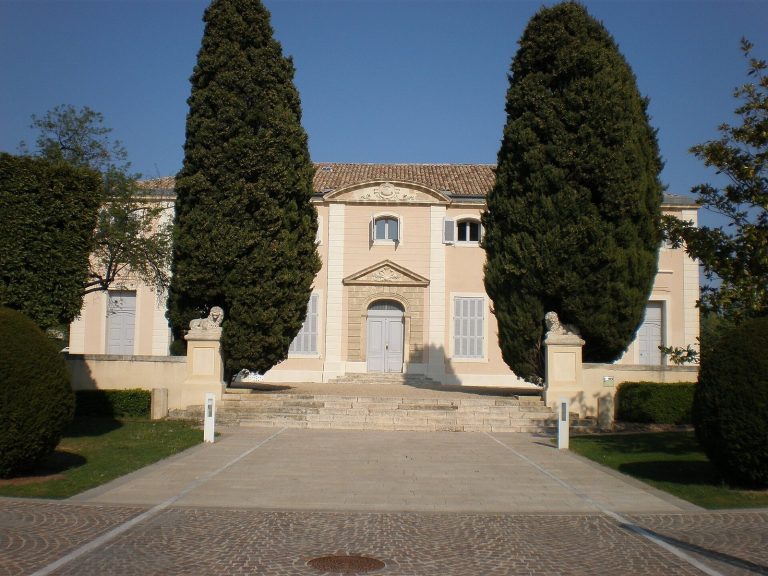
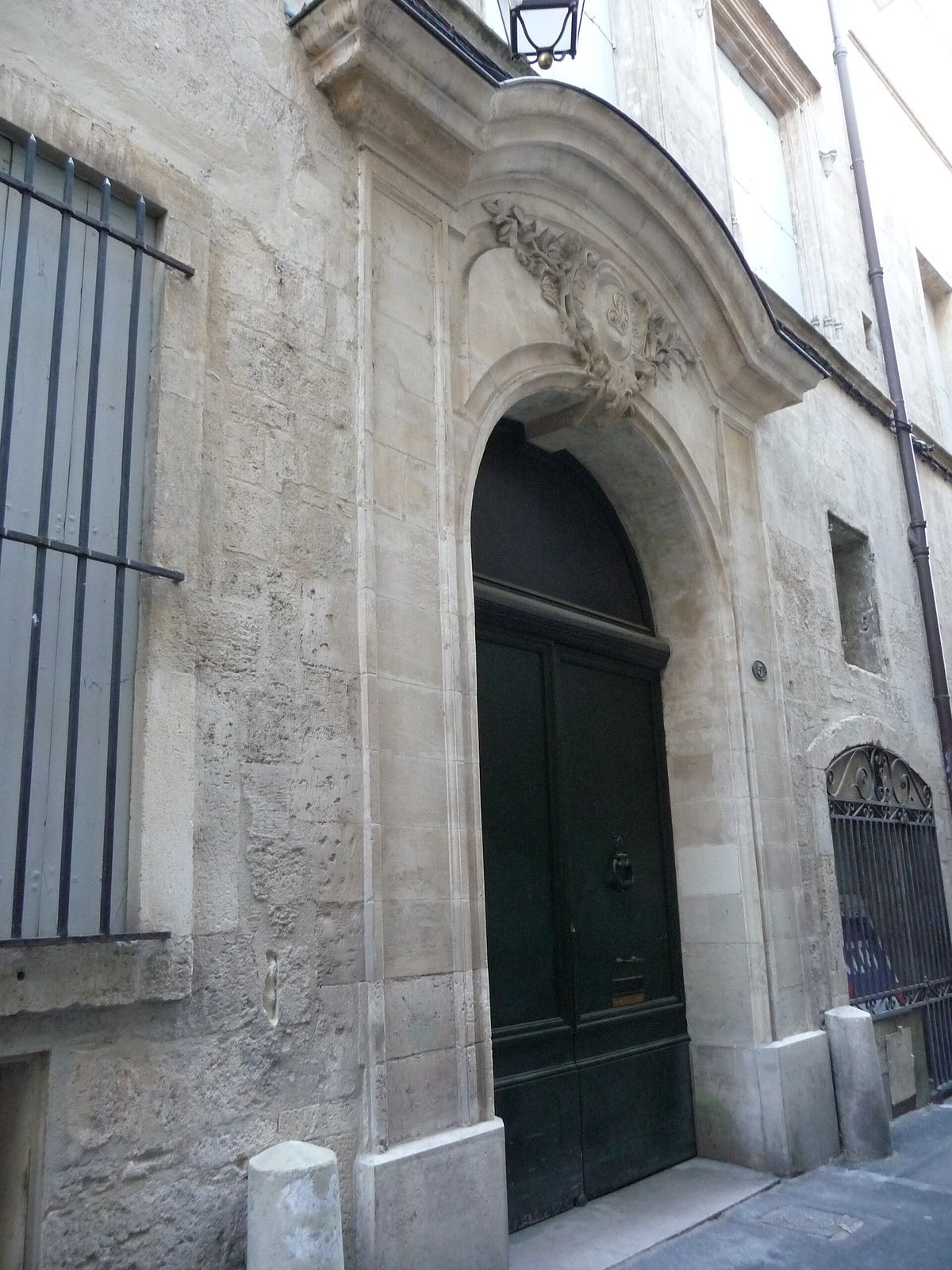
The three-storey mansion stands between two parallel streets, now called rue Jacques-Cœur and rue des Trésoriers-de-France. They were formerly named rue Sainte-Foy and rue Embouque d’Or. The building has no exterior street façade; its imposing principal façade faces a rectangular courtyard and extends across its full width. Two tiers of columns frame a grand staircase behind them, which opens onto a loggia, a covered open gallery, at first-floor level. The ground-floor columns follow the Doric order, a classical column style, while those above use the Corinthian order, another classical column style.
Upper façade and decoration
On the second floor, flat vertical strips resembling columns, called pilasters, take the place of the columns below. A central window is flanked by sculpted suns, and a carved band bears the Latin motto nec pluribus impar, roughly “not unequal to many.” An additional storey later replaced a dome that had crowned the building, changing the façade’s original harmony. The design drew on building practices from the Paris region, with a similar arrangement used at Beaucaire town hall. Jean de Troy painted a ceiling on the theme of the Discovery of Truth by Justice.