Priddy Nine Barrows and Ashen Hill Barrow Cemeteries: Bronze Age Burial Sites
Site at a Glance
- Rating
- 4
- Popularity
- Very Low
- Country
- United Kingdom
- Primary era
- Bronze Age
- Eras represented
- Bronze Age
- Civilizations
- Unclassified
- Site type
- Burial
- Remains
- Necropolis
On this page9 sections
History
Priddy Nine Barrows and Ashen Hill Barrow Cemeteries are Bronze Age burial grounds near Priddy in the Mendip Hills of the United Kingdom. They date to about 2000–700 BC and form part of a landscape that also contains Neolithic remains.
Bronze Age burial landscape
The cemeteries are thought to have been associated with the Priddy Circles, a group of four circular earthwork enclosures considered probable Neolithic ritual or ceremonial monuments. The name Priddy Nine Barrows has been used for the Priddy cemetery since 1296.
Excavation and protection
In 1815, John Skinner, an English antiquary and clergyman, carried out a partial excavation at Priddy Nine Barrows. In 1894, a team led by archaeologist Herbert E. Balch excavated at least one barrow at Ashen Hill.
The cemeteries are scheduled ancient monuments, a UK legal designation that protects archaeological sites. The group of eight barrows at Ashen Hill was scheduled in 1933, while the seven-barrows group at Priddy received this protection in 1981. The earlier scheduling may have been intended to deter excavations by the University of Bristol Speleological Society and local schools.
Remains
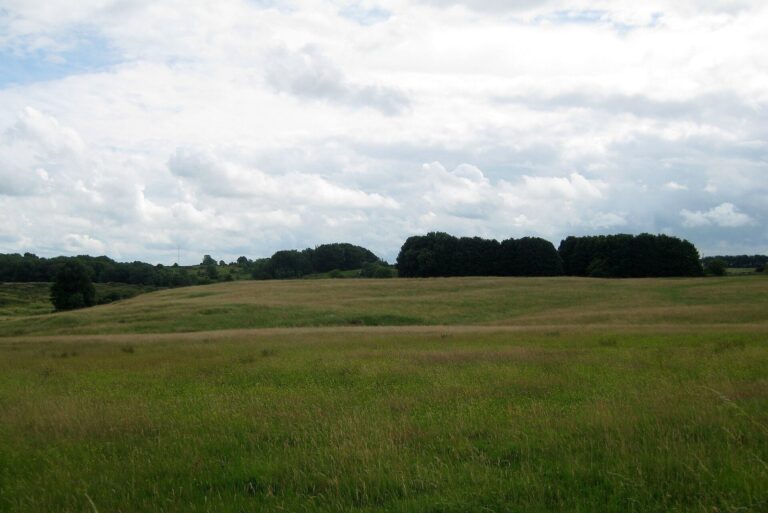
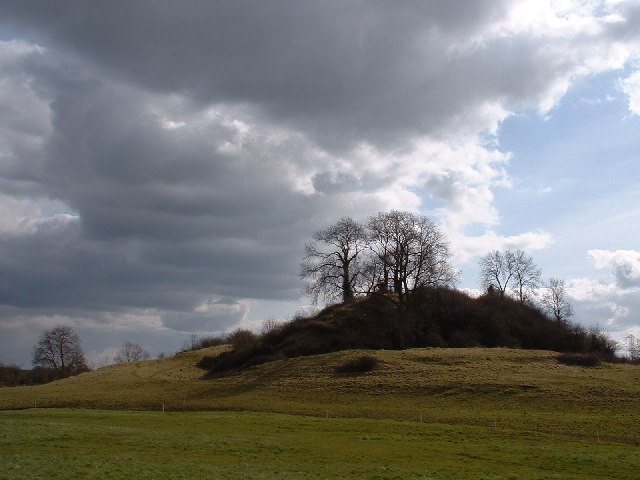
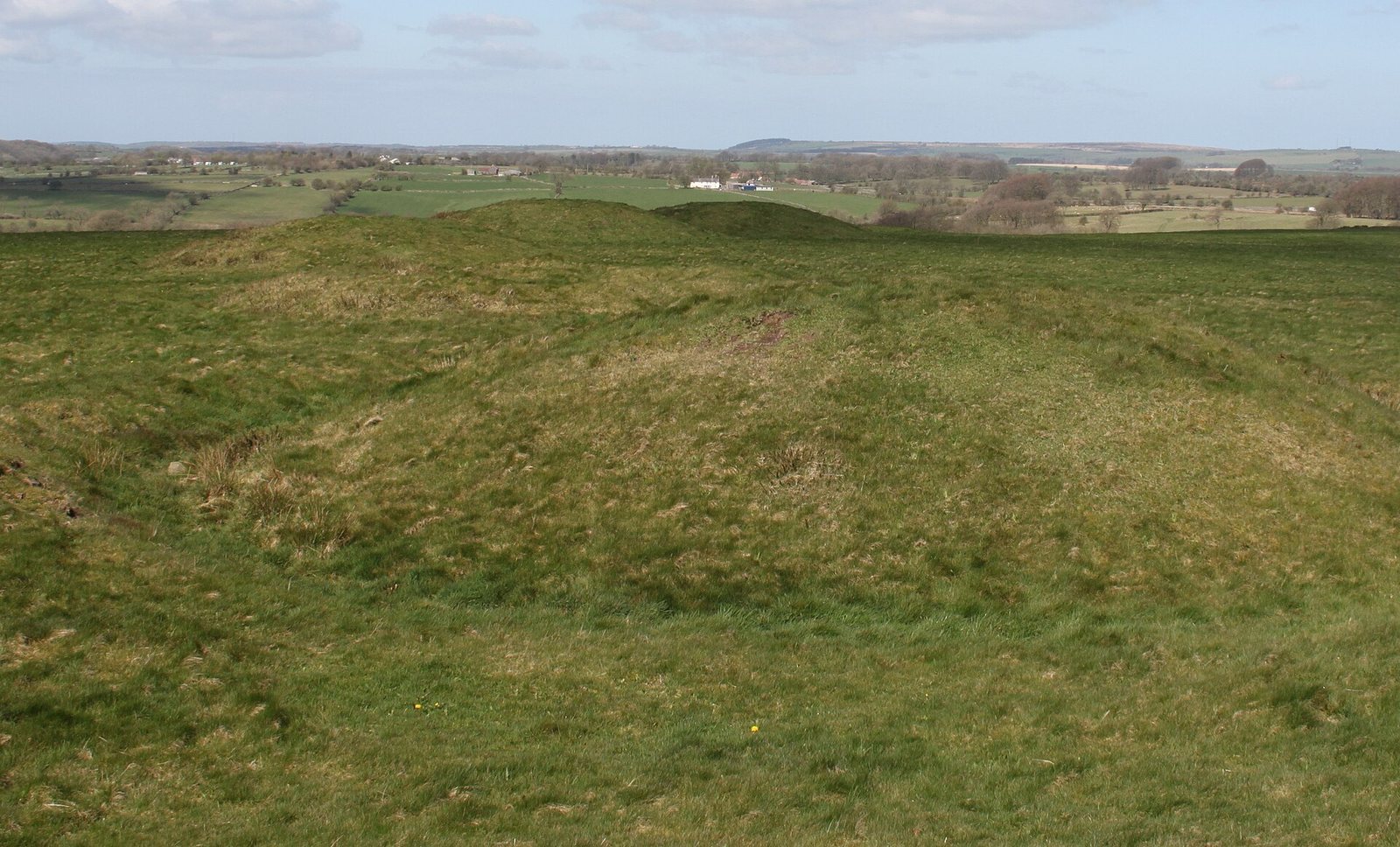
The barrows occupy the crests of the area’s two highest ridges, at opposite ends of a field. Ashen Hill is on the northern ridge, 295 metres above sea level; Priddy Nine Barrows lies to the south, on North Hill, at 307 metres. The field is about one kilometre east of Priddy and 750 metres south of the Priddy Circles. A barrow is a burial mound; bowl and bell barrows are types distinguished by their mound forms and surrounding earthworks.
Ashen Hill
Ashen Hill comprises six bowl barrows and two bell barrows aligned east to west, although one interpretation classifies three of the eight as bell barrows. The mounds measure 14–20 metres across and stand 2–3 metres high. Each is surrounded by a ditch that has gradually filled in. Ground north and east of the barrows has been excavated through lead extraction.
Priddy Nine Barrows
Line of seven barrows
A line of seven round barrows follows the crest of North Hill. They range from 12 to 27 metres in diameter and from 1 to 3 metres in height. Each has a shallow, partly infilled ditch. Indentations on some mound tops are thought to result from excavations in the early nineteenth century.
Outlying pair
A separate pair of bowl barrows lies about 150 metres north of the westernmost mound in the line, with roughly 20 metres between the two. Each mound is about 20 metres across and 2.5–3 metres high. A magnetometry survey, which detects magnetic changes in the ground that can indicate buried features, suggested a ring ditch and other disturbances between the pair and the line of seven. Its results were inconclusive, though they raised the possibility of three additional barrows. Lead mining may have disturbed evidence of further mounds.
Burial finds
An excavated cremation burial lay in an oval cist, a small stone-lined burial chamber, covered by a flat stone. It was positioned just below the ground surface as it would have been in the Bronze Age. Objects found with the burial included bronze daggers, a spearhead, decorative amber beads, a bronze ring and a small incense cup.