Maisel Synagogue: A Historic Jewish House of Prayer in Prague
Site at a Glance
- Rating
- 4.2
- Popularity
- High
- Country
- Czechia
- Primary era
- Modern
- Eras represented
- Early Modern, Modern
- Civilizations
- Austria-Hungary, Habsburg, Habsburg Austria, Holy Roman Empire, Kingdom of Bohemia
- Site type
- Religious
- Remains
- Synagogue
On this page9 sections
History
Foundation and early history
Maisel Synagogue is a Jewish synagogue in Prague, Czechia, first built in the Renaissance style and consecrated in 1592. Mordechai Maisel, a prominent Jewish businessman, financier, and communal benefactor, initiated it for Prague’s Jewish community. He secured the plot in 1590 and received permission to build from Rudolf II, the Habsburg ruler and Holy Roman Emperor, in the early 1590s. Judah Coref de Herz designed the building, which was constructed under Josef Wahl. Its consecration took place on Simchat Torah, a Jewish festival celebrating the completion and renewal of the annual Torah-reading cycle.
Maisel intended the synagogue for communal use. After his death in 1601, his property, including the building, was confiscated despite an imperial privilege allowing him to make a will. His bequest was fulfilled only after legal proceedings that lasted several decades. Alterations in the following years helped make the synagogue the largest and most lavishly equipped building in Prague’s Jewish ghetto; it remained one of the ghetto’s most impressive buildings into the next century.
Fires and rebuilding
A fire that swept through the ghetto in 1689 badly damaged the synagogue, which was subsequently rebuilt. Another fire devastated the building in 1754. It was reconstructed in 1864 to a design by J. M. Wertmüller. During the nineteenth century, it became the home of the Neolog Jewish community, a modernizing movement that developed in Central Europe.
Between 1893 and 1905, architect Alfred Grotte carried out a substantial remodelling, and an organ was installed. During the Nazi occupation, the building was used to store property belonging to Czech Jewish communities, including furniture and sacred and personal objects. After the Second World War, it served as a depository for the Jewish Museum in Prague and returned to the ownership of the Prague Jewish Community. The museum has administered the synagogue since 1955.
Museum use and restoration
The building was restored in the 1960s. From 1965 to 1988, it housed an exhibition of silver Judaica and other objects from Czech and Moravian synagogues whose communities had been lost. After repairs and reconstruction following the Velvet Revolution, it reopened in 1996 as a museum presenting Jewish history in the Czech lands through the Enlightenment. A further restoration was completed in 2015, alongside an update to the permanent exhibition.
Remains
Building and interior
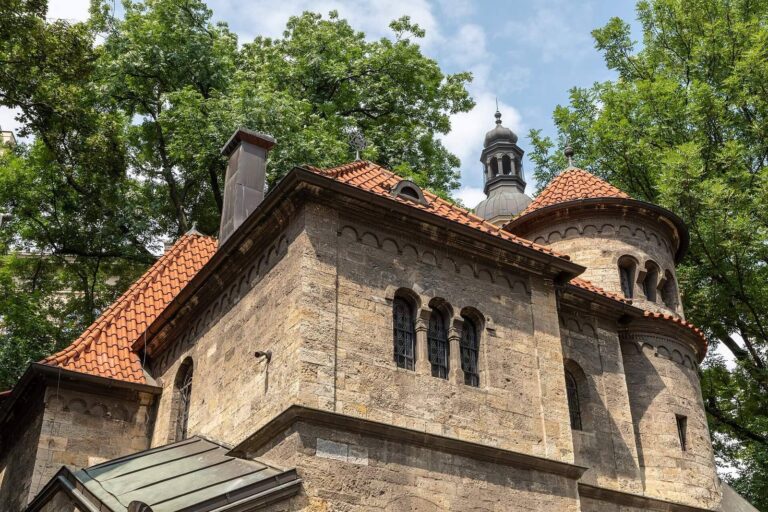
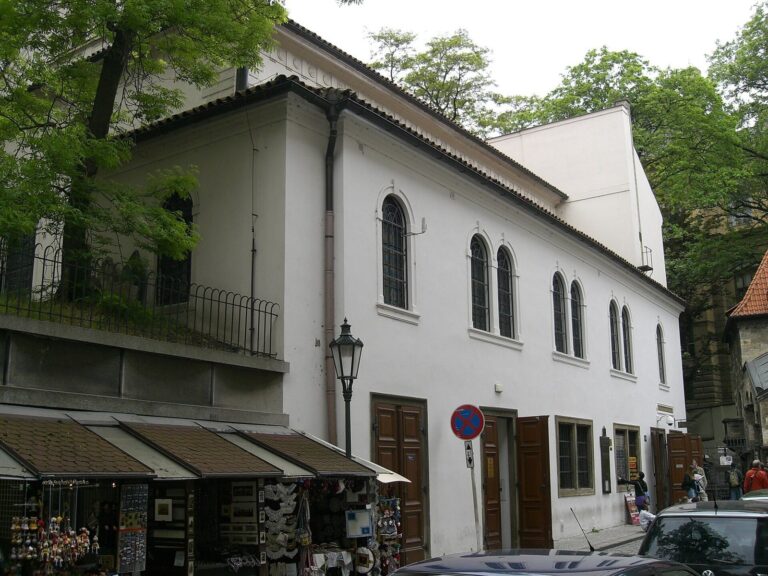
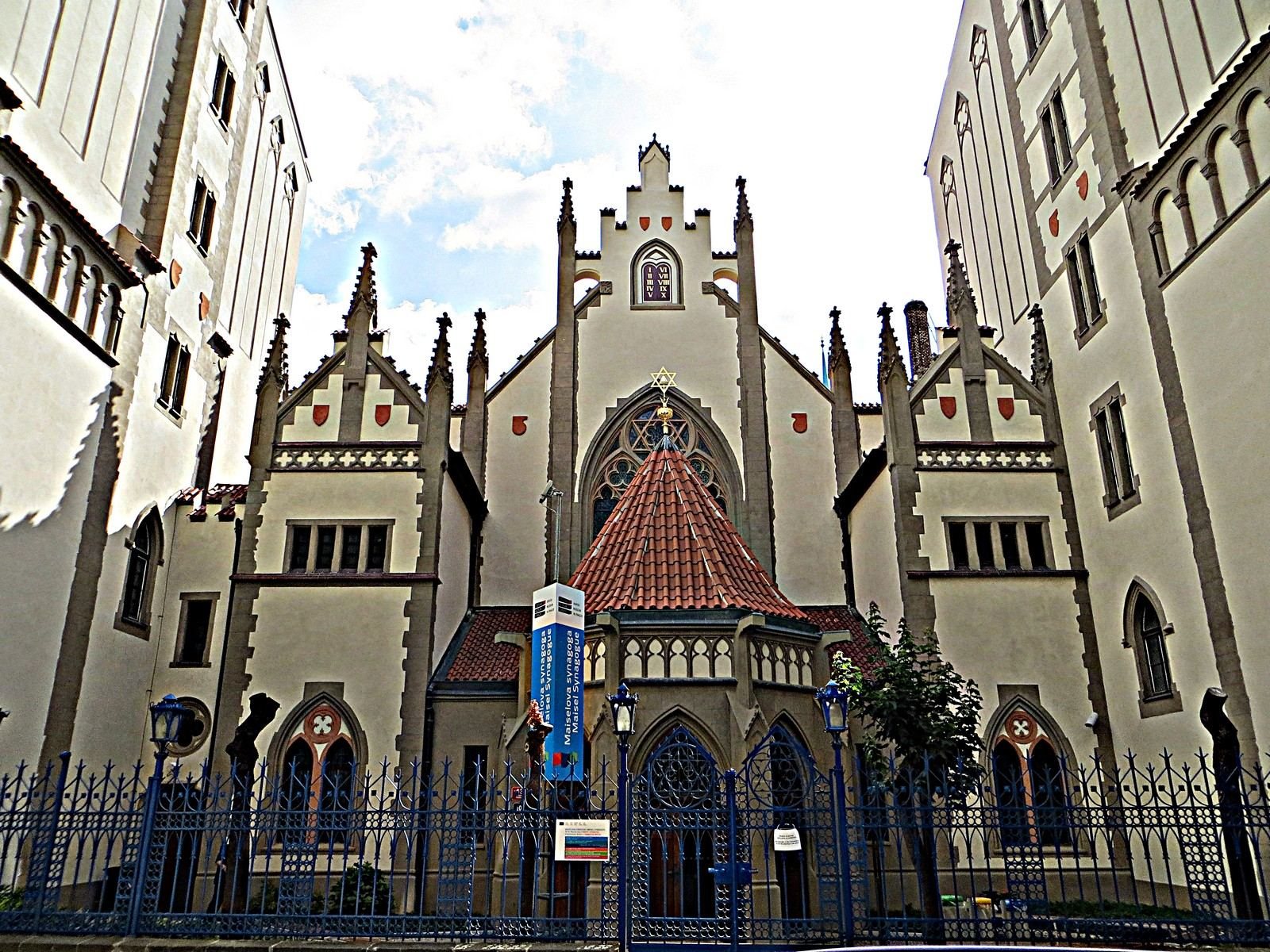
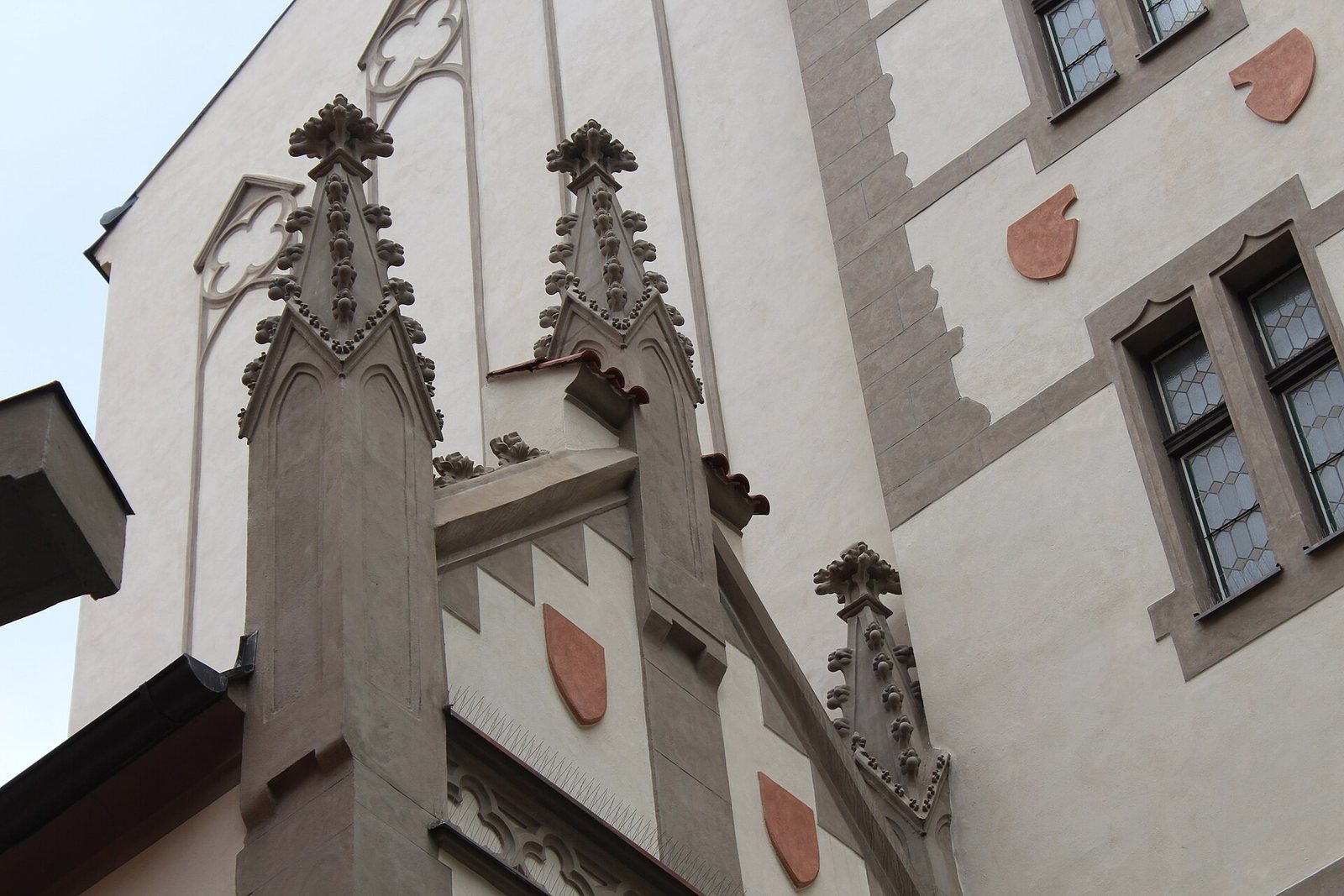
The synagogue’s three-aisled interior is supported by twenty columns and includes a separate side aisle for women. Its original Renaissance design was later transformed into a Neo-Gothic building. The rebuilding after the 1689 fire shortened the synagogue by about one third. In the 2015 restoration, decorative details previously covered by a uniform white finish were brought back into view, moving the interior and exterior closer to their appearance in the early twentieth century.
Permanent exhibition
Historical themes and spaces
The permanent exhibition traces Jewish history in the Czech lands from early settlement through the eighteenth-century Jewish Enlightenment, an intellectual movement encouraging secular education and engagement with wider European society. Its opening themes include Jewish life in medieval and early-modern society, communal life, and traditional education. The central space focuses on the Renaissance-era flourishing of Prague’s Jewish community, Maisel, and the golem legend, about an animated being in Jewish folklore. The north side aisle presents Jewish occupations and daily life alongside discrimination, anti-Jewish unrest, and religious oppression. In the western space beneath the gallery, an epilogue addresses the Enlightenment, growing contact between Jews and Christians in Prague, and changes in Jewish life from the late eighteenth century.
Objects and interactive displays
An audiovisual projection depicts streets in the old Jewish quarter using the Langweil model, a detailed model of Prague’s historic buildings and streets. Interactive displays offer views of the former Jewish town, historical plans of Jewish settlements, and material on the lives and work of about sixty rabbis and other Jewish leaders. Exhibits include rare metalwork, silver Judaica, and historical Jewish manuscripts presented interactively. The broader collection comprises more than 6,000 ritual objects gathered from hundreds of private homes and 153 synagogues, and is the world’s largest collection of its kind. It also includes works by goldsmiths from Prague, Nuremberg, Vienna, Augsburg, and elsewhere.