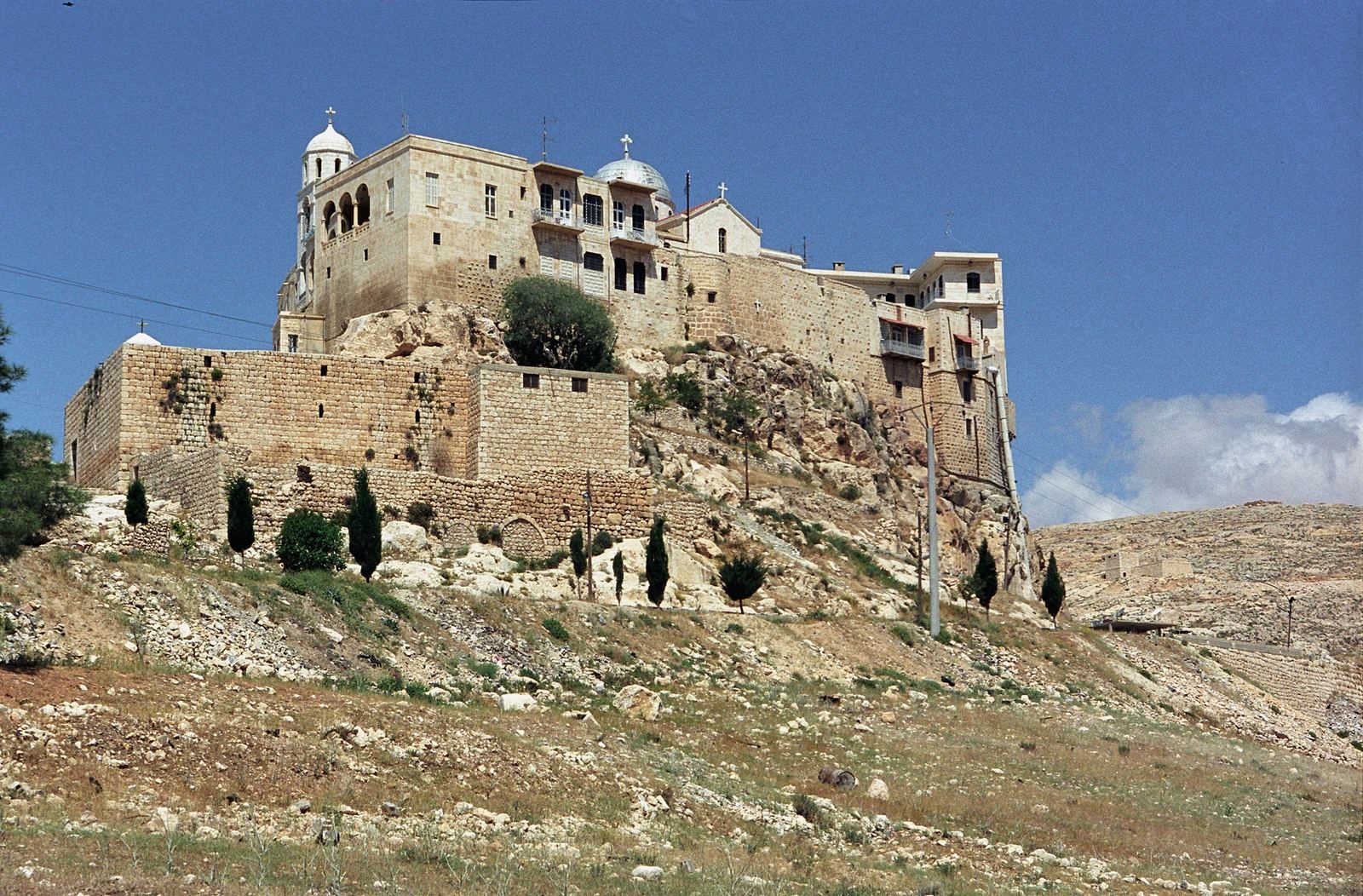
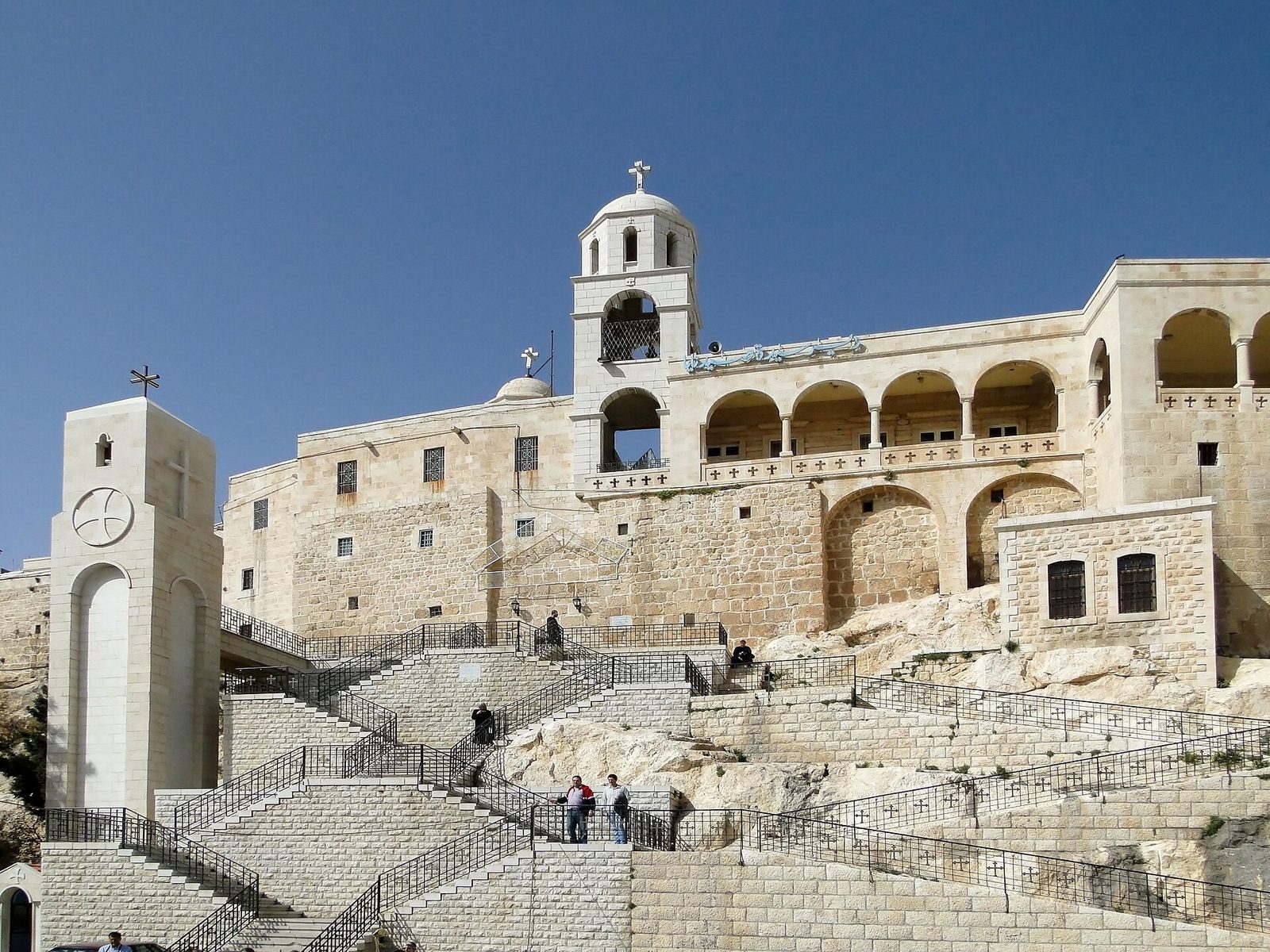
Our Lady of Saidnaya Monastery: A Greek Orthodox Women’s Monastery in Syria
Site at a Glance
- Rating
- 4.8
- Popularity
- Medium
- Country
- Syria
- Primary era
- Modern
- Eras represented
- Medieval, Modern
- Civilizations
- Ottoman
- Site type
- Religious
- Remains
- Monastery
On this page8 sections
History
Our Lady of Saidnaya Monastery is an active Greek Orthodox women’s monastery in Saidnaya, Syria, traditionally founded in 547 under the Byzantine emperor Justinian I. The Byzantine Empire was the eastern continuation of the Roman Empire, centered on Constantinople, and Justinian ruled from 527 to 565. The monastery is regarded as one of the oldest in the world and in the Middle East and North Africa.
It belongs to the Patriarchal Diocese of Antioch and Damascus within the Greek Orthodox Church of Antioch, an Eastern Orthodox church associated with the ancient patriarchal see of Antioch. The monastery serves Greek Orthodox communities in Damascus and Rif Dimashq, particularly in Saidnaya.
Foundation tradition
The tradition of the monastery’s founding places Justinian near Saidnaya, about 40 kilometres from Damascus, during a campaign against the Persians. Another version says that he was travelling on pilgrimage to Jerusalem. While hunting, he pursued a gazelle up a mountain, where the Virgin Mary appeared and told him to build a church. In a later appearance, she showed him its design. Tradition says Justinian dedicated the completed monastery on the Feast of the Nativity of the Virgin Mary, which commemorates Mary’s birth.
The icon and pilgrimage
The monastery’s principal Marian icon, known as Shaghoura, or “the Illustrious,” is said to have arrived in the eighth century. Tradition attributes it to Saint Luke, the evangelist traditionally associated with the Gospel of Luke, and counts it among four icons painted by him.
An annual pilgrimage on September 8 honours Our Lady of Saidnaya. The monastery was also a destination for pilgrims in the Middle Ages, and Thietmar, Burchard von Strasbourg, and William of Boldensele described it in Latin pilgrimage accounts. Some of these accounts portrayed the icon as flesh-like from the neck down and said that it gave off holy oil.
Damage and recent history
An earthquake partially damaged the monastery in 1759. Druze rebels may also have damaged it during the anti-Christian riots of 1860. During the Syrian civil war, shelling struck the monastery in November 2013 and caused a fire; it was shelled again in January 2014.
Remains
Church and medieval fabric
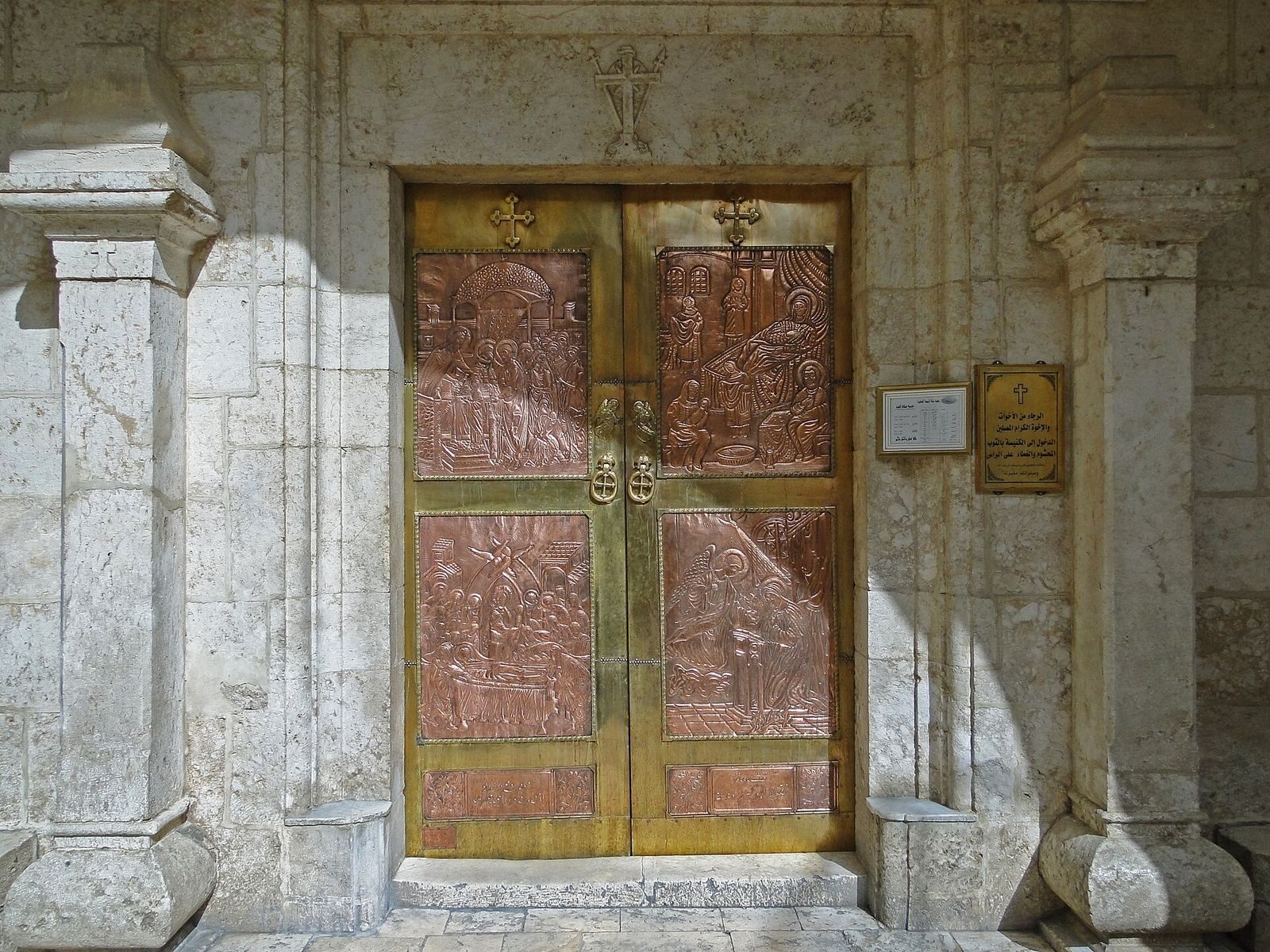
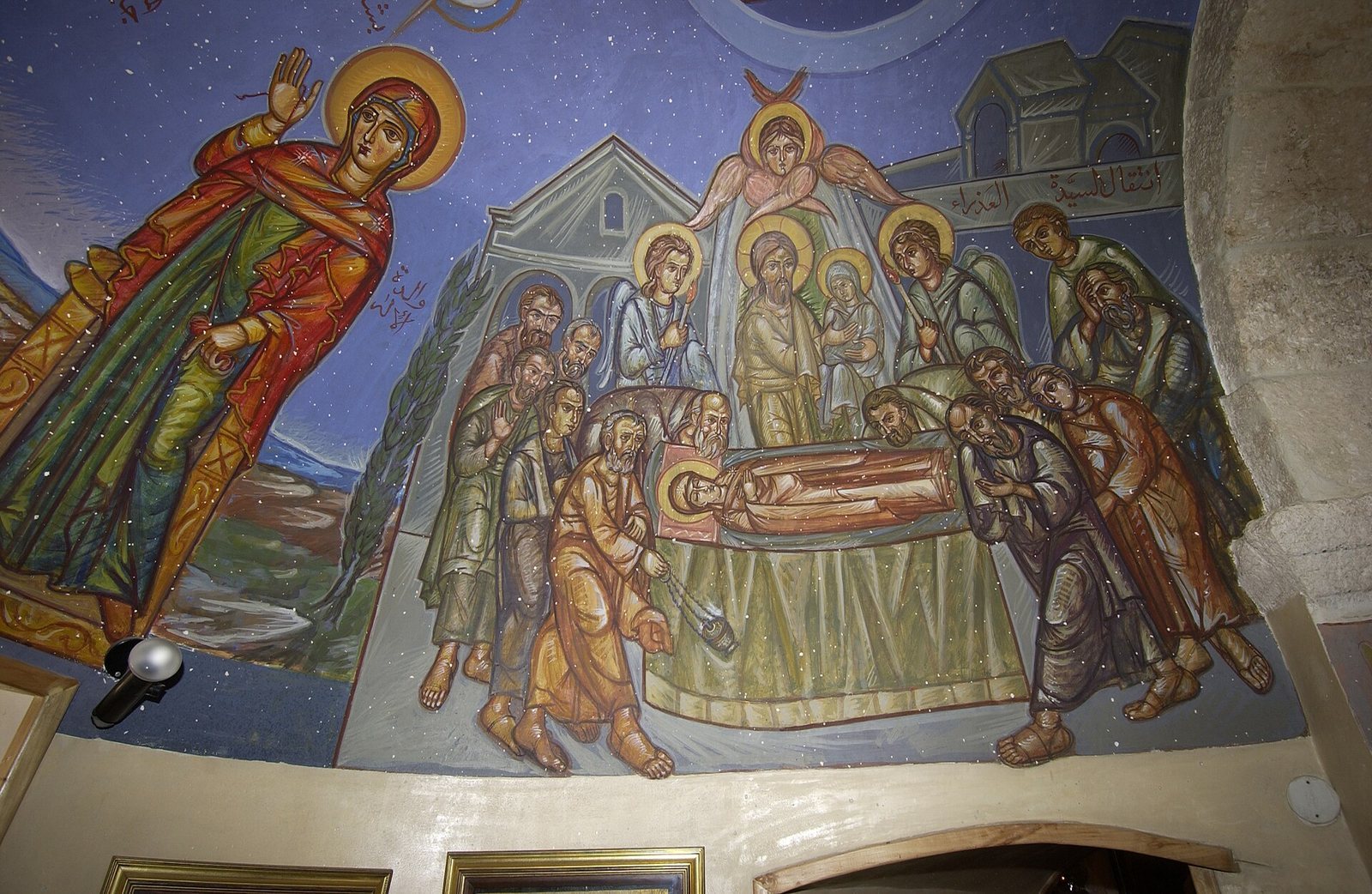
The complex comprises several buildings, including the Church of the Nativity of the Virgin Mary, its principal church, and a separate chapel that serves as the shrine of the principal icon. The main chapel contains numerous icons and a wooden iconostasis, a screen bearing icons that separates the sanctuary from the main worship space, in front of the altar.
By 1883, the apse, the semicircular end of the medieval church, was its only surviving part. It was incorporated into the modern church at Saidnaya. A small room connected to the chapel dates to the twelfth or thirteenth century. It contains a fragment of a painting; a Syriac inscription associated with the room was later removed.
Icon shrine and offerings
The pilgrimage shrine holds the monastery’s principal icon, Shaghoura, concealed behind an ornate niche fitted with silver doors. Later icons stand on either side. Pilgrims have access to the icon’s casket, and the icon is venerated as myrrh-streaming, meaning it is believed to emit sacred oil.
Numerous hammered-silver crosses and other religious symbols left by pilgrims as offerings are displayed on the walls. These offerings, known as ex votos, are made in fulfilment of vows or in thanksgiving.
Collections and grounds
A collection of icons dated to the fifth through seventh centuries and a large library are associated with the monastery. A statue of Jesus Christ also stands on the grounds.