Prinsenhof in Amsterdam: From Convent to Town Hall
Site at a Glance
- Popularity
- Medium
- Country
- Netherlands
- Primary era
- Early Modern
- Eras represented
- Medieval, Early Modern, Modern
- Civilizations
- Dutch, Holy Roman Empire
- Site type
- Civic
- Remains
- Town Hall
On this page11 sections
History
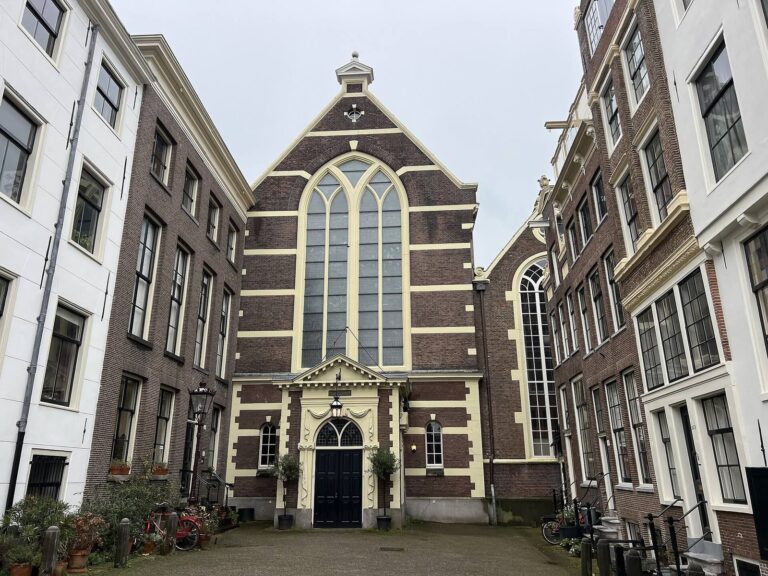
The Prinsenhof is a historic complex in Amsterdam, Netherlands, whose origins lie in the Convent of St Cecilia, established in the early fifteenth century. After the Alteration of Amsterdam in 1578, a political and religious change that brought the city under Protestant rule, the former convent was designated lodging for distinguished guests.
From convent to guest lodging
The complex has been called the Prinsenhof since 1581. The name may be connected with a possible stay by William of Orange, who led the Dutch revolt against Spanish rule. William, an admiral-general, or senior naval commander, is listed as a guest in 1580 or 1581. Historian Jan Wagenaar, however, identified the Earl of Leicester as the first guest and placed his stays in 1586 and 1587. William preferred to lodge at the Admiralty, where his authority meant he did not have to rely on the city’s hospitality, a preference that helped establish the Prinsenhof’s name.
Other guests included Maurice of Orange, who stayed in 1594 and 1618, and Frederick Henry of Orange in 1628. Marie de’ Medici stayed in 1638. In 1642, William II of Orange arrived with his wife, Mary Henrietta Stuart, and her mother, Henrietta Maria, Queen of England.
Admiralty use and rebuilding
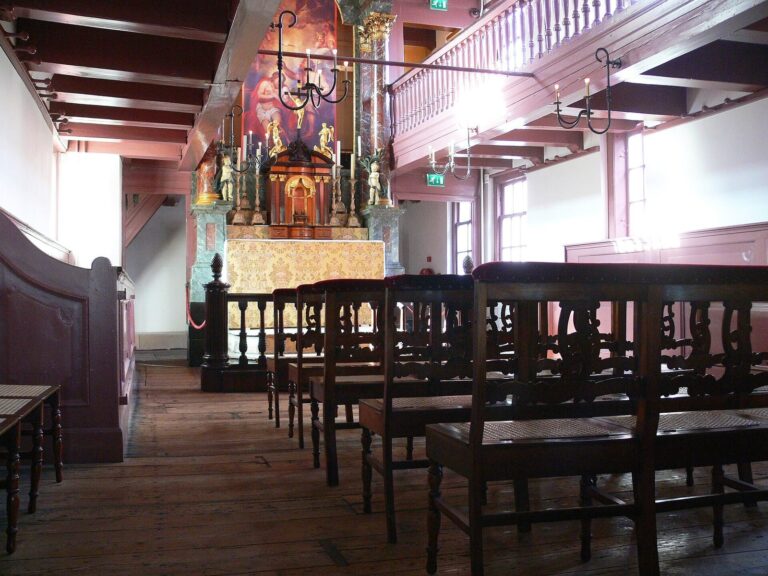
In 1586, the former convent chapel was assigned as a fencing school. After 1597, the rest of the complex provided accommodation for provincial delegates and senior Admiralty officials, including the fiscal advocate, who also lived there. The Admiralty of Amsterdam was a Dutch Republic institution responsible for naval affairs.
When the Old Town Hall on Dam Square burned on 7 July 1652, the Prinsenhof temporarily housed Amsterdam’s mayors and city council. The replacement town hall opened on Dam Square in 1655. In 1656 the entire Prinsenhof passed to the Admiralty and became known as the Sea Office. The complex was rebuilt from the ground up in 1661.
Return to use as town hall
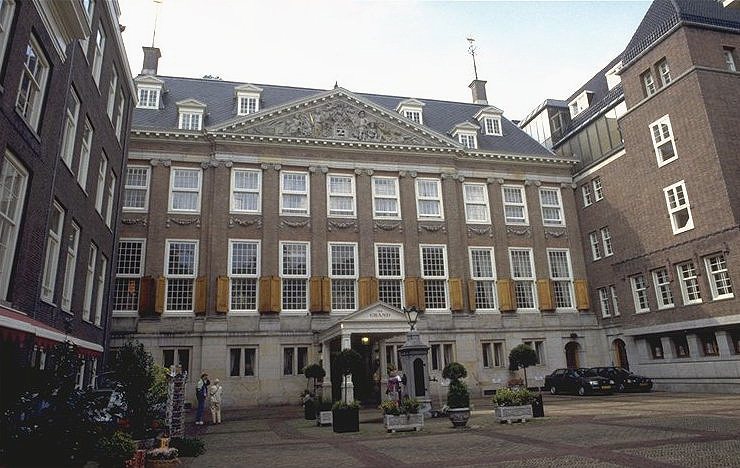
In 1808, Louis Napoleon, then king of Holland, ordered the town hall on Dam Square vacated for use as a royal palace. Amsterdam’s municipal government returned to the Prinsenhof, where the town hall remained until 1988, when it moved to the Stopera on Waterlooplein. A twentieth-century expansion involved the demolition of two houses designed by Philips Vingboons and once occupied by Bertrand van Gronsveld and Joan Cornelis van der Hoop. The complex now houses the Sofitel The Grand hotel.
Remains
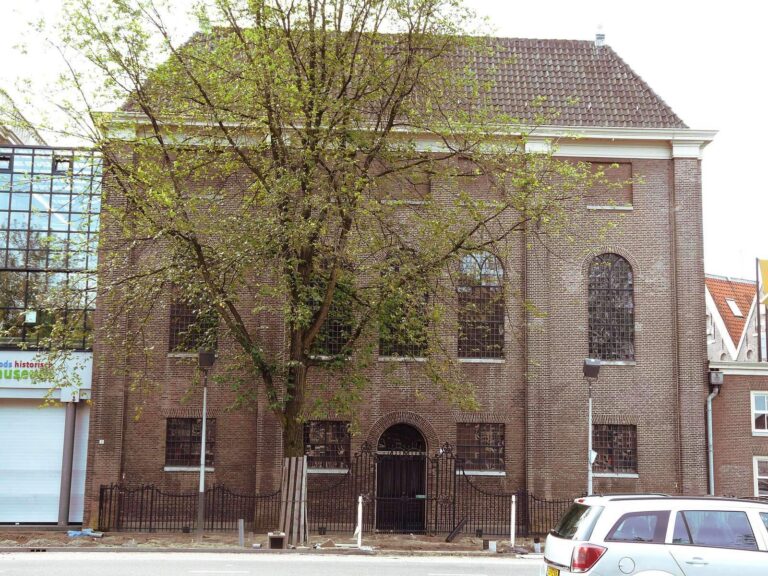
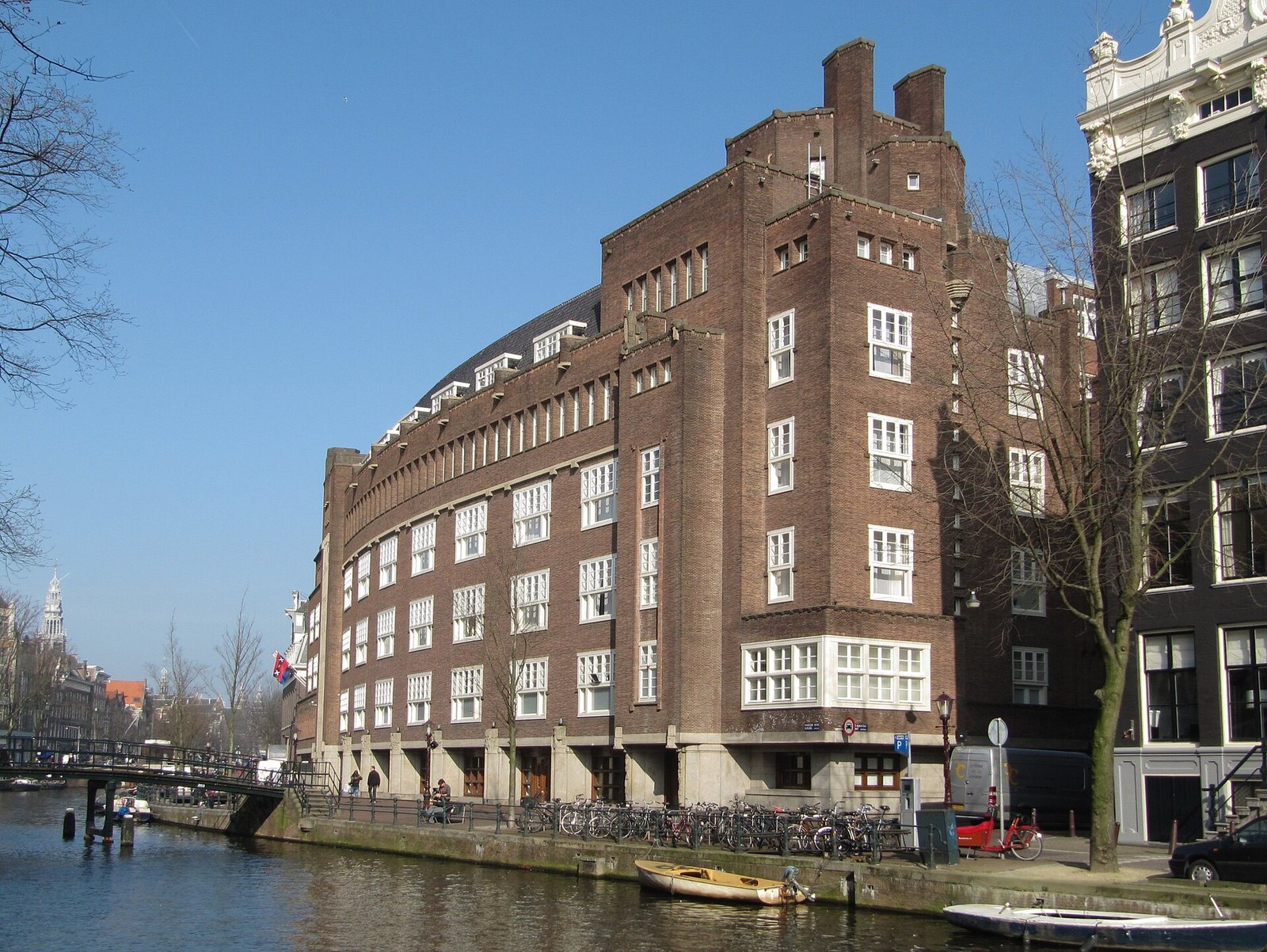
At Oudezijds Voorburgwal, the complex retains features associated with its religious, Admiralty and municipal uses. These include a pointed church turret, a façade from the 1661 rebuilding and a town-hall extension completed in 1926.
Religious and Admiralty-era features
Church turret
A pointed church turret survives as a visible feature of the complex’s origins as a convent.
1661 façade
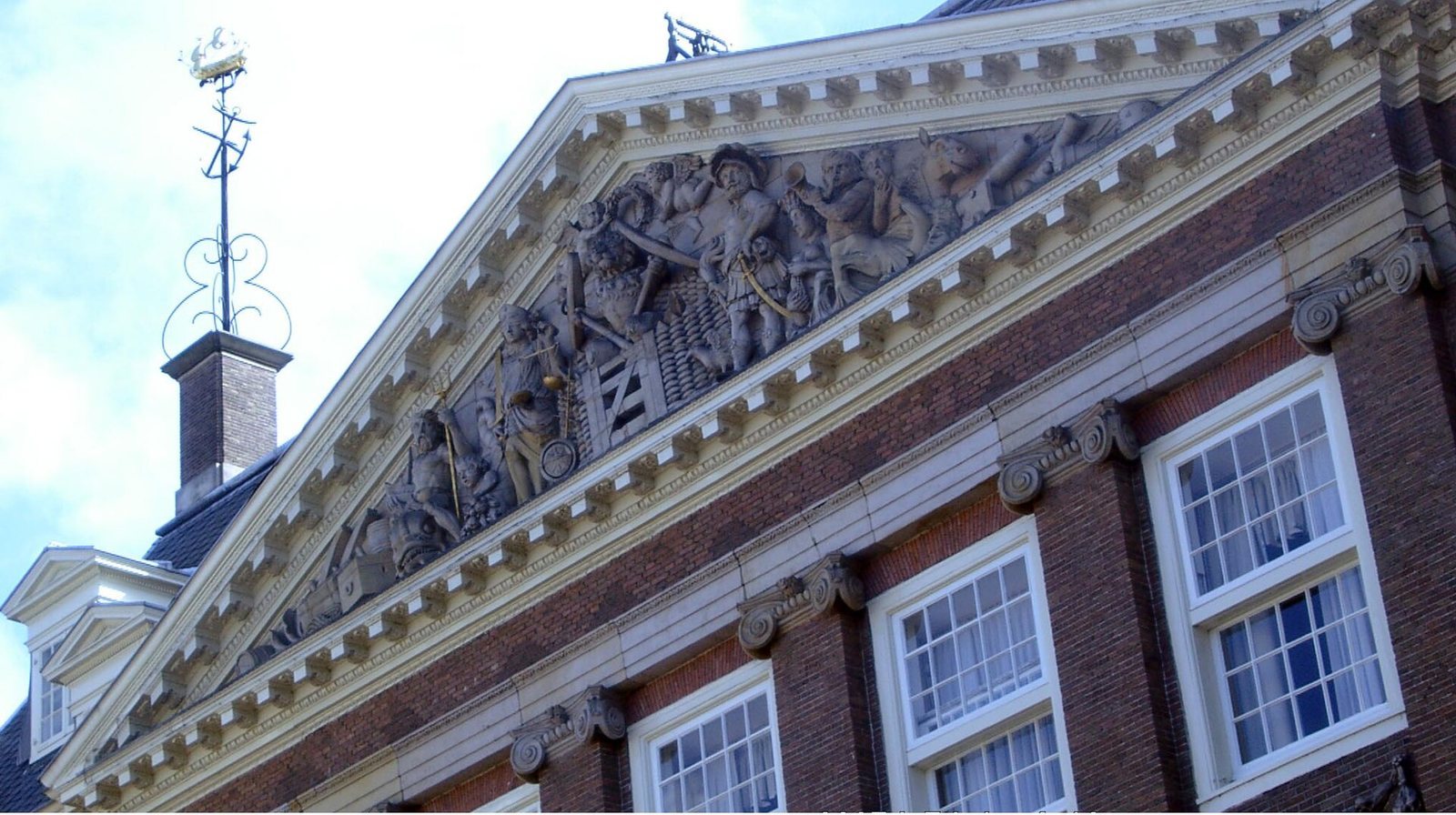
The rebuilding produced a façade articulated by pilasters, flat column-like projections attached to a wall, in a Palladian manner. Palladian architecture adapts principles associated with the Italian Renaissance architect Andrea Palladio. A triangular upper section, or pediment, depicts Neptune, the Roman god of the sea, alongside a lion holding the arms of the Admiralty’s governing college, its senior board. The figures guard the “Holland Garden,” an allegorical representation of the province as an enclosed garden.
Town-hall extension and interiors
1926 extension
The town-hall extension on Oudezijds Voorburgwal was completed in 1926. Designed by municipal architect Allard Remco Hulshoff, it belongs to the Amsterdam School, an early twentieth-century architectural movement known for expressive forms and ornament.
Interior artworks
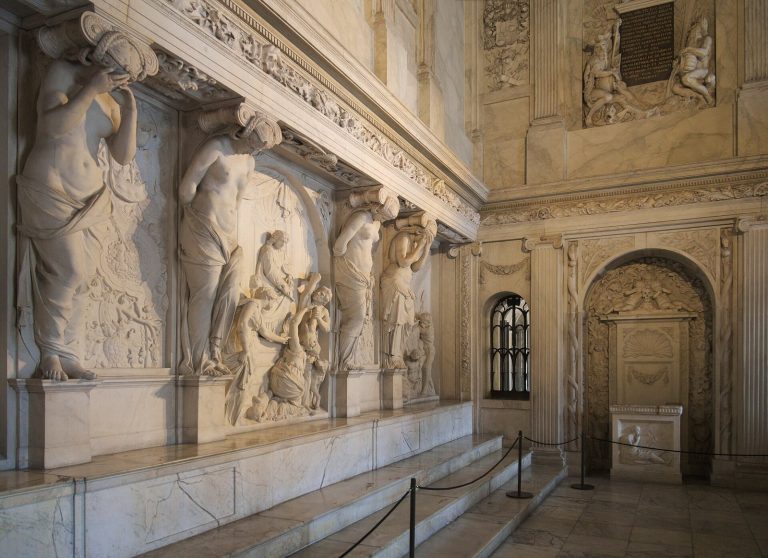
The old council chamber contains a wooden group of three figures by John Raedecker, known as the City Maiden, an allegorical personification of a city. A wall painting by Chris Lebeau, dated 1927, is visible in the former wedding hall. Johan Thorn Prikker and Karel Appel also made works for the complex.