Occhiolà: A Medieval Settlement in Sicily
Site at a Glance
- Rating
- 4.1
- Popularity
- Medium
- Country
- Italy
- Primary era
- Medieval
- Eras represented
- Medieval
- Civilizations
- Unclassified
- Site type
- Settlement
- Remains
- Village
On this page7 sections
History
Medieval settlement
Occhiolà was a medieval settlement on Terravecchia hill near Grammichele in east-central Sicily, Italy. At the time of the 1693 earthquakes, about 2,910 people lived there. Most farmed, while the community also included agricultural laborers and small numbers of doctors, notaries, legal professionals, and artisans.
The earthquakes of 1693
An earthquake on 9 January damaged houses in Occhiolà. Around 2 p.m. on 11 January, a much more powerful shock struck while residents were trying to repair them, destroying the settlement. Estimates of the dead differ: Mongitore gave 1,407, Gallo 725, and Boccone about 100 deaths and 190 injuries.
Survivors sought refuge at the hermitage of Madonna del Piano and in the countryside of Margi and Camemi. After local officials informed Prince Carlo Maria Carafa of the disaster, he sent provisions. The destruction of Occhiolà led to the establishment of present-day Grammichele. Carafa wanted the new city to follow a hexagonal plan, designed by Friar Michele da Ferla, a member of a religious order.
Excavations and earlier settlement
Paolo Orsi began excavating at Occhiolà in 1890. He identified older remains beneath and around the medieval ruins, though cultivation and the removal of building material for later construction had disturbed them. Orsi interpreted the remains as evidence of a Hellenistic or late Greek settlement with an acropolis, the elevated, often fortified part of an ancient settlement. One disputed identification links the site to Echetla, a Greek-influenced settlement of the Sicels, an ancient people of Sicily. The historian Diodorus Siculus associated Echetla with Syracuse’s occupation in 309 BC. The Hellenistic period followed Alexander the Great’s conquests and saw Greek culture spread across the eastern Mediterranean.
Excavations at Occhiolà continued in repeated campaigns. Work on the Occhiolà Archaeological Park began in 1993, the 300th anniversary of the earthquake. Finds from the site are held at the municipal museum in Grammichele and the Paolo Orsi Archaeological Museum in Syracuse.
Remains
Settlement layout and buildings
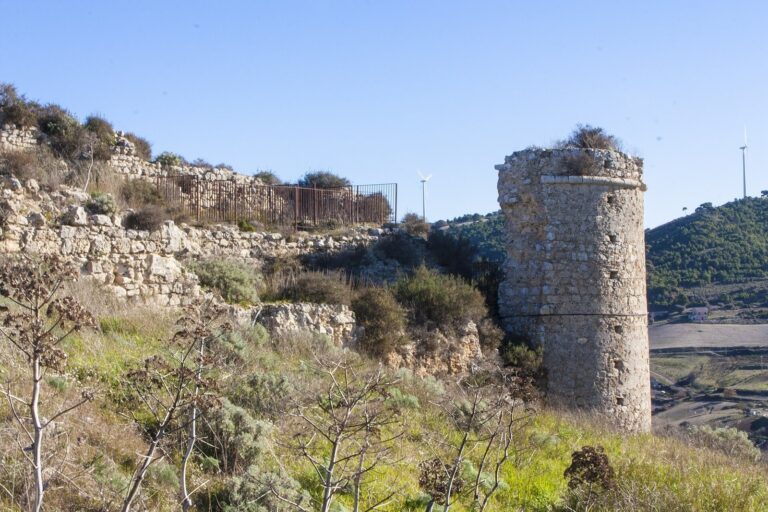
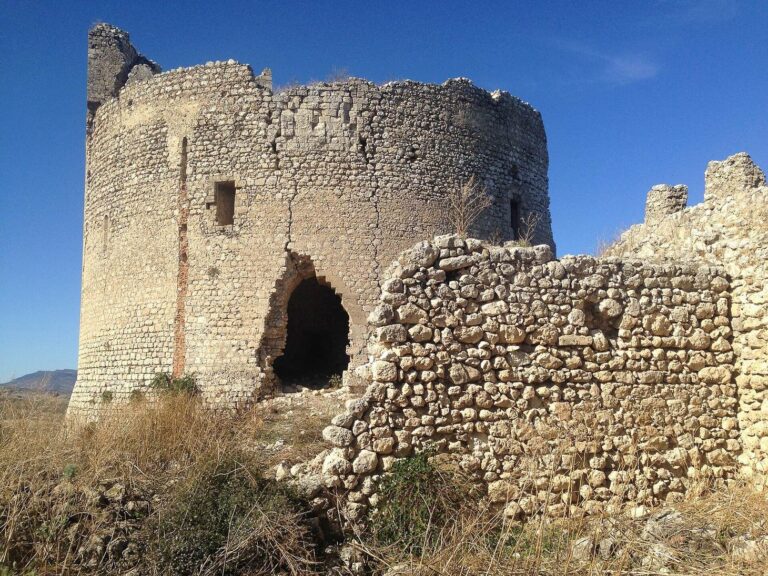
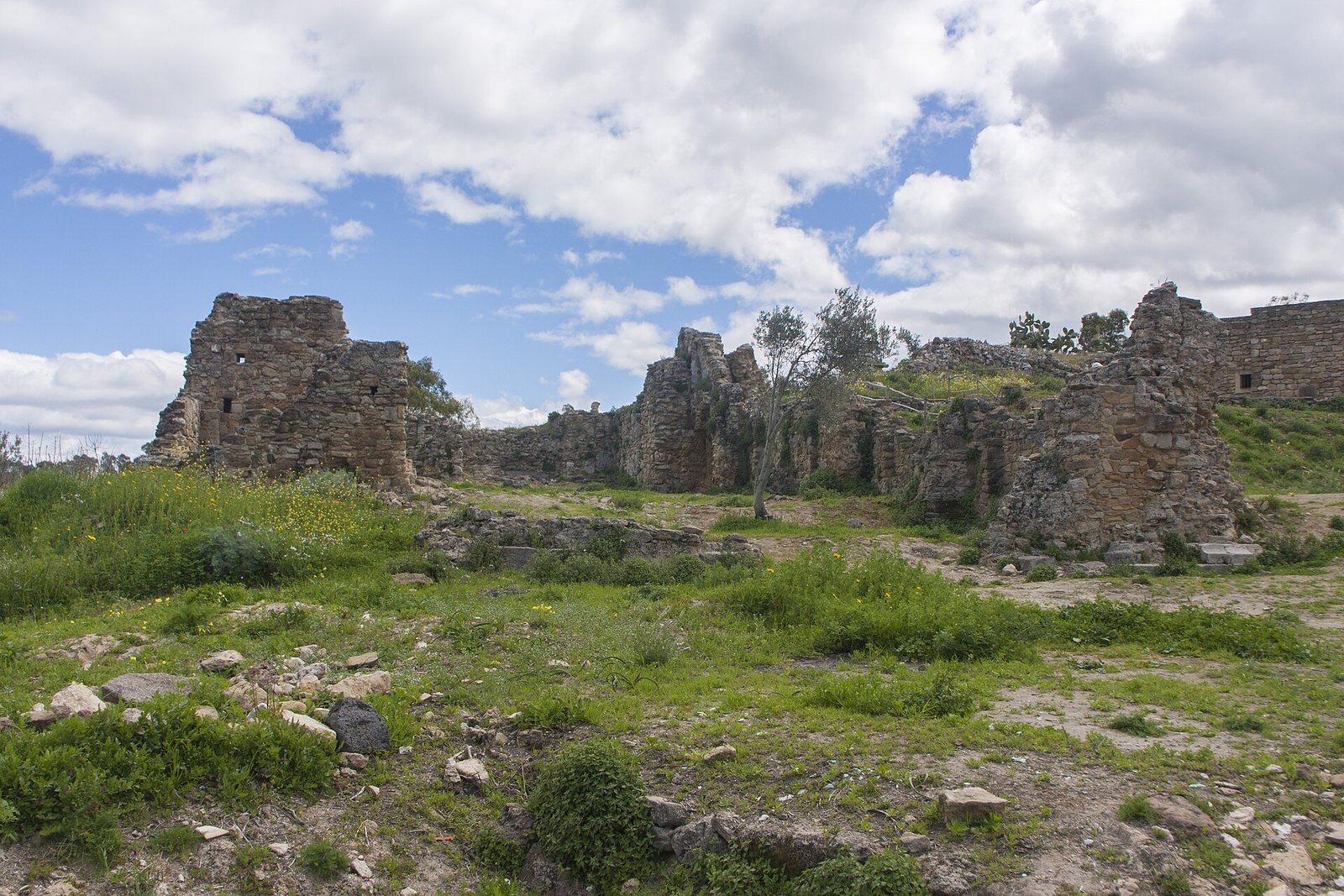
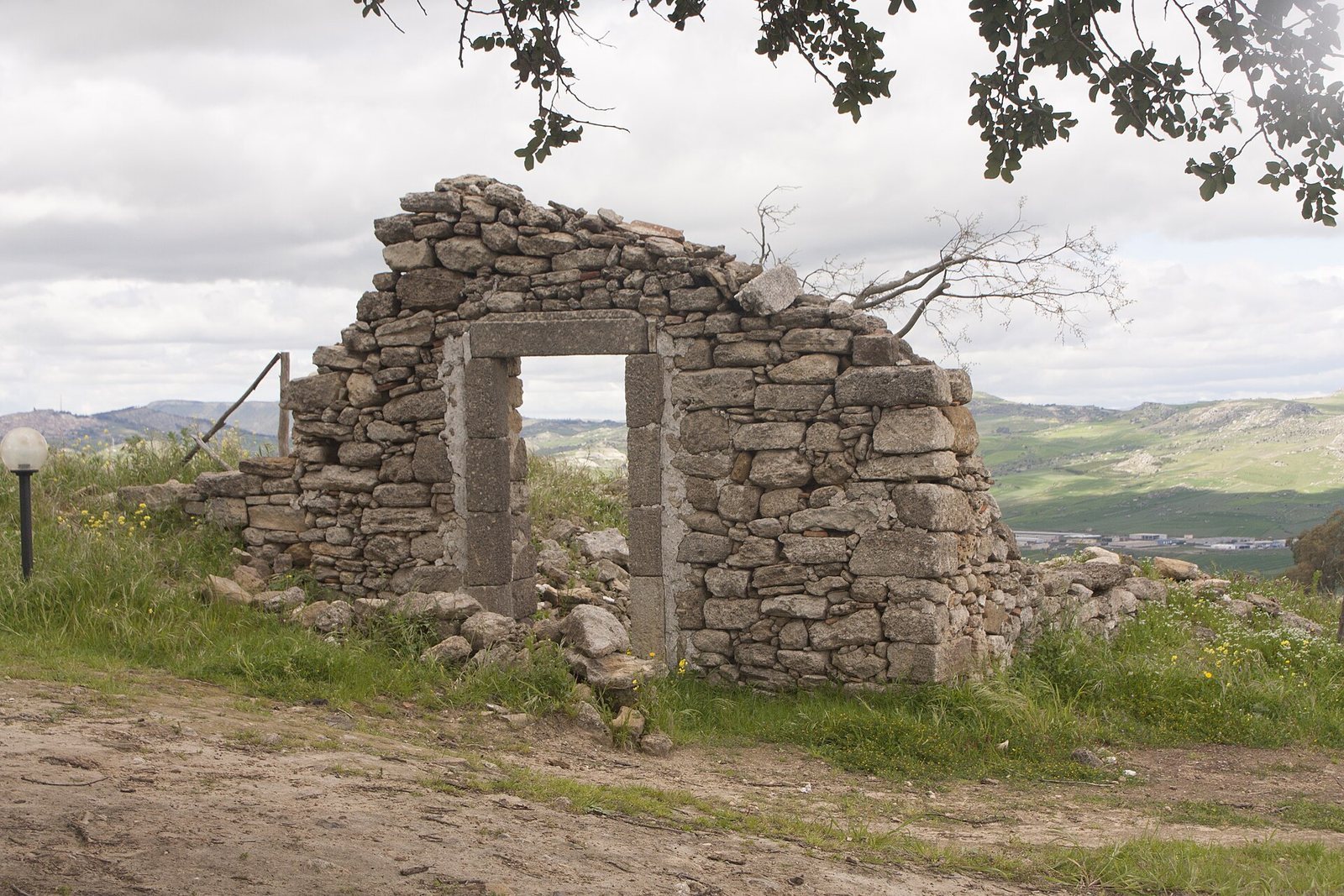
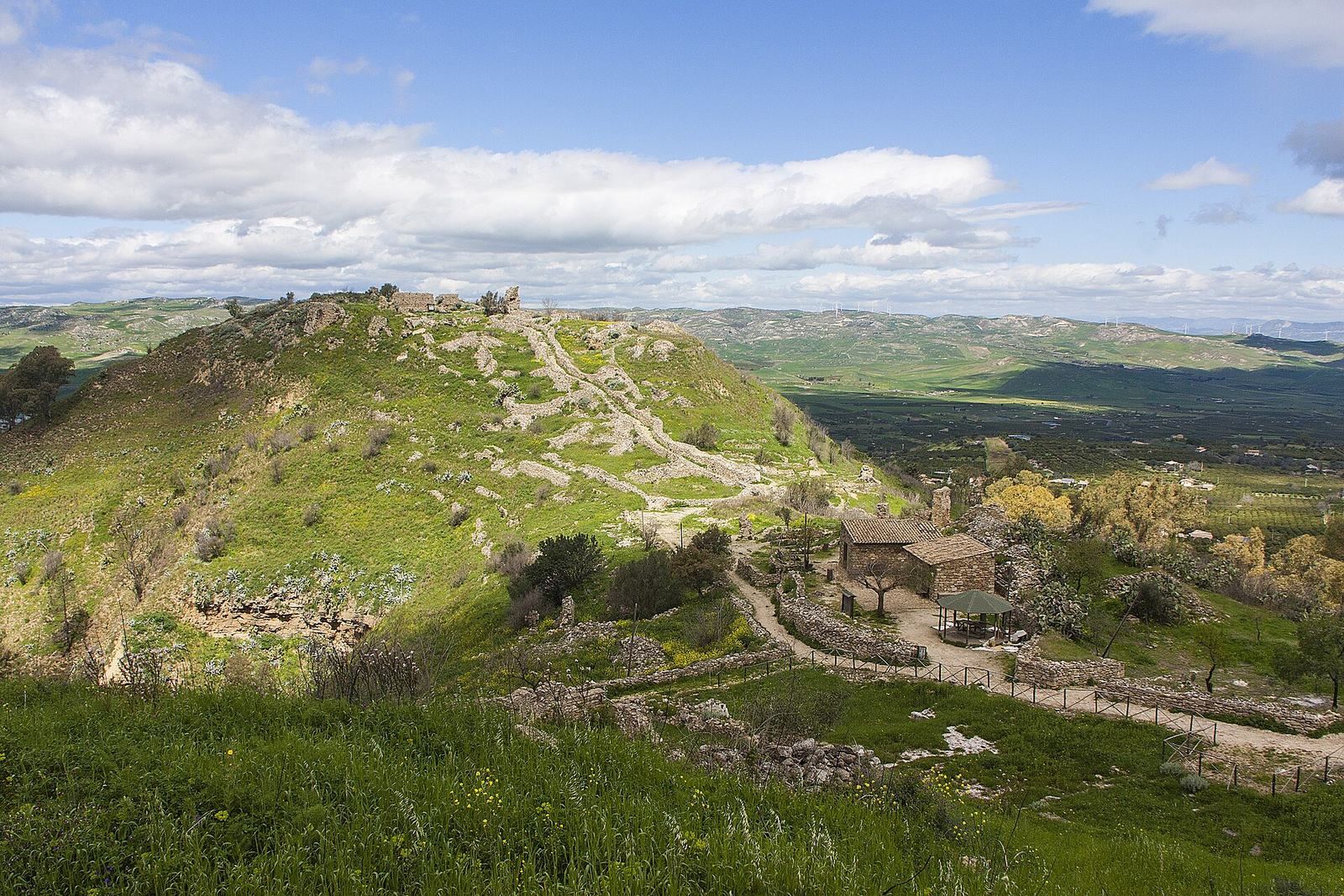
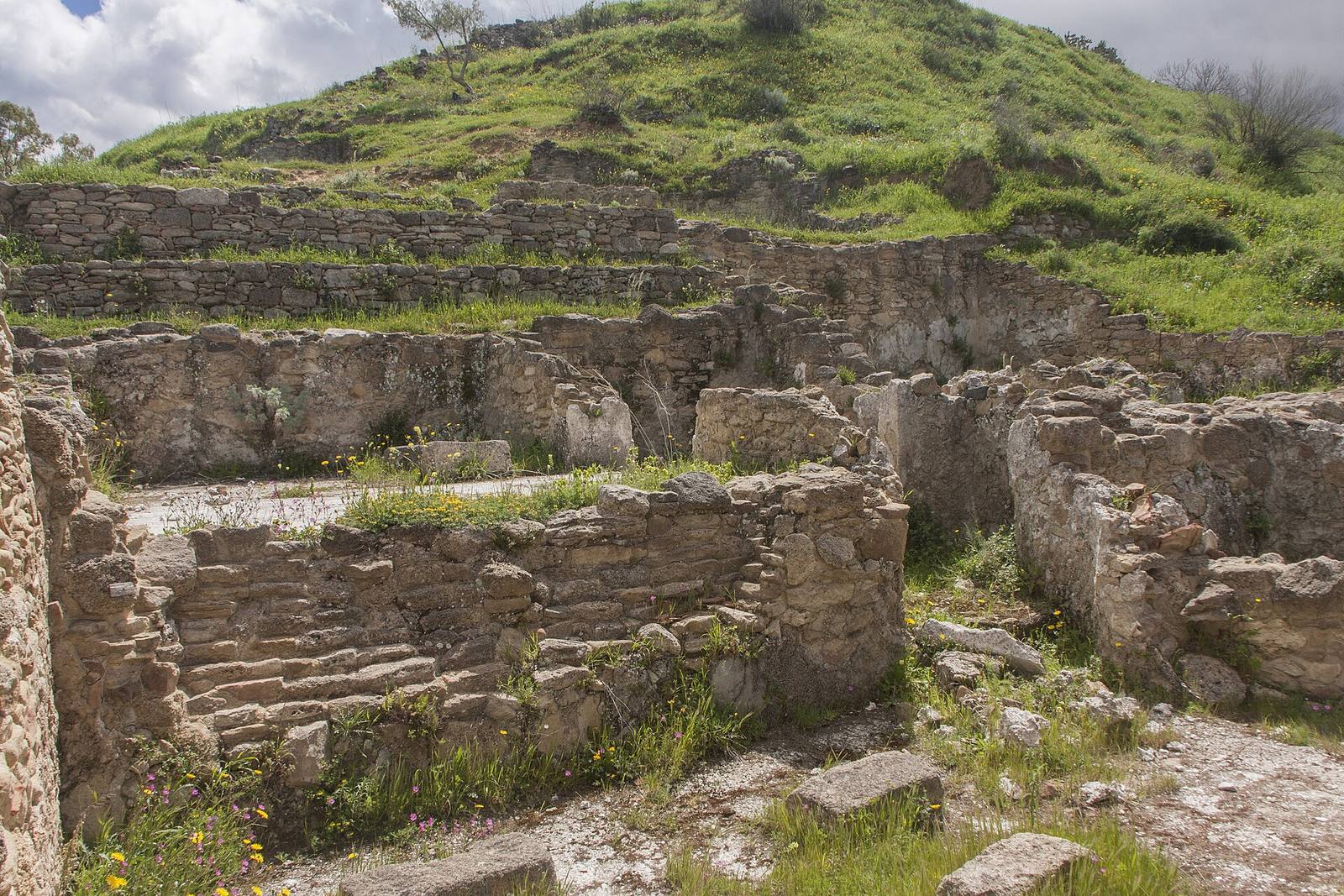
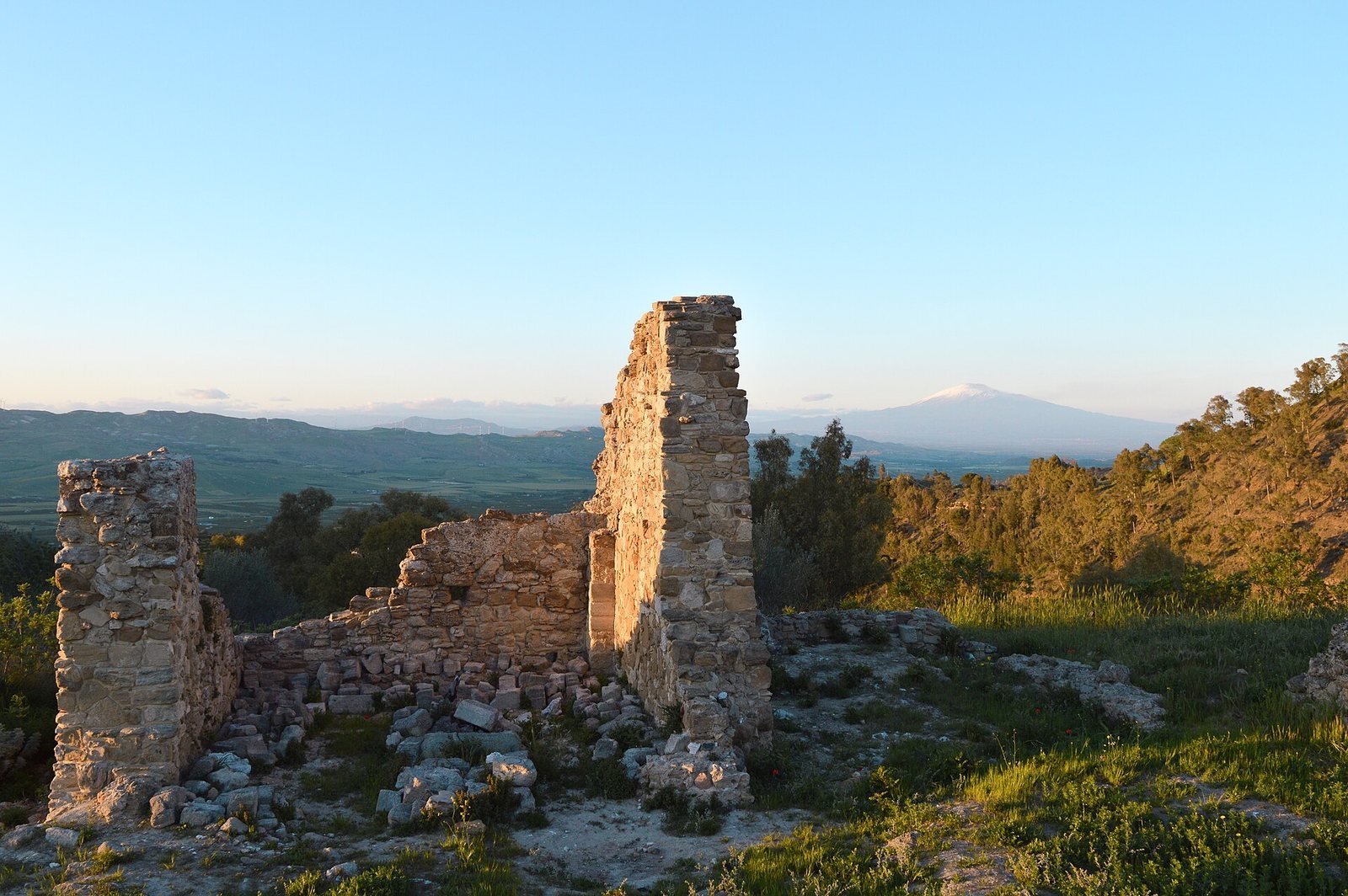
Occhiolà occupied the summits and saddle points of three steep-sided hills formed of sandstone. Small streams descending from the hills feed the Caltagirone stream. Castle remains stand on a summit, while ruins of churches, houses, and other buildings extend toward Santo Spirito.
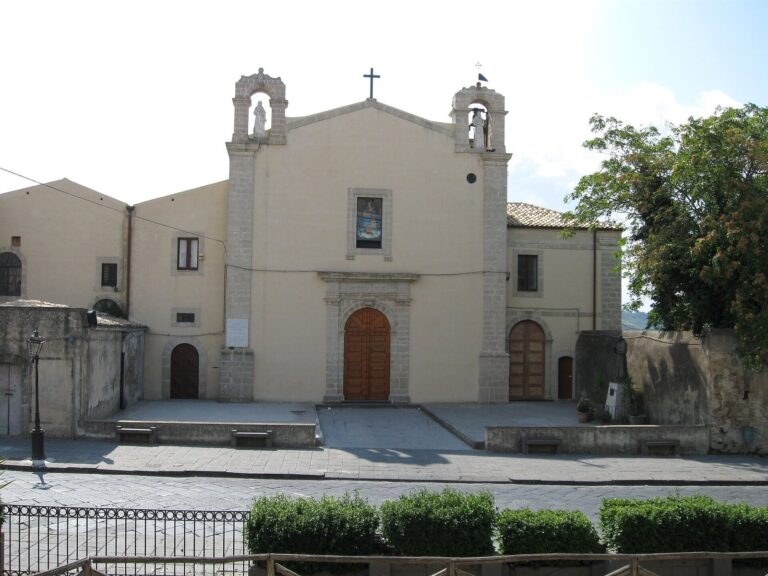
Most residents lived in small, single-storey houses; only a few families had homes with several rooms. Household work also took place in the streets, where people split firewood and washed dishes, while women spun and sewed. The church and hermitage of Madonna del Piano survive in the Occhiolà area.
Archaeological finds
Finds from the settlement include a statue used as a religious offering, dated to the late sixth or early fifth century BC, and a torso from a kouros, an ancient Greek statue of a young man, dated to the early fifth century BC.