Broadlands: A Palladian Country House in Hampshire
Site at a Glance
- Rating
- 4.4
- Popularity
- Medium
- Country
- United Kingdom
- Primary era
- Early Modern
- Eras represented
- Early Modern
- Civilizations
- British, English
- Site type
- Domestic
- Remains
- Manor House
On this page6 sections
History
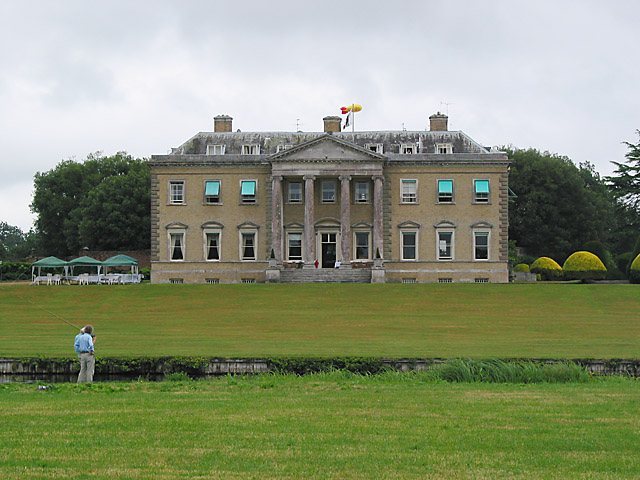
Broadlands is a country house in Romsey Extra, near Romsey in Hampshire, England, United Kingdom. Its major architectural transformation took place in the eighteenth century.
From Romsey Abbey to the St Barbe family
Before the Norman Conquest of 1066, when the Normans took control of England, the manor and surrounding area belonged to Romsey Abbey, a medieval religious house. After the Dissolution of the Monasteries, the sixteenth-century suppression and seizure of England’s monastic institutions, Broadlands was sold to Sir Francis Fleming in 1547. Fleming’s granddaughter married Edward St Barbe, and the manor then remained with the St Barbe family for 117 years.
Sir John St Barbe made many improvements to the property. He died childless at Broadlands on 7 September 1723 and left the estate to his cousin Humphrey Sydenham of Combe, Dulverton.
The Palmerstons and the eighteenth-century transformation
The South Sea Bubble, an early eighteenth-century boom and collapse in British financial speculation, ruined Sydenham financially. He sold Broadlands in 1736 to Henry Temple, 1st Viscount Palmerston, a hereditary peerage title, for £26,500. Temple began making the gardens between the house and river less formal, shaping the grounds into a gentle descent toward the water.
Under Henry Temple, 2nd Viscount Palmerston, major work on the house and gardens began in 1767. He asked Capability Brown, an influential English landscape designer, to develop the potential of the earlier manor house. Henry Holland, an English architect, completed the transformation. Between 1767 and 1780, earlier garden work associated with William Kent, an eighteenth-century architect and landscape designer, was completed alongside further landscaping, planting, clearing, and riverside work.
Later owners and royal honeymoons
Broadlands became the country estate of Henry John Temple, 3rd Viscount Palmerston, a British prime minister in the nineteenth century. After his death, the estate passed to his stepson, William Cowper-Temple, 1st Baron Mount Temple. Cowper-Temple held public prayer meetings in the grounds and prohibited blood sports, activities in which animals are killed for sport, on the property.
After Cowper-Temple’s death, Broadlands passed to Evelyn Ashley, a younger son of Anthony Ashley-Cooper, 7th Earl of Shaftesbury, and Lady Emily Cowper. It later went to Ashley’s son, Wilfrid Ashley, 1st Baron Mount Temple, who died in 1939 and left the estate to his daughter Edwina, wife of Lord Louis Mountbatten. In November 1947, Princess Elizabeth, later Elizabeth II, and Prince Philip spent their honeymoon at Broadlands, then the home of Philip’s uncle, Louis Mountbatten, 1st Earl Mountbatten of Burma, a British naval officer and statesman. Broadlands House received Grade I listed status on 29 May 1957, a category for buildings of exceptional interest. In 1981, Prince Charles, later Charles III, and the Princess of Wales spent the first three days of their honeymoon there. The formal gardens and historic landscape received Grade II* status on the Register of Historic Parks and Gardens in 1984, denoting particular importance.
Remains
The house and river landscape
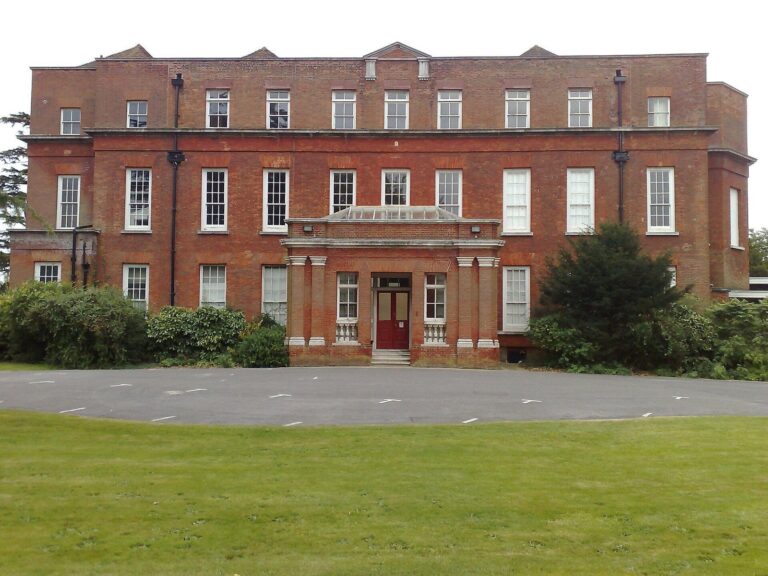
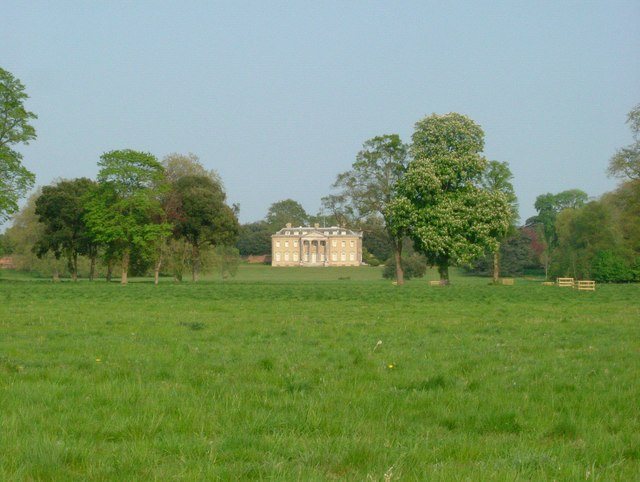
The house has a Palladian style, based on classical forms associated with Andrea Palladio, and developed from an earlier manor of Tudor and Jacobean character. The formal gardens and historic landscape occupy the land between the house and the river, with the grounds descending gently toward the water.