Repton Priory: An Augustinian Religious House in Repton
Site at a Glance
- Popularity
- Medium
- Country
- United Kingdom
- Primary era
- Medieval
- Eras represented
- Medieval, Modern
- Civilizations
- British, English
- Site type
- Religious
- Remains
- Monastery
On this page9 sections
History
Foundation and union with Calke
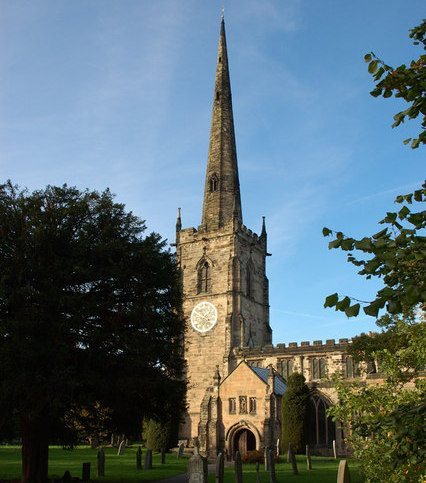
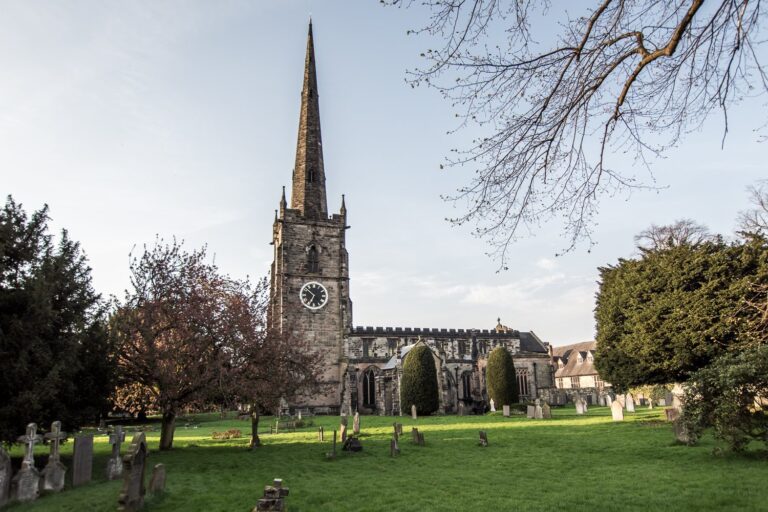
Repton Priory was an Augustinian religious house at Repton in the United Kingdom, founded in the twelfth century by Maud of Gloucester, Countess of Chester. After her husband, Ranulf de Gernon, died in 1153, Maud granted St Wystan’s Church to the canons of Calke Priory and established a new house dedicated to the Holy Trinity. The priory became a pilgrimage destination through its shrine of St Guthlac and a bell linked to the saint. Pilgrims believed that resting their heads on the bell would cure headaches.
Repton was initially dependent on Calke. Maud’s grant provided for most of Calke’s canons to transfer when convenient, and they did so in 1172, making Calke dependent on Repton. The two houses continued to operate jointly under a shared institutional name, and the priory belonged to the Diocese of Lichfield.
Church rights and pilgrimage
In 1220 Nicholas de Willington gave the priory the right to nominate a priest for Willington Church, on condition that the canons prayed for him and his heirs. In January 1263 Pope Urban IV ordered the house to pay an annual pension of forty silver marks to John de Ebulo, a cleric serving in the papal establishment. The reason for this payment is uncertain.
Bishop Roger de Meyland confirmed the priory’s control of St Wystan’s Church in 1271, and Henry III confirmed it the following year. The confirmations covered eight dependent chapels and their districts at Bretby, Foremark, Ingleby, Measham, Milton, Newton, Smisby, and Ticknall, as well as the churches of Croxall and Willington in Derbyshire and Baddow in Essex. St Wystan’s Church had been left without a vicar.
A 1291 tax assessment valued the priory’s annual income from its secular properties at £38 0s. 3½d., with a further £28 from its control of St Wystan’s. Since its lands yielded more than £20 a year, the prior was called to a military gathering at Nottingham in 1297.
Patronage and dissolution
The right to appoint the prior initially remained with Maud’s descendants. It passed through the Chester family to Ranulf de Blondeville, Earl of Chester. After his death, his property was divided among his four sisters, and Matilda of Chester, Countess of Huntingdon, received the priory’s patronage. The right later passed through her descendants to John Balliol, former King of Scotland. Edward I took control of the priory after Balliol’s lands were forfeited. By the election of a new prior in 1336, the patronage had passed to the Crown.
The 1535 Valor Ecclesiasticus, a survey of church property and income made under Henry VIII, recorded annual income of £118 8s. after expenses. Because its income was below £200, Repton was included in the first wave of dissolutions in 1536. The priory was restored after John Young paid the king a fine of £266 13s. 4d.; Young was reappointed prior on 12 June 1537. On 25 October 1538 the house was surrendered to the Crown for dissolution for a second and final time. Young had died three days before the surrender was formally signed.
After the final dissolution, the sub-prior received an annual pension of £6. Four canons received £5 6s. 8d. each, three received £5 each, and two received £4 each.
Destruction and Repton School
The Crown granted the former priory to Thomas Thacker, who kept its buildings. When Thomas died in 1548, the property passed to his son Gilbert. After Mary I became queen, Gilbert ordered the near-total destruction of the priory, fearing its return to religious use. The work was almost completed in a single day.
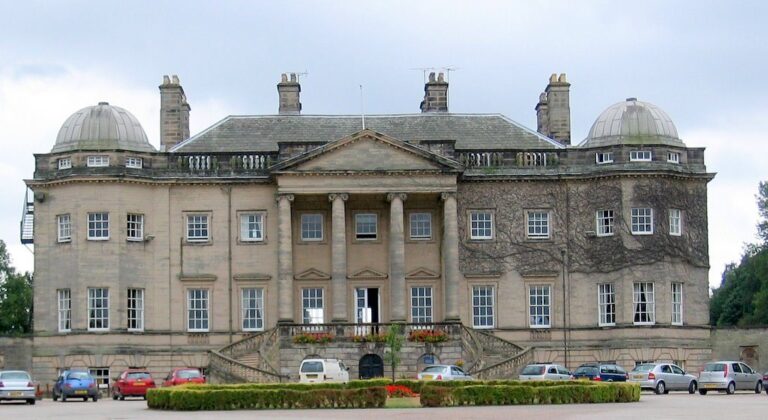
Sir John Port, an English judge and benefactor, died without a male heir on 6 June 1557. His bequests provided for almshouses at Etwall and a grammar school at either Etwall or Repton. He intended the school’s scholars to pray daily for the souls of his parents and other relatives. In 1559 his executors bought the former priory site from the Thacker family for £37 10s. and developed it as Repton School.
Remains
Surviving fabric
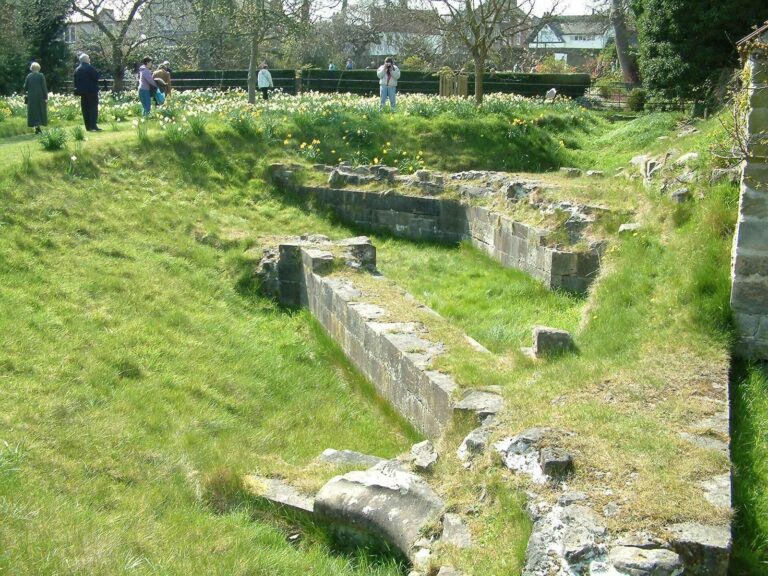
The medieval complex included a church and cloister, a covered walkway around an open courtyard, as well as a chapter house for community business, a dining hall, the prior’s lodgings, a hall, and cellars. Ancillary buildings stood a short distance away. Only small fragments of the original structures survive, chiefly foundations and footings.
Prior’s lodgings
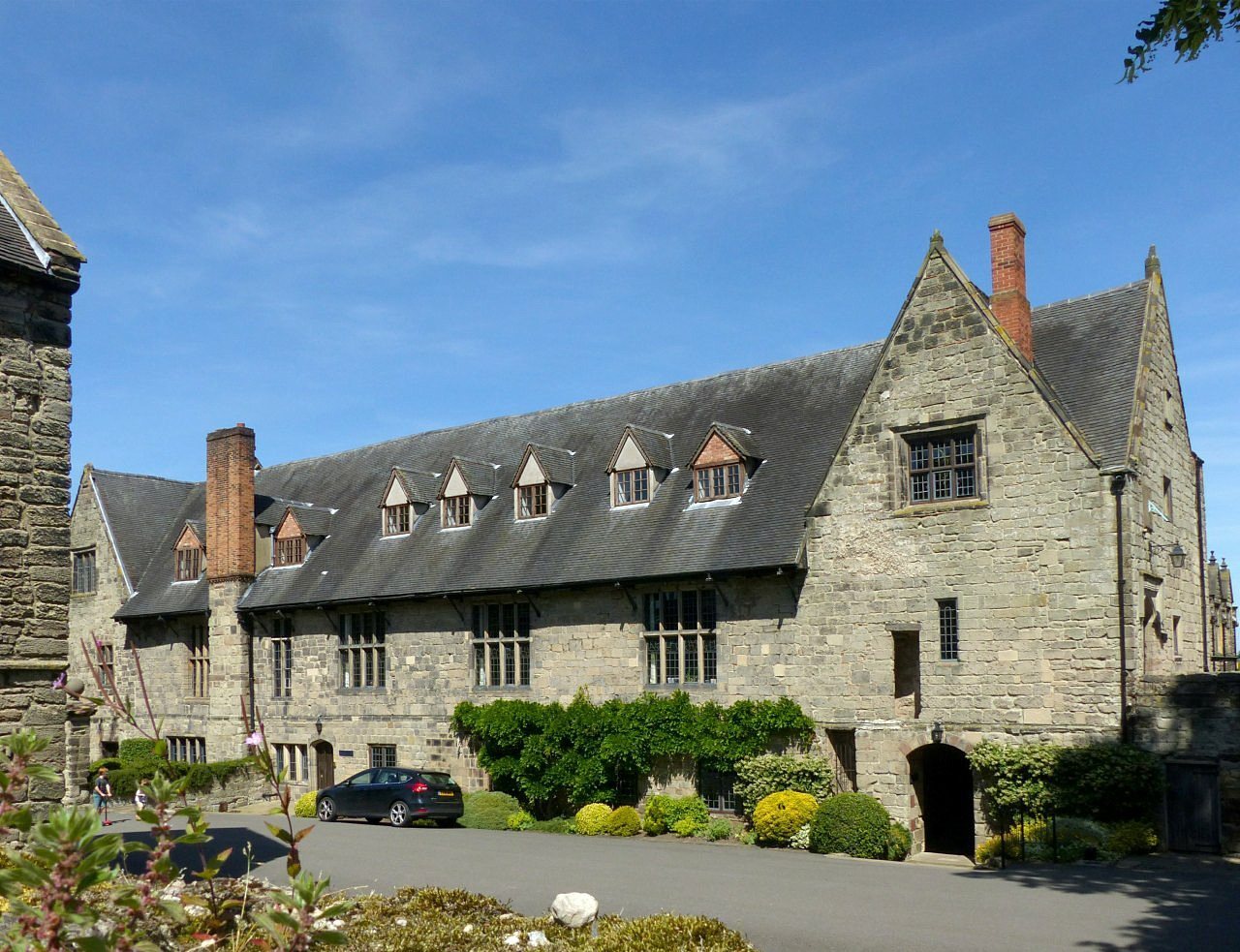
Foundations of the prior’s lodgings date to about 1438 and were incorporated into a later building at Repton School. Most of that building dates from the seventeenth century, and it was extensively altered in the nineteenth century.
Church and communal buildings
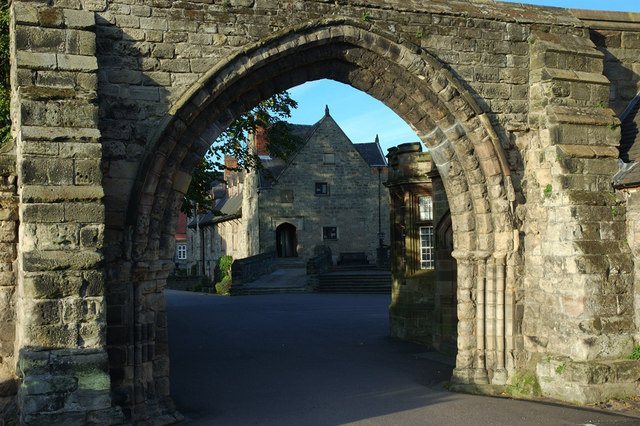
Foundations of other priory buildings came to light during construction work at Repton School in 1922. Surviving fragments include bases from columns in the former chancel, the church area containing the choir and altar, and its chapels. Another fragment is part of an arch from the former choir screen, which separated the choir from the nave; it was moved to its present position in 1906. Fragments of door surrounds from the chapter house and the warming room, a heated communal room, also remain.