St. Wystan’s Church, Repton: An Anglo-Saxon Parish Church and Royal Burial Site
Site at a Glance
- Popularity
- High
- Country
- United Kingdom
- Primary era
- Medieval
- Eras represented
- Medieval, Modern
- Civilizations
- Anglo-Saxon, British, English
- Site type
- Religious
- Remains
- Church
On this page17 sections
History
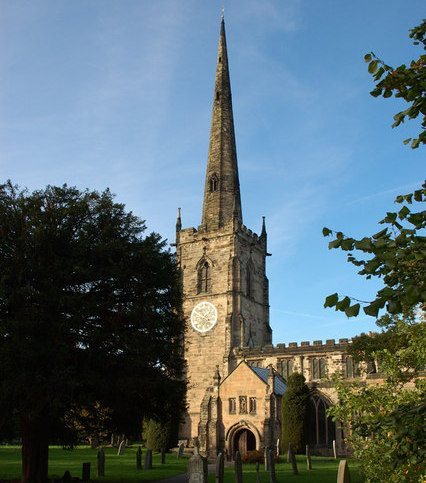
St. Wystan’s Church is a parish church of the Church of England, England’s established Anglican church, in Repton, United Kingdom. An Anglo-Saxon abbey was established here around 600, and its foundation is traditionally credited to Saint David, a Welsh bishop revered as the patron saint of Wales. The Anglo-Saxon period in England lasted from roughly the fifth century to the Norman Conquest in 1066. The church is dedicated to St Wystan, also known as Wigstan, a Mercian prince venerated as a saint. The site later became a place of royal burial and pilgrimage.
Abbey and royal burials
During the lifetime of Æthelbald, king of Mercia, the church’s crypt, an underground chamber beneath a church, was adapted as a mausoleum. Æthelbald was killed at Seckington, near Tamworth, and buried at Repton in 757. Wiglaf, another king of Mercia, was also buried there after his death in 839. Wigstan, Wiglaf’s grandson, died in 849 and was laid in the crypt as well. It is thought that the dead were first buried in the ground and that their bones were later transferred to the chamber.
Wigstan’s burial and the Danish invasion
Wigstan’s burial drew pilgrims to Repton. During a Danish, or Viking, invasion, fleeing monks took his body with them from the church. It was subsequently brought back, but in the eleventh century King Cnut, who ruled England and other Scandinavian realms, had Wigstan’s remains removed again and reburied at Evesham Abbey in Worcestershire.
Restoration and archaeological reassessment
Architect Arthur Blomfield restored the church in 1885–86. In 1967 it received Grade I listing, the highest category for listed buildings in England, reserved for structures of exceptional interest.
In the 1980s, archaeologists Martin Biddle and Birthe Kjølbye-Biddle and their team uncovered a mass grave west of the church. The remains were first thought to have accumulated over several centuries. In 2018, a University of Bristol team placed them all in the late ninth century, a date consistent with the Great Danish Army, a Viking force campaigning in England, spending a winter in Derbyshire. The earlier dating discrepancy was attributed to the marine reservoir effect, which can make human remains appear older when people ate substantial amounts of seafood.
Remains
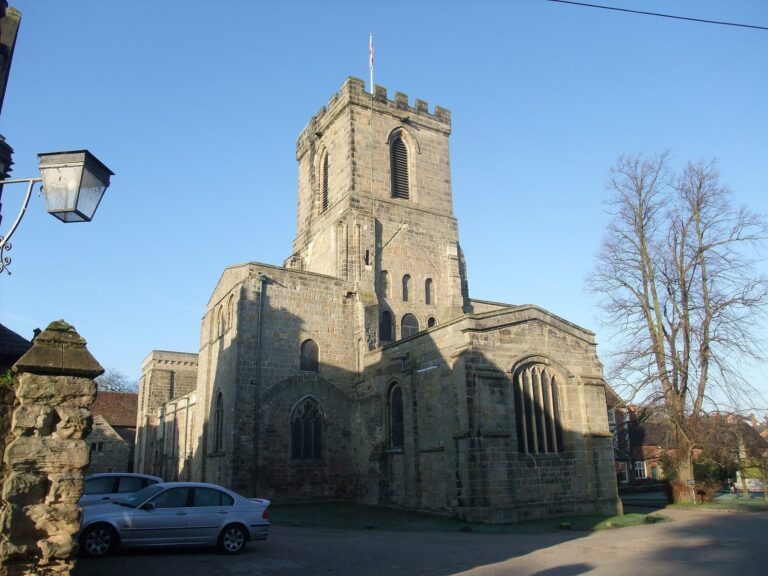
The church brings together surviving Anglo-Saxon masonry and later medieval additions. Its early fabric remains in the chancel, parts of the crossing, where the nave and cross-arms meet, part of the north transept, an arm extending across the church, and the crypt.
Anglo-Saxon fabric
Abbey church
The former abbey church had a cruciform, or cross-shaped, plan and may have included a tower above the crossing. Parts of its structure survive in the present church’s chancel, in the northeast and southeast sections of the crossing, and in part of the north transept.
Crypt
Built in the early eighth century above a spring, the crypt is a square chamber thought originally to have served as a baptistery, a place for Christian baptism. Its ceiling consists of nine small dome-shaped vaults arranged in three rows. Two shallow, column-like pilasters on each wall and four free-standing pillars support the vaults around the centre.
The crypt’s dimensions and design have been proposed as influences on the spiral-columned shrine honoring Edward the Confessor, an eleventh-century English king, and the Cosmati Coronation Pavement at Westminster Abbey, an inlaid-stone floor. Henry III commissioned both in the thirteenth century. Further design echoes have been proposed at Soulton Hall in Shropshire, associated with the publisher of the Geneva Bible.
Medieval additions
Nave and aisles
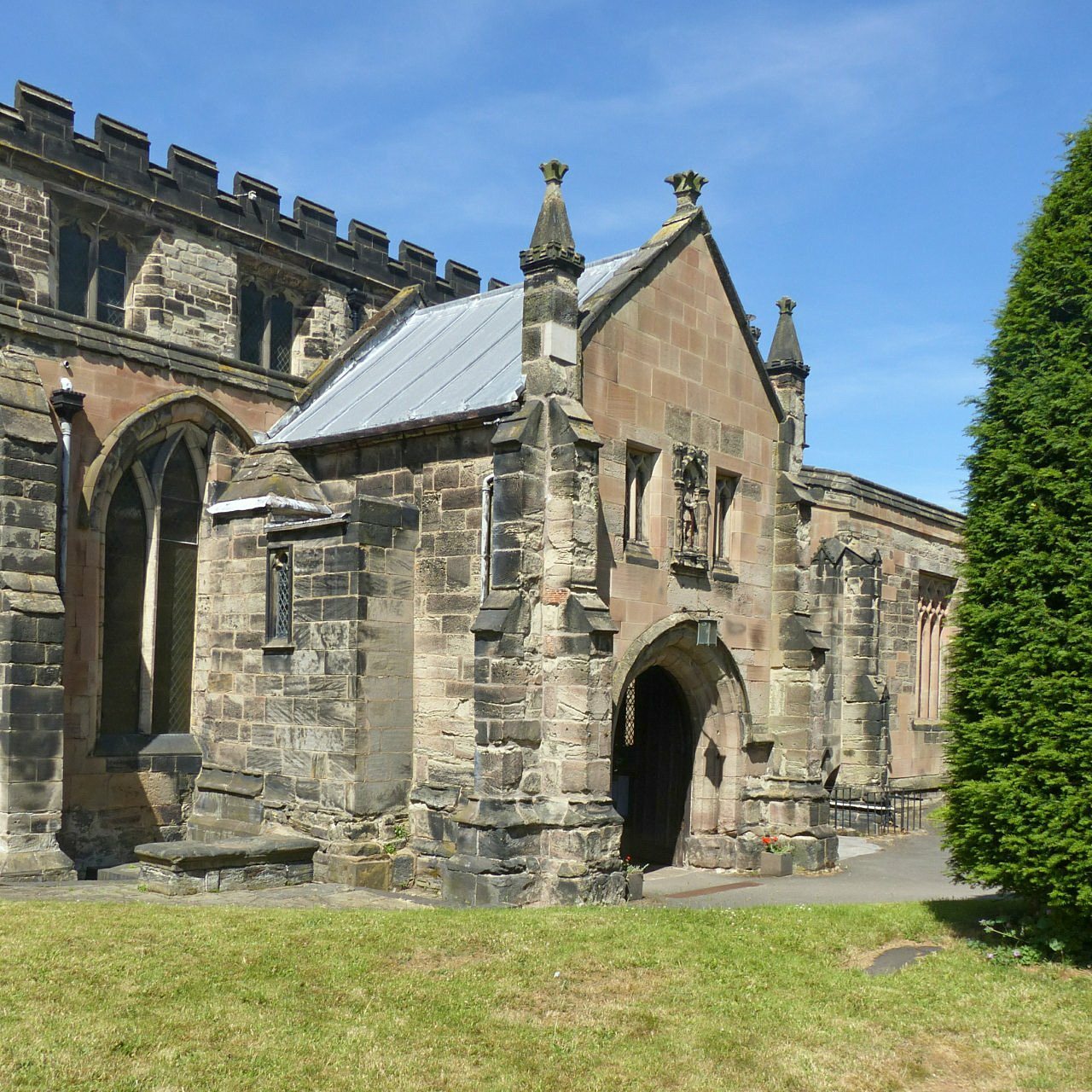
The church’s nave, its main body, has north and south aisles in the Gothic style, a medieval architectural style. The aisles were rebuilt in the thirteenth century and widened in the early fourteenth century. In the fifteenth century, builders added a clerestory, a high wall with windows above the main roofline, along with its timber roof and a porch with two storeys.
West tower and bells
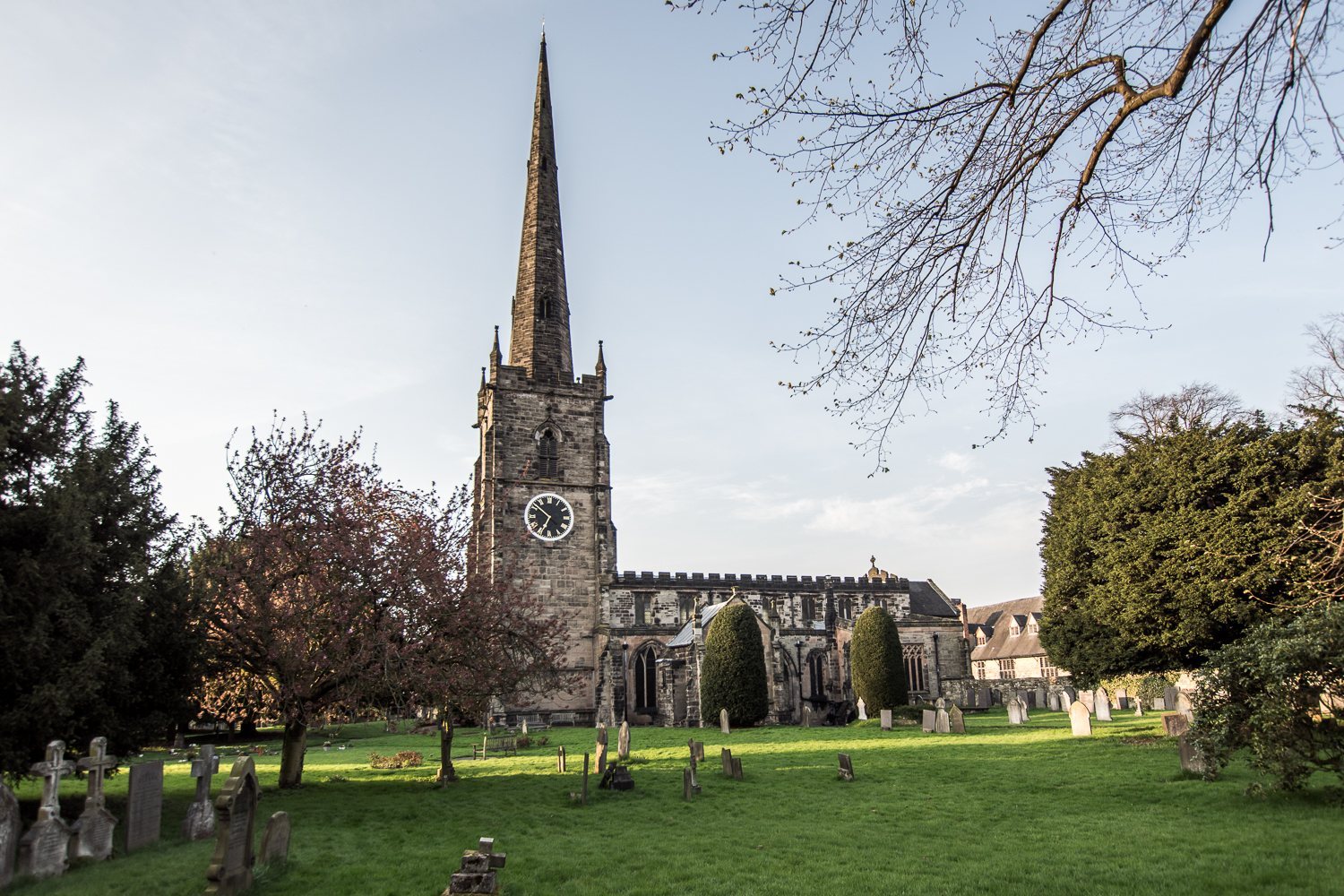
A west tower with a recessed spire was added in 1340. The spire rises 212 feet (65 metres) above ground. The tower has eight bells, the oldest cast at Leicester around 1500. Its windows were altered in the fifteenth century.
Monuments and later furnishings
Effigy and memorials
An alabaster effigy of a knight, dating to about 1400, survives in the church. In the south aisle, a monument commemorates Gilbert Thacker (1563). The south transept contains memorials to George Waklin (1617), Ellen Waklin (1614), Thomas Whitehead (1645; his monument was erected in 1802), and John Macauley (1840). In the north aisle are monuments to William Bagshaw Stevens (1800), Francis Thacker (1710), and the Reverend Joseph James (1856).
Organ and churchyard
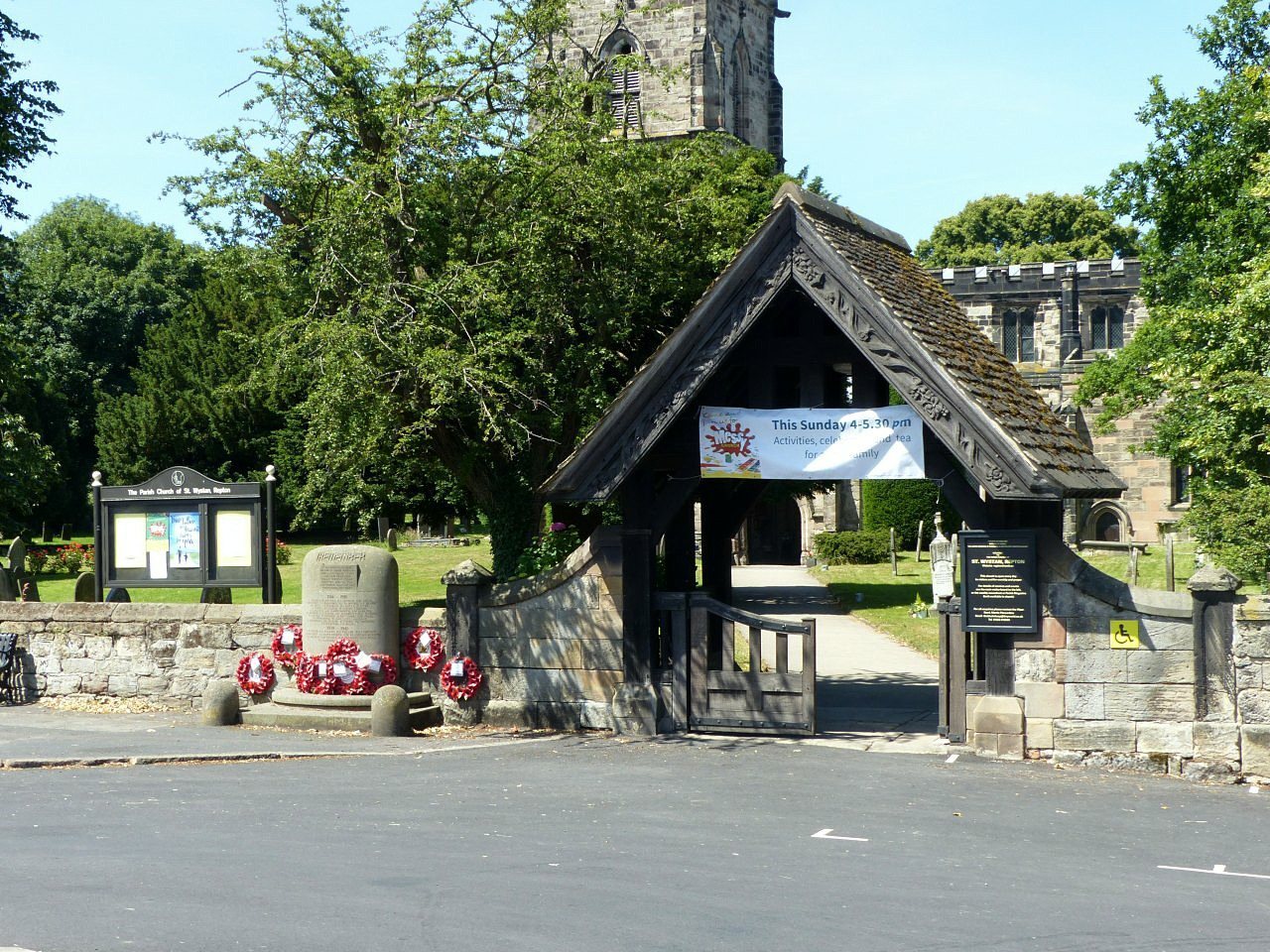
The church’s pipe organ was made by Peter Collins in 1998. It has two manuals, 23 stops, and tracker action, a system of mechanical links connecting the keys to the pipes. The churchyard holds 17 Commonwealth service war graves, most belonging to Royal Air Force personnel who died in the Second World War. It also contains the ashes of C. B. Fry, the English cricketer, scholar, athlete, and author. A tombstone dedicated in 2008 describes him in those terms.
Archaeological remains west of the church
Mass grave
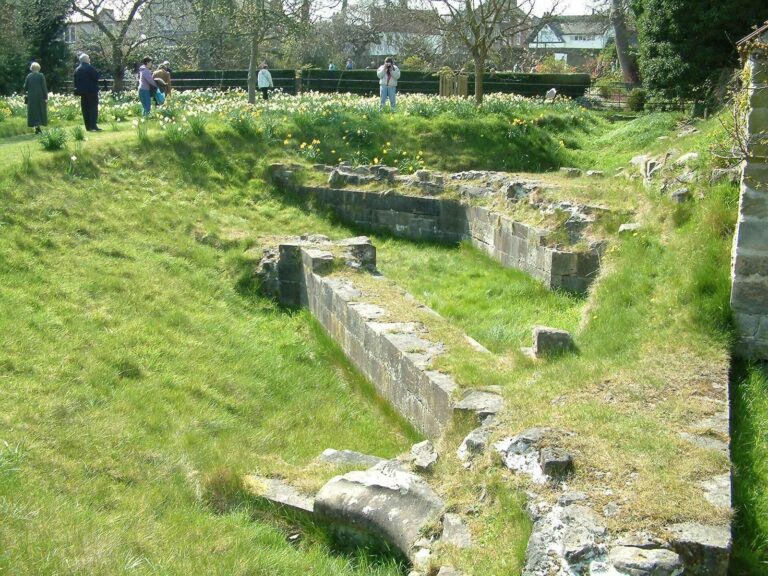
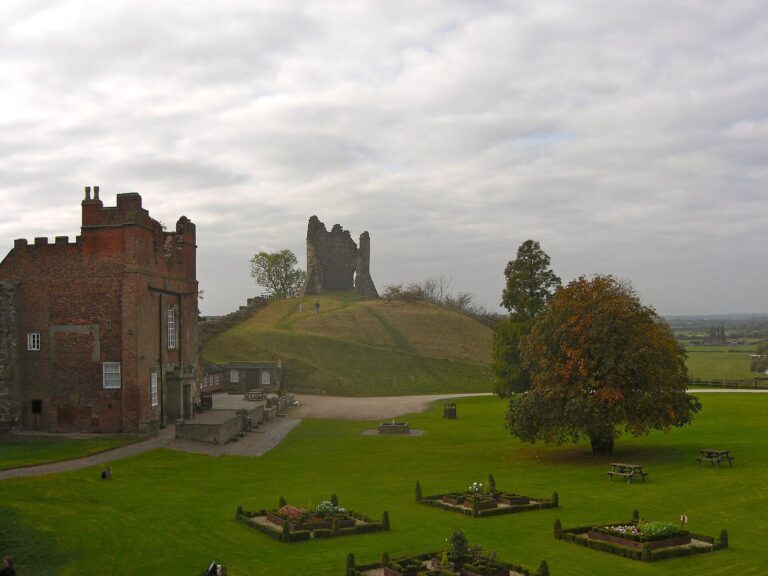
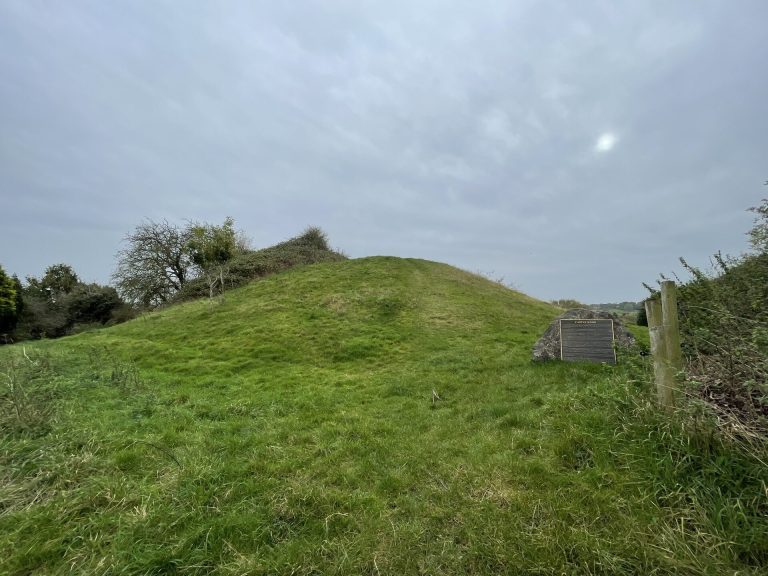
The mass grave lies in a mound west of the church, built over the remains of a Saxon chapel. It contained about 300 sets of human remains. Women made up roughly one fifth of the individuals; the others were men aged 18 to 45. Many had injuries caused by violence. Viking objects, including a pendant associated with Thor, were found among the bones.
Repton Stone
Found outside the crypt in 1979, the Repton Stone is now displayed at Derby Museum and Art Gallery. It is understood to be the upper portion of a standing cross. One face shows a mounted figure wearing mail armour made of linked metal rings, carrying a sword and shield, and wearing a diadem, or narrow crown. The rider has been identified as Æthelbald, though this remains uncertain. If the identification is correct, the carving would be the earliest large-scale image of an English monarch.