Church of St Hywyn: A Medieval Pilgrimage Church in Wales
Site at a Glance
- Rating
- 4.8
- Popularity
- Medium
- Country
- United Kingdom
- Primary era
- Medieval
- Eras represented
- Medieval, Early Modern, Modern
- Civilizations
- British, English, Kingdom of Gwynedd
- Site type
- Religious
- Remains
- Church
On this page14 sections
History
Early community and church
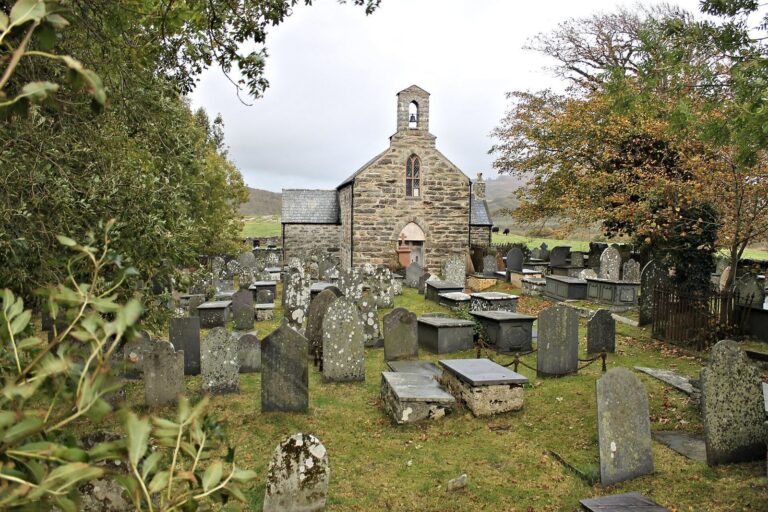
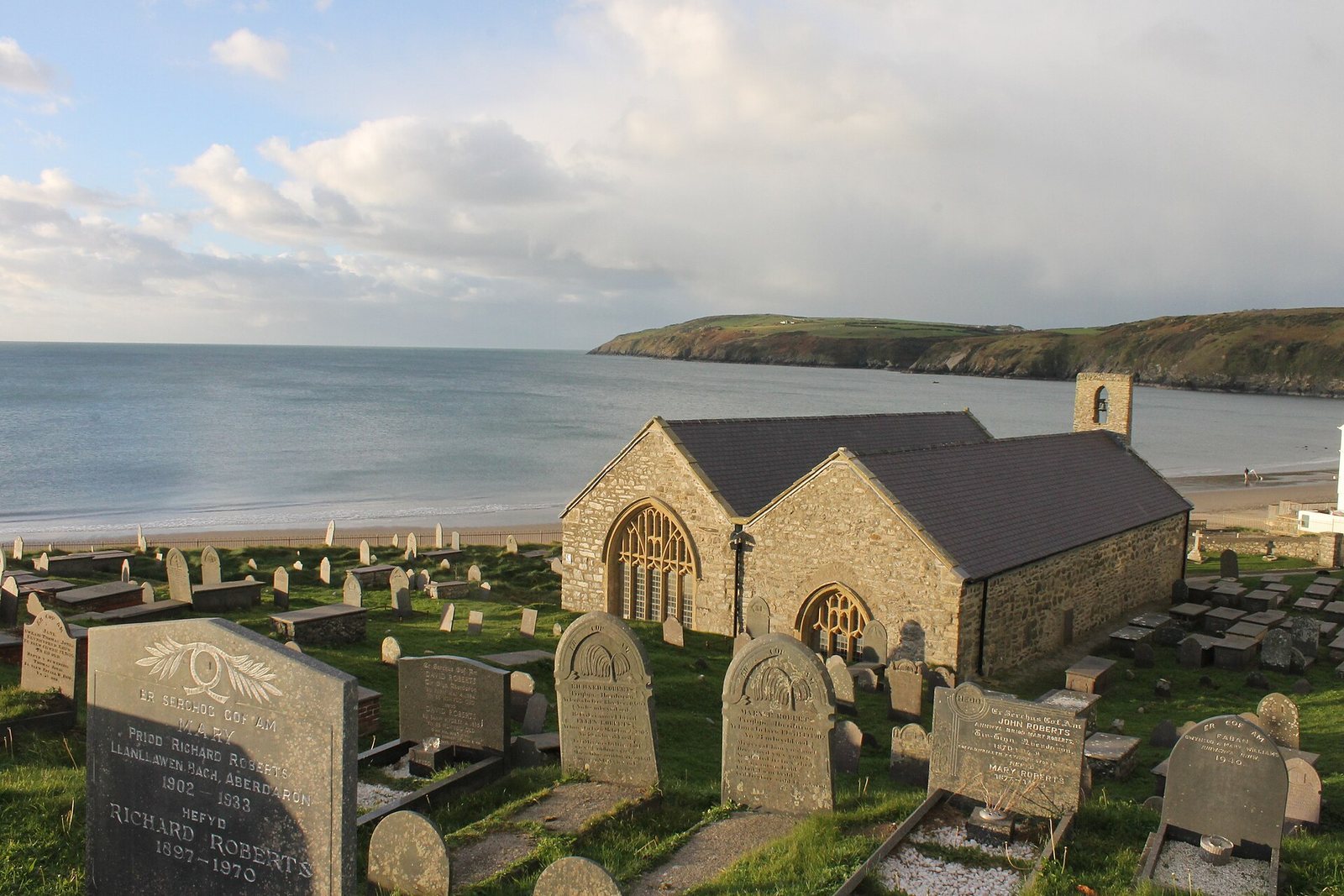
The Church of St Hywyn stands above the beach at Aberdaron, Wales, in the United Kingdom. Its origins lie in a clas, an early Welsh religious community, founded by St Hywyn between the fifth and seventh centuries. Hywyn, a Welsh Christian saint from Brittany, established the community at Aberdaron. In the sixth century he came to Wales with St Cadfan, an early Welsh religious leader who founded a monastery on Bardsey Island.
During the reign of Gruffydd ap Cynan, king of Gwynedd, stone churches replaced older wooden buildings. Much of St Hywyn may date from this period. The present church is associated with the early twelfth century and was first recorded in 1115.
Pilgrimage to Bardsey
The church became a departure point for pilgrims journeying to Bardsey Abbey, a monastery on Bardsey Island. Routes from the north and south met at St Hywyn, while the nearby Great Kitchen provided food and water for the many travellers. The church grew to serve this pilgrimage traffic.
In 1120, Pope Callixtus II declared that three visits to Bardsey counted as equivalent to one pilgrimage to Rome. A document from 1122 called Bardsey the “Rome of Wales,” and the island was also known as the “Island of 20,000 Saints.” After 1190, the Papacy, the office and authority of the pope, recognized Bardsey and St Davids as pilgrimage destinations. St Hywyn also offered refugees 40 days of asylum.
Decline, restoration, and modern use
From 1624, St John’s College, a constituent college of the University of Cambridge, administered the church for nearly three centuries. After the Reformation, the movement that established Protestant churches across much of Europe, the church declined and often had clergy who lived elsewhere. By the 1840s it was in ruins. A new church, Eglwys Newydd, was built inland in 1841, but proved unpopular; St Hywyn was also used as a schoolhouse for a time.
A restoration was proposed in 1848 to plans by architect Henry Kennedy and completed in 1868, when the church returned to use. Further work followed in the nineteenth and twentieth centuries. In the 1990s, the seaward side was reinforced to protect it from being undermined. The church is now an active Church in Wales parish within the Diocese of Bangor’s Bro Enlli Ministry Area, a group of churches served collaboratively. It is also called the “Cathedral of Llŷn.” Its Grade I listing, granted in 1971, describes it as one of the major churches of Lleyn.
R. S. Thomas, a Welsh poet and Anglican priest, served as minister from 1967 to 1978. Alice Griffith, a local herbalist, was buried at the church in 1821. In 2008, vicar Jim Cotter blessed a same-sex civil partnership; the act prompted controversy and a reprimand from Barry Morgan, then Archbishop of Wales. A continuing devotional custom involves writing names or prayers on stones gathered from the beach, which are returned to the sea during a service in late October.
Remains
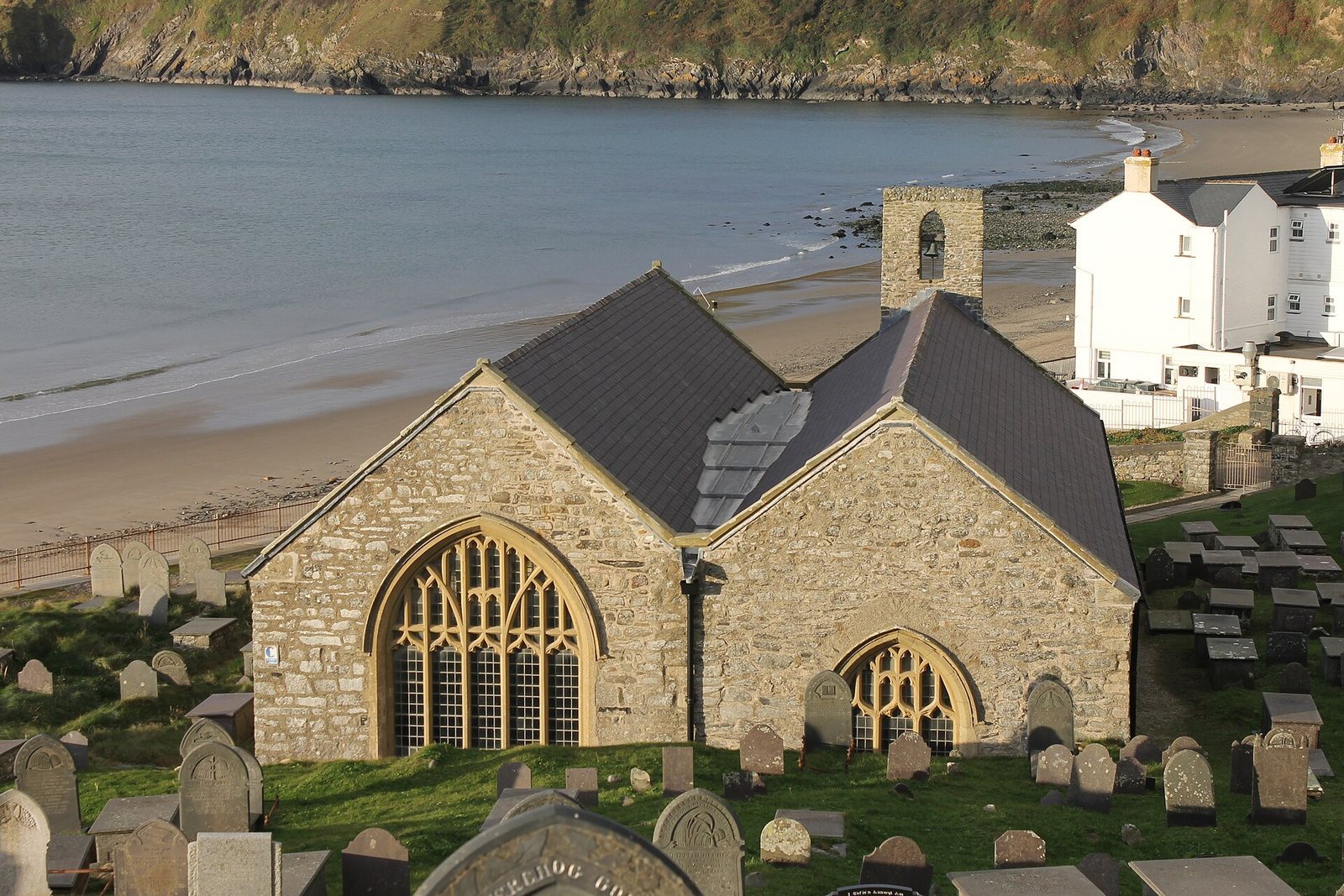
The church has two naves of equal length but different dates, built of roughly shaped stone beneath slate roofs with gabled ends. Its plan and construction reflect successive phases of enlargement, while the surviving fittings and memorials span many centuries.
Plan and exterior
The two naves
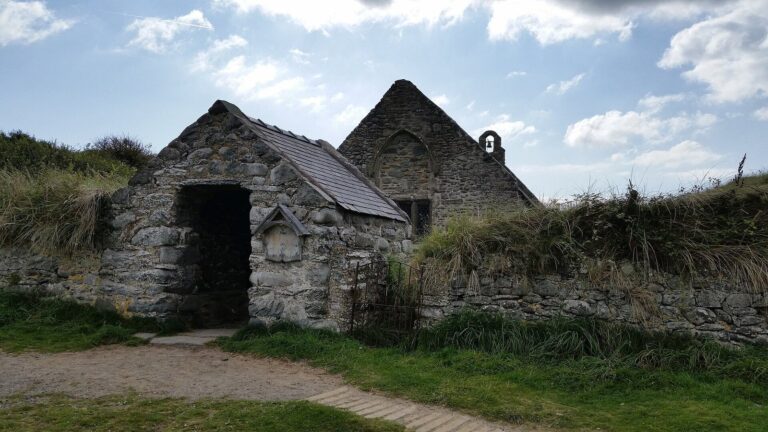
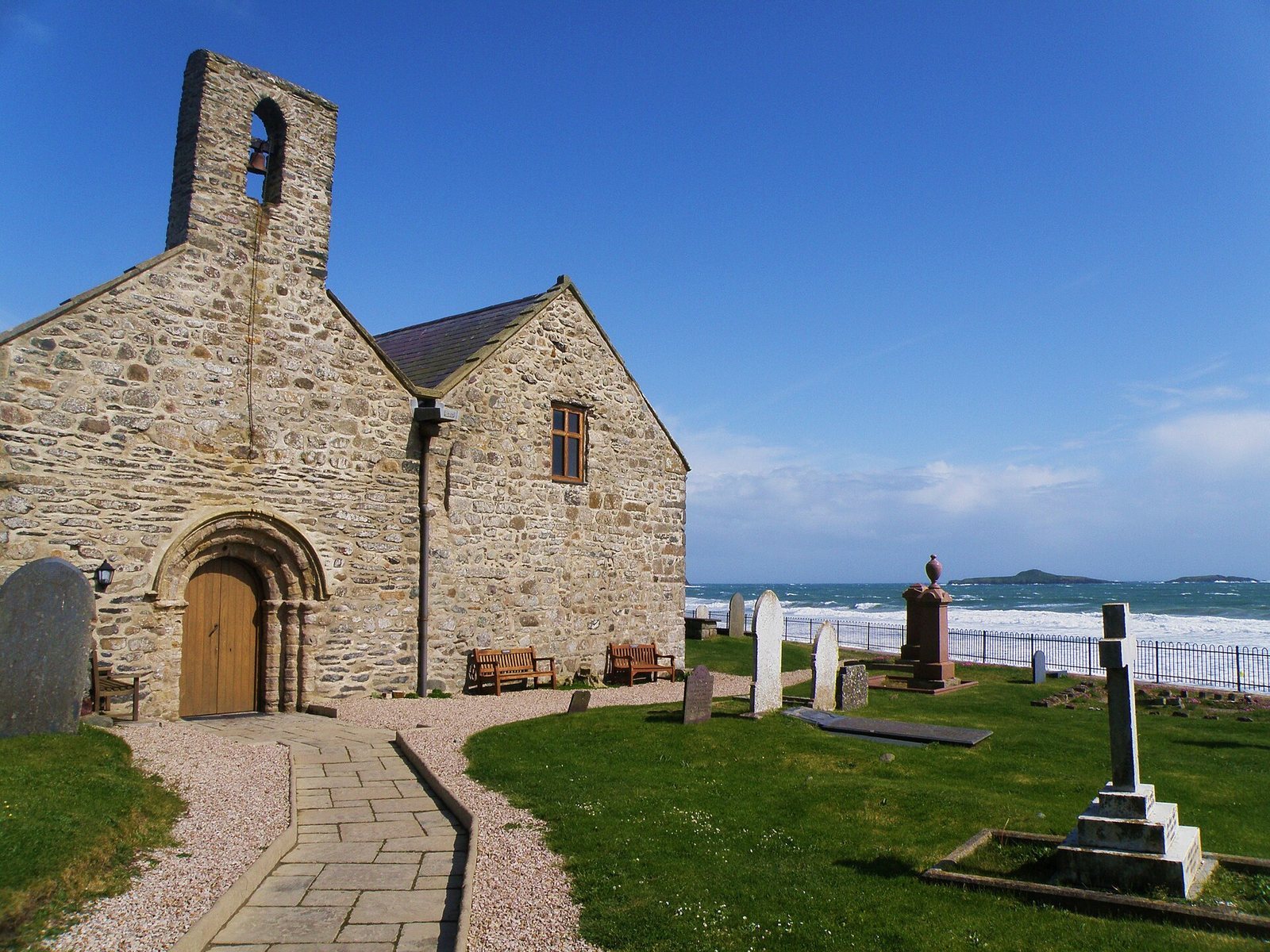
The northern nave is the original and is largely twelfth-century. The church was enlarged during the fourteenth and fifteenth centuries, with possible further work in the sixteenth. Its southern nave was added in the late fifteenth or early sixteenth century and dates from around 1500. A simple bellcote on the northern nave houses a bell cast in 1901. The southern roof has been restored using much of its original timber.
Doorways and windows
The round-arched west entrance was probably remodelled in the fifteenth century. A low-arched doorway in the north wall may date from the twelfth century and can no longer be used. One western window occupies an opening that formerly served as a doorway. A rain gutter between the western gables bears the date 1760.
A large window at the east end was blocked in 1848. Its tracery dates from the nineteenth century, while a relieving arch above it belongs to an older window, possibly from the fourteenth century. The window’s proportions suggest that the gable was raised when the southern nave was built. The east end of that nave has a five-part window, and its south side has windows dating from around 1500.
Interior and furnishings
Arches and roof
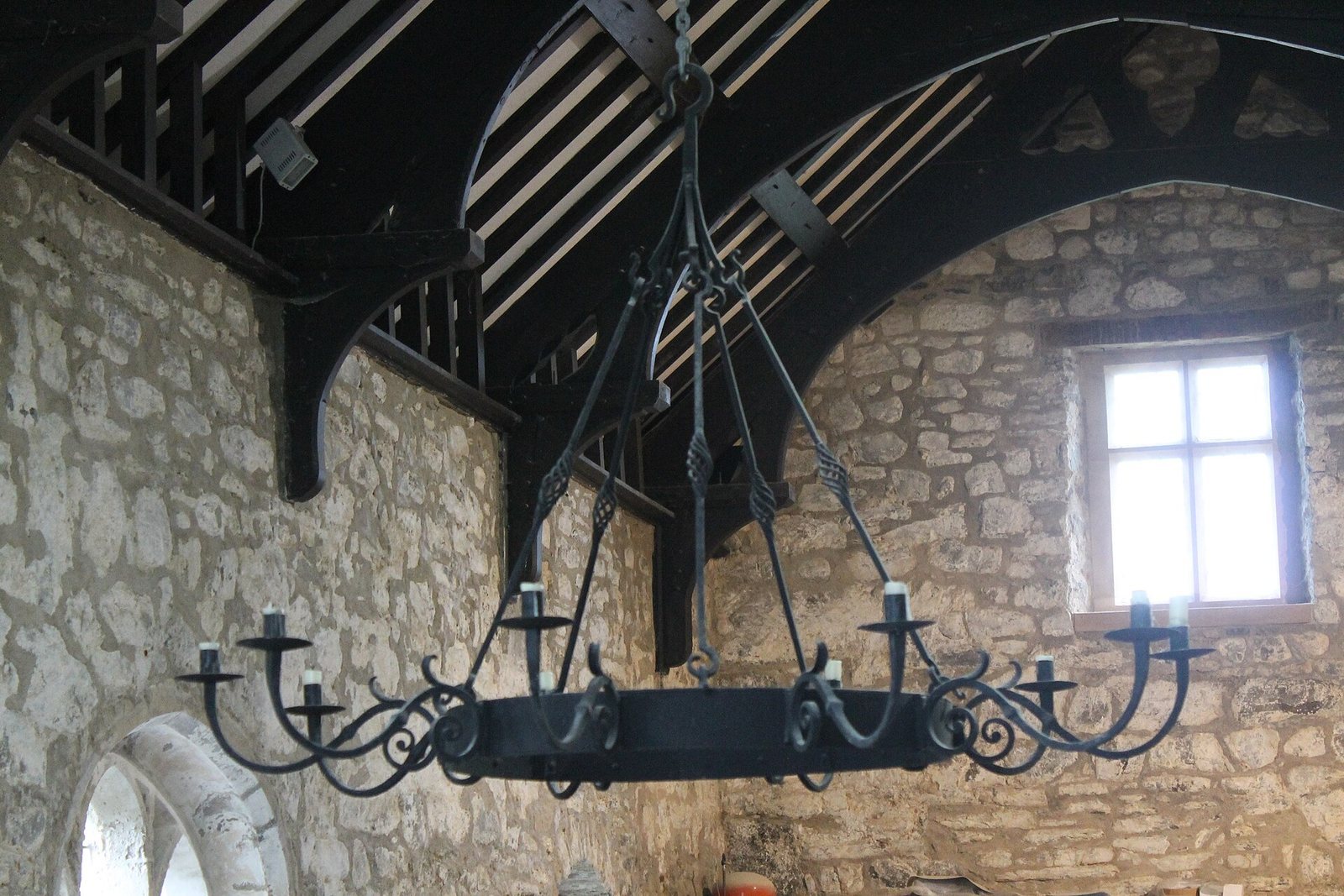
The interior is divided into six bays. Five four-centred arches, whose curves are formed from four centres, stand on octagonal piers with moulded capitals and bases. A hammerbeam roof, supported by short horizontal beams projecting from the walls, spans the interior. The walls were plastered at some point.
Font and furnishings
An octagonal baptismal font dates from around 1500. Furnishings from the 1906 restoration include the chancel’s marble steps, lectern, seating, and wooden arches. The decorated wooden pulpit and litany stand date from 1911. A large iron chandelier in the southern nave dates from the nineteenth or early twentieth century. The church also has an organ made by Rushworth & Dreaper of Liverpool and a piano.
A display presents the life and work of R. S. Thomas, and one of his poems forms part of the church’s decoration. The interior was refurbished in 2006.
Memorials and carved stones
Veracius and Senacus Stones
Two carved tombstones inside the church commemorate the fifth- or sixth-century priests Veracius and Senacus. Found in the eighteenth century on farmland near Mynydd Anelog, they are also known in English as the Veracius and Senacus Stones. An inscription on Senacus’s stone says that he was buried with many other monks.
Churchyard memorial
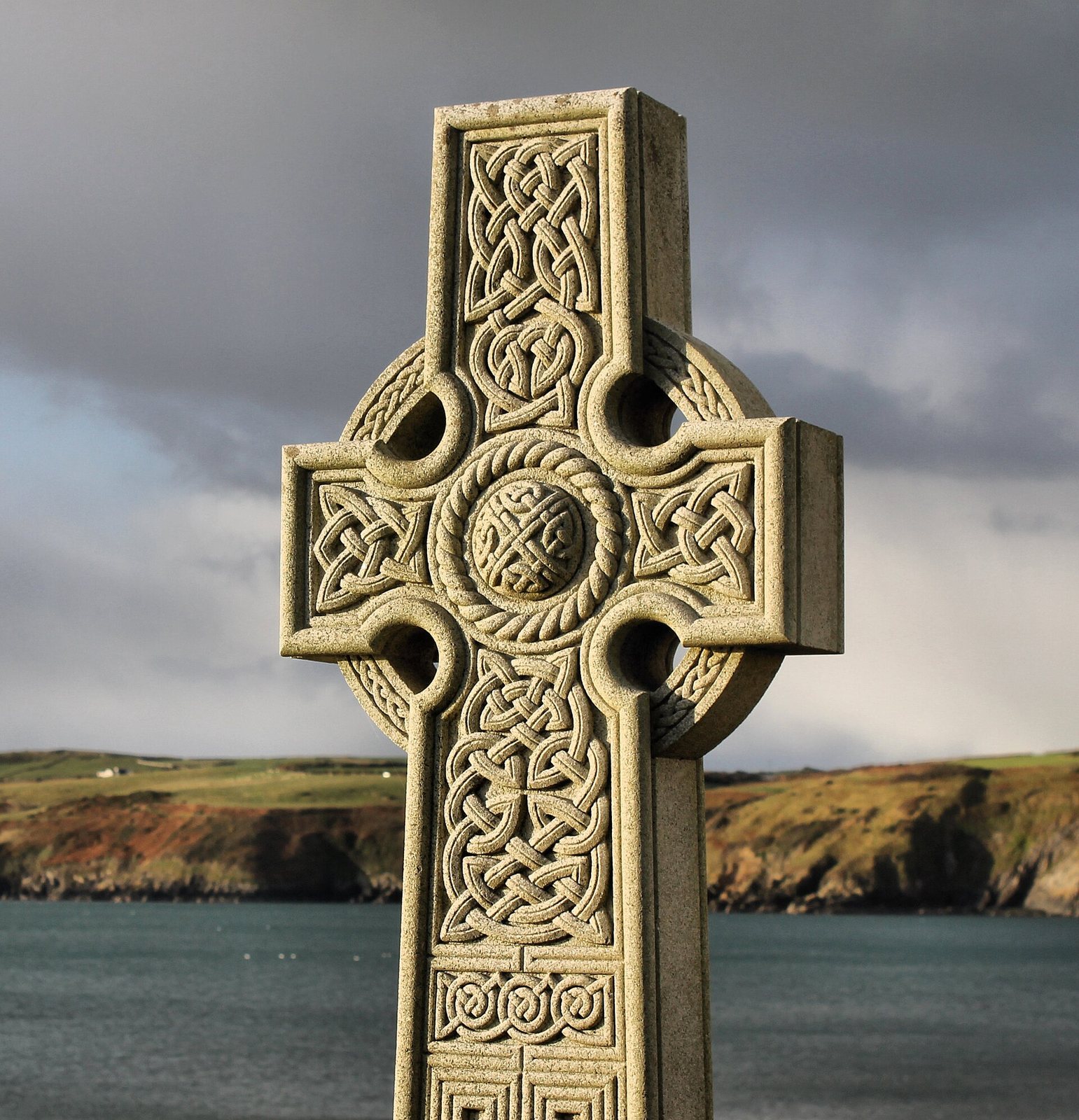
A churchyard memorial commemorates people killed in the First and Second World Wars, as well as sailors who died during the First World War.