Holy Trinity Cathedral (Saborna crkva): A Serbian Orthodox Cathedral in Niš
Site at a Glance
- Rating
- 4.9
- Popularity
- High
- Country
- Serbia
- Primary era
- Modern
- Eras represented
- Modern
- Civilizations
- Ottoman
- Site type
- Religious
- Remains
- Cathedral
On this page15 sections
History
Construction and consecration
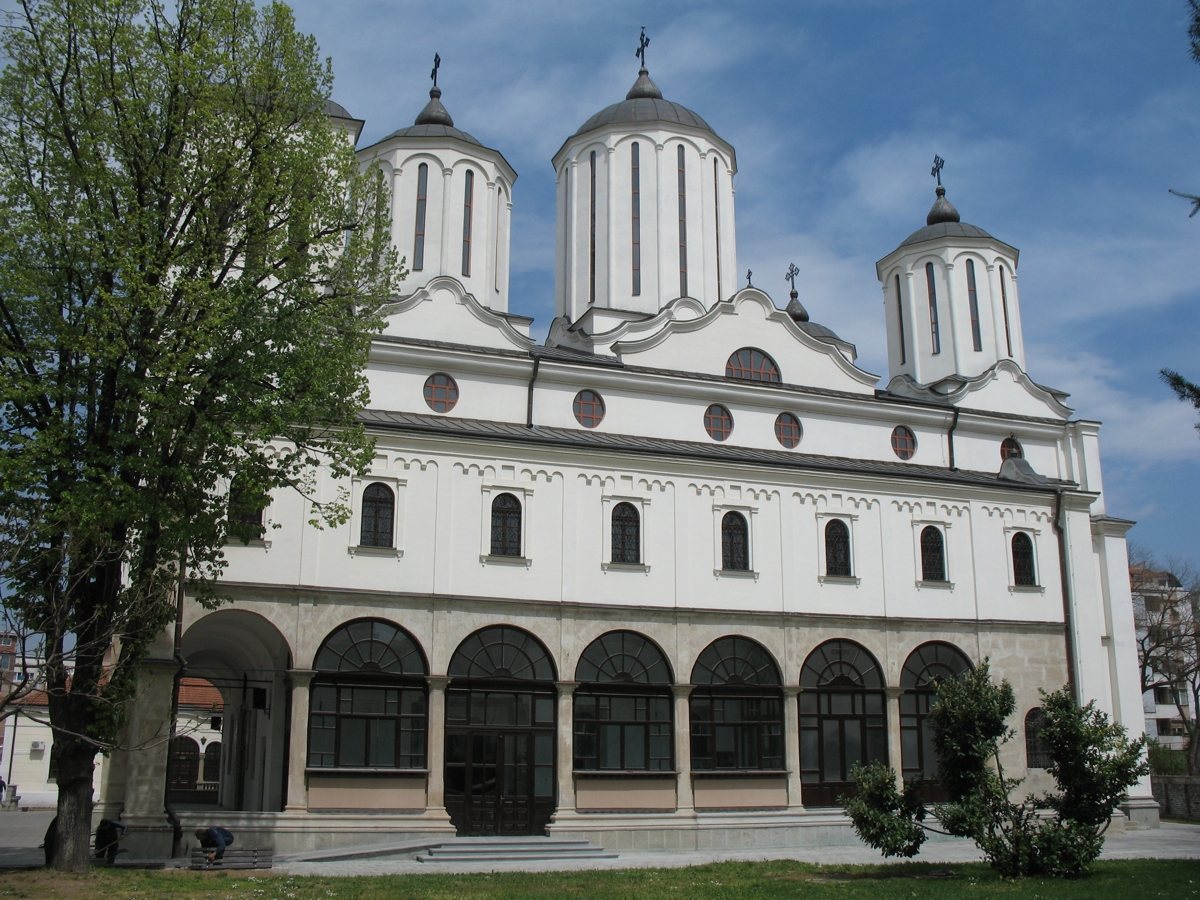
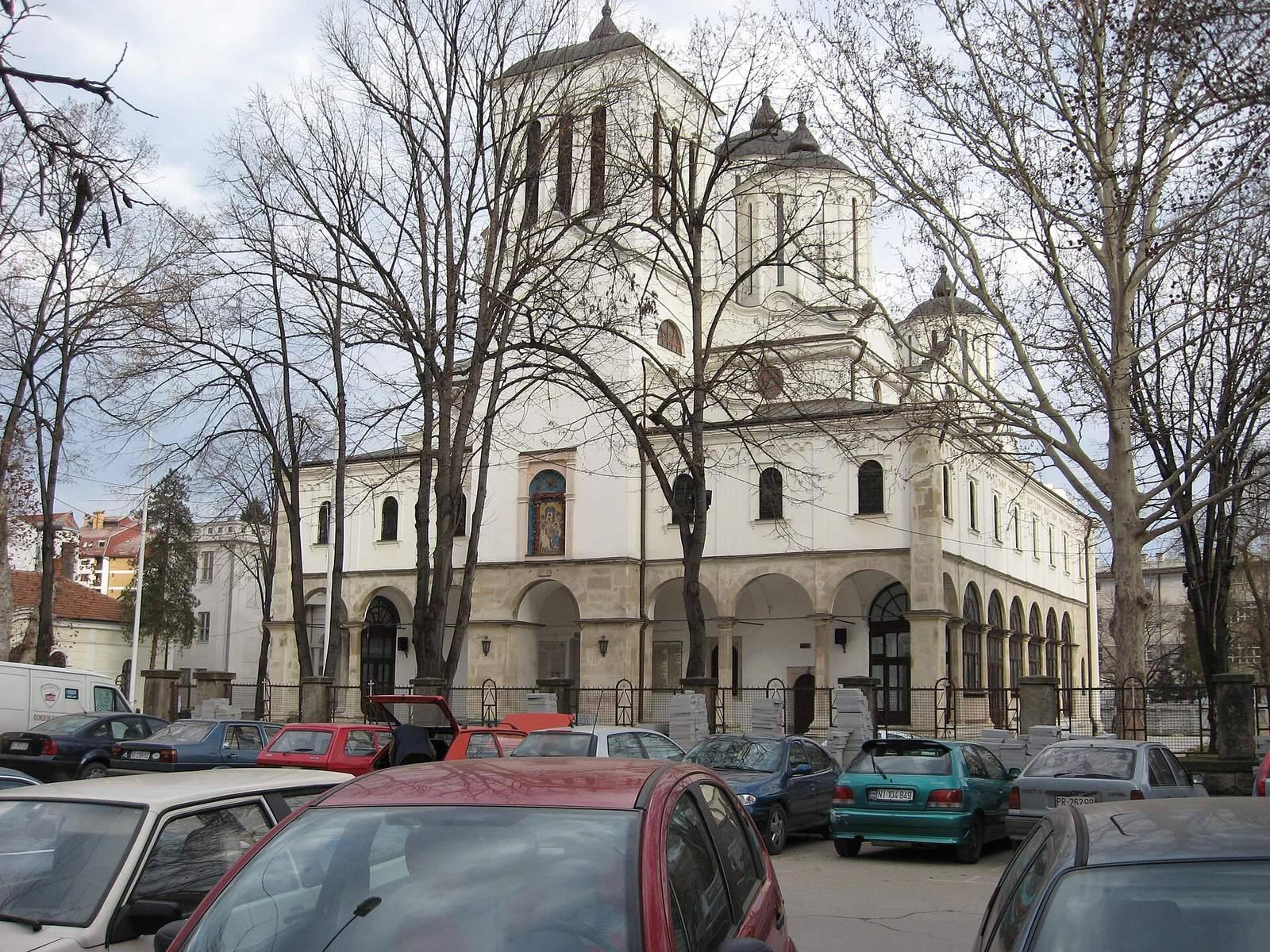
Holy Trinity Cathedral, also known as Saborna crkva, is a Serbian Orthodox cathedral in Niš, Serbia. Dedicated to the Holy Trinity, it serves the Niš Eparchy, an Orthodox diocese, and celebrates its dedication on the feast of the Descent of the Holy Spirit. Construction began in 1856, when about 12,000 Orthodox Serbs lived in Niš, then under Ottoman rule. The Peace of Paris that year ended the Crimean War and, under pressure from its other signatories, the Ottoman government recognized equality between Muslims and Christians. This helped create conditions for new churches to be built and existing ones repaired.
On 18 October 1856, Bishop Janićije contributed a substantial sum toward the building and called on wealthier residents to help finance it. The municipality contracted with architect and master builder Andrey Damyanov of Veles on 12 May 1857. Its representatives wanted the new church to recall the medieval Serbian monasteries of Gračanica or Visoki Dečani. The cathedral was completed in 1872, initially without its planned Neo-Baroque bell tower, and underwent several repairs within about twenty years.
In the mid-nineteenth century, the church stood in a part of Niš inhabited mainly by Serbs; it is now near the city center. Ottoman restrictions prevented a bell tower from rising above the church roof. Niš was liberated before the cathedral’s consecration on 13 February 1878, attended by Metropolitan Mihailo of Belgrade and Prince Milan Obrenović.
War damage and restoration
On 4 September 1921, the remains of priests killed by Bulgarian soldiers in autumn 1915 were buried in the church. The priests had been killed at three locations. On 4 April 1944, Allied bombing severely damaged the cathedral. The Allies had been told that German forces stored gasoline in the churchyard and parked vehicles there, but whether this information influenced the bombing is unknown. Donations supported repairs, and worship resumed by June 1945.
A fire broke out early on 12 October 2001. Its cause remains unclear. Negligence was suspected in connection with work on the underfloor heating, while some residents alleged arson, for which there was no evidence. Bishop Irinej of Niš initiated the restoration, supported by donors, the Serbian government, businesses, and local residents. The cathedral was fully restored and consecrated on 8 October 2006 by Metropolitan Jovan of Zagreb and Ljubljana and other Serbian Orthodox hierarchs.
Recent ecclesiastical and cultural history
On 7 August 2011, Serbian Patriarch Irinej enthroned Bishop Jovan of Niš at the cathedral. A museum of church antiquities opened there in April 2021, inaugurated by Serbian Patriarch Porfirije. Its collection brings together 264 objects from the Niš Metropolitanate, including paintings, old and rare books, photographs, liturgical textiles, metalwork, and other items.
Remains
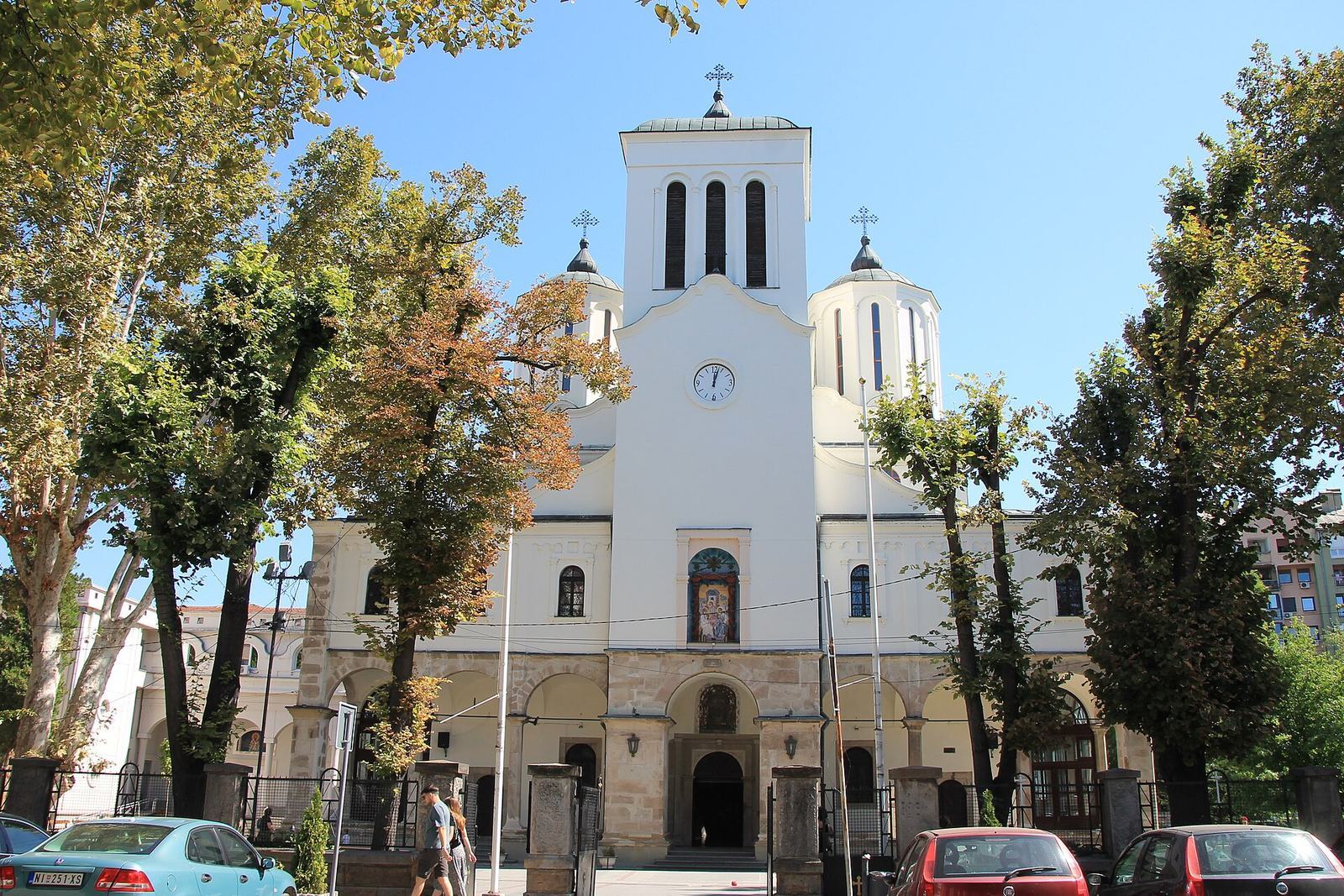
The cathedral has a three-nave basilica plan, meaning its long interior is divided into three principal spaces, and five domes. Its design combines Serbian-Byzantine, Romanesque-Byzantine, and Islamic motifs with Renaissance and Western Baroque elements. This mixture has been viewed as a turning point in Serbian architecture, as designers moved away from classical models toward a national character.
Building and bell tower
Main church
The cathedral is described as Serbia’s third-largest church, after the Church of Saint Sava and the Church of Saint Mark in Belgrade. Allied bombing in 1944 destroyed its northeast wall and damaged the north side of the main nave. The 2001 fire left only the walls standing; the building was subsequently restored.
Bell tower
A clock tower was added in 1937 to a design by Niš architect Alexander Medvedev. It reaches the height of the central dome and contains a large clock and five bells cast in Vršac between 1877 and 1881. The church received five bells in 1880: Prince Milan gave one, another was cast from captured Ottoman cannons, and Niš residents donated the remaining three.
Interior and decoration
Gallery chapels
The upper gallery had a chapel to Saint John the Baptist on its north side and one to Saint Simeon the Myrrh-bearer on its south side. The 1944 bombing destroyed the gallery, including the chapel of Saint John and a chapel dedicated to Saint Nicanor.
Iconostasis
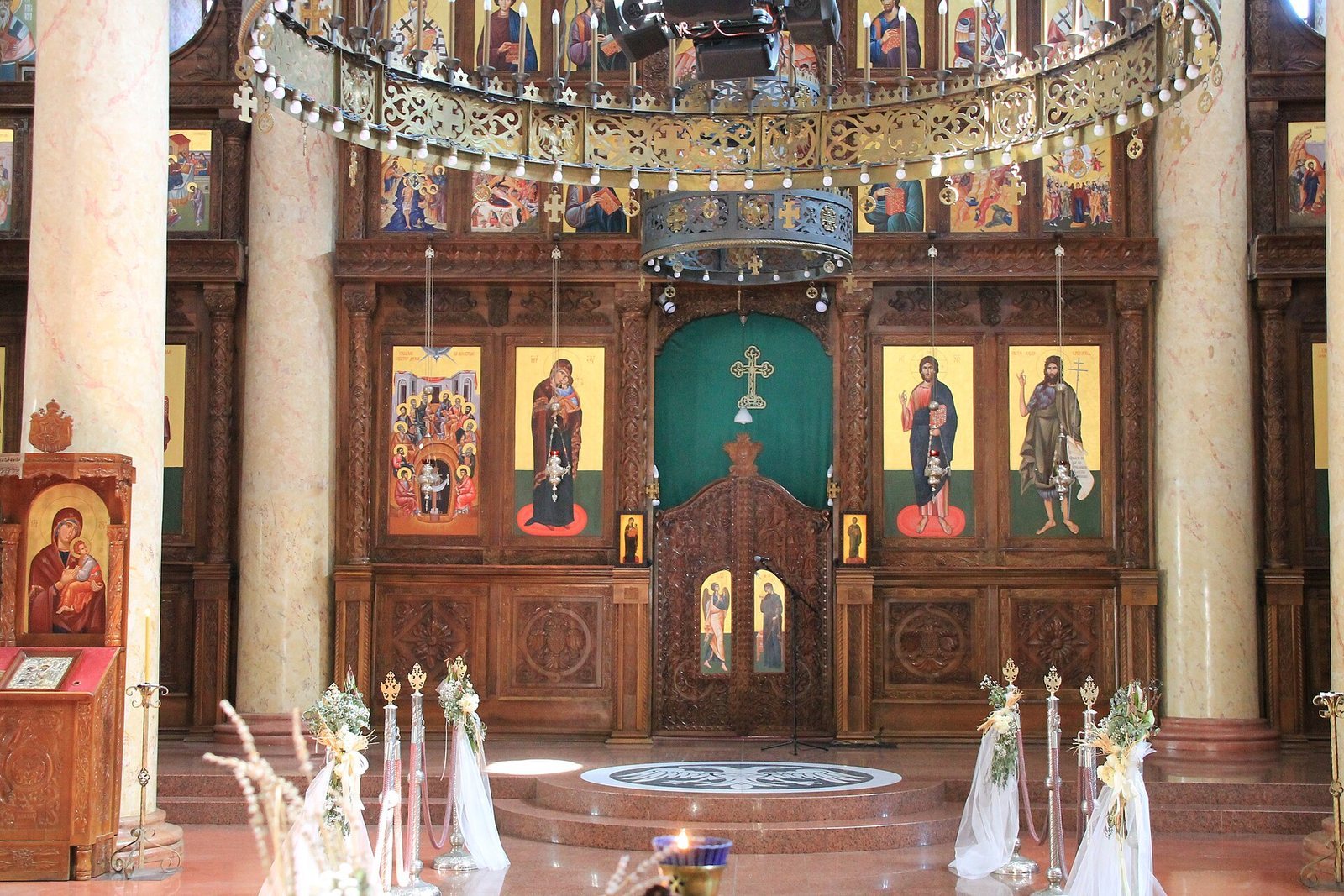
The church’s iconostasis, an icon-bearing screen that separates the sanctuary from the main worship area, measured 19 by 12 metres. Its carved, gilded framework held 54 sacred images arranged in five levels. Twenty were painted by Đorđe Krstić, and works by Pavle Čortanović, Milutin Marković, and Steva Todorović were also included. Marković painted most of the icons after 1897. The paintings followed academic realism, a fine-art tradition emphasizing naturalistic representation associated here with the Munich school.
Krstić’s first completed image for the screen, The Death of Prince Lazar, shows the dying medieval Serbian ruler as an angel descends to receive his soul. Its lifelike treatment prompted a public debate known as the “Orthodoxy controversy.” Belgrade woodcarver Louis Kapelnik made the framework, and Krstić was responsible for much of the painting. The fire of 2001 destroyed the iconostasis and its Imperial Doors, the central doors of the screen and its most decorative element.
Paintings and frescoes
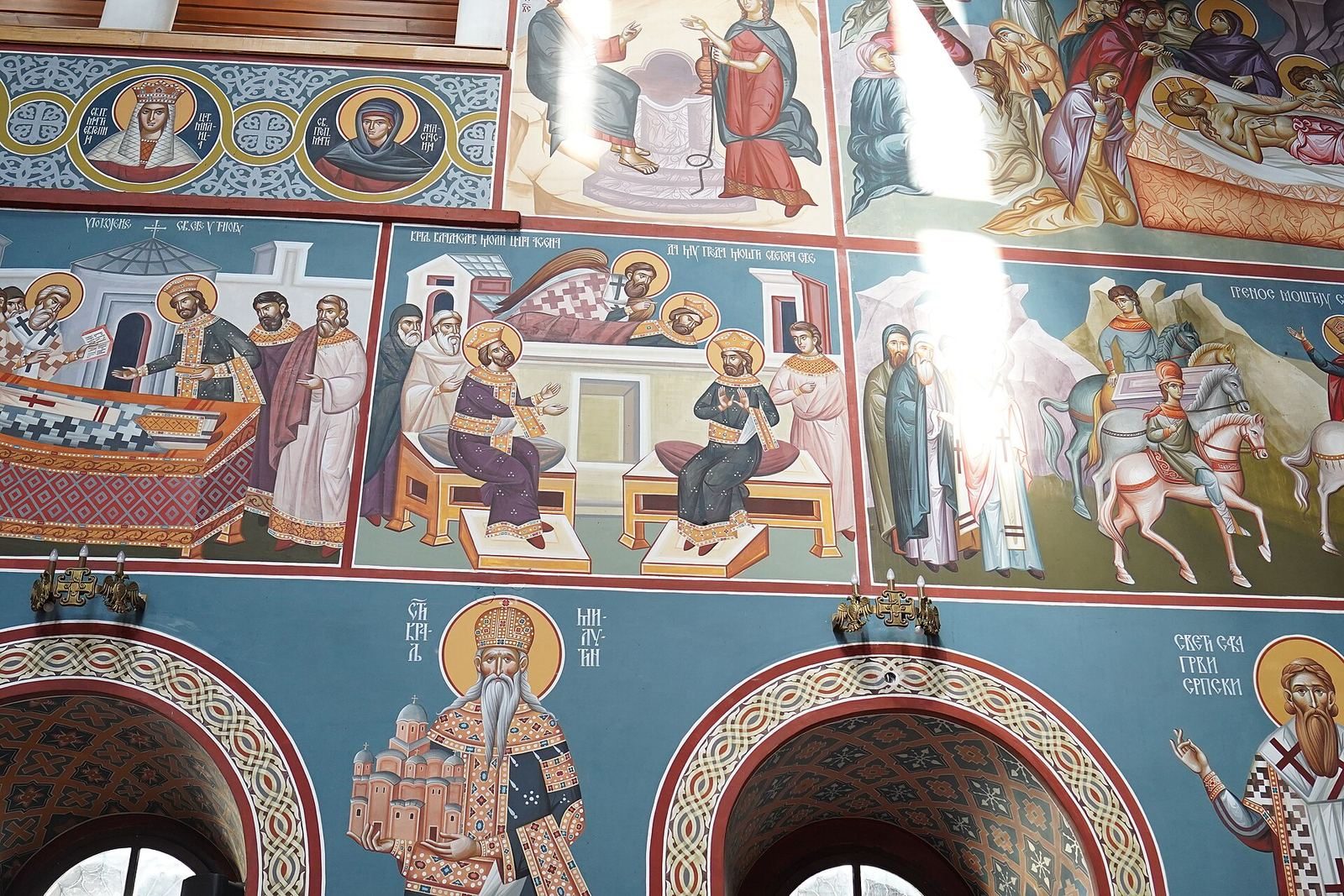
Belgrade painter Vladimir Predojević decorated the church in the 1930s. Its painted subjects included the Dormition of the Virgin, the Orthodox account of Mary’s death and assumption into heaven, and decoration in the domes. The 2001 fire destroyed the frescoes apart from the Holy Trinity image, which Niš painter Milorad Cvetković had restored in 1999.
Objects and churchyard
Church objects
Associated objects include fragments of relics, bodily remains or other objects linked to a saint, of Saint Artemius, and a liturgical shroud used in Orthodox Holy Week observances. The shroud, described as dating from the beginning of the century, has white metallic braid, gold threads, and lace edging. In 1902, Ivan Vasiljević donated a large cross depicting Russian and Serbian saints and an image of the Virgin embellished with pure gold. Tsar Nicholas II gave the church costly liturgical vessels in 1913.
Churchyard monument
A monument to Serbian Patriarch Irinej was erected in the churchyard in April 2023.