Gads Hill Place: Charles Dickens’s Country Home in Kent
Site at a Glance
- Popularity
- High
- Country
- United Kingdom
- Primary era
- Early Modern
- Eras represented
- Early Modern, Modern
- Civilizations
- British
- Site type
- Domestic
- Remains
- Elite Residence
On this page8 sections
History
Before Dickens
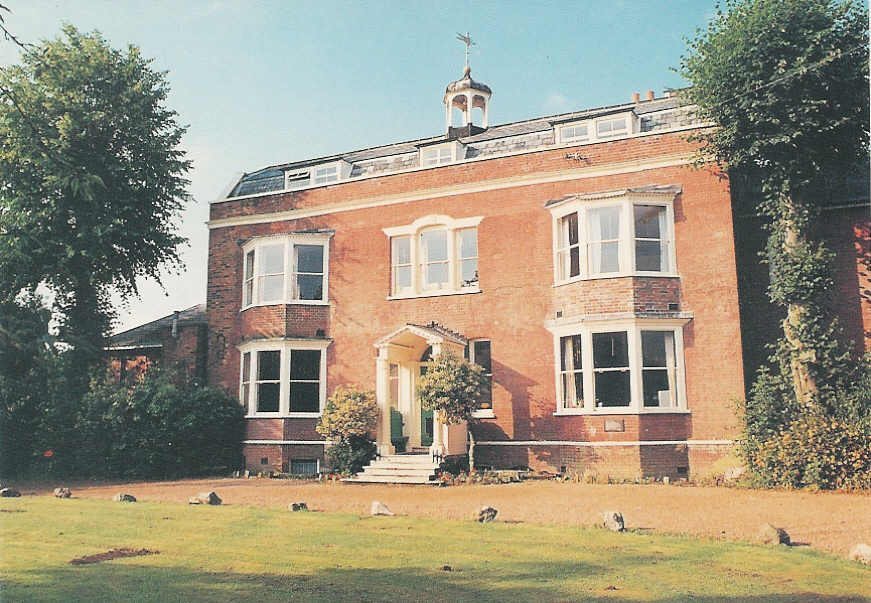
Gads Hill Place is a house in Higham, Kent, United Kingdom, built in 1780 for Thomas Stephens, a former mayor of Rochester. It is best known as Charles Dickens’s country home from 1857 until his death in 1870. The place is also connected by name with Gad’s Hill, the setting of Sir John Falstaff’s robbery in Shakespeare’s Henriad, the history plays about Henry IV and Henry V.
Dickens first saw the house as a boy while walking with his father, John Dickens. His father encouraged him to hope that hard work might one day make it possible for him to own the property. Dickens often walked from Chatham to see it.
Dickens at Gads Hill Place
In March 1856, Dickens bought the house for £1,790 from the writer Eliza Lynn, later known as the novelist Eliza Lynn Linton. He initially planned to rent it out as an investment, but changed his mind and moved in in June 1857, making it his country retreat.
The house received a varied circle of guests, including the Danish writer Hans Christian Andersen, the American poet Henry Wadsworth Longfellow, writers Charles Allston Collins, Wilkie Collins and Percy Fitzgerald, artists Marcus Stone, John Leech and William Powell Frith, music critic H. F. Chorley, historian Alexander William Kinglake, and actor Charles Fechter. Andersen was invited for two weeks in 1857 but stayed for five. He later wrote positively about the visit, while Dickens told friends that he had found it difficult. Dickens was then separating from his wife and had recently begun a relationship with actress Ellen Ternan. After Andersen returned to Denmark, Dickens stopped corresponding with him.
In 1864, Fechter gave Dickens a prefabricated Swiss chalet as a Christmas present. Dickens used its upper-floor study while working on books including A Tale of Two Cities, Great Expectations, Our Mutual Friend and the unfinished The Mystery of Edwin Drood.
Gads Hill Place remained Dickens’s country home until he died there in 1870, on a couch in the dining room. Shortly before his death, he burned most of his private correspondence in a large garden bonfire. Much of the house’s remaining contents was sold at auction afterward.
After Dickens
Dickens’s son, Charles Dickens Jr., bought the house after his father’s death. He gave it up in 1879 because of ill health and financial difficulties. Francis Law Latham, then Advocate-General of Bombay, bought it in 1890.
The independent Gad’s Hill School moved into the building in 1924 and continues to occupy it. The house was listed at Grade I in 1952, the highest category of listed-building protection in England.
Remains
The site’s physical features include the house and a chalet that once stood on a separate plot across Rochester High Road. A tunnel built some years before the chalet connected the two areas. The house stands opposite the Sir John Falstaff Public House.
The house and associated structures
The study
Dickens had bookshelves installed in his study. Some held dummy books with invented titles that expressed his opinions and prejudices. These included Hansard’s Guide to Refreshing Sleep, History of a Short Chancery Suit in twenty-one volumes, Socrates on Wedlock and King Henry the Eighth’s Evidences of Christianity. A seven-volume series, The Wisdom of Our Ancestors, comprised Ignorance, Superstition, The Block, The Stake, The Rack, Dirt and Disease. Beside them was a very narrow dummy volume titled The Virtues of Our Ancestors.
The chalet
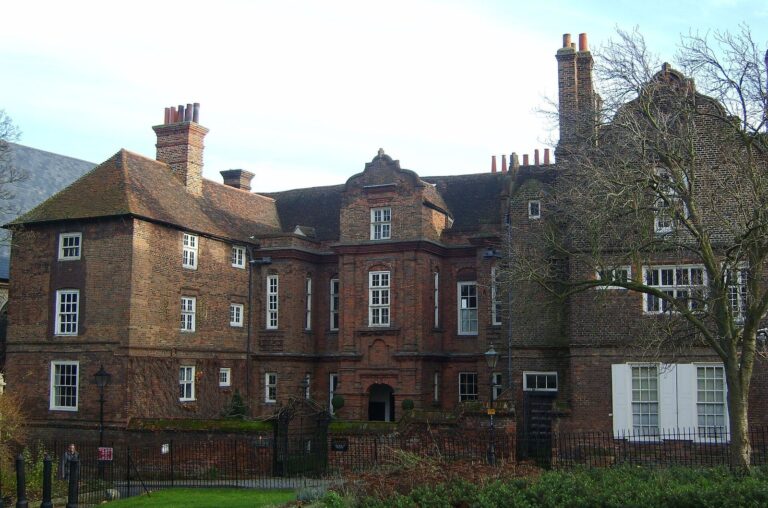
The chalet was a prefabricated, two-storey building in the Swiss style. It was assembled on Dickens’s land across Rochester High Road, in an area his family called the Wilderness. The chalet has been preserved and moved to Eastgate House on Rochester High Street in Rochester as a memorial to Dickens.