St Vincent Street Church, Glasgow: A Greek Revival Presbyterian Church
Site at a Glance
- Popularity
- Medium
- Country
- United Kingdom
- Primary era
- Modern
- Eras represented
- Modern
- Civilizations
- British
- Site type
- Religious
- Remains
- Church
On this page8 sections
History
St Vincent Street Church, Glasgow, is a Presbyterian church in Scotland, United Kingdom, at the junction of St Vincent Street and Pitt Street. Designed by Alexander Thomson for the United Presbyterian Church of Scotland, it was built in the Greek Revival style, which draws on ancient Greek forms, from March 1857 to February 1859. It opened on 16 February 1859 and is the only surviving one of the four Glasgow churches Thomson designed.
Denominational changes and new ownership
After denominational unions, the church became associated with the United Free Church of Scotland in 1900 and the Church of Scotland in 1929. The Association of Spiritualists, a religious movement centered on communication between the living and the dead, bought the building in 1939. Glasgow Corporation, the city’s municipal authority at the time, acquired it in 1964, when the church was considered obsolete, and carried out repairs. Glasgow City Council owns the building.
In 1966, the church received Category A status, the highest grade in Scotland’s listed-building system. The World Monuments Watch, a program identifying heritage places considered at risk, included it in 1998, 2004 and 2006.
Free Church congregation
From 1971, the building served a Free Church of Scotland congregation and became known as Glasgow City Free Church. The congregation had served Glasgow’s Gaelic community on Gordon Street from 1824 to 1886, then on Waterloo Street from 1886 until a fire in 1957 left it without a place of worship. In 1994, it united with Milton Free Church of Garnethill, whose building had been demolished over safety concerns.
The congregation left St Vincent Street Church in October 2021 because plaster was falling. It moved to smaller premises in Partick, and the church building has remained unused. In 2023, the congregation joined the congregation hosting it, whose origins date to 1843, to form Crow Road Free Church.
Remains
Architecture and setting
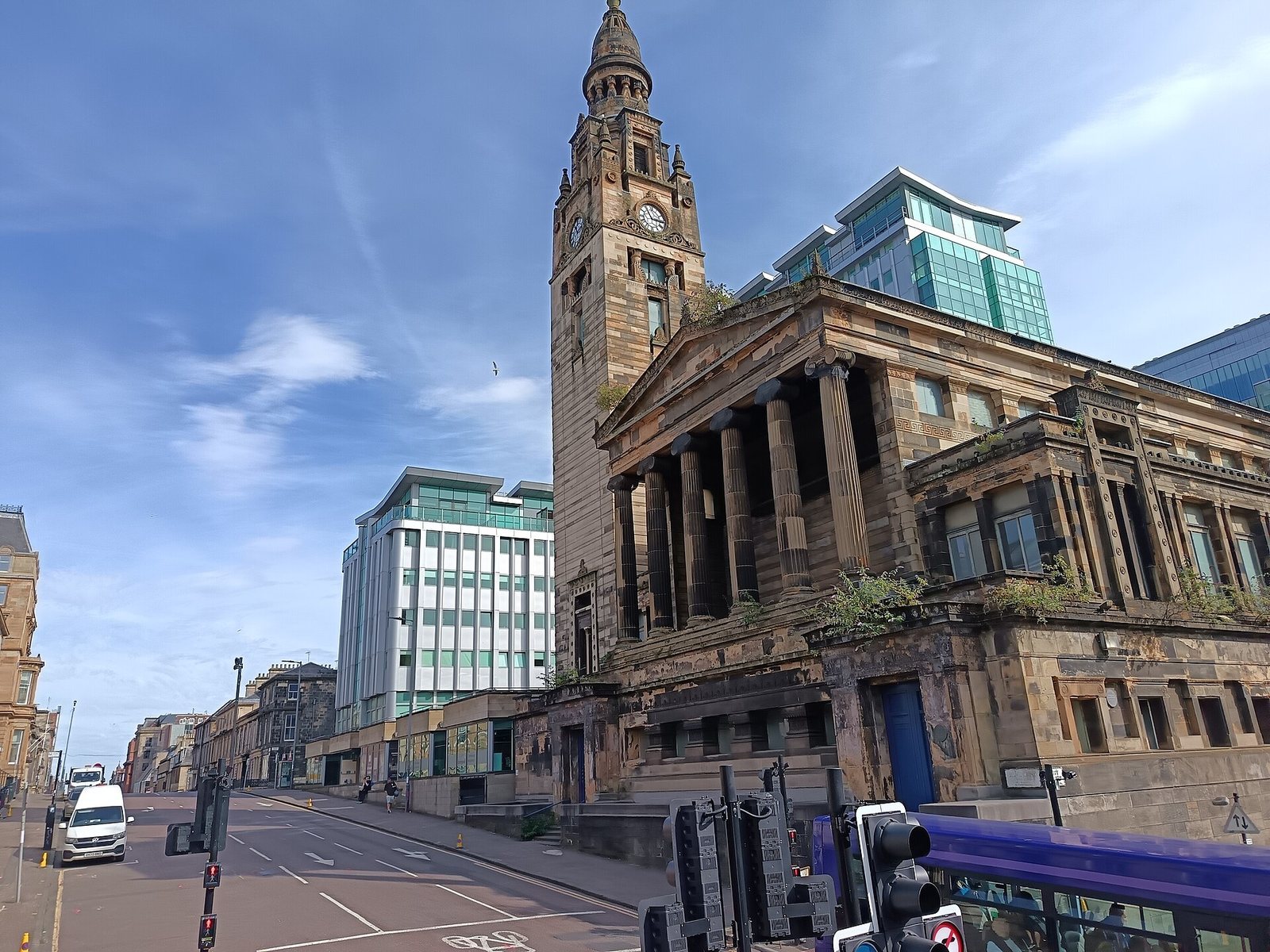
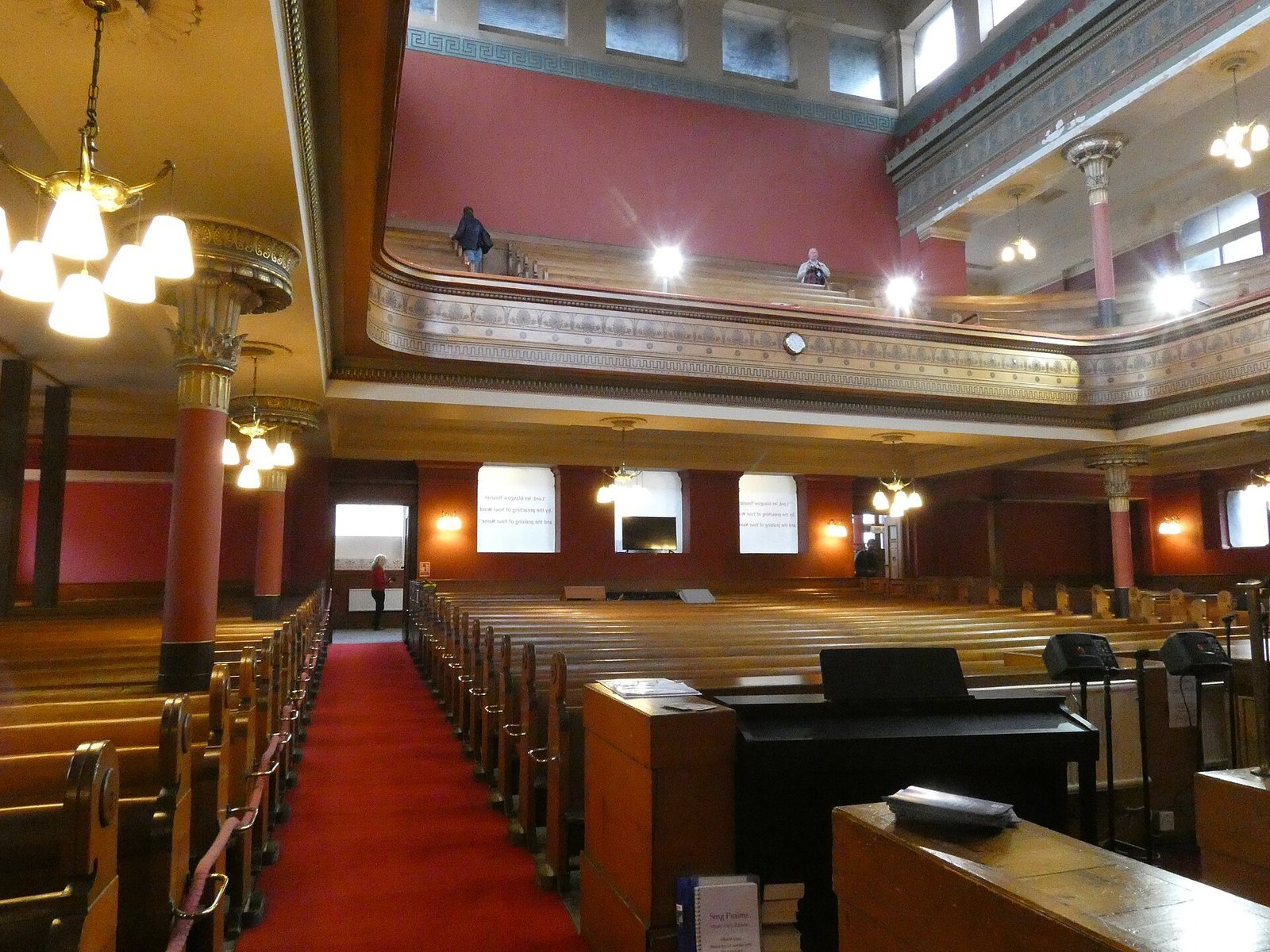
The church stands on a raised platform built into sloping ground in the west of Glasgow city centre. Its main exterior features include a northeast-facing entrance front and a bell tower on the east side. The building follows the Greek Revival style, drawing on ancient Greek forms.
Entrance front
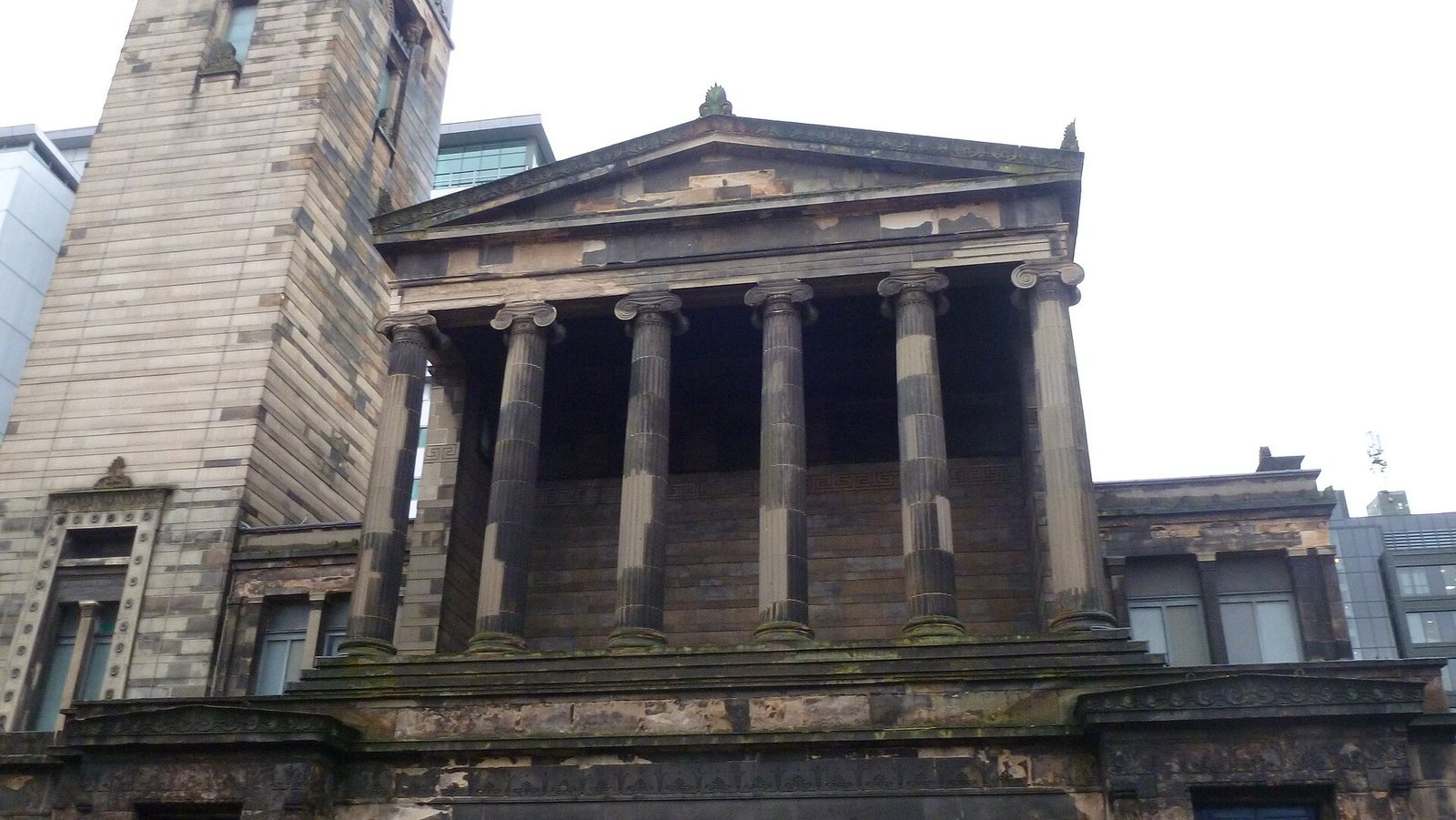
A projecting entrance porch on the northeast front is supported by six Ionic columns, whose capitals have scroll-shaped forms. Above them, a triangular roof feature is decorated with ornaments at its corners and peak, while upright ornaments run along the roof edge.
Bell tower
The tower rises on the east side and is capped by a dome supported by a surrounding row of columns. Some elements of the church, probably including the tower, may have been designed by Robert Gordon Wilson, a young assistant to Thomson. The World Monuments Fund helped restore the tower.
Church hall
A church hall designed by Thomson was added to the complex in 1868.