Church of St Mary in Thirsk: A 15th-Century Parish Church
Site at a Glance
- Rating
- 4.6
- Popularity
- Medium
- Country
- United Kingdom
- Primary era
- Medieval
- Eras represented
- Medieval, Modern
- Civilizations
- British, English
- Site type
- Religious
- Remains
- Church
On this page7 sections
History
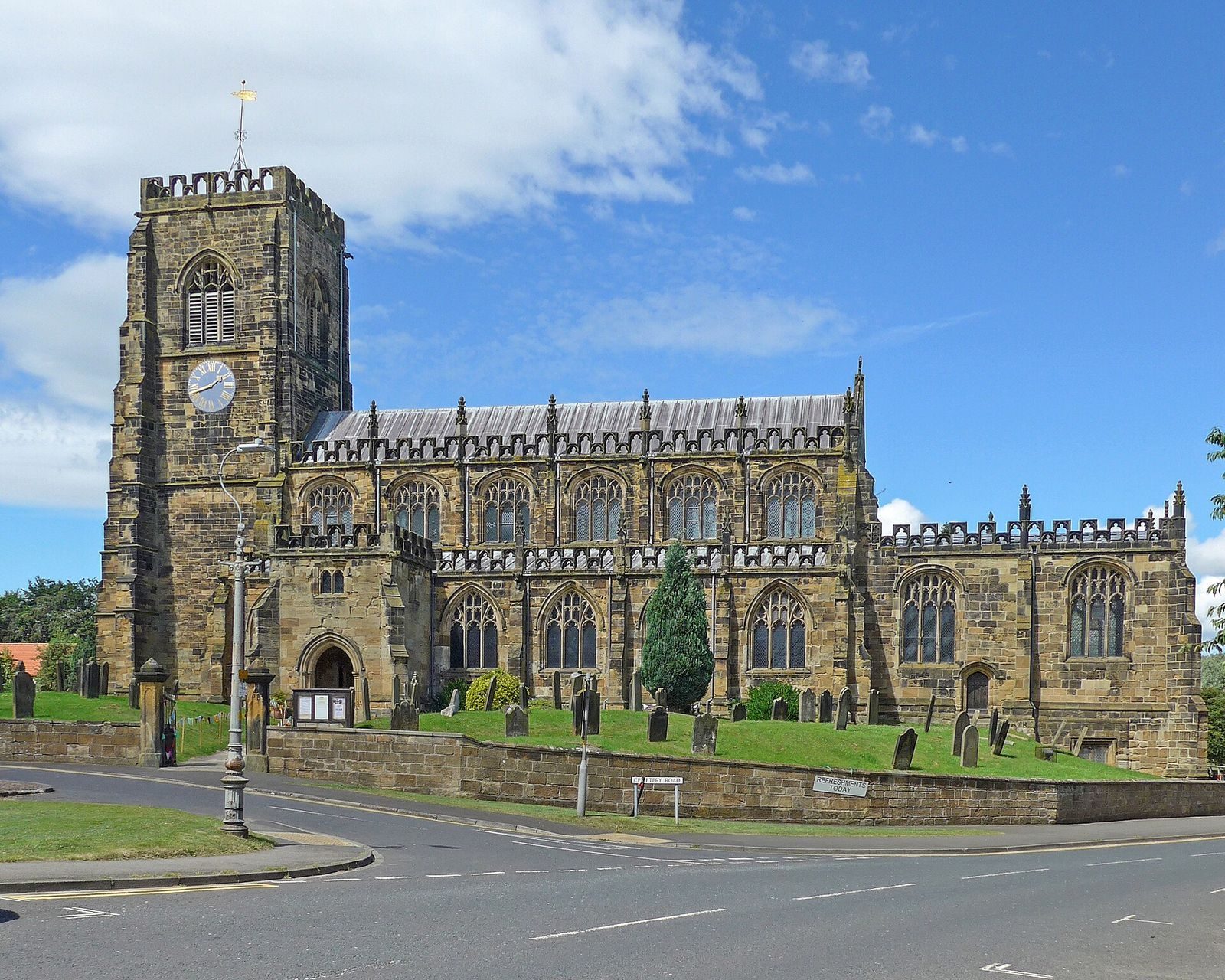
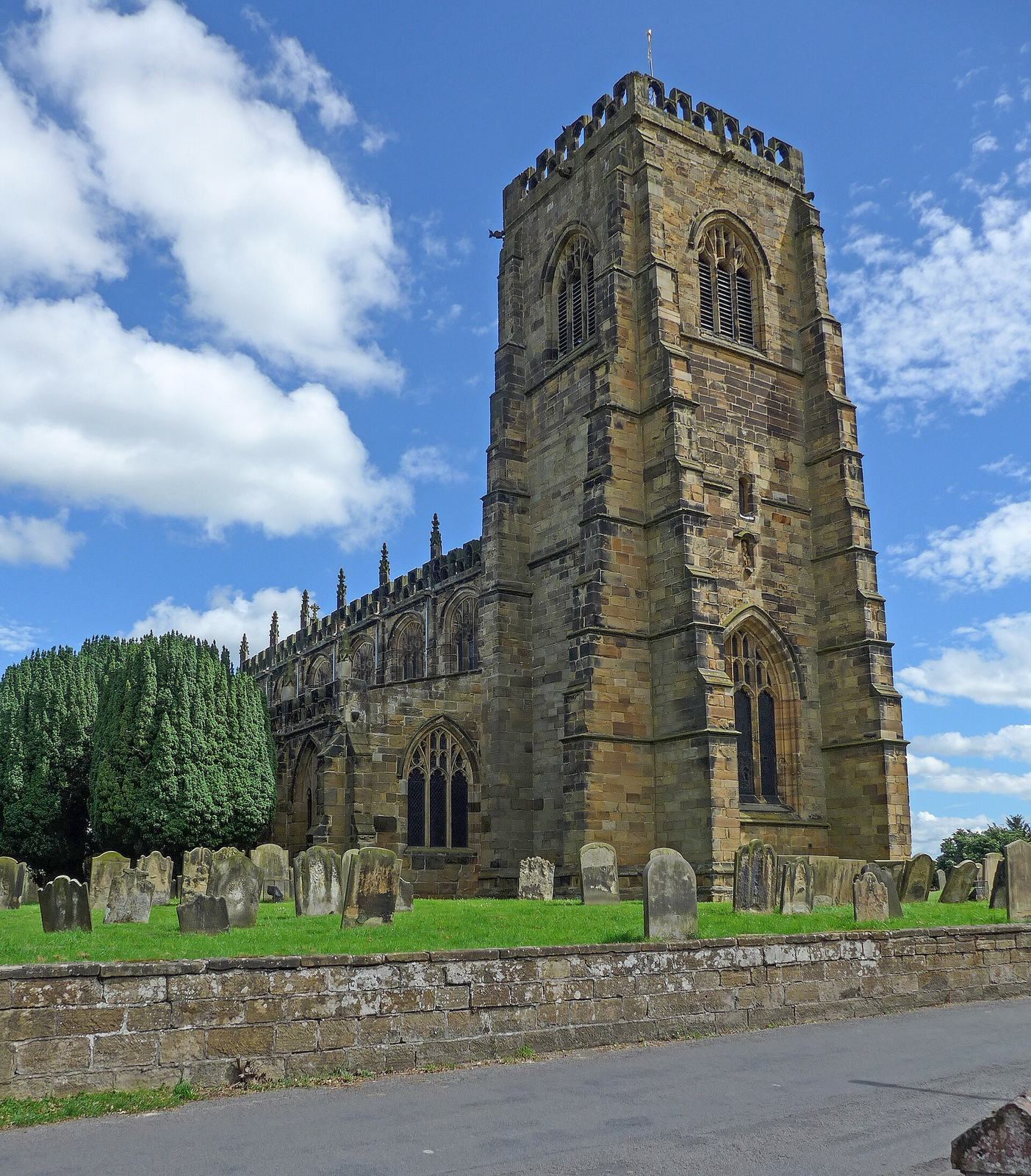
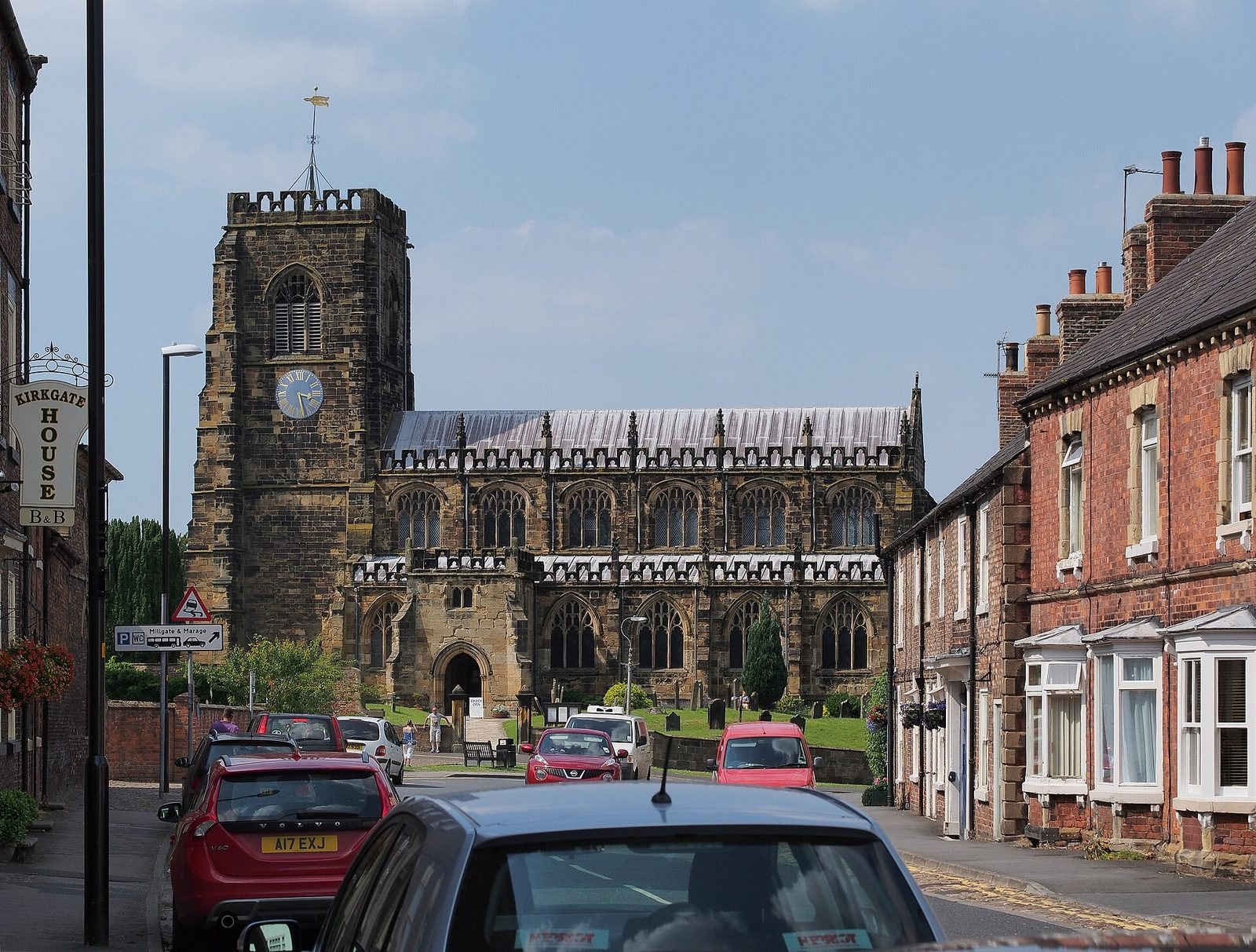
The Church of St Mary in Thirsk is a Church of England parish church in the United Kingdom, built between 1430 and 1480 in the Perpendicular Gothic style. Dedicated to St Mary Magdalene, a follower of Jesus named in the New Testament, it remains an active parish church.
Nineteenth-century support and restoration
Parliamentary grants for the parish living were awarded by lot: £1,200 in 1811 and £400 in 1824. In 1834, a further £400 grant was made in connection with Archbishop Edward Venables-Vernon-Harcourt’s provision of a £30 annual stipend, established as a lasting addition to parish income.
The south-side porch was rebuilt in 1857. In 1877, the architect George Edmund Street restored the church, which reopened on 2 October that year.
St Mary’s belongs to the Diocese of York, the Archdeaconry of Cleveland, and the Deanery of Mowbray, successive levels of Anglican administration. Its churchmanship is classified as central, between evangelical and Anglo-Catholic tendencies. It is part of the Benefice of Thirsk, a group of churches supported by an endowment that also includes St Wilfrid’s Church in South Kilvington, St Lawrence’s Church in Carlton Miniott, and St Leonard’s Church in Sandhutton. The church is Grade I listed, England’s highest listed-building category, reserved for buildings of exceptional interest.
Remains
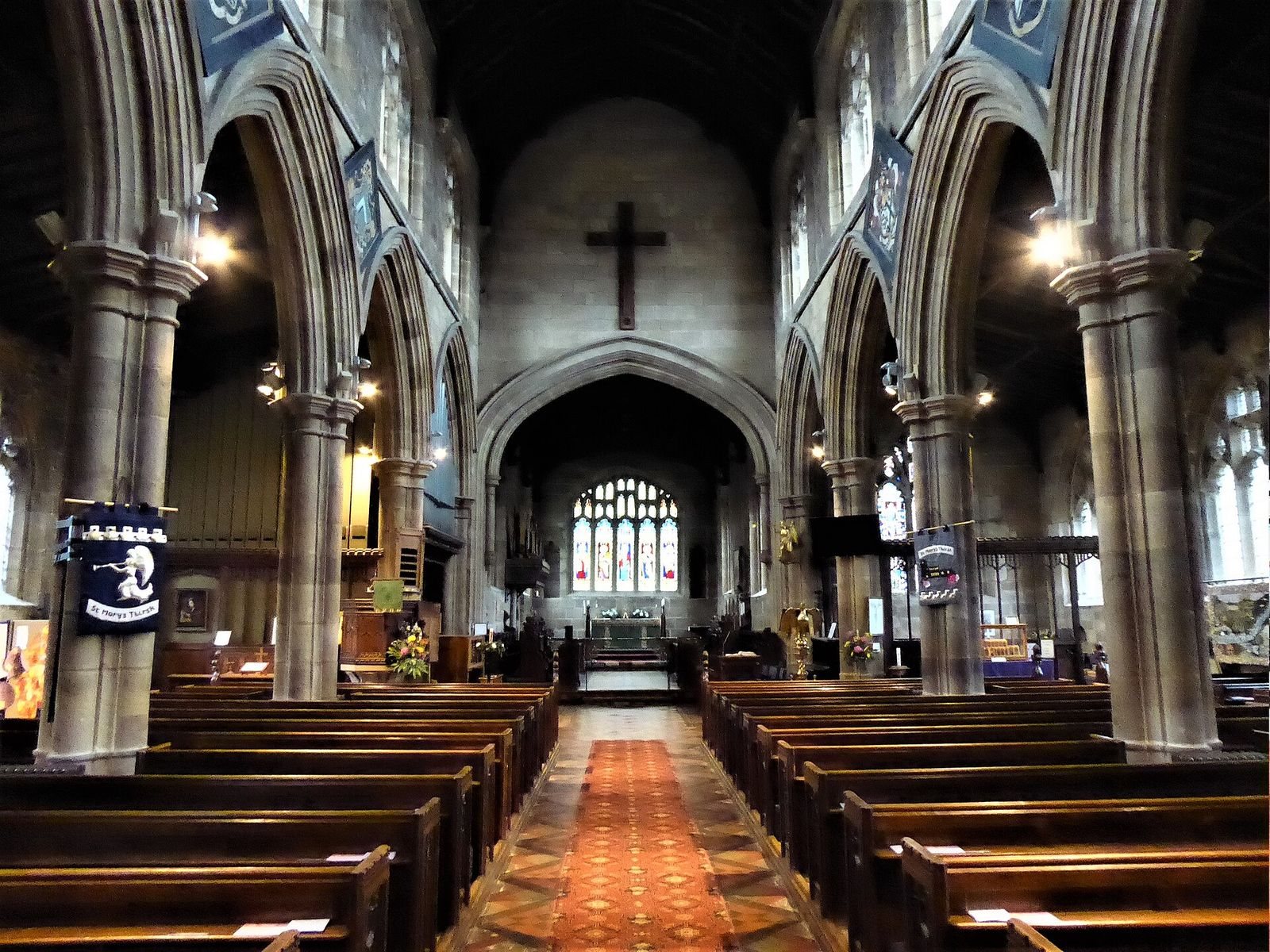
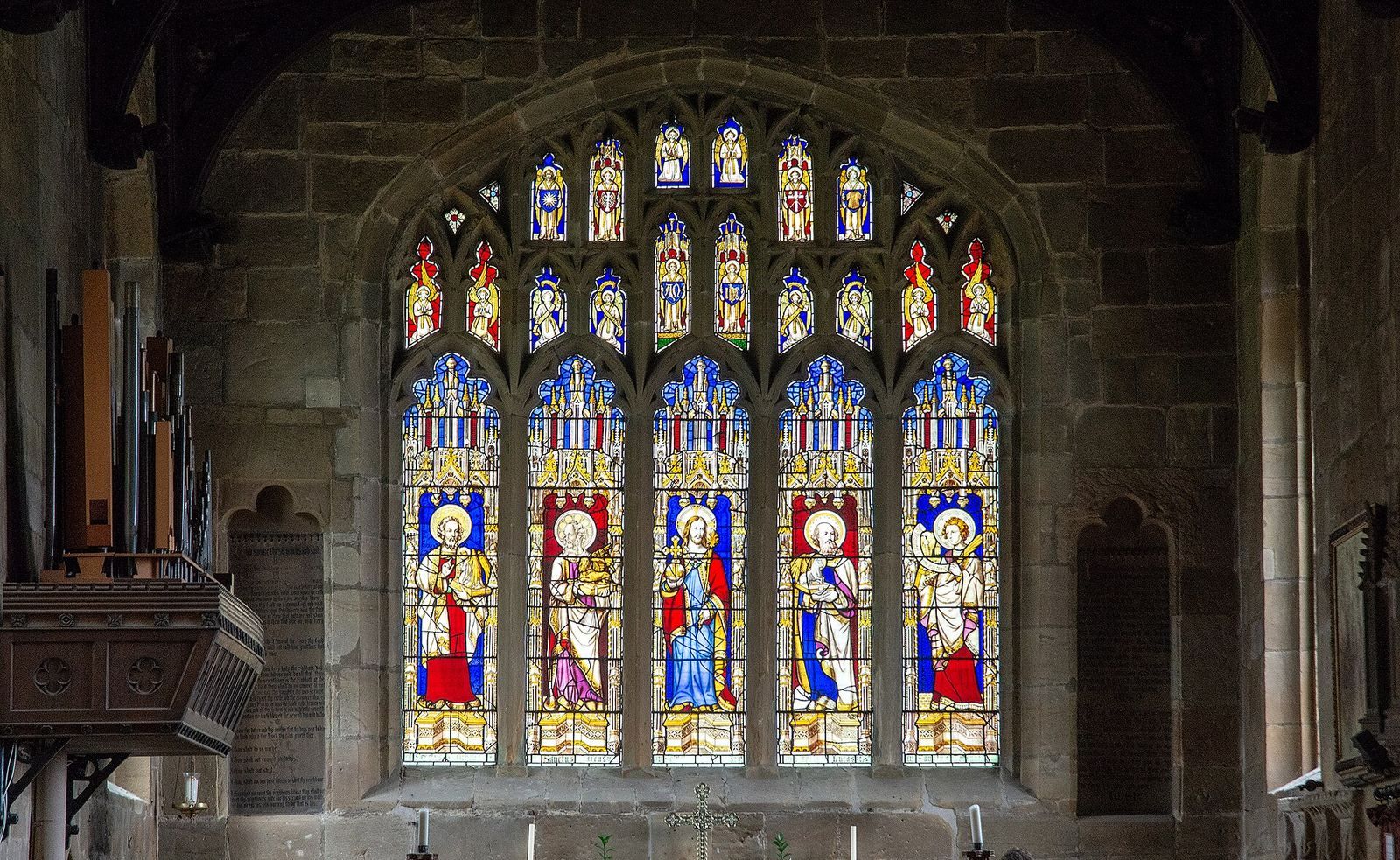
The church is in the Perpendicular Gothic style, a late English Gothic form marked by strong vertical emphasis. Its features include a porch on the south side, a tower, and an east window in the south aisle.
Heraldic window
During the 1877 restoration, the east window of the south aisle was noted for the royal arms of England quartered with France and the motto ‘Dieu et mon droit’ (‘God and my right’). Other arms were associated with the Ascough family, the Mowbrays, Sir James Strangways, his wife Elizabeth, and members of their family.
Organ and tower bells
Pipe organ
Andrew Wood built the church’s pipe organ in 1813. It was later restored and enlarged.
Bells
In 1859, the tower held four bells. The largest was dated as early as 1410 and was reputedly brought from Fountains Abbey, a Cistercian monastery in North Yorkshire. The other three were cast in 1729, 1775, and 1805. Two bells were added between 1857 and 1864, and two more in 1871, bringing the peal to eight. The sixth bell was recast in 1926.