Cowick Hall: A Historic Country House in Yorkshire
Site at a Glance
- Rating
- 4
- Popularity
- Very Low
- Country
- United Kingdom
- Primary era
- Early Modern
- Eras represented
- Early Modern, Modern
- Civilizations
- British, English
- Site type
- Domestic
- Remains
- Manor House
On this page8 sections
History
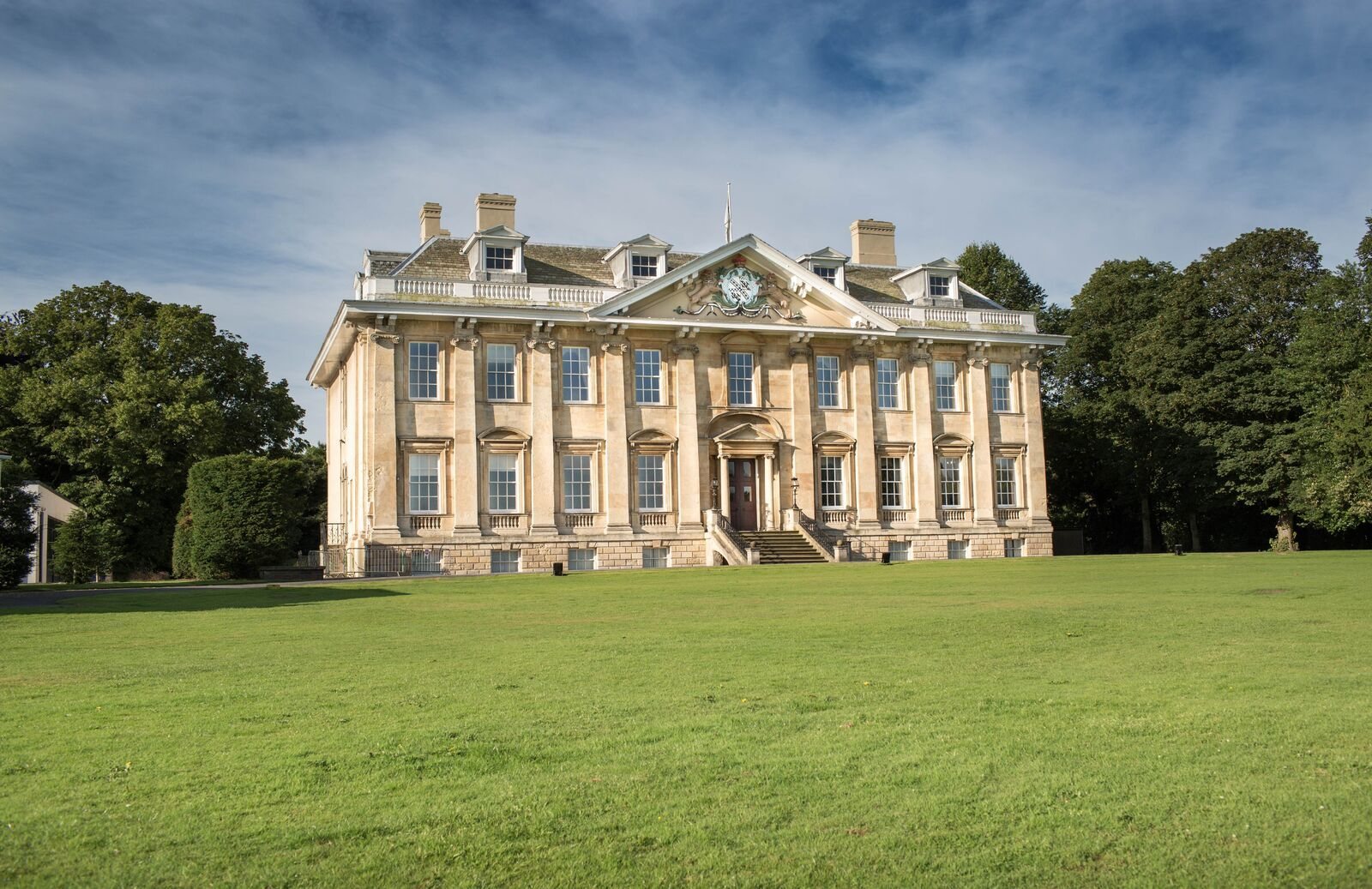
Cowick Hall is a country house in Snaith, between East and West Cowick in the East Riding of Yorkshire, United Kingdom. Built for John Dawnay, 1st Viscount Downe, around 1660–1690, it became a home of the Viscounts Downe and is described as Georgian, a British architectural style associated chiefly with the 18th and early 19th centuries.
The Dawnay family and Cowick
The Cowick lands passed to the Dawnay family in the 14th century. The family traced its ancestry to the lords of the manor at Shannock in Sheviock, Cornwall, and later counted Cowick Hall, Dawnay Lodge and Danby Castle among its principal seats. During the reign of Richard II, king of England from 1377 to 1399, Thomas Dawnay, younger brother of Sir John Dawnay, married Elizabeth Newton, heir to John Newton of Snaith, and settled at Escrick. Thomas’s grandson, Sir John Dawnay, became the first of several family members to serve as High Sheriff of Yorkshire, a county officer with ceremonial and administrative duties on behalf of the Crown.
Alterations in the 18th and 19th centuries
James Paine substantially altered the house for the third Viscount between 1752 and 1760. Joseph Bonomi carried out further changes for the fifth Viscount in the 1790s, then returned for additional work between 1804 and 1811.
In 1869, the ninth Viscount sold the estate to Henry Shaw, a cotton spinner and fruit and vegetable exporter from Cleckheaton. Shaw added a dower house in 1870. After his sudden death the following year, his brother Benjamin inherited Cowick Hall, lived there until 1889 and remodelled its interior. David Lunn, Bishop of Sheffield, later described those changes as having destroyed much of the house’s former splendour.
Sale, neglect and continued use
Industrialist Samuel Joseph Cooper of Barnsley bought Cowick Hall in 1889. After his death in 1913, the house fell into neglect and passed through several hands; pigs were kept in its cellars at one point. Demolition was under consideration in 1954, but in 1955 the house was rescued when it became the headquarters of Croda International, which continues to occupy it.
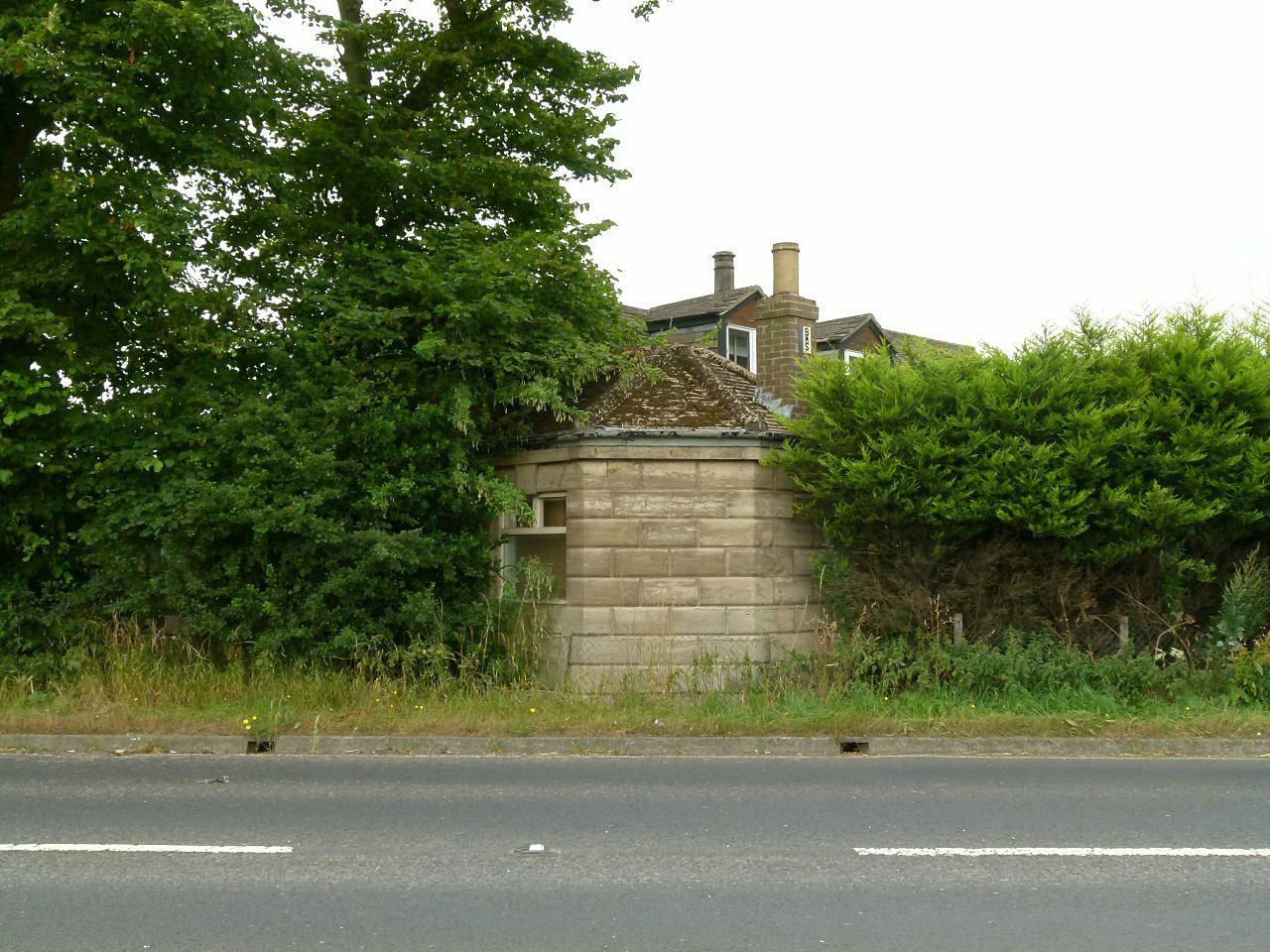
Cowick Hall was designated Grade I on 23 April 1952. The coachhouse and stable block, dower house and gate lodge are Grade II listed.
Remains
The estate brought together the main house, service buildings and landscaped grounds. A description prepared for the 1869 sale placed the Hall in a park of about 330 acres, approached by a long avenue of forest trees.
The Hall
The main fronts have a decorated projecting band supported by pairs of large brackets above each shallow, rectangular wall feature. The brackets carry stylized acanthus leaf ornament. Above the door is a large, carved and painted Dawnay coat of arms bearing the Latin motto Timet Pudorem, meaning ‘He fears shame.’ James Paine’s work included remodelling the interior, rebuilding the south entrance and resetting the roof railing. Joseph Bonomi redesigned the west staircase and added an external gallery on the south side. Architectural historian Nikolaus Pevsner judged the fronts among England’s most accomplished 17th-century country-house designs.
Estate buildings
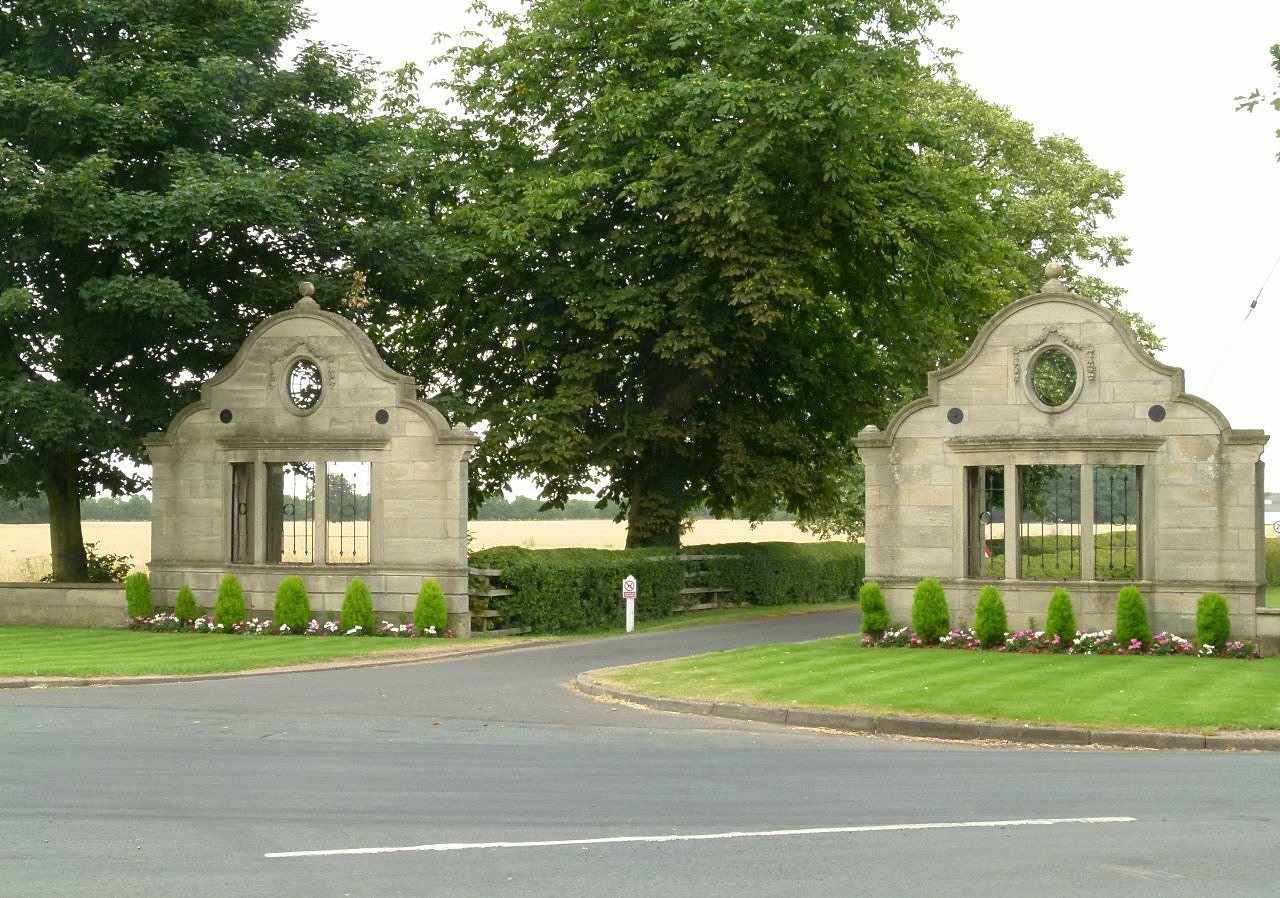
The coachhouse and stable block, designed by Bonomi, is a two-storey, U-shaped building about 150 metres east of the Hall. The two-storey red-brick dower house, built in 1870, lies about 100 metres to the northeast. The gate lodge was probably designed by Paine during his mid-18th-century work.
Park and gardens
The estate description also notes extensive fruit and vegetable gardens enclosed by high brick walls containing flues, channels that can carry heat or smoke. Fruit trees partly covered the gardens. Service facilities listed for the estate included stabling for 20 horses, two saddle rooms, two large carriage houses, four rooms for grooms, a bakehouse and a brewhouse.