Arnoldstein Abbey: A Benedictine Monastery in Austria
Site at a Glance
- Rating
- 4.6
- Popularity
- Medium
- Country
- Austria
- Primary era
- Medieval
- Eras represented
- Medieval, Early Modern
- Civilizations
- Habsburg, Habsburg Austria, Holy Roman Empire
- Site type
- Religious
- Remains
- Monastery
On this page10 sections
History
Arnoldstein Abbey was a Benedictine monastery in Austria, founded in 1106 by Otto, bishop of Bamberg, to protect the bishopric’s recovered lands in Carinthia from secular control. The Benedictines followed the Rule of Saint Benedict, and Bamberg’s bishopric combined religious authority with territorial rule.
Castle and monastic foundation
On 10 February 1014, Holy Roman Emperor Henry II granted Bamberg lands in Carinthia, including property in the Arnoldstein area. Arnold, the builder whose name gave Arnoldstein its name, probably served the bishopric as a ministerialis, a lord’s servant with administrative or military duties. The castle at Arnoldstein is first mentioned in records in 1085/90. Under Bishop Adalbero of Bamberg (1053–1057), the Eppensteiners, a Carinthian noble family, held the bishopric’s property as vassals. They kept it from Adalbero’s successor and fortified the approach to the Canal Valley with a castle. Bishop Otto recovered the lands in the early 12th century.
Otto had the castle demolished and converted into monastic buildings, assigning the new abbey 155 farmsteads to support its economy. Arnoldstein appears to have been a priory, a smaller or dependent monastic house, before Ingram became its first recorded abbot, the head of the abbey, in 1126. The cemetery was consecrated that year. The monastery’s secular protectors later became a source of conflict. After the lords of Ras abused their position, the duke of Carinthia took over the abbey’s secular protection in 1176.
Disaster and late medieval pressures
Poor harvests and a locust plague came before the earthquake of 25 January 1348. It triggered a major landslide on the Dobratsch that buried monastic property, the church, and the village of St. Johann. Restoration continued through 1391. The local population declined afterward, probably in part because of the Black Death. That year, the Patriarch of Aquileia granted the abbey the parish of Hermagor to help ease its financial difficulties, but further gifts and privileges did not clear its debts.
In the 15th century, the monks struggled to provide service to Hermagor’s parish. A dispute arising from these difficulties led to Carinthia’s first documented witch trial, held in 1465 at the regional court of Grünburg. A long-standing tradition says Ottoman raiders burned the abbey before a battle at Villach, but the episode has no historical proof.
Fuggerau and the Reformation
In 1495, Abbot Christoph authorized the merchant and financier Jakob Fugger and his brothers to build a metal-separation works and a castle on abbey land. These developments formed the basis of the Fuggerau complex. By 1507, Abbot Friedrich described the monastery as dilapidated and impoverished.
During the 16th-century Reformation, the movement that produced Protestant churches including Lutheranism, the abbey came close to ruin. Taxes for wars against the Ottoman Empire, neglect of pastoral duties, and disputes with nobles and local subjects weakened it. Despite orders from Bamberg, Lutheran preachers took over the abbey, Thörl, and neighboring castles. In 1570, Abbot Petrus agreed to pay 2,500 guilders in installments to regain the Fuggerau, its lands, and its rights. Mining there had declined, and he sought to prevent the property from passing to neighboring nobles who might become Protestant.
The abbey briefly had no abbot in 1580, when Johannes Pünlein was appointed. A visitation in 1594 found that he led a largely secular life: he celebrated Mass once a year and had only one monk with him, while the rest of the staff was Protestant. The church had no candles or vestments, and its altar was undecorated. His successor, Emerich Molitor, did not restore Catholic practice as Bamberg had hoped. Embezzlement during this period caused losses of about 60,000 guilders.
Recovery, dissolution, and later use
On 12 April 1600, Archduke Ferdinand II of Inner Austria decreed that the abbey should be attached to the Jesuit college at St. Veit. The bishop of Bamberg prevented this by promising to contribute to the college’s costs. After Daniel was freely elected abbot in 1630, the monastery began to prosper again, until a major fire in October 1642. Later recoveries were brief, though they included investment in the buildings and their furnishings.
After the ecclesiastical territory of Aquileia was dissolved and Bamberg’s lands were sold to the Austrian state in 1759, Arnoldstein came under the direct control of the territorial ruler. In 1782, Joseph II decided to suppress Austrian monasteries that did not care for the sick or educate the young. Court officials persuaded him that closing Arnoldstein would cause less harm than suppressing Saint Paul’s Abbey in the Lavanttal. A court decree dissolved Arnoldstein Abbey on 24 November 1783. Abbot Otto von Größing and the 18 other ordained monks could move to another monastery or enter the secular clergy, and the abbey’s property passed into state administration.
The monastery library went to the Klagenfurt Study Library, now the University Library of Klagenfurt; the library’s former name remained in use until 1971. Some of the archives passed to the Historical Society of Carinthia and are now held by the Carinthian State Archives in Klagenfurt. After dissolution, rooms in the former abbey served the state estates administration, were rented out, and housed elementary-school teachers until 1854. Following the administrative reforms of 1848, the complex also housed forestry, district-court, tax, and land-registry offices, as well as a notary and the Arnoldstein municipal office.
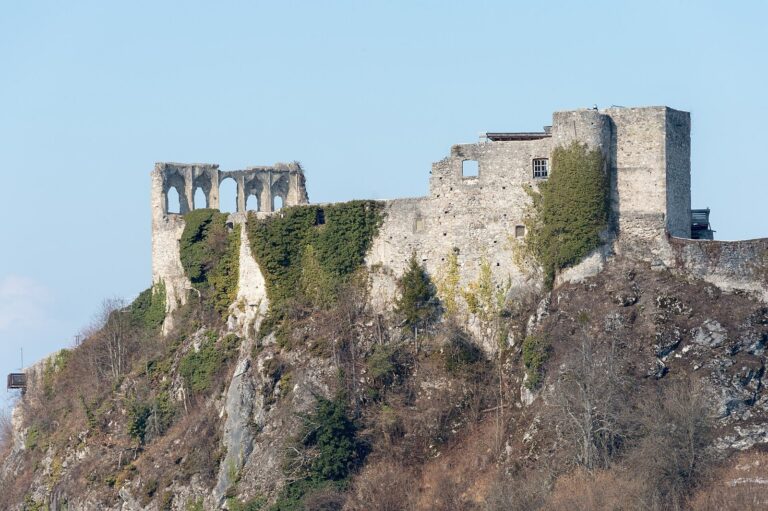
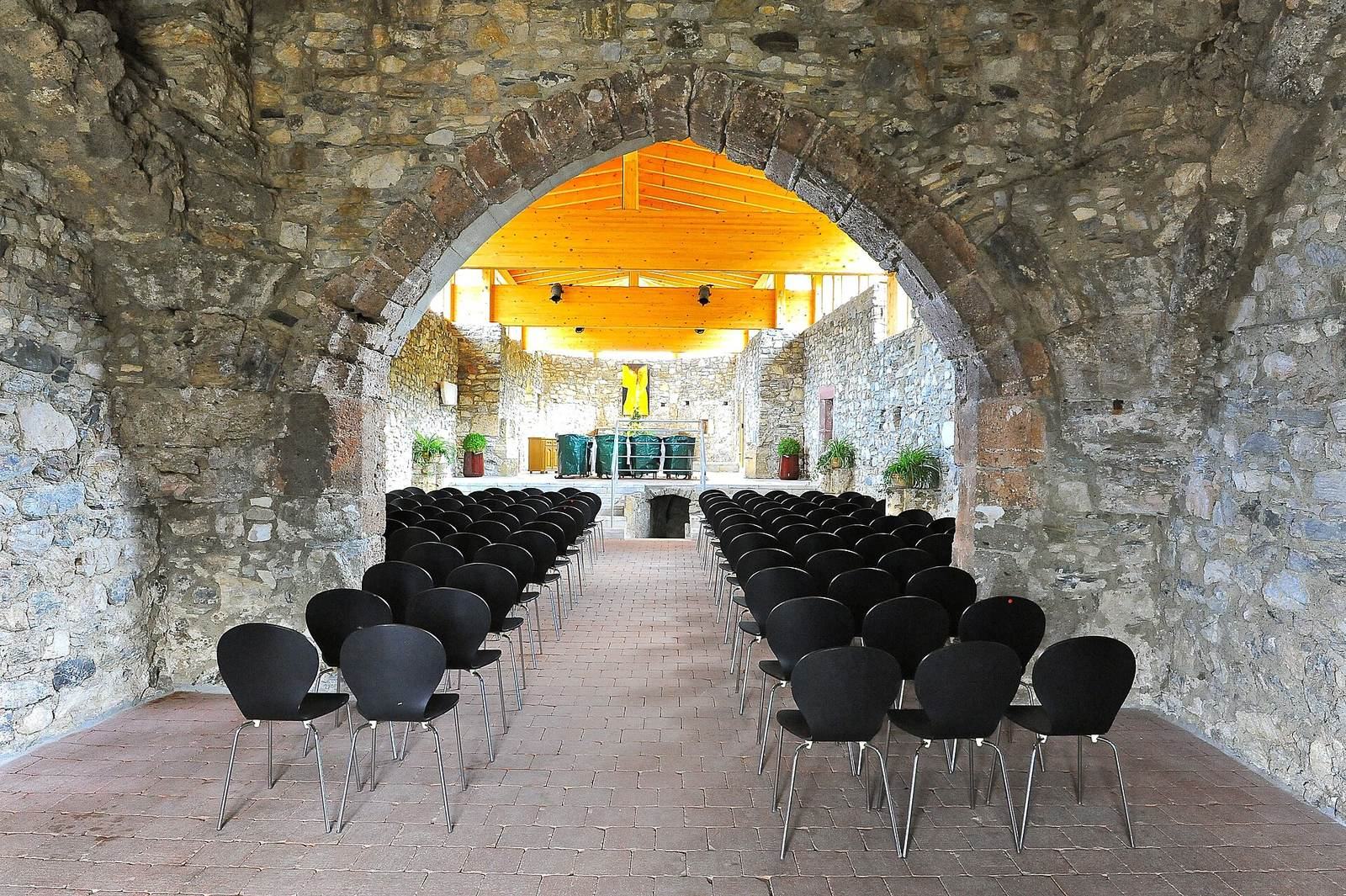
A fire on 16 August 1883 destroyed the buildings’ roofs and wooden ceilings. Funds for repairs were not raised, and the monastery has remained a ruin. The municipality acquired the grounds on 14 May 1980, when the Arnoldstein Monastery Ruins Revitalization Association was founded.
Remains
Layout
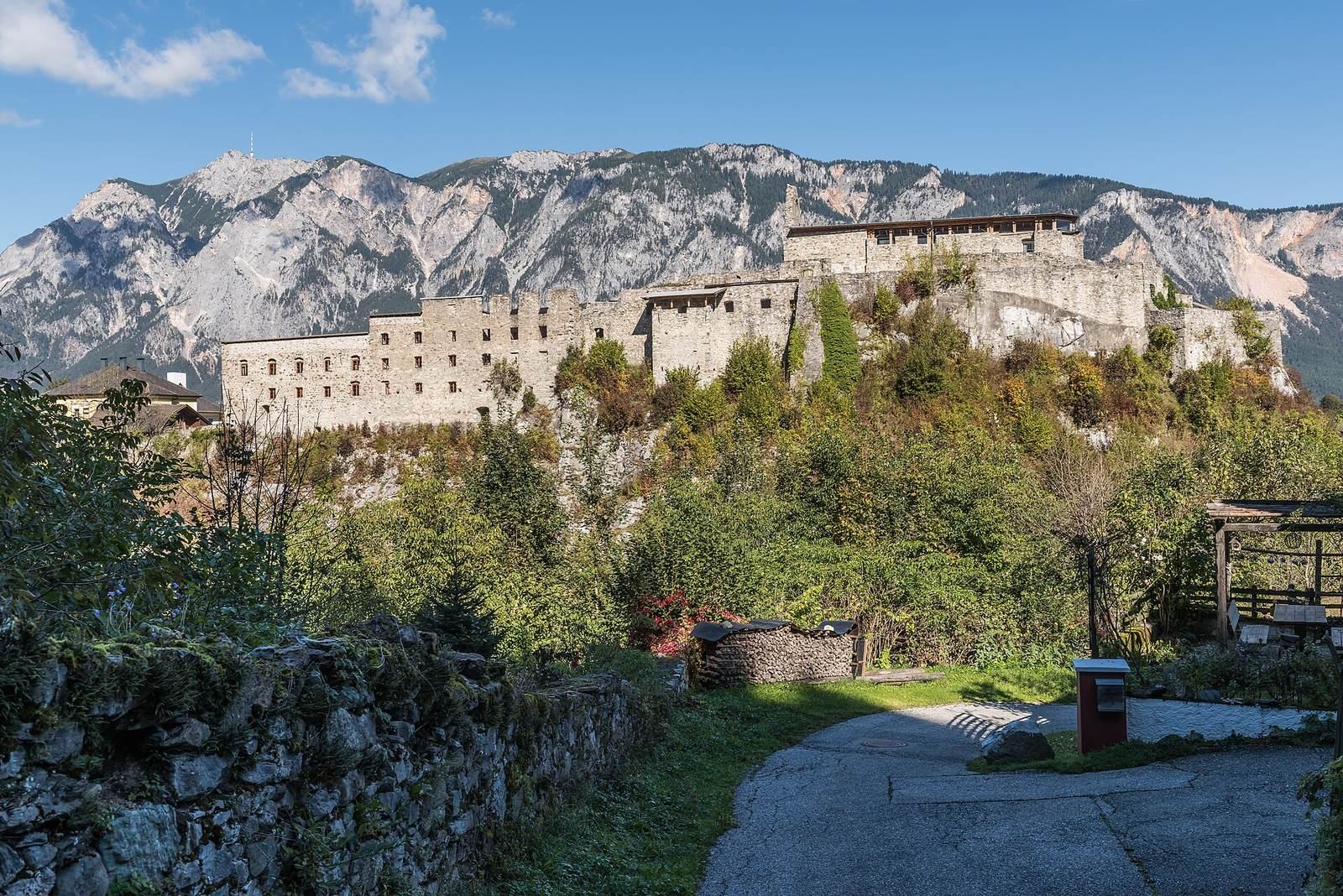
The monastery buildings form an oval around the church. The complex includes work from the Gothic period and the 17th century, and survives as a ruin.
Surviving features
Church
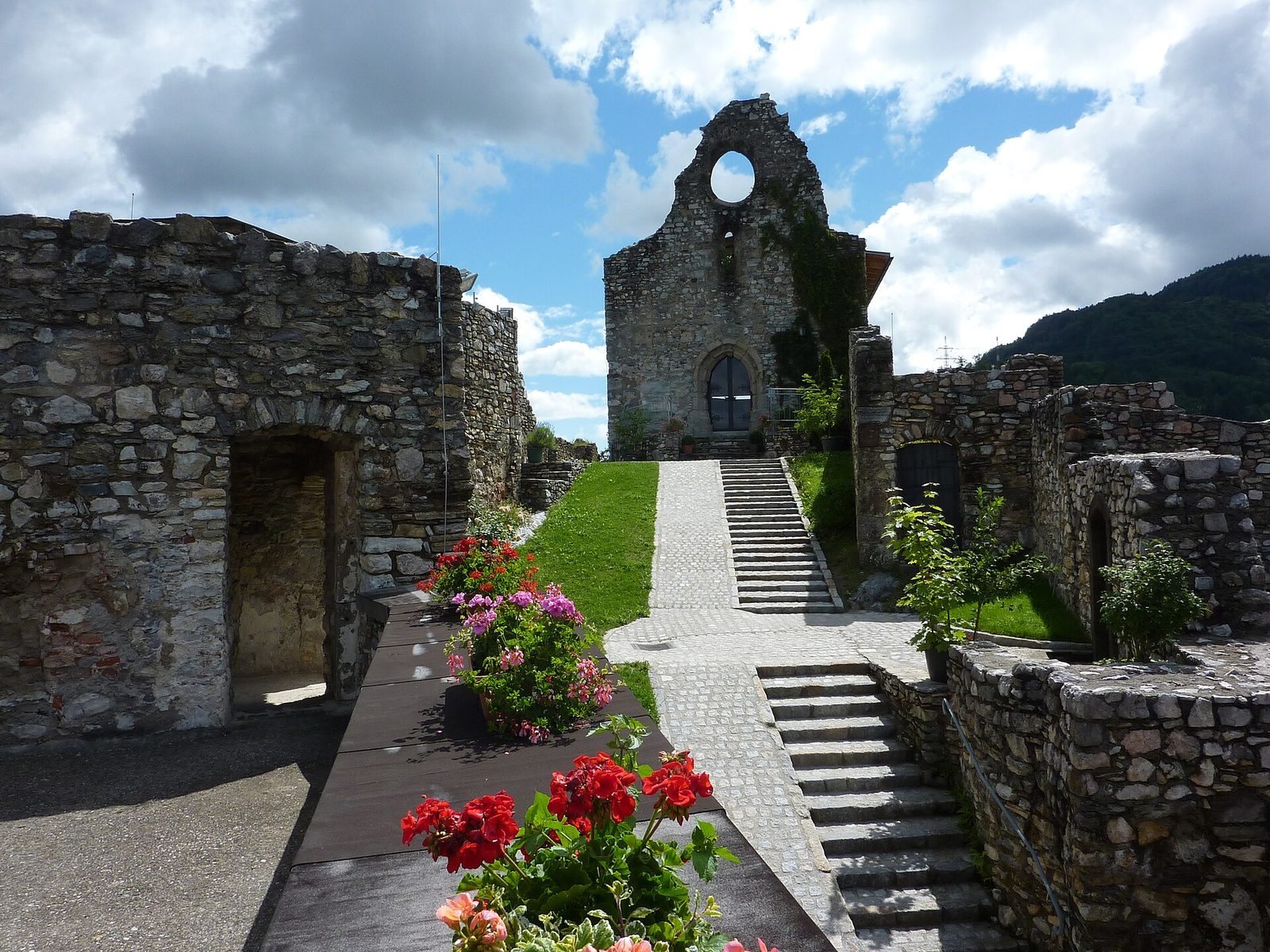
Dedicated to Saint George, a Christian martyr, the church is first mentioned in records in 1316. Its choir, tower with a west portal, and several buttresses remain identifiable.
Gates and archaeological finds
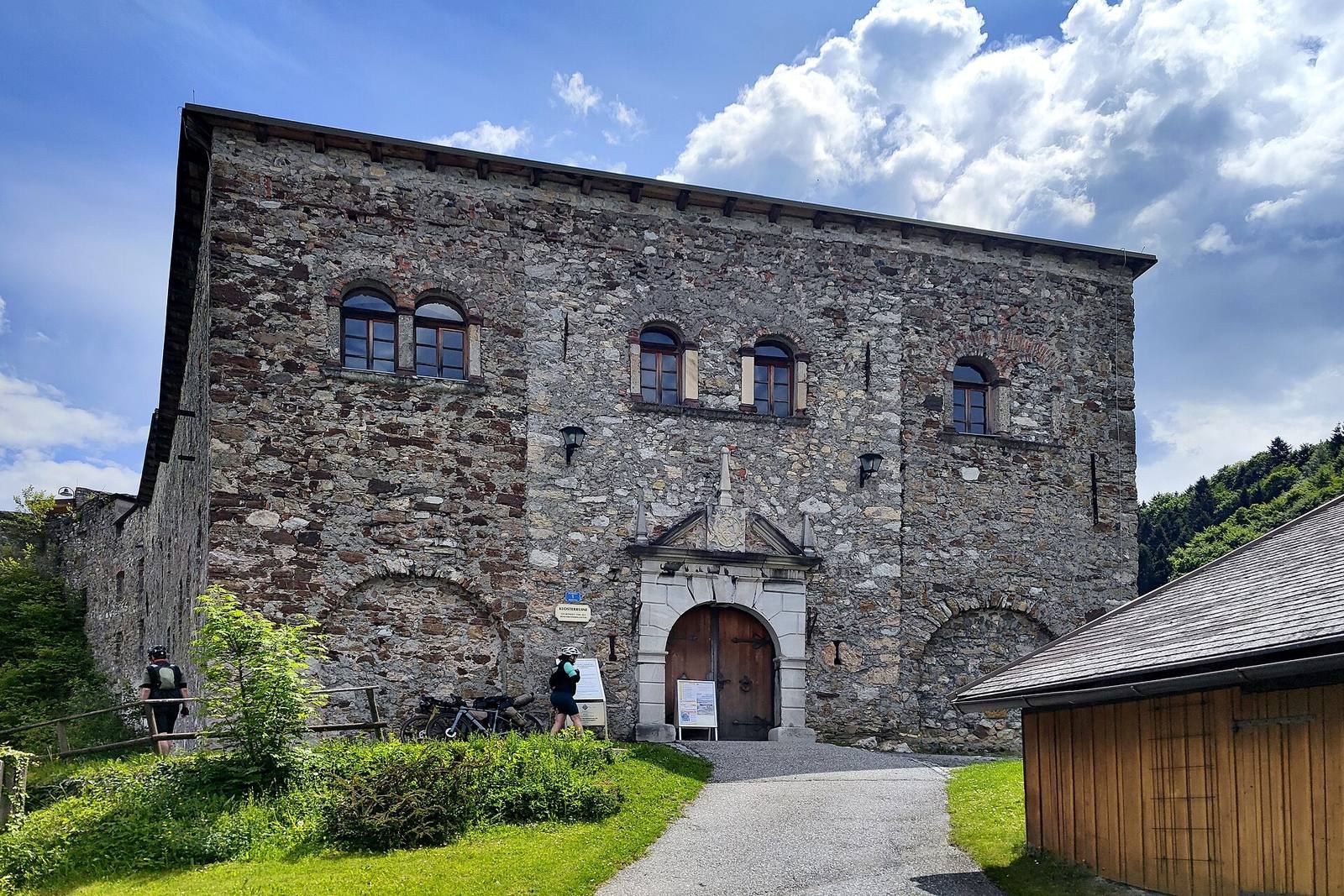
The Baroque gates bear the dates 1677 and 1718. Archaeological finds from the complex chiefly date to the 16th and 17th centuries.