Kovan kaya: A Prehistoric Rock-Cut Ritual Site in Bulgaria
Site at a Glance
- Rating
- 4.6
- Popularity
- Medium
- Country
- Bulgaria
- Primary era
- Unclassified
- Eras represented
- Unclassified
- Civilizations
- Unclassified
- Site type
- Religious
- Remains
- Sanctuary
On this page7 sections
History
Kovan kaya is a prehistoric ritual complex south of Dolno Cherkovishte in Bulgaria’s Eastern Rhodopes. Its name means “Bee Rock” in a local Turkish dialect. Ancient Thracians, peoples of the Balkans, reused the site in later periods.
On June 30, 1972, Kovan kaya was declared a natural landmark.
Remains
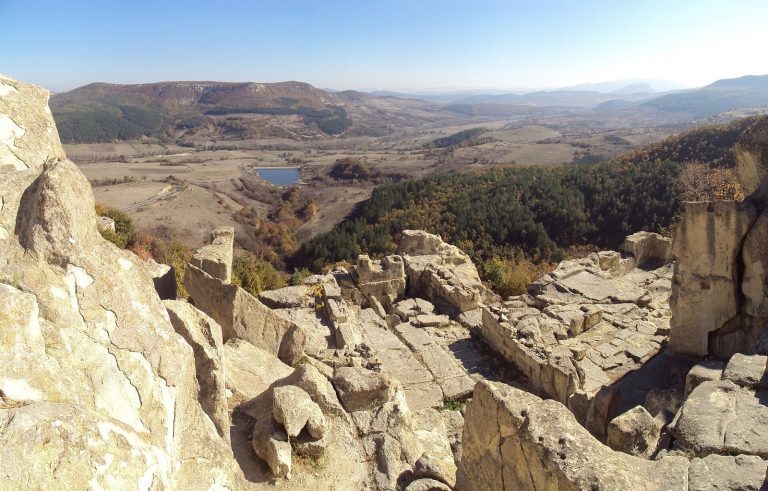
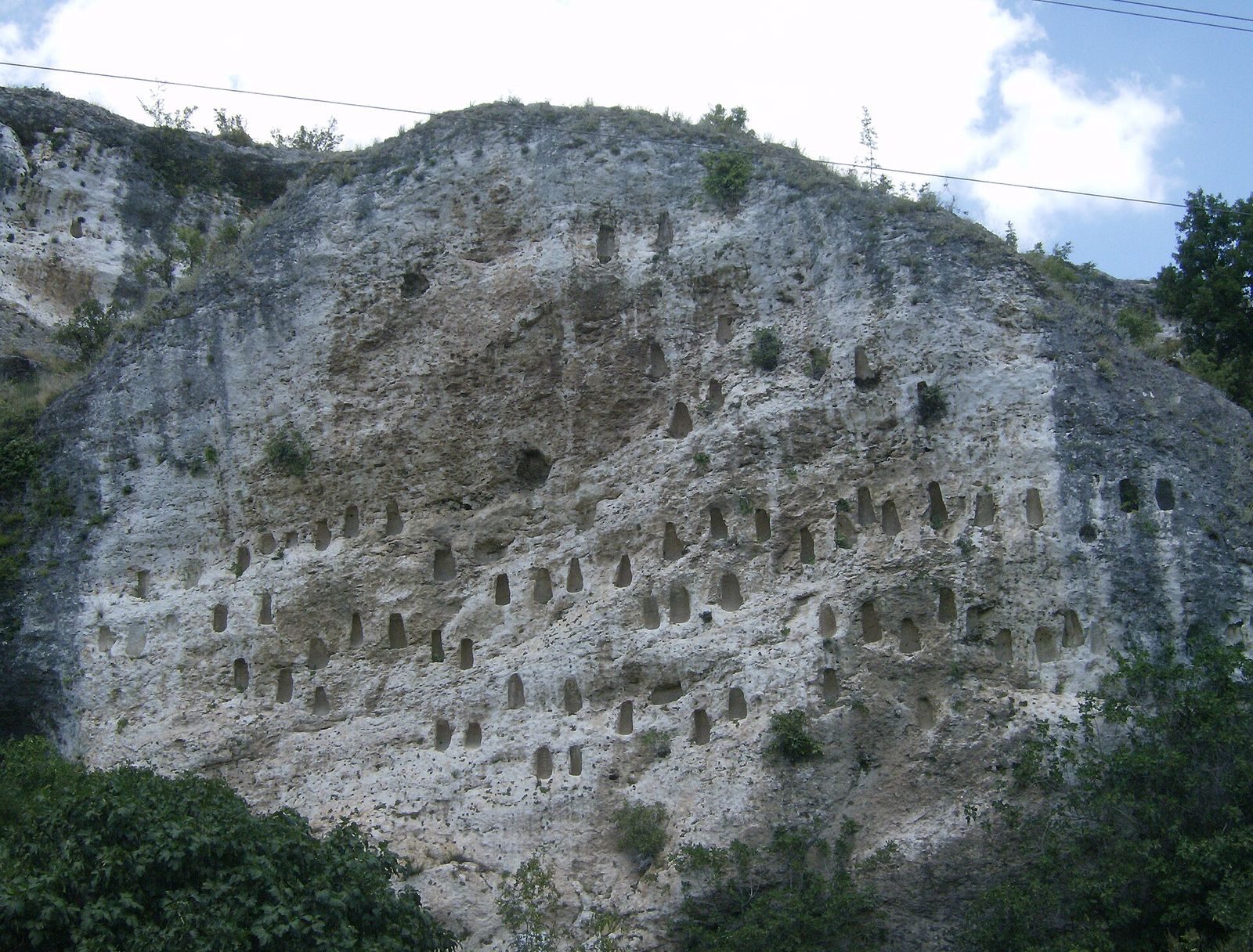
The 1.5-hectare site occupies the left bank of the Arda River, on the Kovan kaya rock massif near Dolno Cherkovishte. Its features are cut into porous volcanic tuff, rock formed from compacted volcanic ash, bound by soft carbonate cement, minerals that hold rock particles together.
Features of the massif
Rock-cut niches
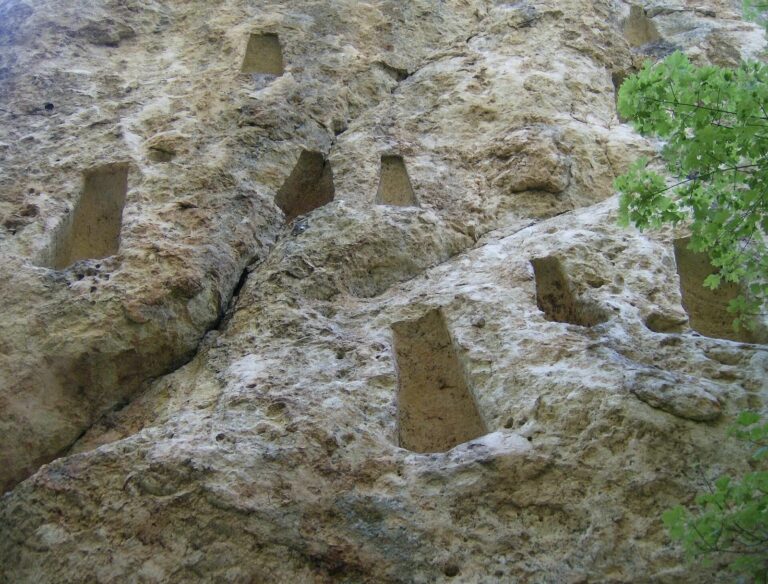
The massif contains 110 trapezoidal niches. Most face south or southeast, while others face west or northwest. Most are vertical, with isolated horizontal, rectangular niches also present.
Artificial cave
An artificial cave forms part of the complex, but its purpose is uncertain. An earlier interpretation identified it as a tomb, though scientific evidence does not support that identification.
Carving ledges
Ledges remain visible at the massif’s right edge. Their position indicates that carving began in prepared rock reached from these shelves, which were progressively removed as work continued. The carved features are difficult to reach but visible from a distance.
Nearby sanctuary
A separate rock sanctuary used by ancient Thracians lies northwest of the massif.