Petkovica Monastery: A Serbian Orthodox Women’s Monastery
Site at a Glance
- Rating
- 4.9
- Popularity
- High
- Country
- Serbia
- Primary era
- Early Modern
- Eras represented
- Early Modern, Modern
- Civilizations
- Habsburg, Habsburg Austria, Ottoman, Serbian
- Site type
- Religious
- Remains
- Monastery
On this page8 sections
History
Petkovica Monastery is a Serbian Orthodox women’s monastery between Divoš and Šišatovac in the southwestern part of Fruška Gora, a mountain range in northern Serbia. It belongs to the Diocese of Srem, a regional jurisdiction of the Serbian Orthodox Church, and its church is dedicated to Saint Petka, the Balkan name for the venerated Saint Paraskeva. Tradition attributes the monastery’s foundation in the first quarter of the sixteenth century to Jelena Štiljanović, widow of Serbian despot Stefan Štiljanović, a high-ranking ruler in the Byzantine and Balkan tradition. A thirteenth-century foundation has also been proposed. The church follows the Morava style, a medieval Serbian architectural tradition.
Foundation and sixteenth-century history
The earliest reliable records date to 1566–1567, when Petkovica was redeemed for 12,000 akçe, an Ottoman coin. An inscription from 1772 records the donation of a handwritten Gospel to the monastery in 1552. In 1588, Abbot Akakije, the monastery’s leader, arranged for the church’s frescoes to be painted.
Rescue and monastic administration
Under Ottoman rule, the monastery fell into disrepair. In 1650, Sinan-beg of Mitrovica planned to demolish Petkovica and Kuveždin and reuse their building materials in Mitrovica. Metropolitan Pajsije, a senior bishop of Belgrade and Srem, arranged for monks from Šišatovac to save the abandoned monasteries by paying Sinan-beg 100 groschen, a historical coin denomination, each year. The monks agreed, and Pajsije secured a written guarantee from Sinan-beg that prevented the planned demolition.
Restoration followed a proposal from Patriarch Arsenije Čarnojević, head of the Serbian Orthodox Church, to Eusebius, abbot of Kuveždin. Monks who had fled from Žiča carried out most of the work. The altar table was installed and consecrated by 1706. Petkovica initially had no resident monks, so a hieromonk, a monk ordained as a priest, came from Šišatovac to conduct services. The monastery is thought to have served as a metochion, a dependent monastic establishment, of Šišatovac.
In 1734, Abbot Prokopije lived at Petkovica with six monks. From 1741, the two monasteries were led by a common abbot based at Šišatovac. Two monks from there maintained Petkovica in alternating two-year stays, an arrangement that lasted until 1856. A 1753 church inspection stated that the church and refectory had been built during Akakije’s tenure.
Decline and renewal
By the beginning of the twentieth century, Petkovica was impoverished and abandoned. Its monastic quarters were demolished and its well filled in during 1908; a major restoration followed in 1927. The church was restored and its painted decoration cleaned in 1950–1952, with further conservation work in 1981. In 1990, Petkovica was declared a Monument of Culture of Exceptional Importance and placed under state protection.
Nun Antonina Simić began restoring the monastery and arrived on 7 June 2001, finding only one spring there. She has led the monastery and its sisterhood since that date. Her mother, Melanija, later joined as a novice, with Antonina serving as her spiritual mother. The sisterhood numbered 11 nuns in 2018.
Remains
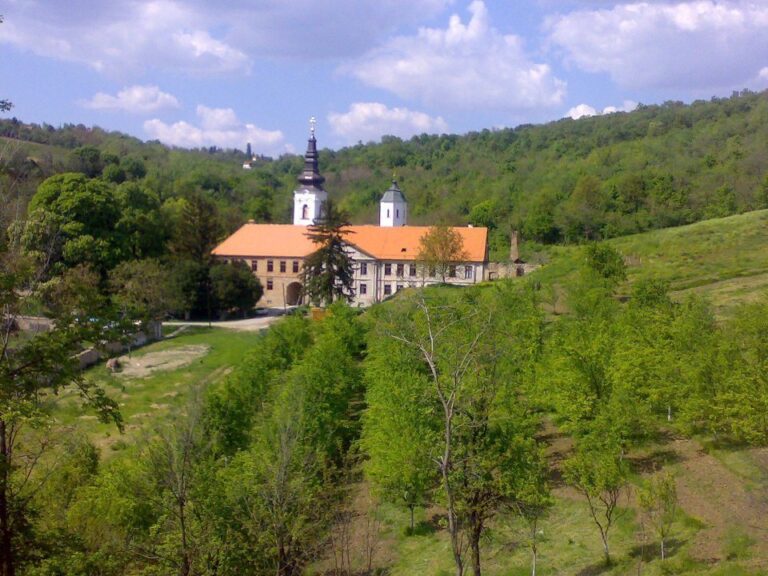
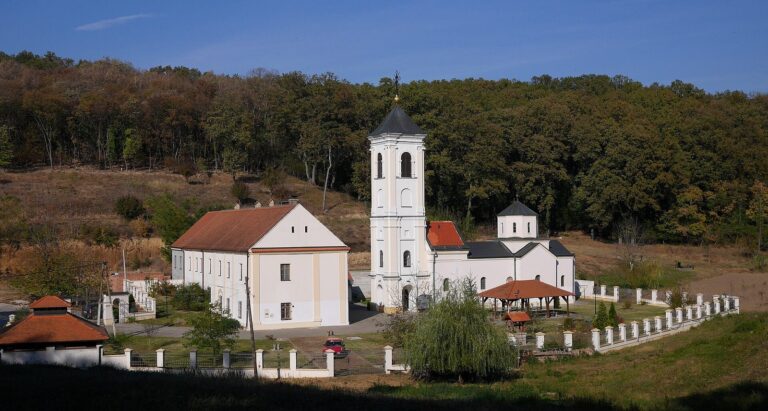
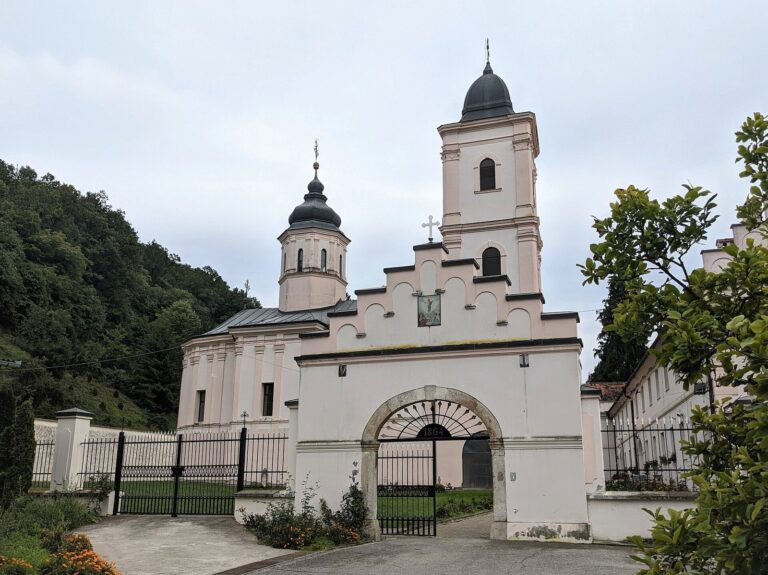
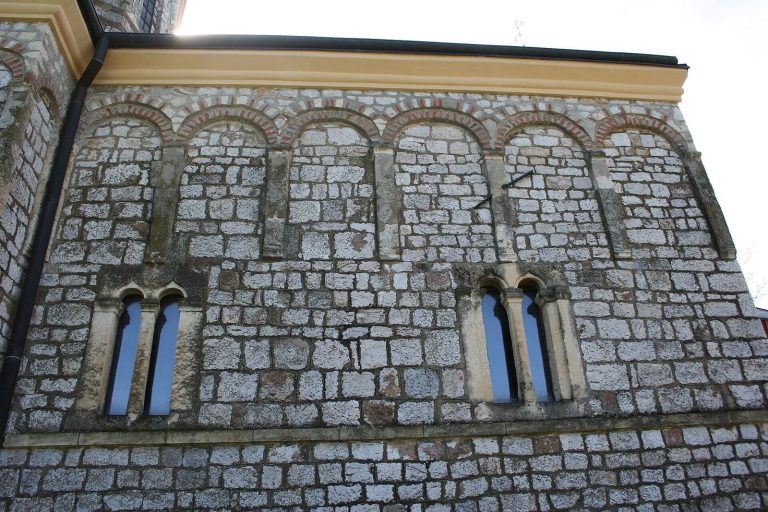
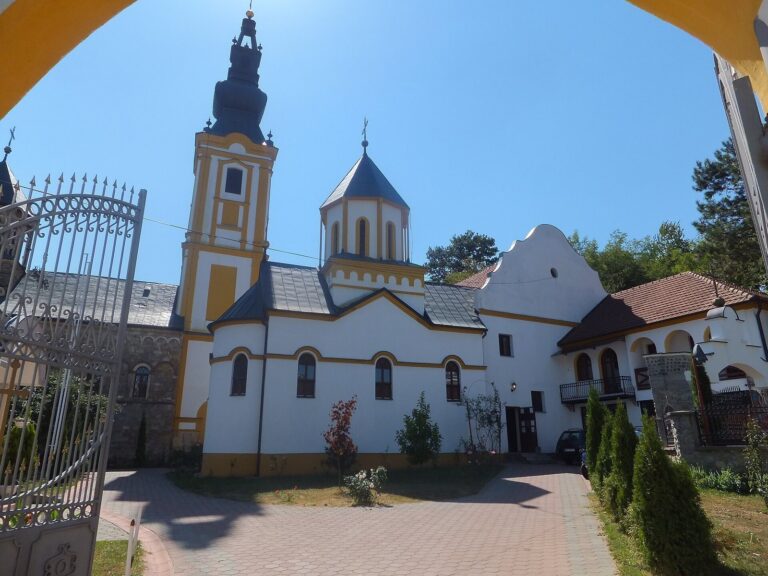
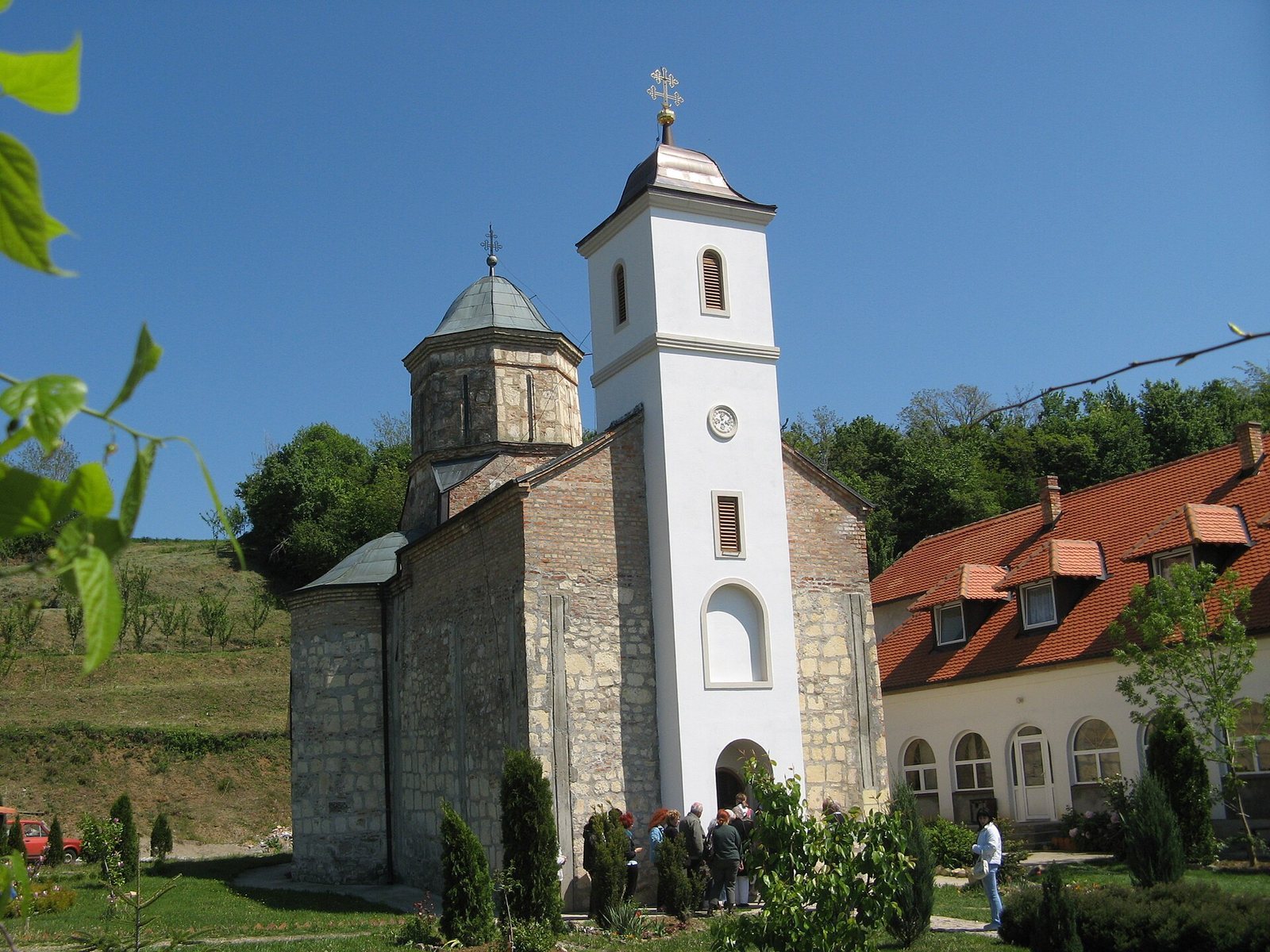
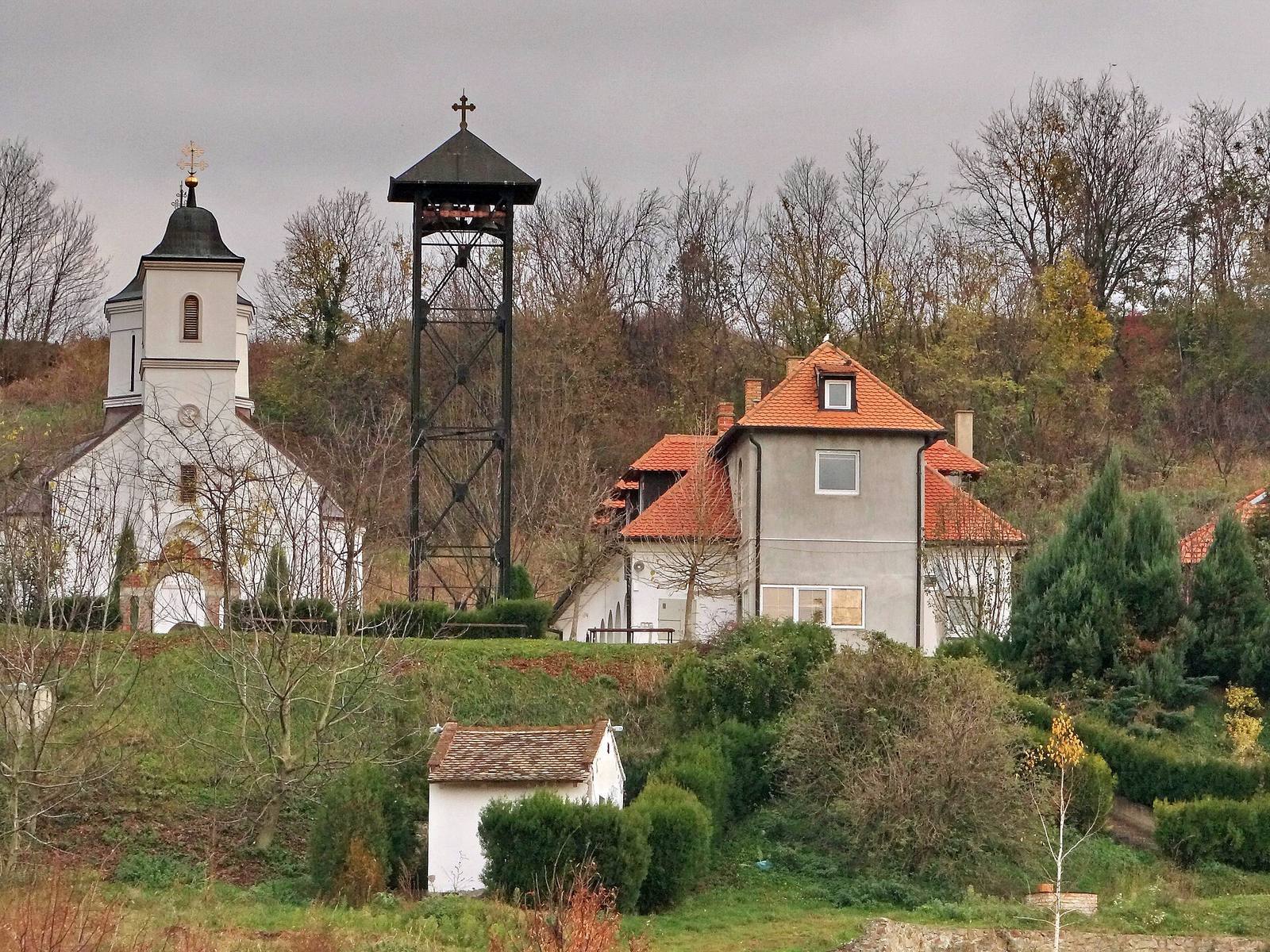
The present monastery consists of its church and newly built monastic quarters. The church is a single-nave building, with one main worship hall, on a cross-shaped plan. Its stone structure was enclosed in brick and then plastered, and its overall appearance has largely been retained.
Church and monastery grounds
Church
A wooden bell tower was replaced by a masonry tower in the second half of the eighteenth century. In 1702 the church was described as stone-built; a 1753 inspection characterized the church and refectory as dilapidated buildings made with wattle and daub, woven branches coated with mud or clay.
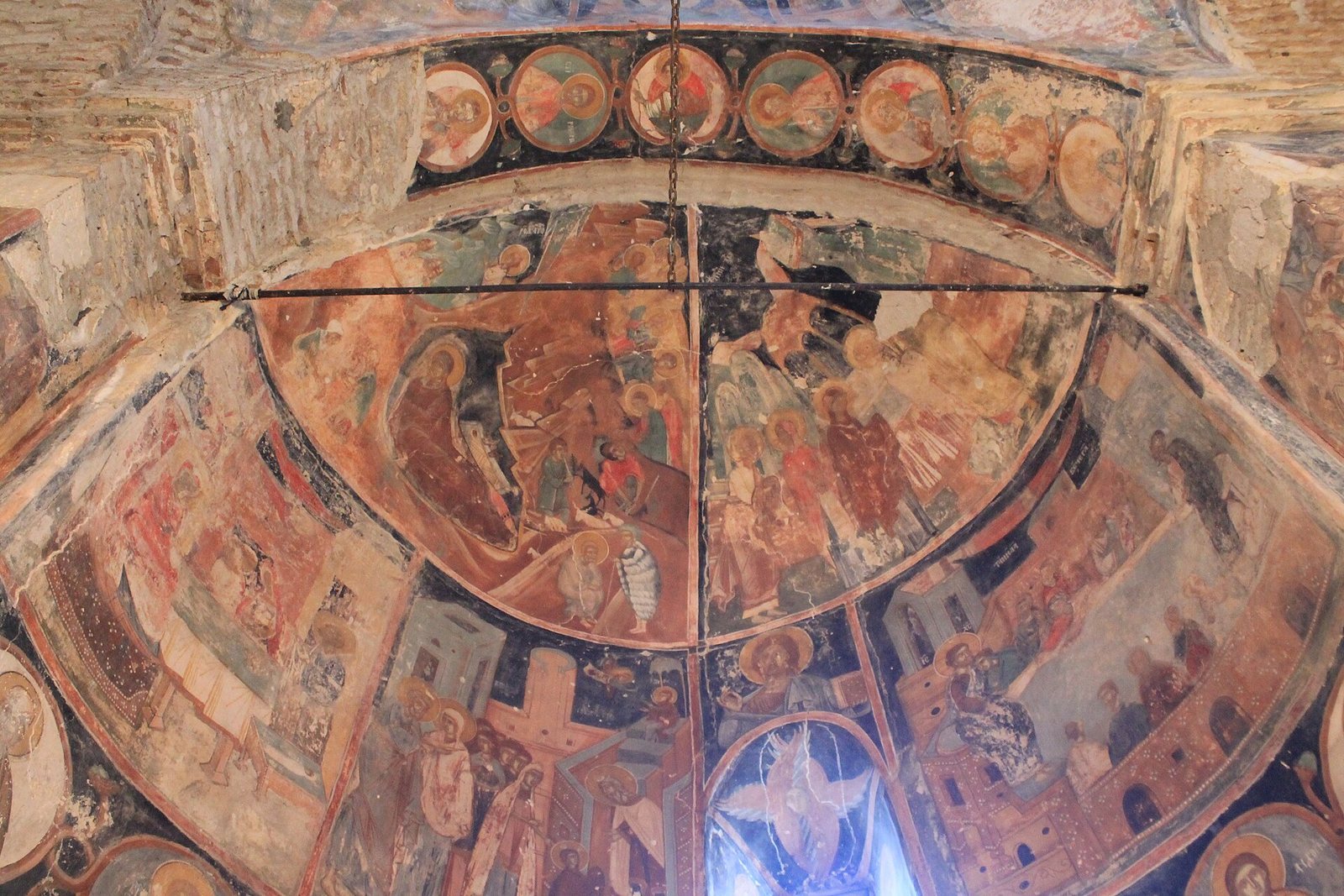
The sixteenth-century frescoes were painted in tempera, a paint made with pigment and a water-based binder, and are now poorly preserved. A 26-icon iconostasis, a screen displaying religious icons, was installed in 1735 and was almost entirely destroyed during the Second World War. Its carved cross and two icons survived and were transferred to the Museum of Srem. A new iconostasis is now inside the church.
Monastic quarters and grounds
By 2003, the army had brought electricity to the monastery, drilled a new well, built a road to it, and excavated a lake used as a fishpond. The newly built monastic quarters form part of the present complex.