Manastir Petkovica: A Serbian Orthodox Women’s Monastery
Site at a Glance
- Rating
- 4.9
- Popularity
- Medium
- Country
- Serbia
- Primary era
- Modern
- Eras represented
- Modern
- Civilizations
- Serbian
- Site type
- Religious
- Remains
- Monastery
On this page8 sections
History
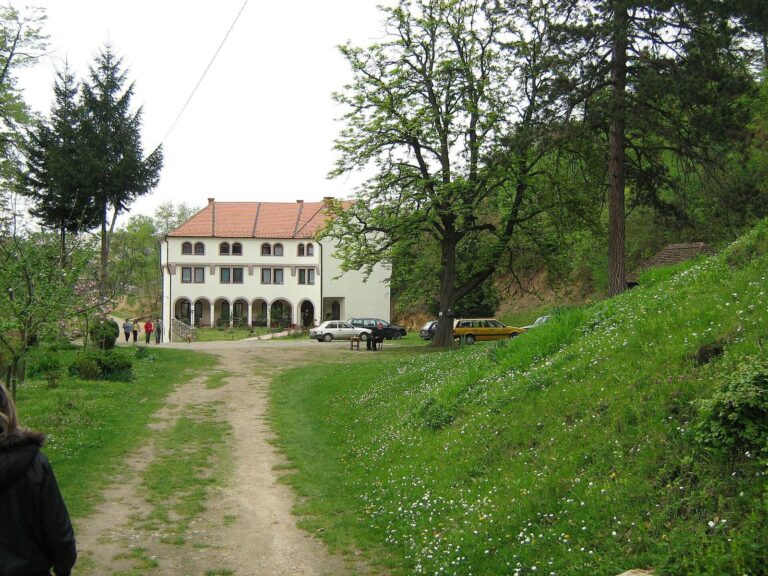
Manastir Petkovica is a Serbian Orthodox women’s monastery at the foot of Mount Cer in Serbia, about 35 km from Šabac. Dedicated to the Holy Trinity, it belongs to the Eparchy of Šabac, an Orthodox Christian diocese, and is home to a community of nuns. Its foundation is traditionally placed in the second half of the 13th century, while the present church, built in 1887, follows the Serbian-Byzantine style.
Medieval Origins and Sixteenth-Century Activity
The monastery’s foundation date is unknown. Tradition credits King Stefan Dragutin, a Serbian ruler of the late 13th century, with establishing it, while the beginnings of construction are broadly dated to the 13th or 14th century. The monastery was temporarily deserted after Ottoman forces reached the area in 1521.
Its activity had resumed by 1561, when Pavle, bishop of Zvornik, visited the church. On his order, a typikon, a guide to a monastery’s religious services and observances, was written there in 1576. A metropolitan of Szeged, a senior Orthodox bishop who had become a monk at Petkovica, donated books to the church in 1579 and 1581. A school for copying manuscripts by hand operated there during the 16th and 17th centuries.
Schools, Conflict, and Rebuilding
In 1718, after Austrian forces took the region from the Ottomans, Petkovica housed a school for training priests. During the First Serbian Uprising, a revolt against Ottoman rule, Ottoman forces burned churches and monasteries across Mačva after the Battle of Mišar, including Petkovica. The monastery was restored soon after the region was freed from Ottoman rule, but suffered further damage in both World Wars.
The present monastery was built on an older religious site in the late 19th century. Its church was constructed in 1887 with support from Josif Kuturović of Šabac. Serbia protects the monastery as a cultural monument of great importance.
Remains
The Church
Plan and Sanctuary
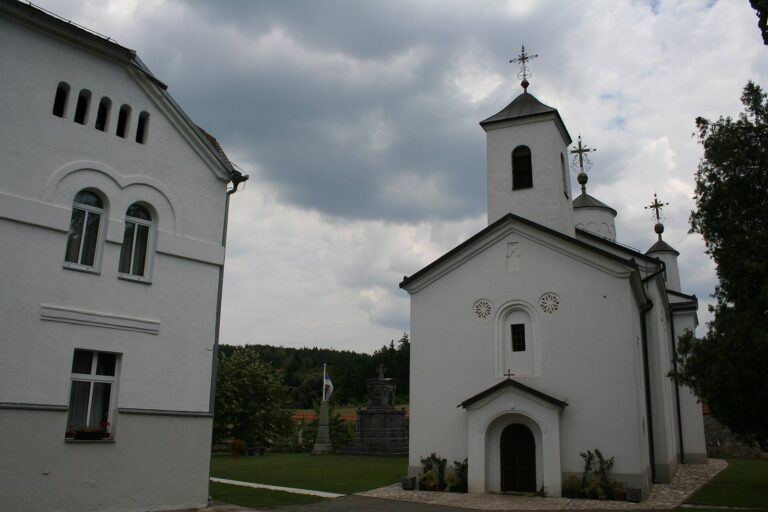
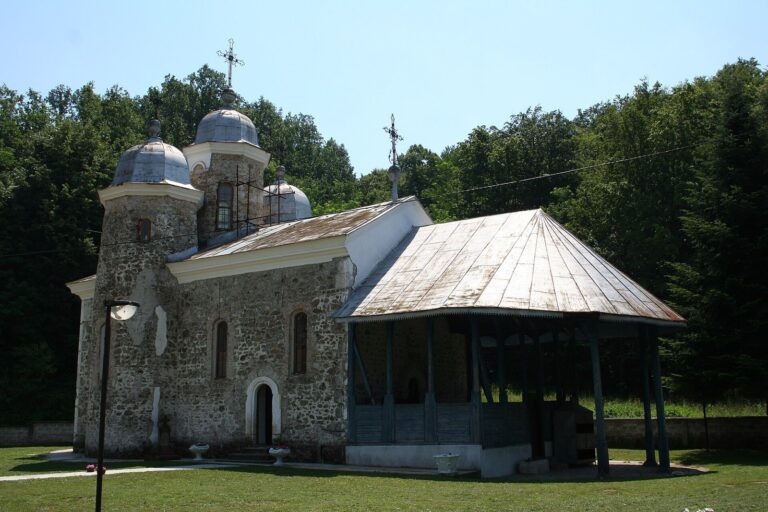
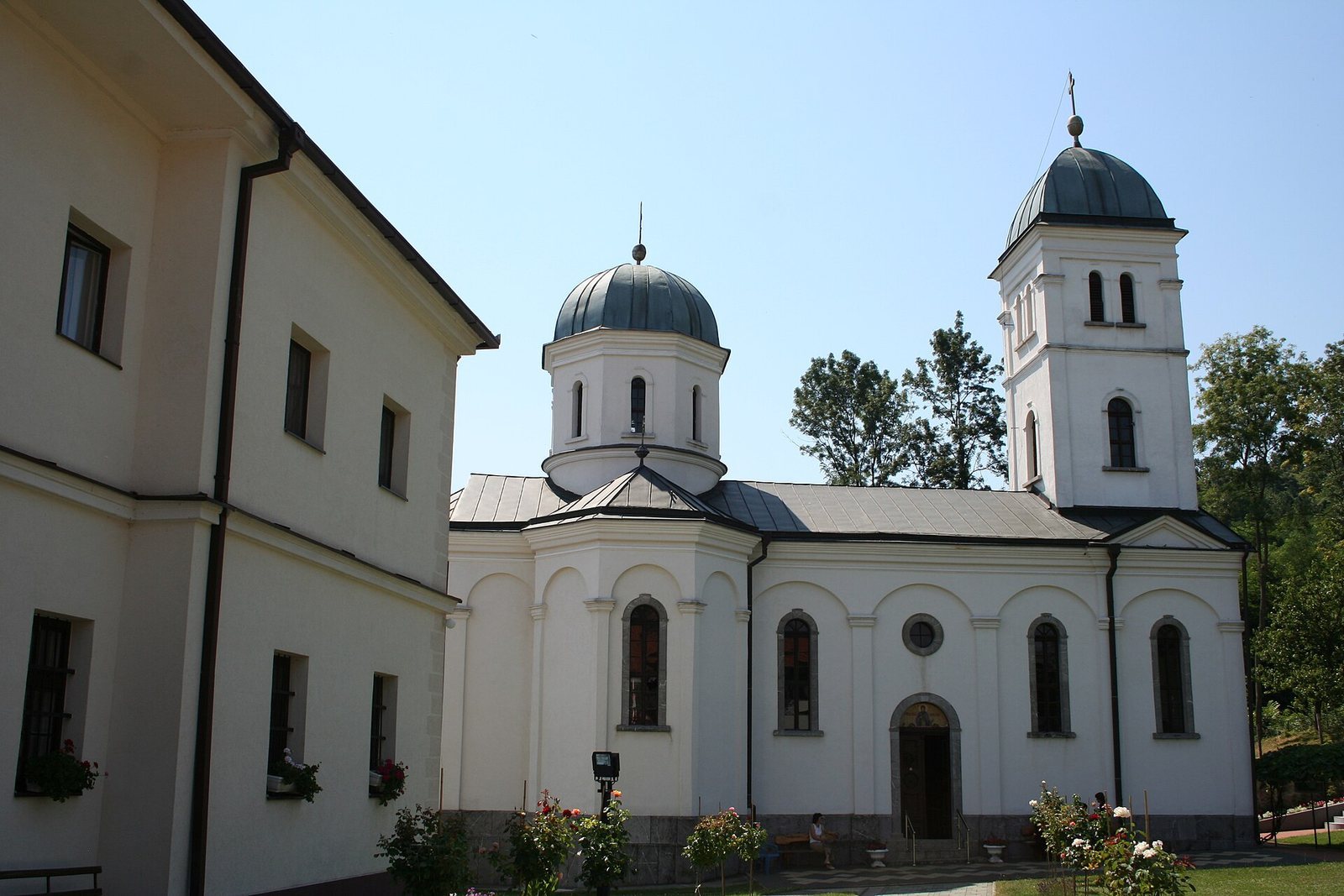
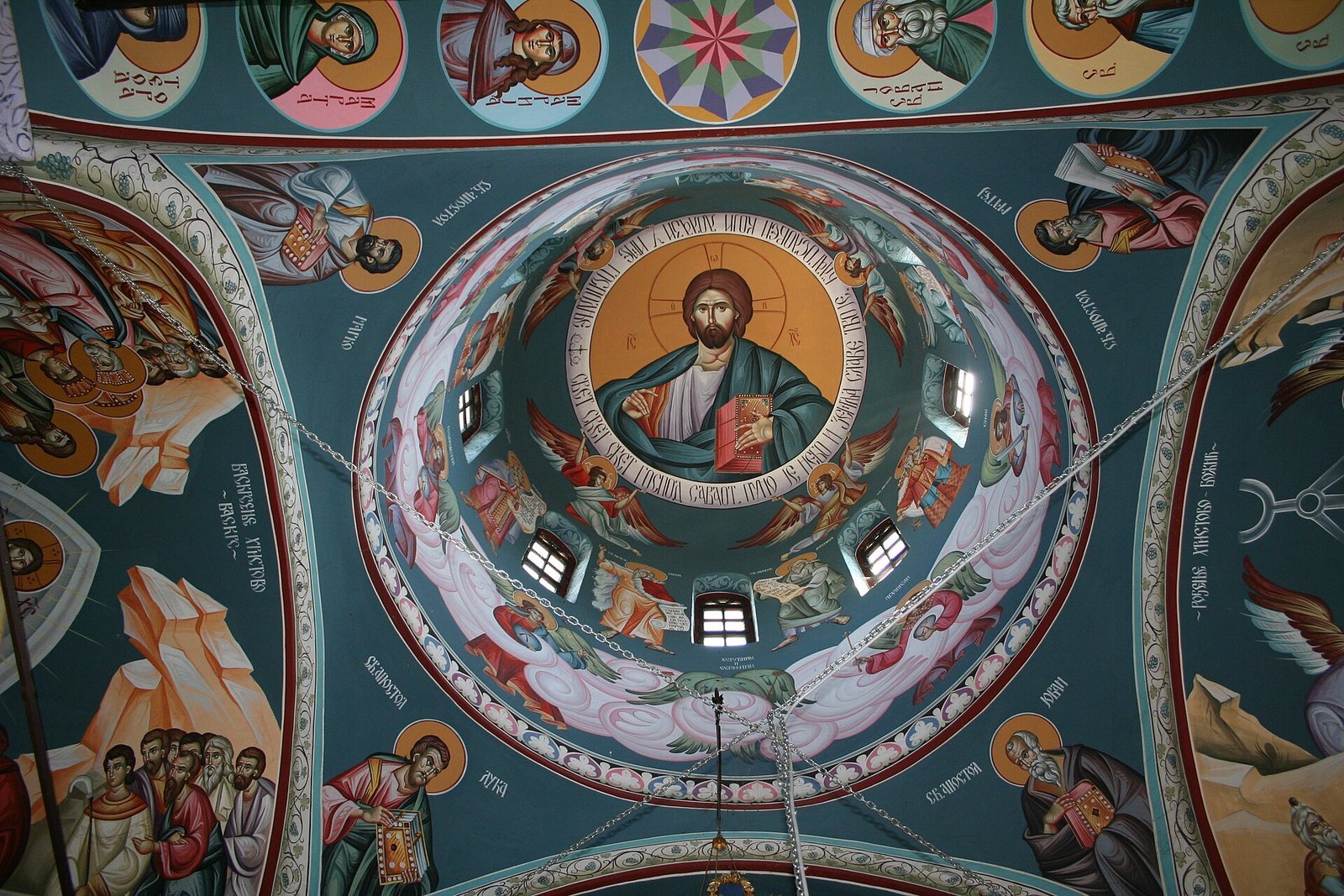
The church has an elongated trefoil plan, with three apse-like extensions, and reflects the Moravian school, a medieval Serbian architectural tradition. Its design is also described as Serbian-Byzantine, a Serbian church style shaped by Byzantine forms. Three spacious apses extend from the east end: a central one for the altar and two side apses. They have polygonal outer walls and semicircular interiors. An octagonal dome rises where the apses meet, and frescoes decorate its interior.
Elongated recesses with curved ceilings flank the altar area. The southern recess serves as a diakonikon, a chamber for liturgical vessels and vestments; the northern one serves the proskomedia, the preparation of the Eucharistic gifts.
Exterior and Bell Tower
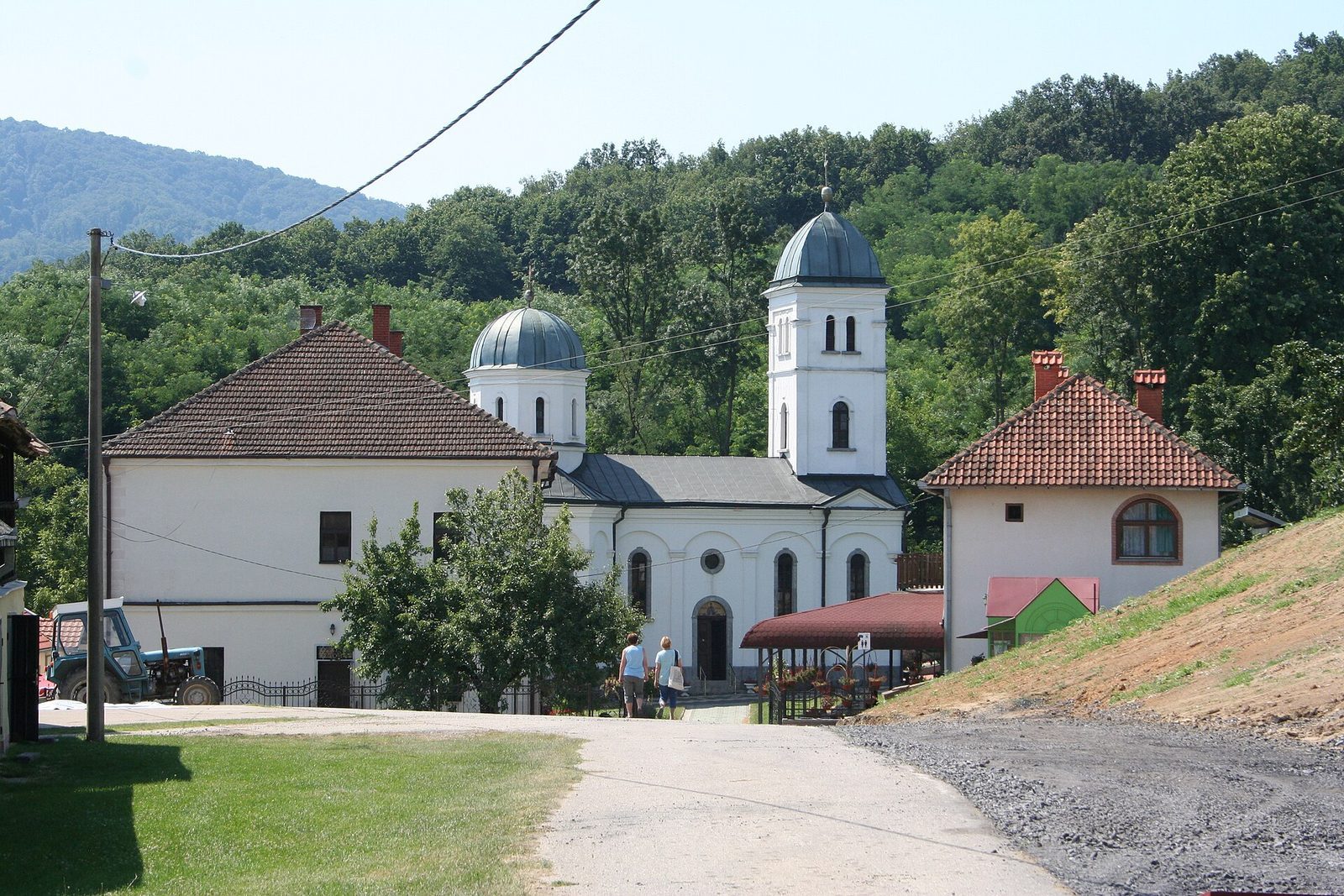
The exterior walls are plastered and whitewashed, rising from a base of dressed granite blocks. A projecting horizontal molding runs below the roof, while shallow wall projections resembling columns are linked by rows of arches. Tall, narrow, arched windows with a single opening light the walls, except on the west side.
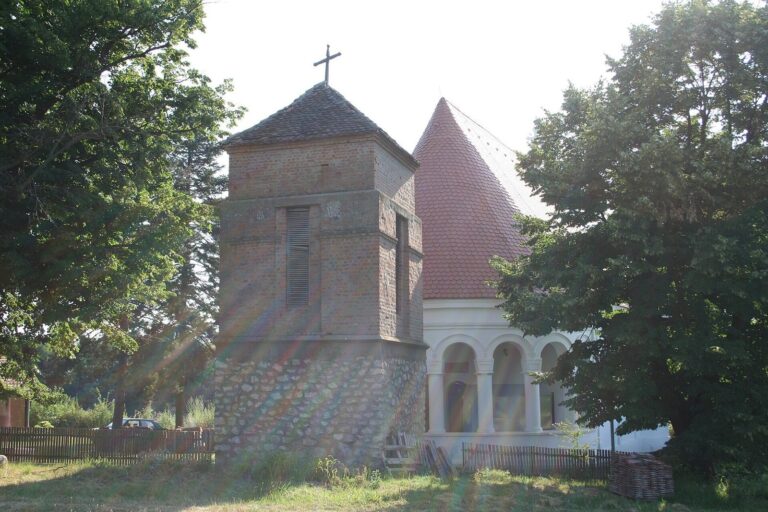
A tall, two-storey bell tower rises above the western facade. Shallow column-like projections mark its corners, with horizontal moldings near the top. The lower storey has four single-opening windows; the upper one has four smaller pairs. On the west facade, a gabled structure emphasizes the main entrance, and a profiled molding frames the wall surface within the gable.
Entrance and Interior Fittings
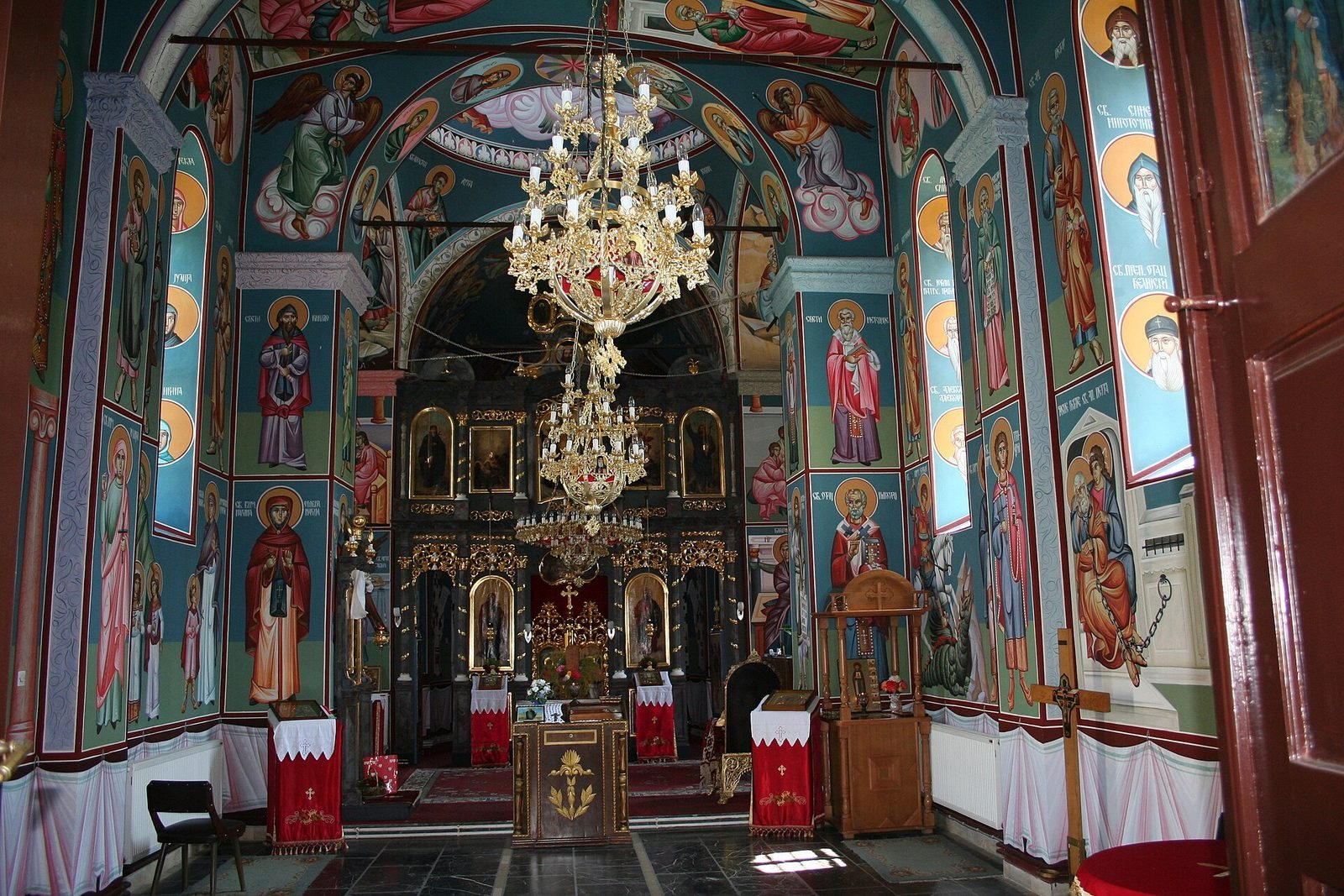
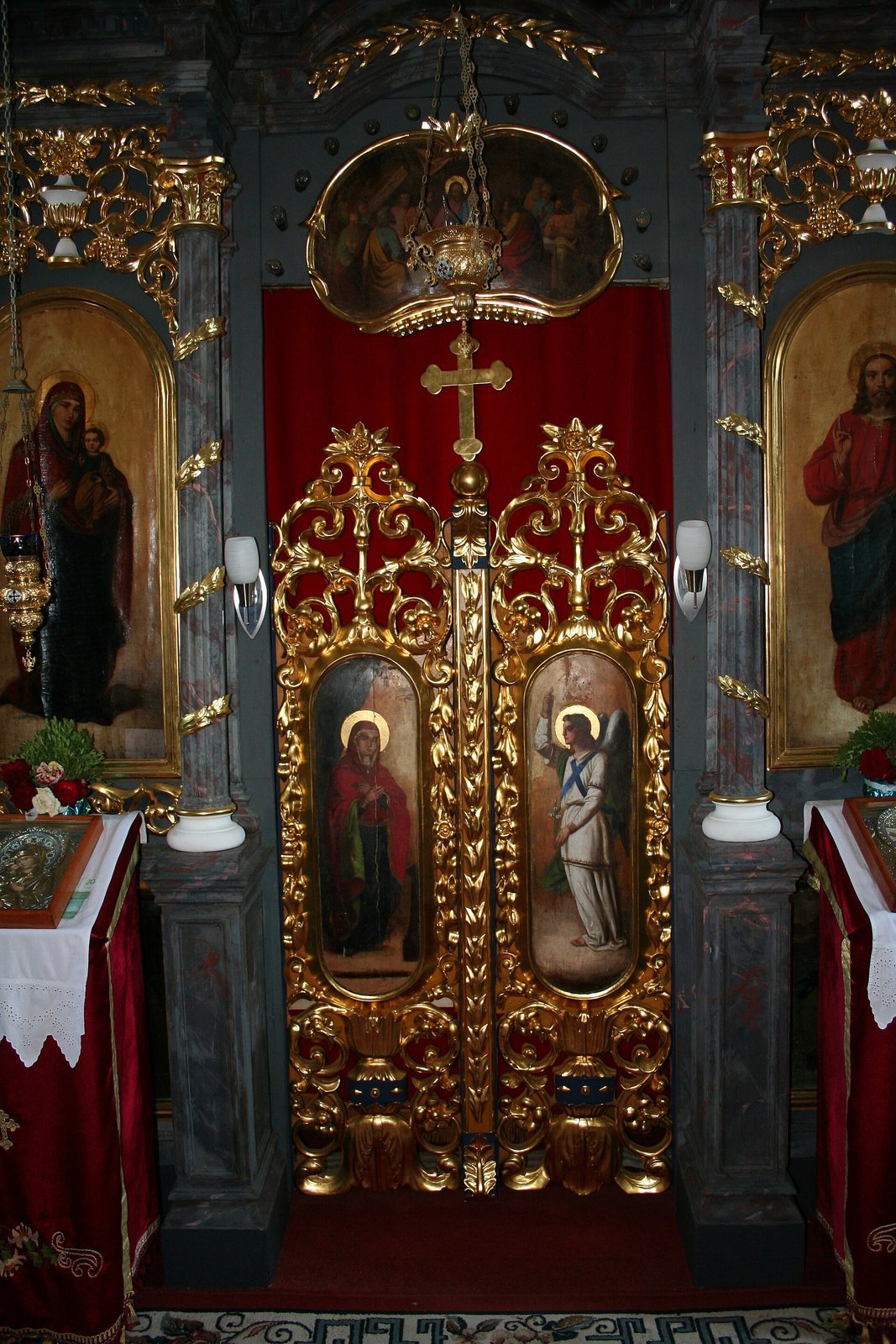
The entrance space at the west end, known as a narthex, has a gallery and is considerably smaller than the main worship area. The wooden iconostasis, a screen bearing icons that separates the sanctuary from the main church, is relatively small and richly carved with predominantly plant motifs. It is painted, and its icons are attributed to Nikola Marković of Požarevac. The side doors belong to a later phase.