Zozan: A Medieval City in Iran
Site at a Glance
- Popularity
- High
- Country
- Iran
- Primary era
- Medieval
- Eras represented
- Medieval
- Civilizations
- Khwarazmian
- Site type
- Settlement
- Remains
- City
On this page7 sections
History
Early City
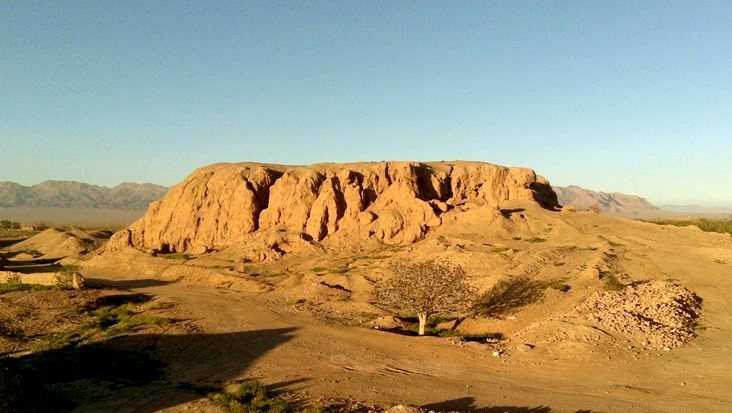
Zozan was a medieval city in Khaf County, Razavi Khorasan, Iran. Its earliest artifacts date to the fourth century, while remains of the ruined city are dated separately to the fourth through seventh centuries AH, the Islamic lunar calendar era. Zozan is also identified as the birthplace of Hamza ibn Ali ibn Ahmad, founder of the Druze religious community, which developed from an Ismaili branch.
Khwarazmian Period
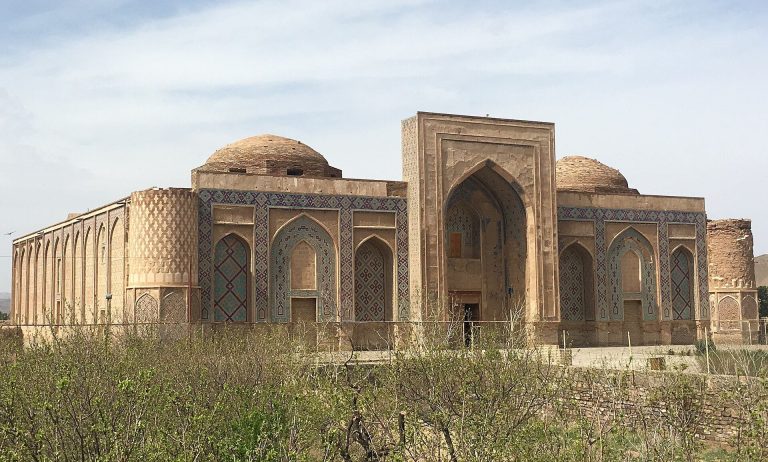
The city flourished especially under the Khwarazmian Empire, a medieval state centered in Khwarazm. Qiwam al-Din Muayyid al-Mulk Abu Bakr ibn Ali al-Zuzani, governor of the area from 1200 to 1220, built Zozan’s best-known monuments, the Zuzan Madrasa and Malek Zuzan Mosque.
Modern Study and Status
In 1949, French archaeologist Andre Godard described the madrasa and attributed it to the Khwarazmian Empire. He first identified the building as a mosque, but an inscription honoring Abu Hanifa, an eighth-century jurist whose name identifies a major school of Sunni Islamic law, shows that it was a Hanafi madrasa. The historic city is on Iran’s tentative list for UNESCO World Heritage nomination and is registered as an Iranian national monument.
Remains
The medieval city had a rectangular plan with irrigation systems and dams. Its principal surviving monuments are the Zuzan Madrasa and Malek Zuzan Mosque.
Zuzan Madrasa
Dated to 1219, the madrasa reflects Ghurid and Khwarazmian architectural influences. The Ghurids were a medieval dynasty centered in Ghor, in present-day Afghanistan. The building followed a four-iwan plan, with four vaulted spaces open on one side arranged around a central court; two iwans survive. Its surviving inscription fragments include the date, and the building is also noted for elaborate ceramic decoration and highly stylized inscriptions.
Malek Zuzan Mosque
The mosque is dated to 616 AH, while its inscription includes the dates 600 and 610 AH. Its surviving original structure includes several piers, two walls, and an entrance portal. The architecture combines an iwan with rooms, and decorative details include Kufic, an early style of Arabic script, alongside extensive lapis-blue and turquoise tiling. The mosque is described as among the earliest Iranian buildings to use two colors of tile on its exterior.