Amri: An Early Urban Settlement in Sindh, Pakistan
Site at a Glance
- Popularity
- High
- Country
- Pakistan
- Primary era
- Bronze Age
- Eras represented
- Stone Age, Bronze Age
- Civilizations
- Indus Valley
- Site type
- Settlement
- Remains
- Town
On this page9 sections
History
Amri is an ancient settlement in Sindh, Pakistan, whose fortified phase flourished around 3600–3300 BCE. It was an important early urban center in Lower Sindh, though it was never a large city. Its earliest occupation is conventionally placed around 3600 BCE; archaeologist Rafiq Mughal proposed a date of 3540–3240 BCE for this phase.
Early settlement and Amri culture
Amri is a type site, a reference site used to define an archaeological culture, for the Amri culture that developed in Sindh during the fourth millennium BCE. It is also one of two type sites associated with the prehistoric Amri-Nal cultural grouping. Amri and Kot Diji developed related local traditions with shared elements before contact with Harappan culture, the Indus Valley Civilization of South Asia. Amri is dated later than Rehman Dheri, an early settlement in present-day Pakistan.
The settlement is divided into five occupation phases, with one four-part scheme linking its first three parts to Indus cultural traits and the fourth to Jhukar culture. Evidence suggests that Amri culture did not directly develop into Indus culture at the site; the two traditions coexisted rather than one abruptly replacing the other.
Indus and later cultural phases
The second period, around 2750–2450 BCE, shows increasing Indus cultural influence. The third, around 2450–1900 BCE, belongs almost entirely to that culture. A widespread fire affected the settlement around 2500 BCE.
From around 1900 to 1300 BCE, Indus traditions mingled with other cultural elements. Jhukar elements appeared alongside the late Indus phase, followed later by Jhangar elements. Similar pottery fragments have also been found at Chanhudaro.
Later occupation
A later occupation is tentatively placed around AD 300. The site was occupied again during the Muslim period in the sixteenth century, after about 1,300 years of abandonment.
Remains
Mounds and setting
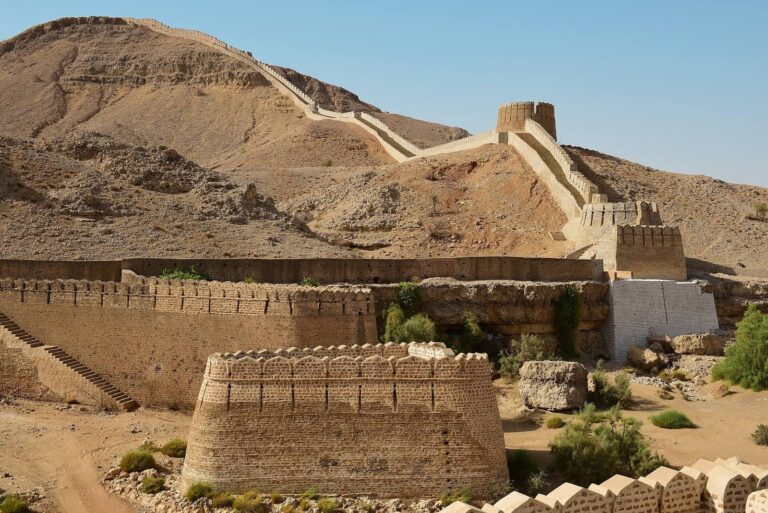
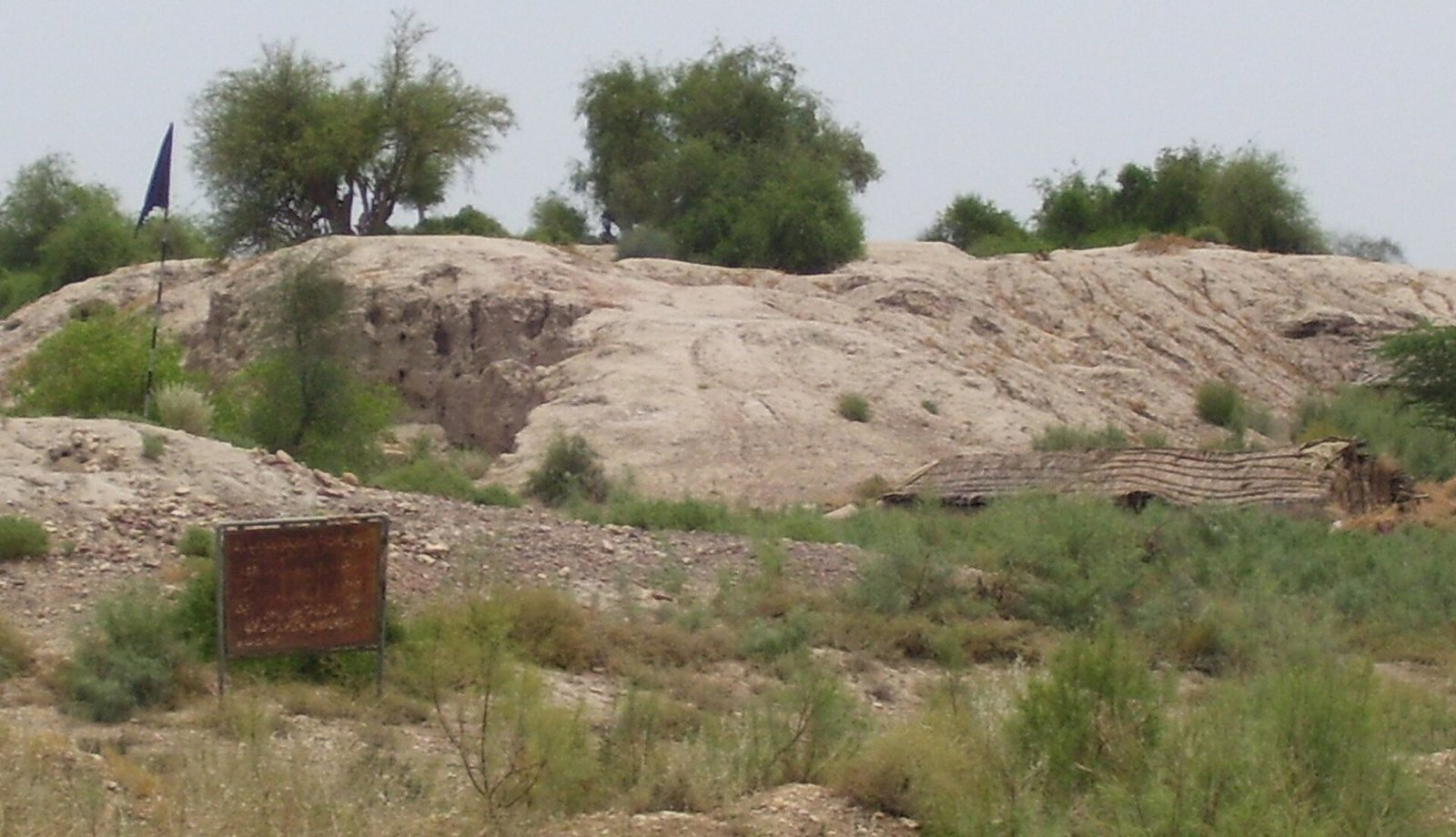
The settlement occupies two mounds north of the present village of Amri, on the west bank of the Indus and about a mile from the river, near the foothills of the Kirthar Mountains. One mound is about 40 feet high and the other about 13 feet. The mounds cover roughly 8 hectares, while the settlement may once have extended across 24 acres. Remains at multiple levels include a fortified earliest settlement.
Early buildings
Early remains include brick walls and wooden posts in some places. People may have lived in huts, and some buildings stood above cellars that were probably reached from above. A construction technique found at Amri was later used in the great granary at Mohenjo-daro.
Later buildings
Rectangular buildings from a later phase contained small rooms. French archaeologist J. M. Casal considered the rooms too narrow for living. Some held debris and mud bricks, while one house retained a space for a doorway between two rooms. The walls were five to six feet thick. Casal proposed that they served as foundations to protect against wild animals, with residential huts built above them.
Pottery and small finds
Pottery from the earliest phase, known as Amri Ware, was usually handmade, with about 82 percent made by hand; the rest consisted of fine, thin-walled wheel-made vessels. The clay was almond-colored or pinkish-red, and decoration included rough geometric designs in red and black. Wheel-made vessels and more elaborate patterns became common in successive early subphases, including deer, polychrome designs, and animals, especially bulls, shown within bands. Some vessels have Togau-style decoration associated with the Quetta culture, a prehistoric tradition in Balochistan. Amri and Sohr Damb (Nal), to the west in Balochistan, are associated with pottery sometimes called Amri-Nal ware. Other finds include copper fragments, broken blades, stone balls, clay beads, one or two clay bangles and shell bangles, and knife-shaped blades made from low-quality agate.