Roman Theatre of Italica: A Roman Civic Performance Venue
Site at a Glance
- Rating
- 4.4
- Popularity
- High
- Country
- Spain
- Primary era
- Classical
- Eras represented
- Classical
- Civilizations
- Roman
- Site type
- Entertainment
- Remains
- Theatre
On this page8 sections
History
The Romans built the Roman Theatre of Italica in Spain between the first century BC and the first century AD as a venue for public performances and religious events. Italica was founded in 206 BC and is described as the first Roman city in Hispania, the Roman name for the Iberian Peninsula. The theatre is the city’s oldest known civic building apart from probable remains of a council house, or curia, identified in 1984.
Performances and civic life
Theatre productions included tragedies, comedies and mime, alongside musical performances and religious ceremonies. Some rites were associated with the imperial cult, religious observances connected with the emperor and imperial authority. From the time of Augustus, Rome’s first emperor, soldiers, married men and young men accompanied by tutors were expected to sit in separate areas, possibly in designated wedges. The uppermost seating was allocated in order to women, poor free people and enslaved people.
The theatre continued to be used until at least the fifth century, though performances may have become intermittent in its later years. Its abandonment may have resulted chiefly from the gradual loss of interest among local elites, who had supported performances, rather than from sustained Christian opposition to theatre.
Decline and rediscovery
After the theatre fell out of use, parts of its grounds were filled and put to use as storage areas, animal pens and rubbish dumps. Burials also took place there at times during the medieval period. Repeated flooding from the Guadalquivir gradually covered the theatre with sediment.
The site’s approximate location was known from the eighteenth century, and sculptures were associated with it. By the 1940s, part of the seating had been exposed in the courtyard of a house on the hill. Large-scale excavation followed from 1970 to 1973, with later campaigns clearing the portico. Restoration work began in the 1980s.
Remains
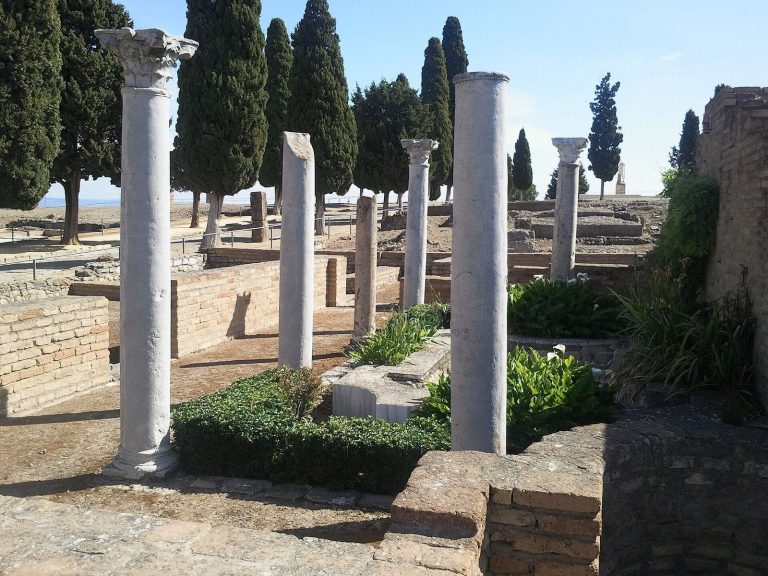
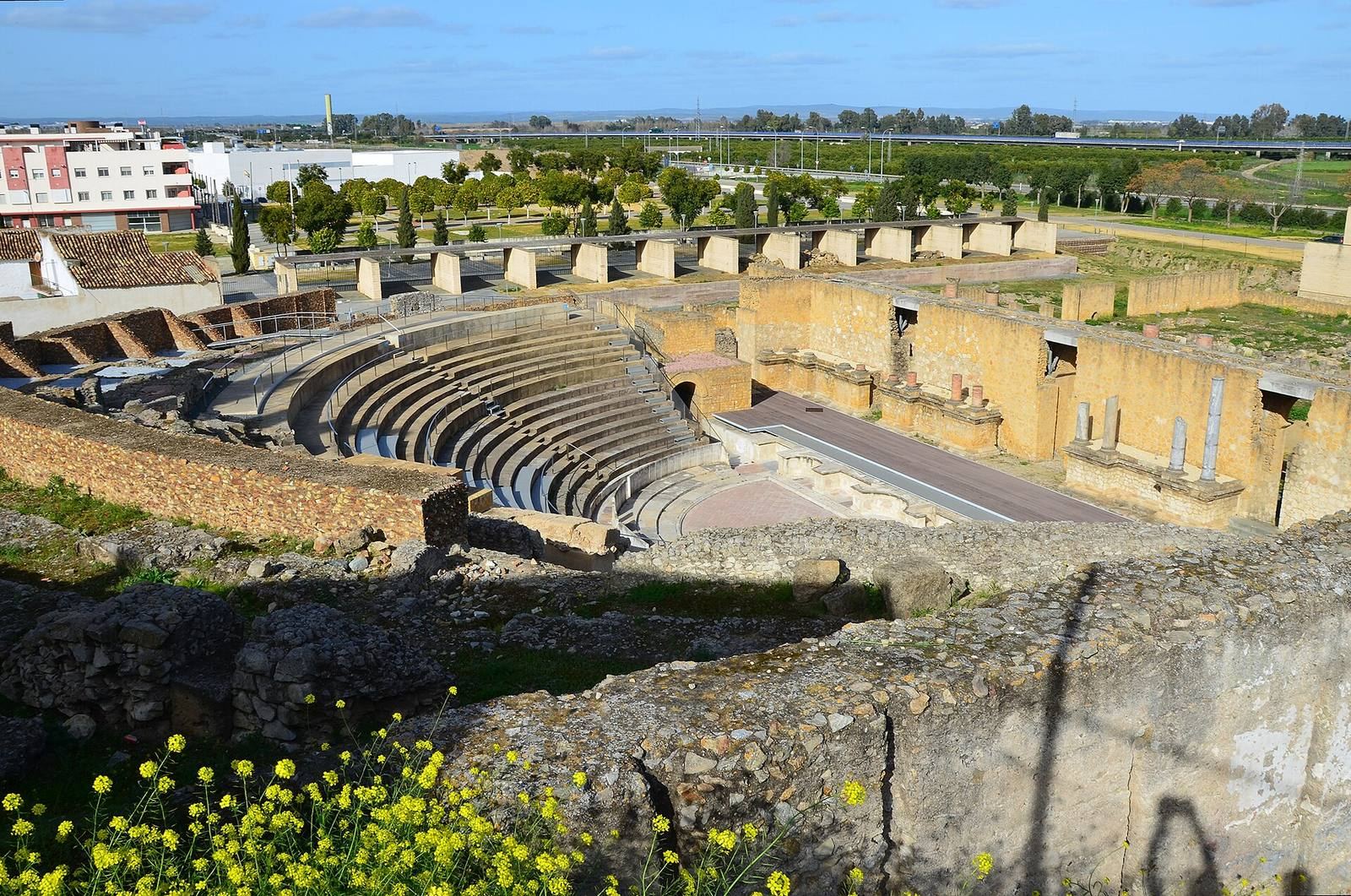
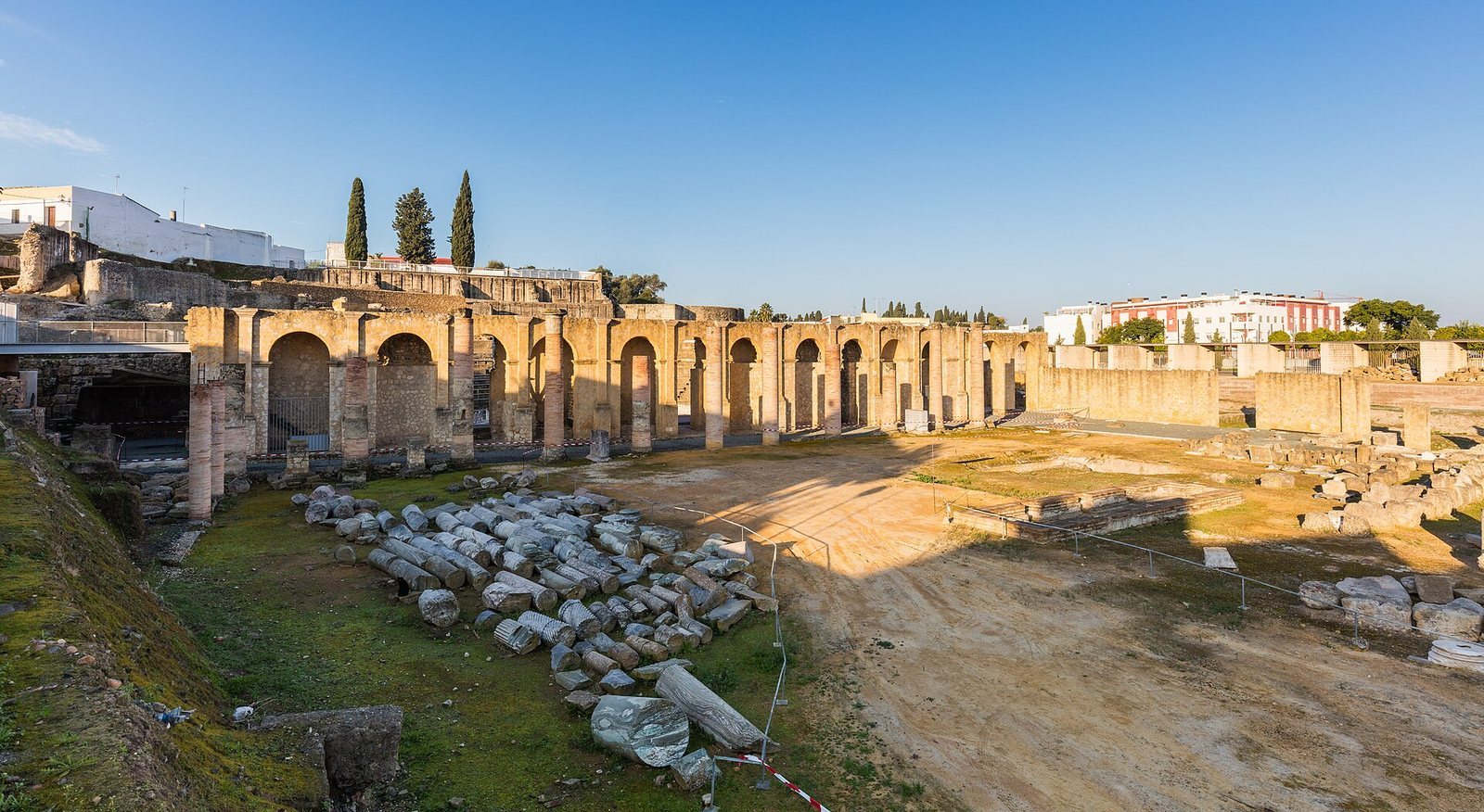
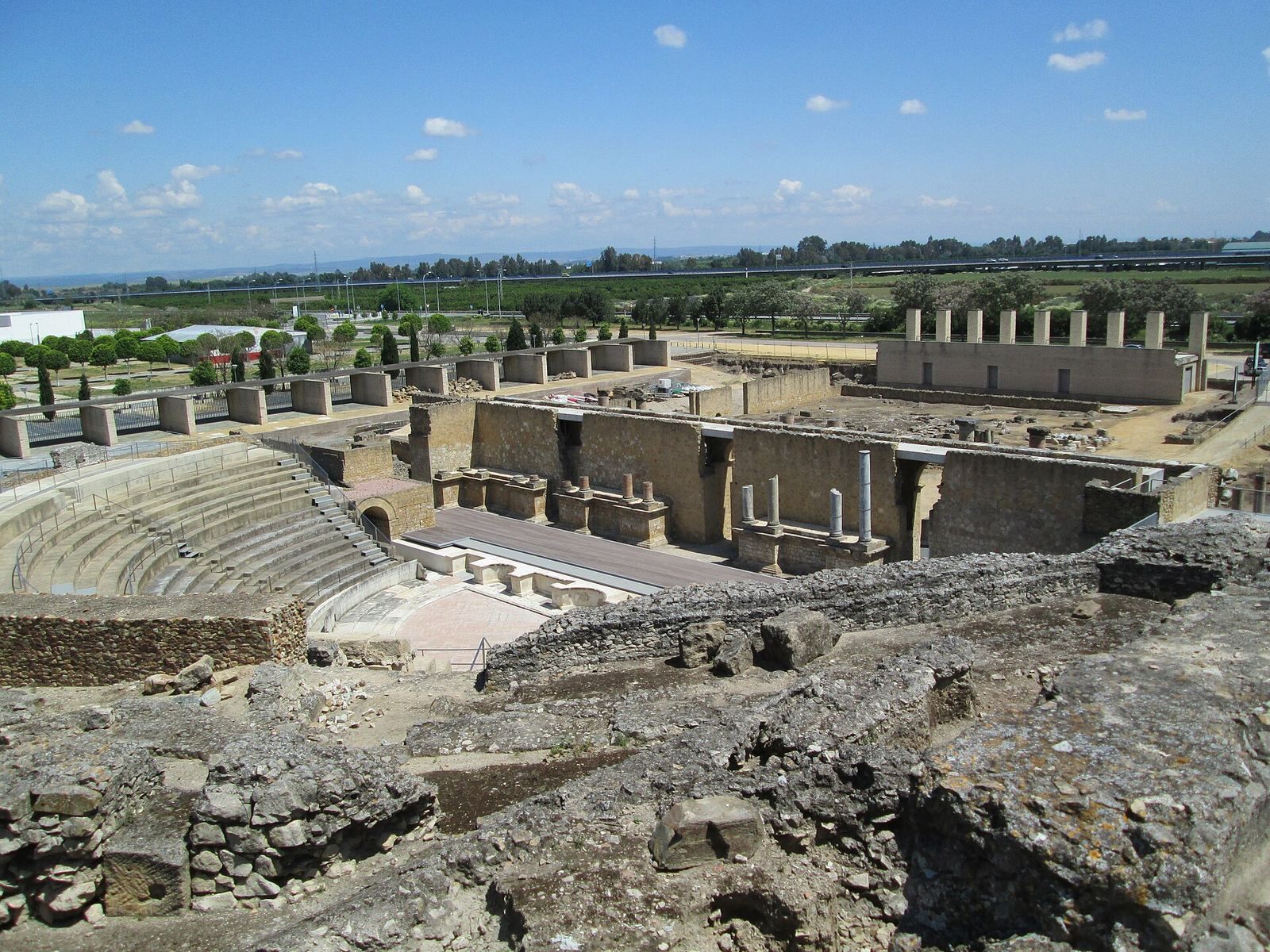
The theatre stood on Cerro de San Antonio, east of Italica’s original city, using the natural hillside above the Guadalquivir, known in antiquity as the Baetis. The structure measured about 98 m long and 71 m wide, and could hold approximately 3,000 people. Yellow and grey limestone featured in earlier building phases; later work used concrete, brick and white and coloured marble. Marble formed columns, architectural beams, seating facings and other decorative elements. The complex also included a four-sided portico.
Seating and audience circulation
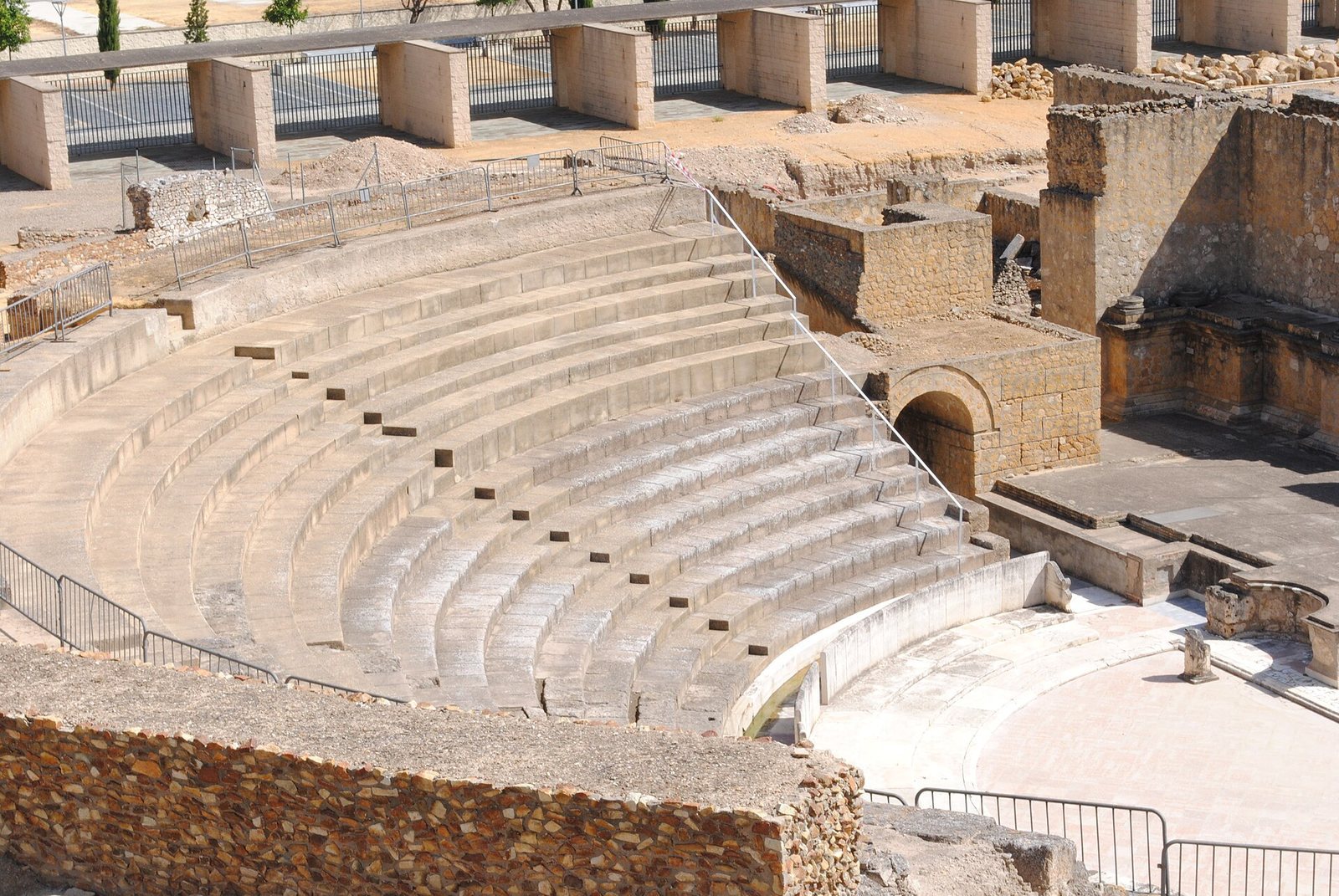
The semicircular seating area measured 71 m across and faced a semicircular space between the seats and stage. Marble covered the seating tiers. Three broad steps in the lower area held movable seats for high-ranking spectators. A marble barrier, made with alternating colours, separated this privileged lower seating from the lower, middle and upper tiers. Horizontal passages and access stairs divided the seating into four wedge-shaped sections. A portico ran along its upper edge, where fittings suggest that an awning system may have been installed.
Stage and rear garden
Stage complex
The painted stage platform joined the semicircular space in front of it through a sequence of alternating niches. Behind it, a columned stage façade had three doorways: one central entrance and two side doors. The central doorway may have been rebuilt in the early third century. An excavated hexagonal altar has been linked to that proposed rebuilding.
Rear portico and Isis sanctuary
On the river-facing side, a broad portico had inscribed pedestals from different periods. Its open area was later enclosed as a garden, where a small temple to Isis was built during the reign of Hadrian, Roman emperor from 117 to 138. Plaques bearing outlines of feet were associated with the sanctuary. Similar plaques came from the amphitheatre’s shrine to Nemesis, a goddess associated with retribution.