Emperor’s Mosque: An Ottoman Mosque in Sarajevo
Site at a Glance
- Rating
- 4.9
- Popularity
- High
- Country
- Bosnia and Herzegovina
- Primary era
- Early Modern
- Eras represented
- Medieval, Early Modern, Modern
- Civilizations
- Austria-Hungary, Habsburg, Ottoman
- Site type
- Religious
- Remains
- Mosque
On this page11 sections
History
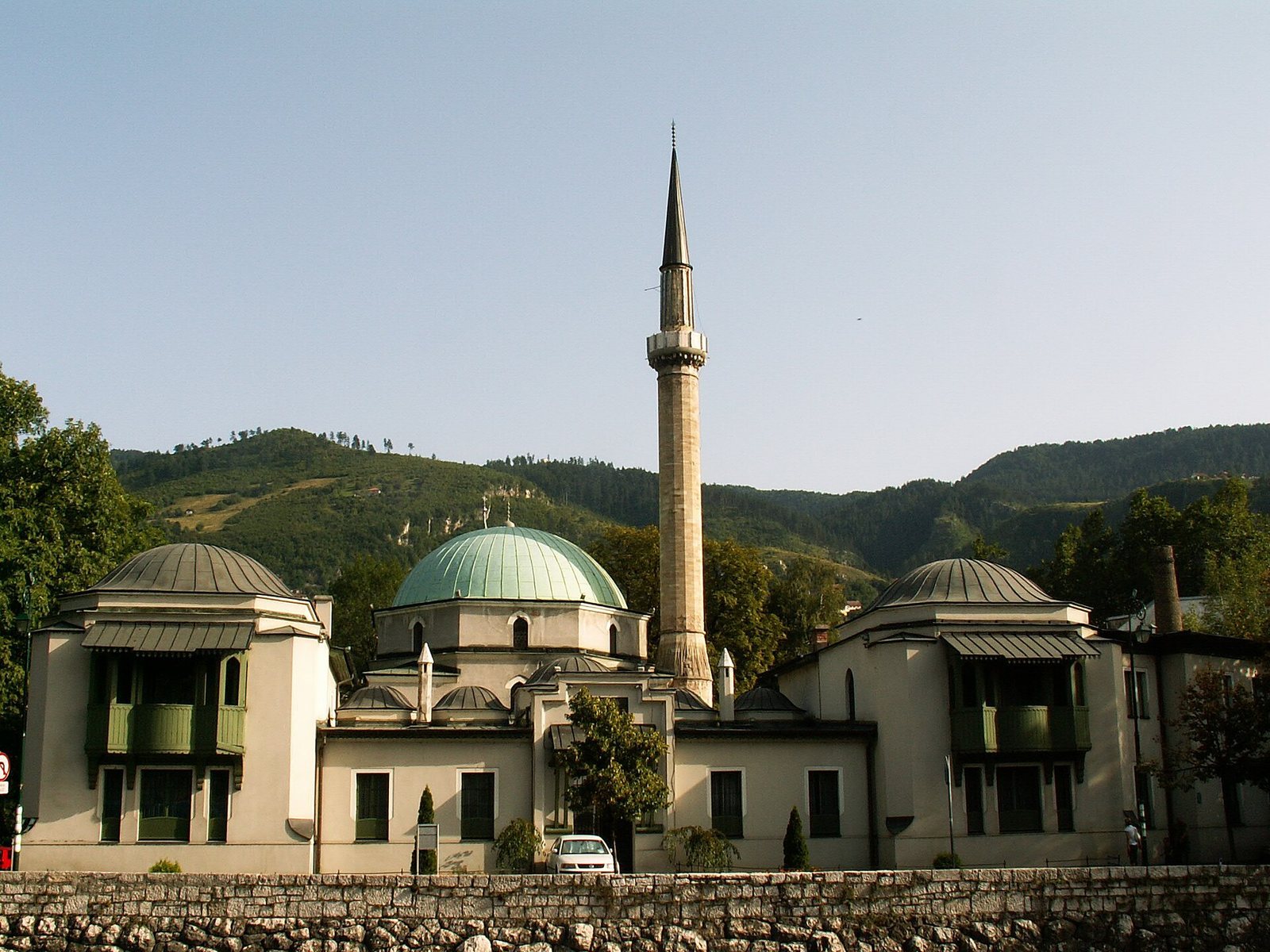
The Emperor’s Mosque is an Ottoman-style mosque in Sarajevo, Bosnia and Herzegovina, on the southern bank of the Miljacka River. Built in 1462 with support and financing from Ottoman official Isa-beg Ishaković, it was among the first mosques in Bosnia and Herzegovina and the first in Sarajevo.
Foundation and rebuilding
The mosque was first dedicated to Mehmed the Conqueror, the Ottoman sultan who captured Constantinople. In 1480, forces led by the Serbian ruler Vuk Grgurević invaded from Jajce and set fire to Sarajevo, burning the mosque.
Rebuilding on the same site was completed in 1566 with funding from Sultan Suleiman the Magnificent, and the mosque was then dedicated to him. The extent of the work is uncertain: the building may have been reconstructed from its foundations, or the repairs may have focused on replacing the burned dome. The design is attributed to a pupil or associate of Mimar Sinan, the Ottoman Empire’s chief architect.
The mosque and Sarajevo’s growth
Settlements developed around the mosque, and a residence for the sultan’s representatives was later built beside it. Isa-beg also established a public bathhouse and a bridge leading directly to the mosque. A roadside inn stood across the river. Shops, land, and other properties that he endowed provided income for these facilities. During Austro-Hungarian rule, the bridge was dismantled and rebuilt a few metres upstream.
Damage, restoration and protection
The mosque suffered damage during the Second World War and again in the wars of the 1990s, particularly during Sarajevo’s 1992–1996 siege. Renovation work was completed in 2020. The mosque is affiliated with Sunni Islam, a major branch of Islam, and is administered by the Islamic Community in Bosnia and Herzegovina. In 2004, it was designated a National Monument of Bosnia and Herzegovina.
Remains
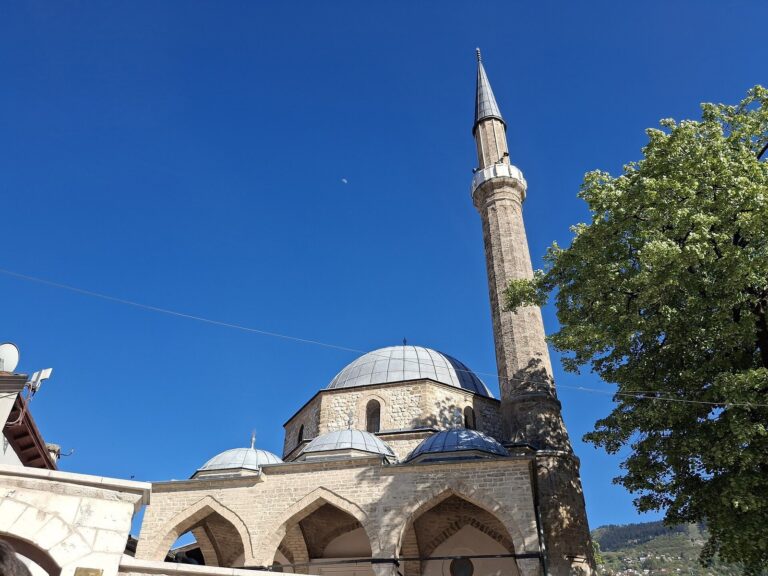
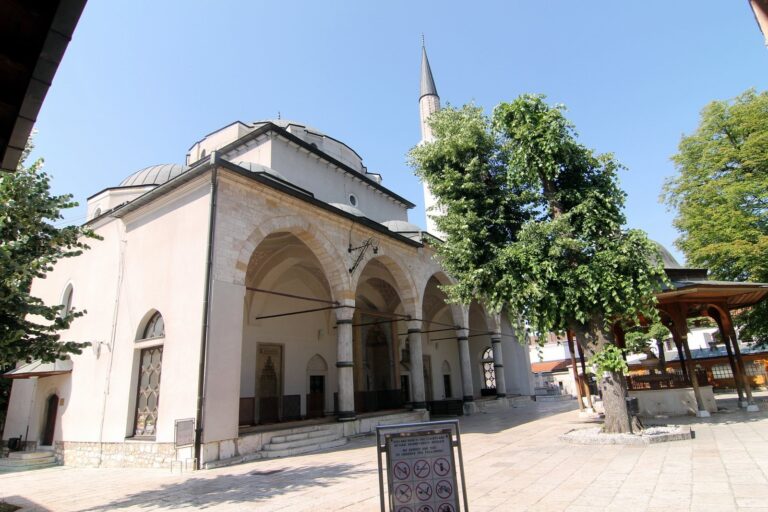
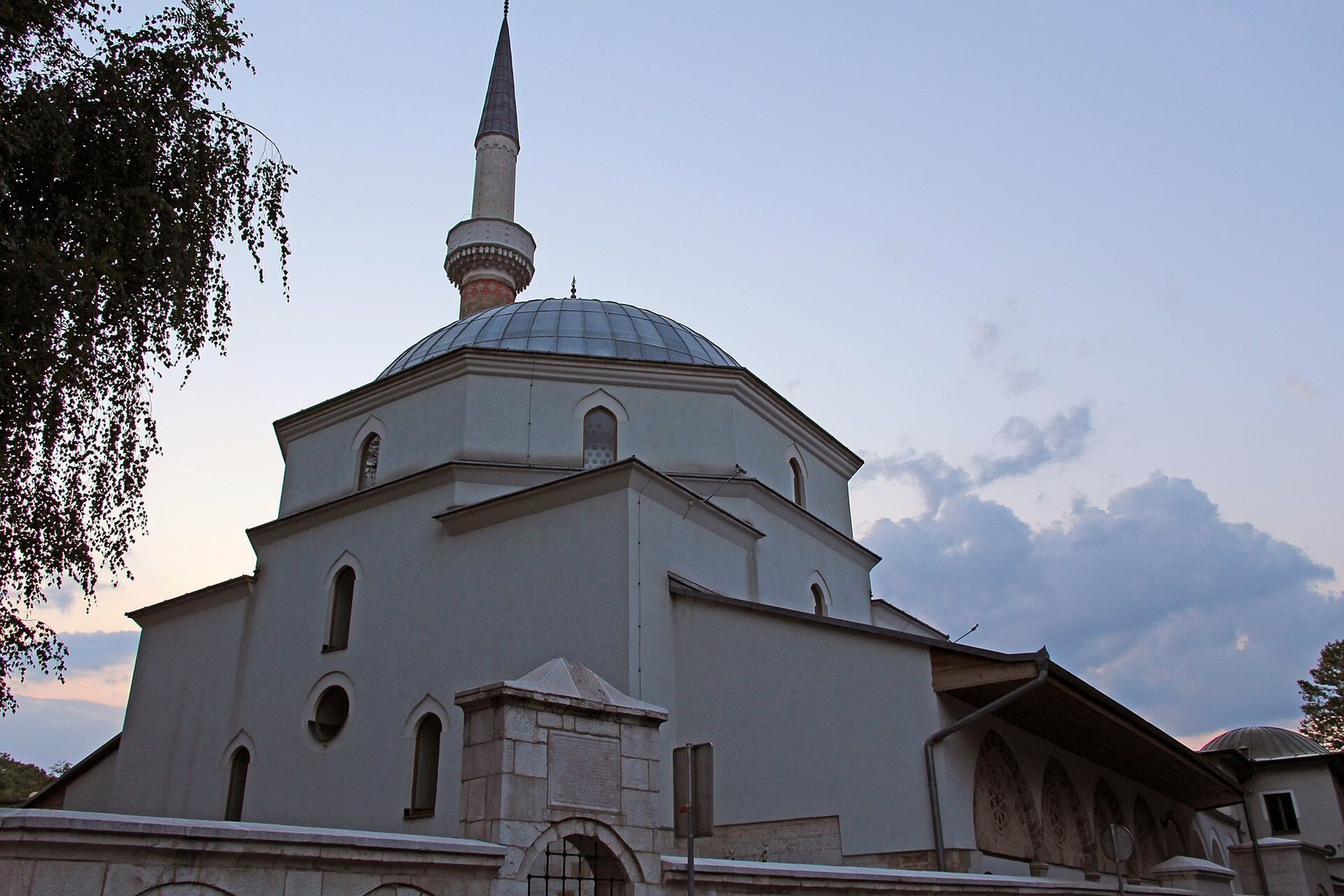
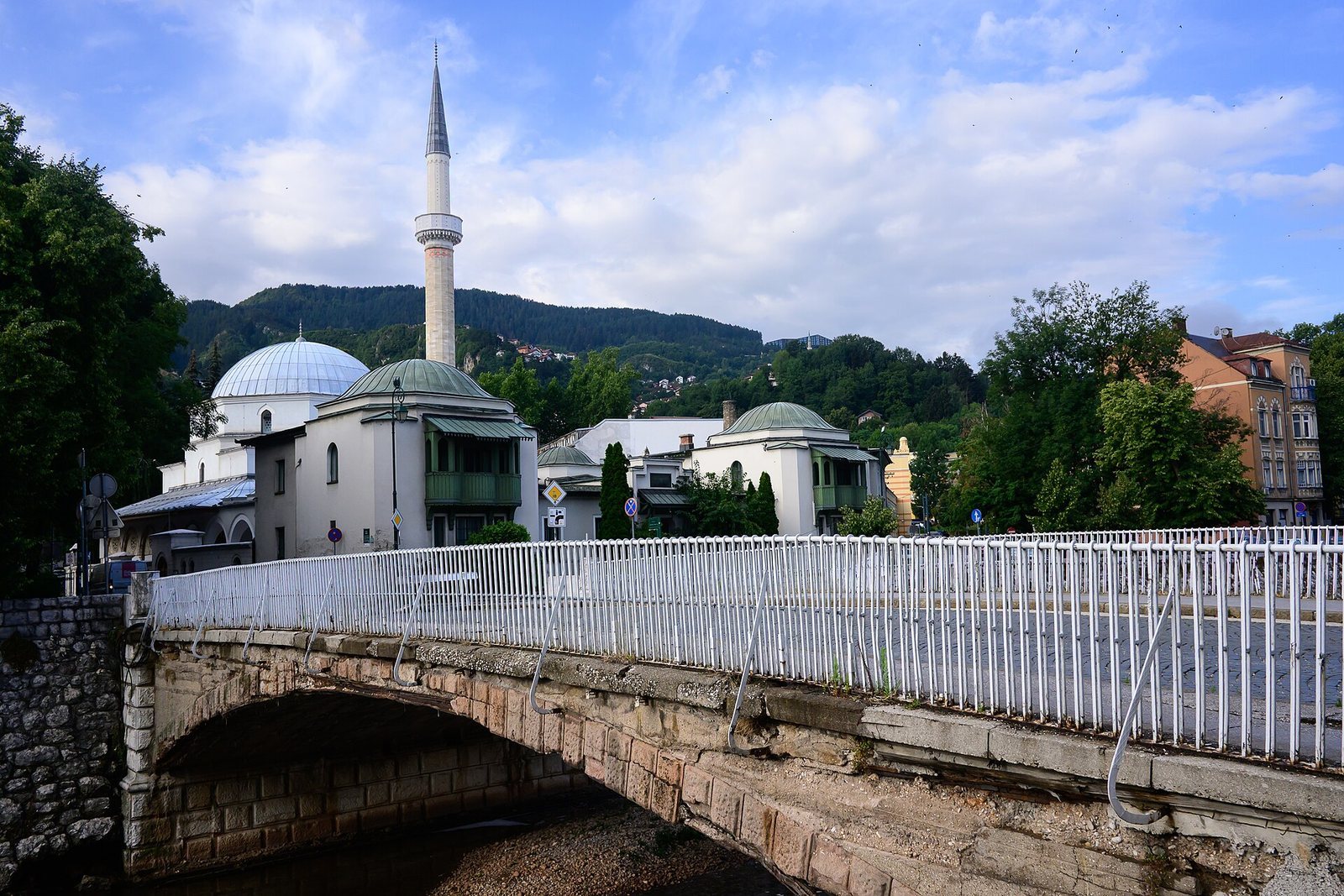
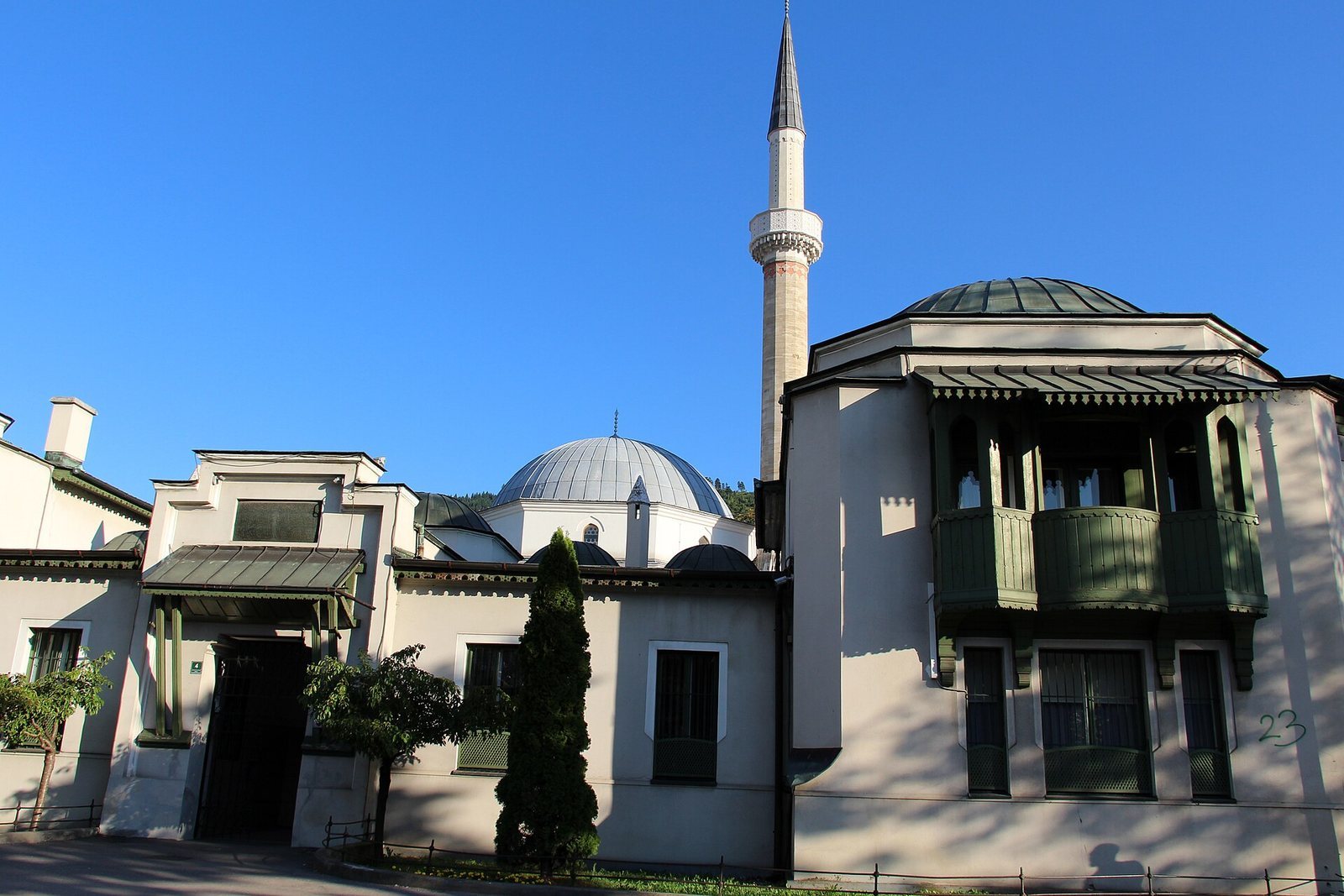
The mosque stands opposite Baščaršija in Sarajevo’s Old Town. Its central-plan design has a single dome over the prayer hall and a portico, a roofed entrance structure, along three sides. It is described as the country’s largest single-dome mosque and has a stated capacity of 500 worshippers.
The mosque
The first building was wooden and considerably smaller than the present mosque. The current dome has a semicircular cross-section, characteristic of classical Ottoman architecture; the earlier dome is thought to have had an elliptical form. In 1847, the two side sections of the portico were enclosed and converted into rooms. Their connection to the central prayer space dates to 1848.
An octagonal minaret (a mosque tower) has a balcony decorated with stalactite-like forms. Inside, the spacious prayer hall includes a mihrab, a niche indicating the direction of prayer, with decorative detail. Conservation work in the 1980s uncovered four layers of wall decoration from the sixteenth century, the eighteenth century, and the early nineteenth century, and partly restored them.
Courtyard and associated structures
Courtyard and enclosure
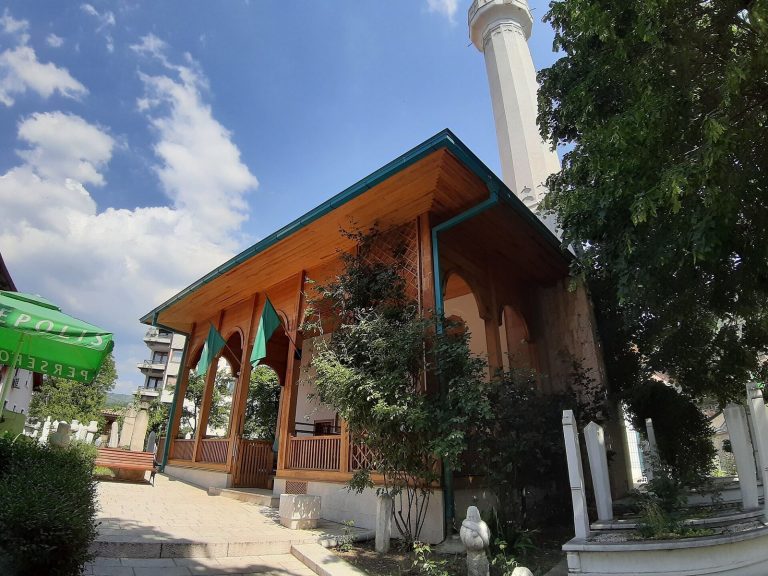
The mosque grounds include a courtyard and fountain, stone enclosure walls with two gates, and Sheikh Bistrigi’s mausoleum. The three-sided portico forms part of the mosque’s setting within this group of structures.
Cemetery
Behind the mosque, the cemetery contains tombstones dating from the fifteenth through the nineteenth centuries. Its graves include those of high officials, Muslim religious leaders and scholars, mosque employees, and other prominent Sarajevo residents. Two archaic grave markers behind the mihrab are thought to mark Isa-beg Ishaković’s grave.
Ulema-Medžlis building
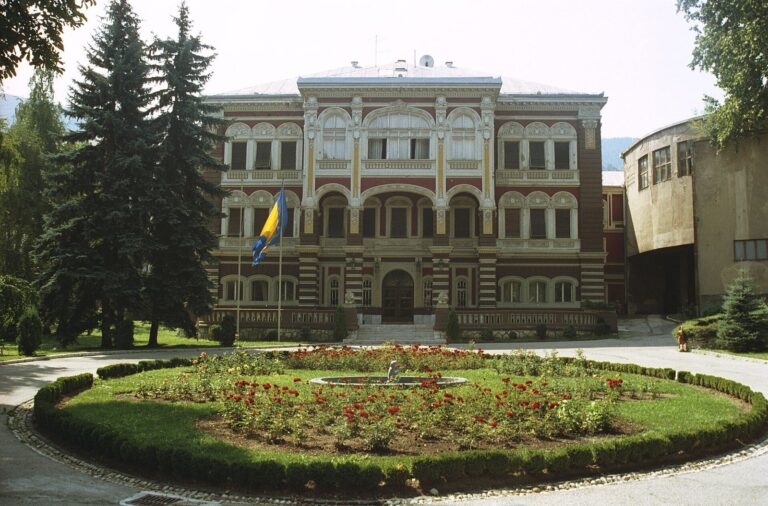
The Ulema-Medžlis, a council of Muslim religious scholars, occupies a building designed by architect Karlo Paržik in 1912. Its design uses a module and elements found in Bosnian houses, and the building was integrated into the mosque’s architectural ensemble.
Bathhouse and bridge
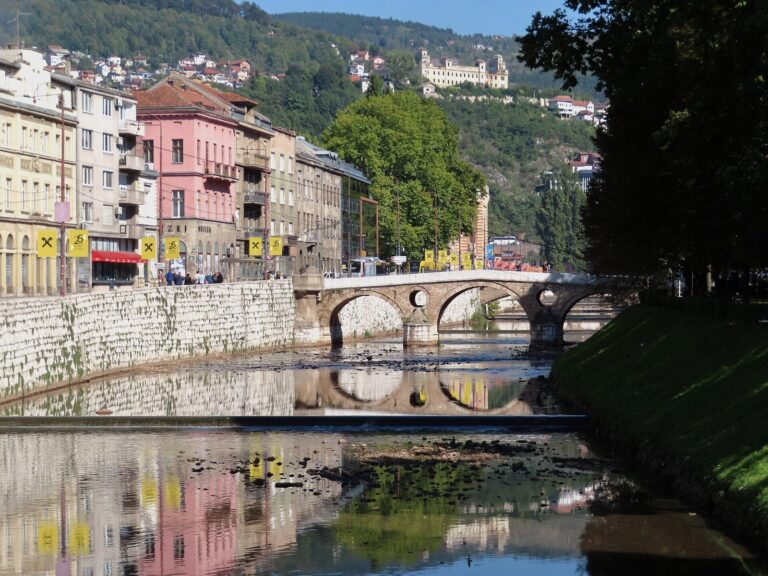
Isa-beg’s bathhouse is included among the associated structures. The Emperor’s Bridge remains a few metres upstream from its former position leading directly to the mosque.