Greaser Petroglyph Site: Indigenous Rock Carvings in Oregon
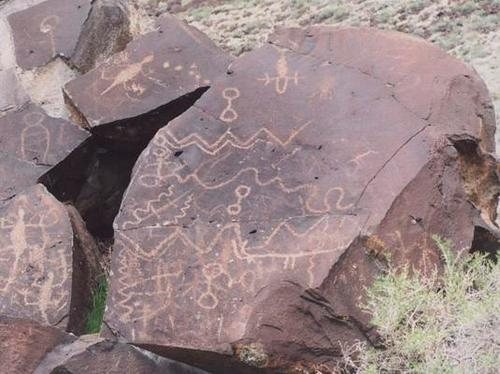
Site at a Glance
- Rating
- 4
- Popularity
- Very Low
- Country
- United States
- Primary era
- Stone Age
- Eras represented
- Stone Age
- Civilizations
- Unclassified
- Site type
- Civic
- Remains
- Rock Art
On this page4 sections
History
The Greaser Petroglyph Site is a group of Indigenous carvings on a basalt boulder in eastern Lake County, Oregon, United States. The carvings are estimated to be roughly 7,500 to 12,000 years old and may belong to the Clovis or subsequent Stemmed Point period.
Ancient carvings and uncertain meaning
The people who made the carvings are unknown. Clovis is an early North American archaeological culture identified partly by distinctive stone projectile points; the Stemmed Point period is associated with projectile points that have stems. When non-Indigenous men first traveled through southern Oregon in 1840, the Fort Bidwell and Harney Valley bands of the Northern Paiute lived in the region around Greaser Canyon. The carvings’ estimated age means those communities may not have made them. Their purpose is also uncertain. Possible interpretations include religious use, marking territorial ownership, giving directions, or expressing an individual story or artistic intent.
Recognition and repair
Vandals damaged the carvings at least once, and archaeologists from the Bureau of Land Management repaired them. The site was added to the National Register of Historic Places, the federal register for properties recognized for historical or cultural value, on November 20, 1974, in recognition of its cultural significance and archaeological value.
Remains
The carvings are cut into a southwest-facing basalt boulder in Warner Valley near Greaser Canyon. The protected area encompasses 9 acres of open rangeland owned by the Bureau of Land Management. The boulder lies about half a mile north of Oregon Route 140.