Sidi Bashir Mosque: A Sufi Mosque in Ahmedabad

Site at a Glance
- Popularity
- High
- Country
- India
- Primary era
- Early Modern
- Eras represented
- Medieval, Early Modern
- Civilizations
- Unclassified
- Site type
- Religious
- Remains
- Mosque
On this page5 sections
History
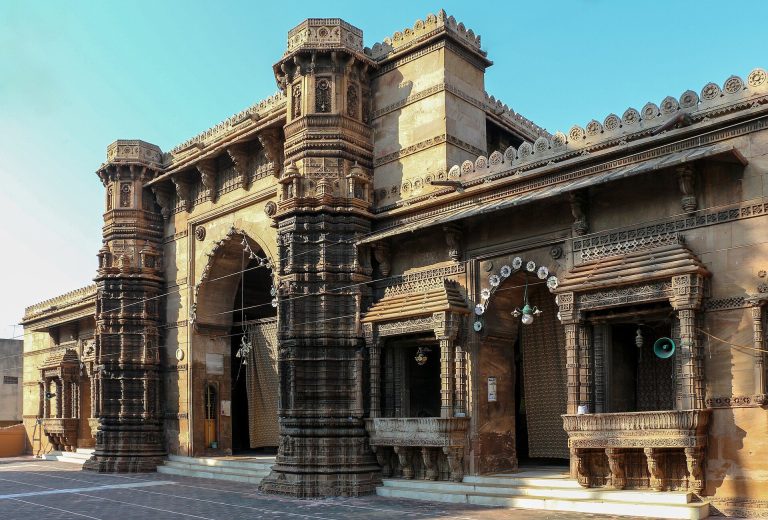
The Sidi Bashir Mosque is a Sufi mosque, associated with the mystical tradition within Islam, in Ahmedabad, India. Dated to 1452, it reflects Indo-Islamic architecture, which combines Islamic forms with regional South Asian practices.
Its construction is attributed either to Sidi Bashir, enslaved by Sultan Ahmed Shah of the Gujarat Sultanate, a medieval Muslim state in western India, or to Malik Sarang, a noble at the court of Sultan Mahmud Begada, another ruler of Gujarat. Although the mosque is dated to 1452, the minarets’ style and materials point to the end of Mahmud Begada’s reign in 1511 or later.
The mosque’s use as a Sufi place of worship ended in 1753, when fighting between the Marathas, a powerful Indian political and military force, and Jawān Mard Khān, governor of Gujarat for the Mughal Empire, a major South Asian empire, destroyed much of the building. The remains are designated a Monument of National Importance, India’s formal heritage designation for protected sites.
Remains
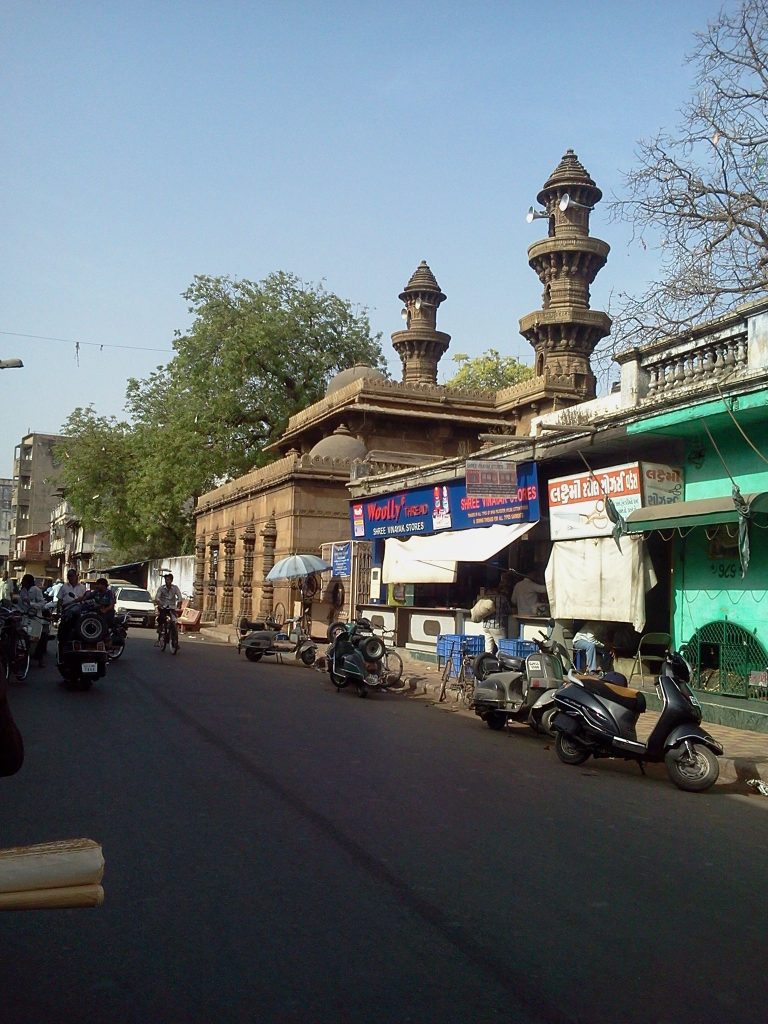
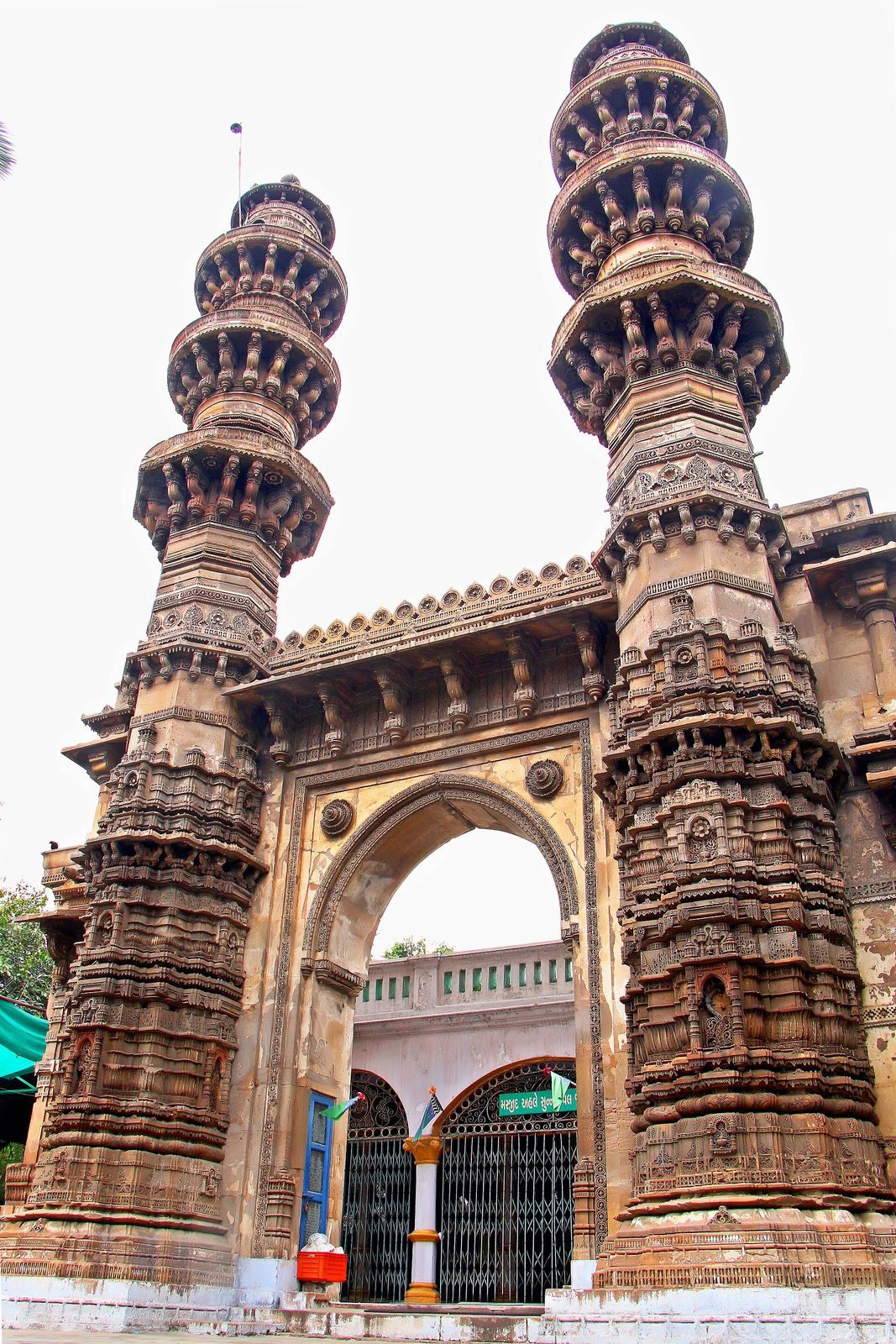
The surviving architecture consists of a central arched gateway joining two minarets. The towers stand north of Ahmedabad Junction railway station.
Gateway and minarets
Arched gateway
The central gateway connects the two minarets. Its passage remains still when the towers vibrate in response to movement.
Minarets
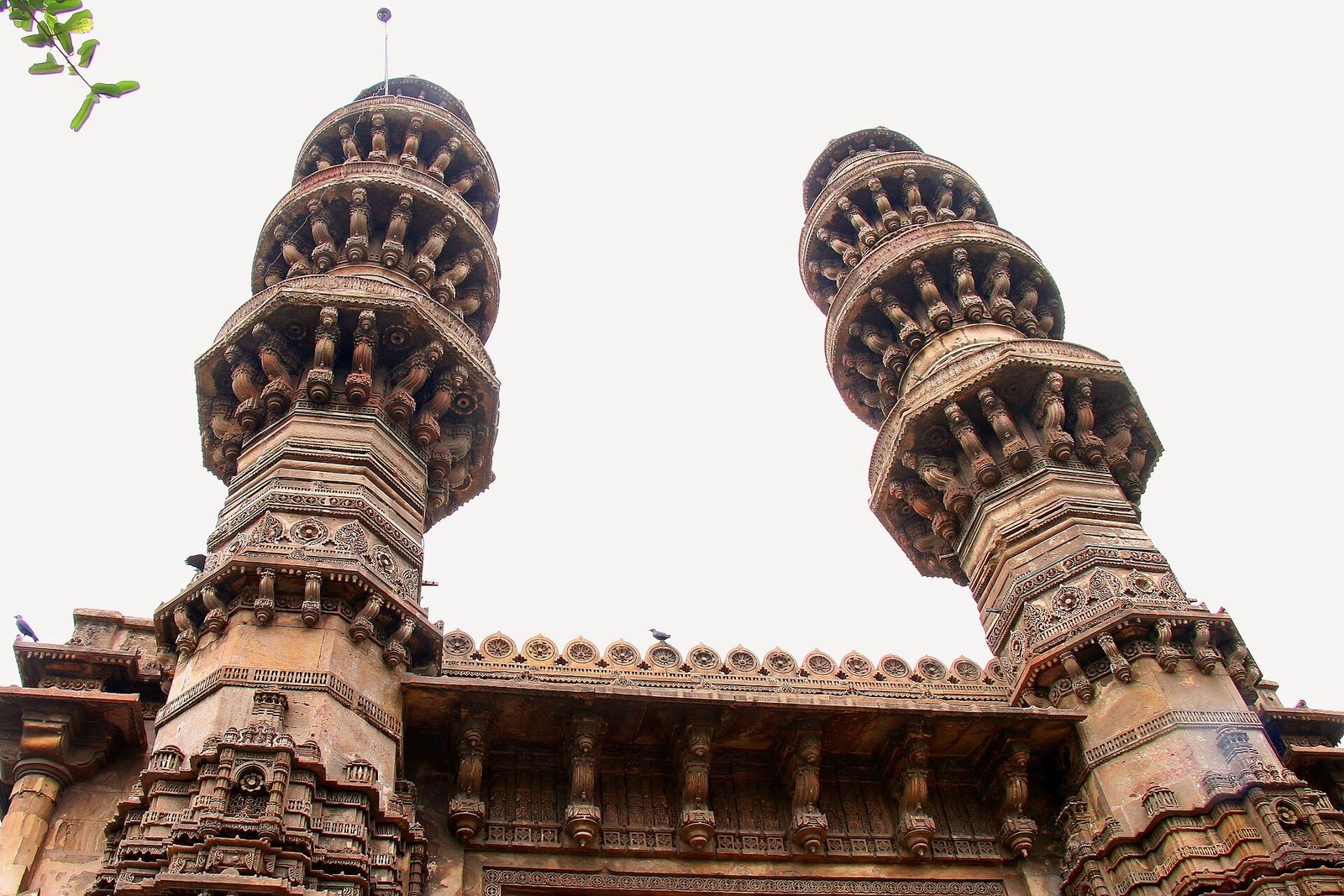
The three-storey minarets have carved balconies and intricate designs. They are described as the tallest in Ahmedabad. Both towers are damaged, particularly near their bases and upper sections, while the stairs inside remain usable.
A gentle shake to one minaret causes the other to vibrate a few seconds later. English Sanskrit scholar Monier M. Williams first noted this linked movement in the nineteenth century. Its cause is unknown, though layered construction is considered one possible factor. The towers can withstand fast-moving trains passing nearby.