Tanis Royal Necropolis: Egypt’s Third Intermediate Period Royal Burial Ground
Site at a Glance
- Popularity
- Medium
- Country
- Egypt
- Primary era
- Iron Age
- Eras represented
- Iron Age, Classical
- Civilizations
- Egyptian, Ptolemaic
- Site type
- Burial
- Remains
- Necropolis
On this page13 sections
History
The Tanis Royal Necropolis is an Egyptian royal burial ground at Tanis in Egypt’s Lower Egypt region, established beside the temple of Amun, a major Egyptian deity, during the Third Intermediate Period. This era, between the New Kingdom and the Late Period, included the Twenty-first and Twenty-second Dynasties. Under Psusennes I, the boundary of the surrounding enclosure was redirected to include the tombs, making the necropolis an important source for understanding this period of Egyptian history.
Later use of the enclosure
Several chapels were added inside the enclosure in later centuries. During the Ptolemaic period, the area changed into a residential quarter with craft workshops, giving the royal burial ground a new role within Tanis.
Excavation and discovery
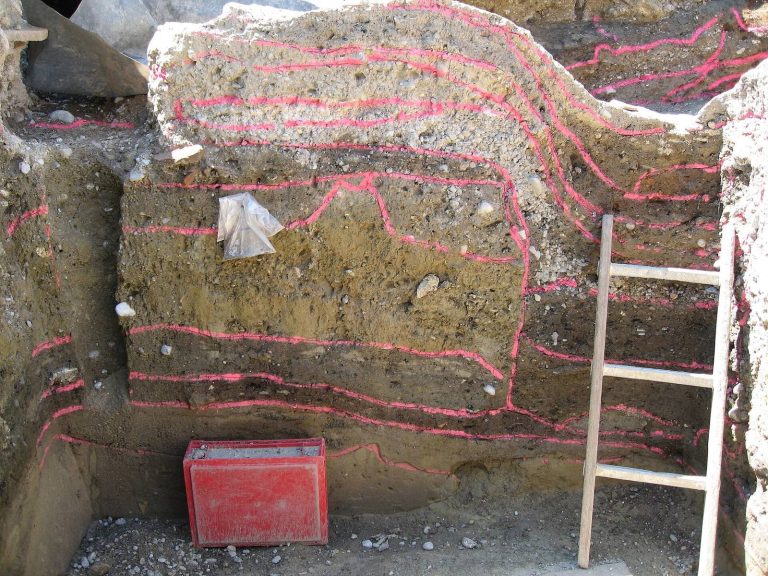
In the late 1930s, a French excavation mission led by Egyptologist Pierre Montet cleared the enclosure’s southwest sector. Layers of earth and sand had accumulated there over centuries, including spoil from Auguste Mariette’s nineteenth-century work at the temple of Amun. Montet’s team worked methodically from east to west across a roughly triangular area, initially looking for deposits associated with the temple’s foundations.
In 1938, the excavators uncovered brick-built remains and a shrine dedicated to Horon, a falcon god. Inside stood a statue of the god protecting a child king whose royal name, enclosed in a cartouche, was Ramesses II’s. The statue was taken to the Cairo Museum. In February 1939, further clearing led to the discovery of underground rooms and the tomb identified as that of Osorkon II. Excavation of this burial vault revealed several royal interments, which had been plundered to varying degrees. As the team continued to investigate, it found other tombs to the north and south.
The seven tombs were labelled NRT, for Royal Necropolis of Tanis, followed by numbers reflecting the order of discovery. NRT I was the first tomb identified as that of Osorkon II. NRT III, the tomb of Psusennes I, had remained sealed since antiquity and held burials from more than one period, some of them partly or wholly intact. Its excavation followed the clearing and examination of the first two vaults.
Royal burials and changes to the tombs
NRT I had a building on its site before Psusennes I’s reign, although identifying it as the tomb of Smendes remains uncertain. Psusennes I enlarged the burial complex, cutting into that earlier building. Osorkon II later took over and extended the vault to bury his father, Takelot I, and his son, Hornakht. The royal burial texts decorating the tomb belong to this phase. Sheshonq III later altered the arrangement of one chamber; the date when a sarcophagus was placed there is unknown.
The later use of NRT III brought together several royal burials. Its antechamber held the burials of Siamun and Psusennes II beside that of Sheshonq II. A chamber associated with Psusennes I’s wife, Moutnedjemet, was reused by Amenemopet. His burial was less richly furnished than that of his predecessor. It was probably plundered once, then emptied by priests, who transferred its contents to his mother’s tomb, whose identification remains uncertain.
Two further burial chambers were made for the general and steward of Amun, Ânkhefenmout, and the general Oundjebaoundjed. Their construction extended into the earlier NRT I complex. Ânkhefenmout may have been a son of Psusennes I or of Herihor II; Oundjebaoundjed was probably related to King Smendes.
NRT II was left unexplored at first because its fragile condition posed a danger to the excavators. A later investigation found remains in its sarcophagus, leading to its identification, with considerable probability, as the tomb of Pharaoh Pami I. NRT IV may initially have been intended for Amenemopet, while NRT V was the original tomb of Sheshonq III. NRT VII was destroyed no later than Osorkon II’s expansion of NRT I. Its construction dates to no earlier than the end of the Twenty-first Dynasty.
Remains
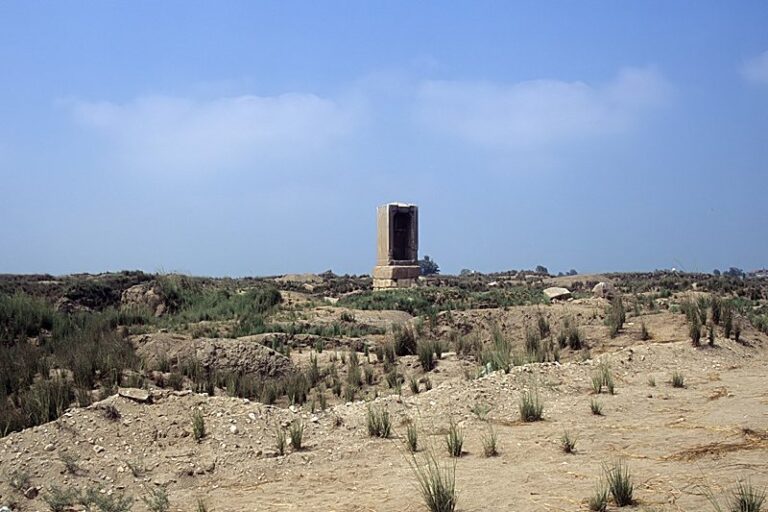
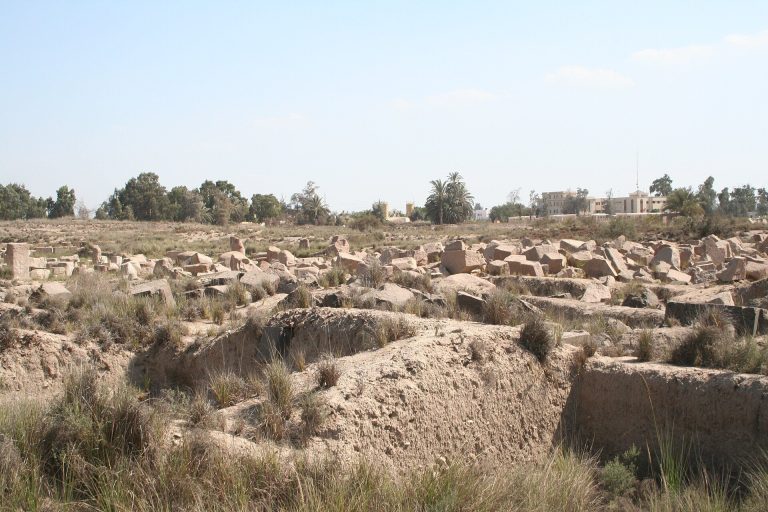
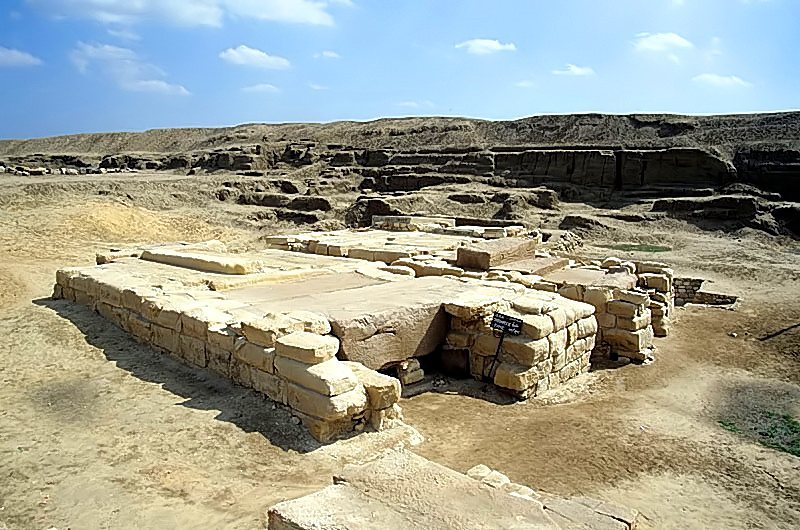
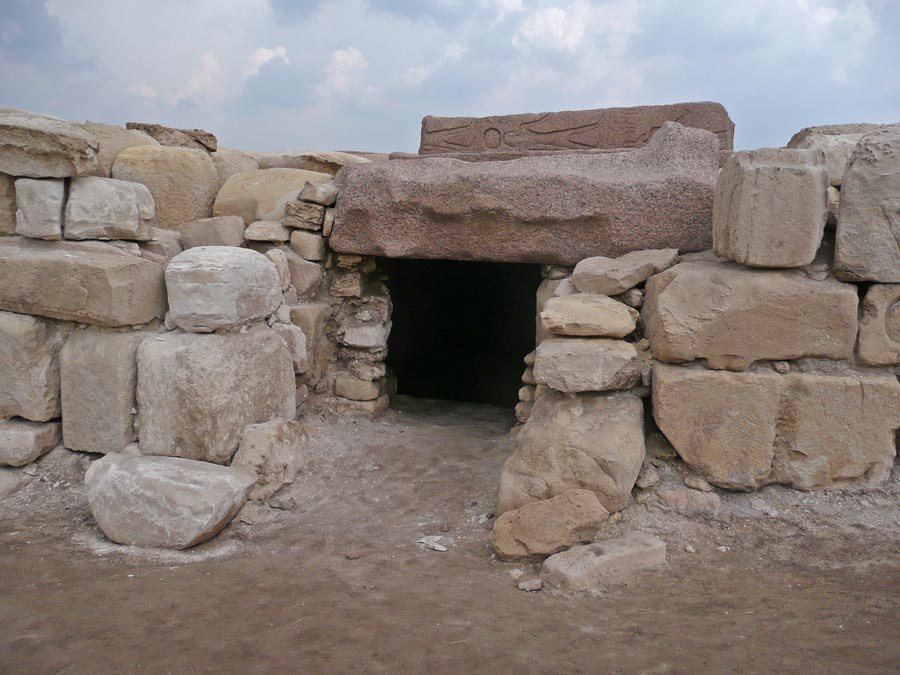
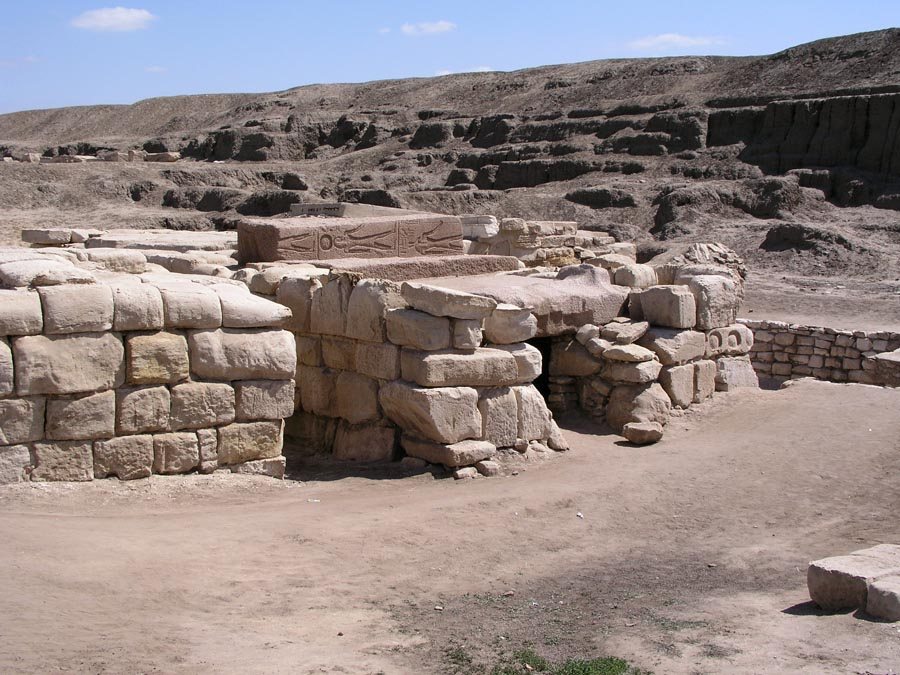
The necropolis lies southwest of the great temple of Amun’s axis, within Psusennes I’s enclosure. The enclosure boundary bends around the tomb area. Its underground tombs occupy ground that also yielded brick-built remains, which appeared to run along the wall of the temple’s forecourt.
Tomb chambers and burial equipment
NRT I
The final arrangement of NRT I comprised four spaces. NRT I,1 held a plundered sarcophagus belonging to a king named Sheshonq, installed during a later phase and possibly that of Sheshonq V. NRT I,2 was the original access shaft, where remains of royal burial equipment were found. NRT I,3 contained Takelot I’s plundered sarcophagus; wall texts identify Osorkon II as the person who placed it there. NRT I,4 held Osorkon II’s plundered sarcophagus and the nearly intact sarcophagus of Hornakht.
Objects recovered from NRT I included shabti figurines, intended to serve the dead in the afterlife, bearing the name of Sheshonq. The finds also included three canopic jars, containers for organs removed during mummification, and two stoppers depicting the protective deities Duamutef and Qebehsenuef. Other burial objects included a gold cloisonné tyet knot, an Egyptian protective symbol made with metal strips dividing a surface into compartments, fragments of shabti figures bearing Osorkon’s name, an uninscribed scarab, and further royal burial equipment.
NRT II
NRT II consists of an access shaft and a burial chamber. The chamber held a large, anonymous sarcophagus carved from a reused architrave, a horizontal beam often supported by columns or piers. Tomb robbers broke its lid.
NRT III
NRT III has six spaces: an access shaft, an antechamber, and four burial chambers. The shaft was intact and filled to ground level. In the antechamber, heavily plundered burial equipment lay with the mummies of Siamun and Psusennes II, positioned beside Sheshonq II’s intact solid-silver sarcophagus. His mummy and royal regalia were inside it.
NRT III,1 was Psusennes I’s intact burial chamber, with his sarcophagi and richly furnished burial. NRT III,2 held the sarcophagi and burial equipment of Amenemopet in the chamber associated with Moutnedjemet. NRT III,3 was intended for Ânkhefenmout and contained an intact sarcophagus. NRT III,4 was Oundjebaoundjed’s intact burial chamber, with his sarcophagi and valuable burial equipment. The two officials’ chambers extended into the pre-existing NRT I complex.
NRT IV
NRT IV consists of a single chamber, where Amenemopet’s outer sarcophagus remained.
NRT V
NRT V has an access shaft and a burial chamber. The chamber contained Sheshonq III’s original outer sarcophagus and the plundered sarcophagus of Sheshonq IIIa.
NRT VI
NRT VI is a plundered tomb with one surviving chamber. Its original plan appears to have included at least one additional chamber.
NRT VII
NRT VII is a ruined tomb adjoining NRT I and probably had two chambers. A block belonging to Psusennes I was reused in its construction.