Al-Halawiyah Madrasa: A Twelfth-Century Islamic School in Aleppo
Site at a Glance
- Rating
- 4.8
- Popularity
- Low
- Country
- Syria
- Primary era
- Medieval
- Eras represented
- Classical, Medieval
- Civilizations
- Byzantine
- Site type
- Religious
- Remains
- Madrasa
On this page8 sections
History
Al-Halawiyah Madrasa is an Islamic school in Aleppo, Syria, converted for Hanafi teaching in 1149 within the former Great Byzantine Cathedral of Saint Helena. The cathedral dated to the fifth century, and the building is described as having a Byzantine ecclesiastical character and Zengid architectural style.
Religious history before the madrasa
Tradition places a Roman temple on the site before the cathedral. A reconstruction proposed by Sauvaget traces an earlier sequence from a pagan sanctuary associated with fire worship to a Jewish place of worship, followed by the cathedral. The Christian church was dedicated to Saint Helena, an early Christian figure and mother of the Roman emperor Constantine the Great.
Conversion and Islamic education
During the 1124 siege of Aleppo, Crusaders, participants in medieval Christian campaigns in the eastern Mediterranean, plundered the surrounding countryside and dug up Muslim graves. While Belek Ghazi, an Artuqid ruler of a Turkmen dynasty, governed the area, Aleppo’s chief judge, Ibn al-Khashshab, began adapting the cathedral for Islamic religious use.
In 1149, Nur al-Din, a ruler of the Zengids, a Muslim dynasty prominent in Syria and northern Mesopotamia, converted the building into a madrasa for followers of the Hanafi school, one of the major traditions of Sunni Islamic law. A later benefactor established a school within the mosque and endowed it extensively. The benefactor stipulated that qatayef pastries be prepared each Ramadan and distributed to students and passersby.
Remains
Building and associated features
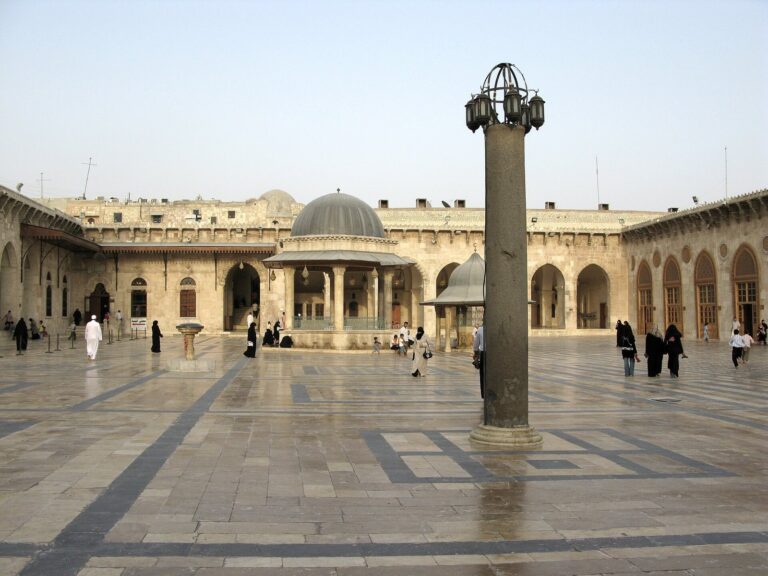
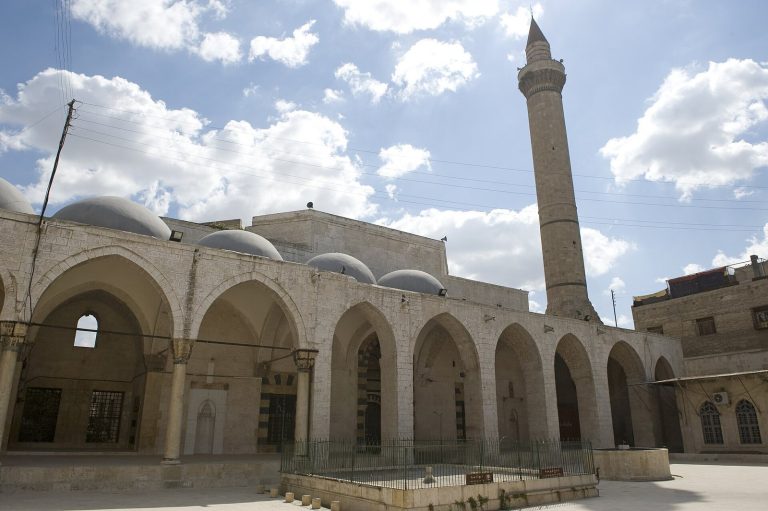
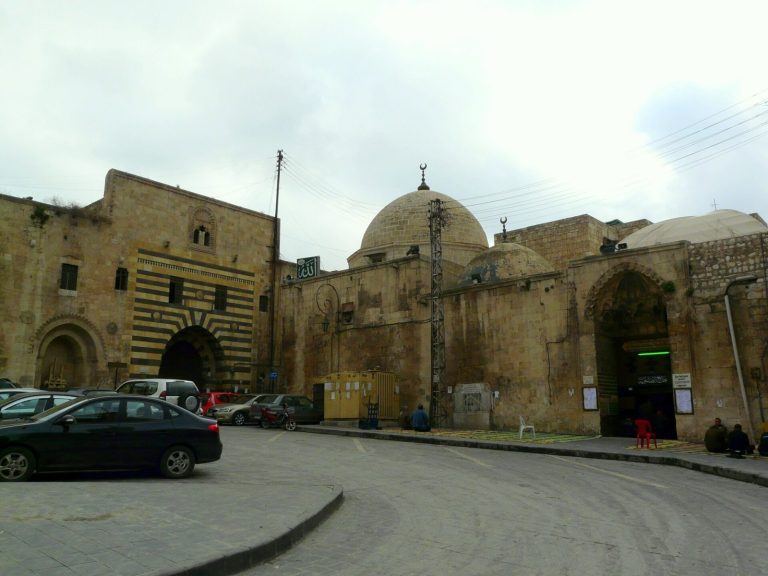
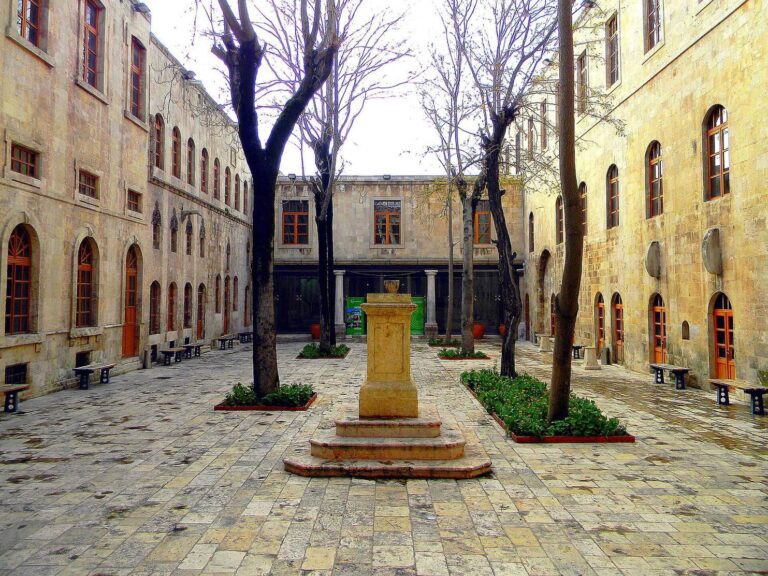
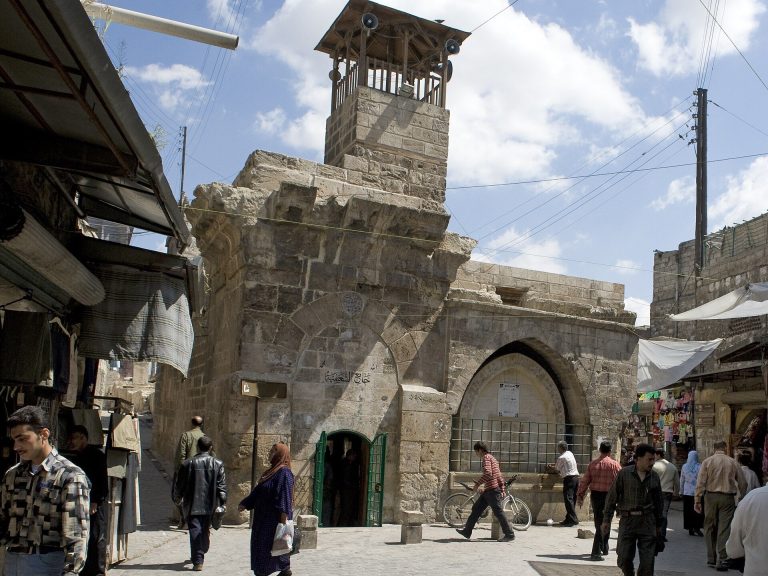
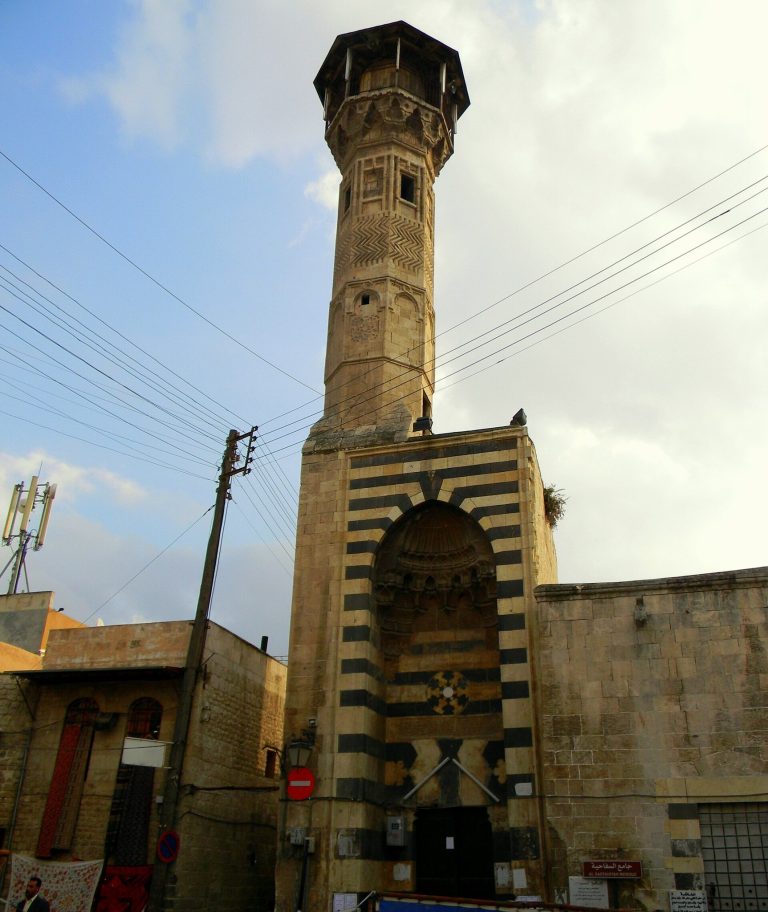
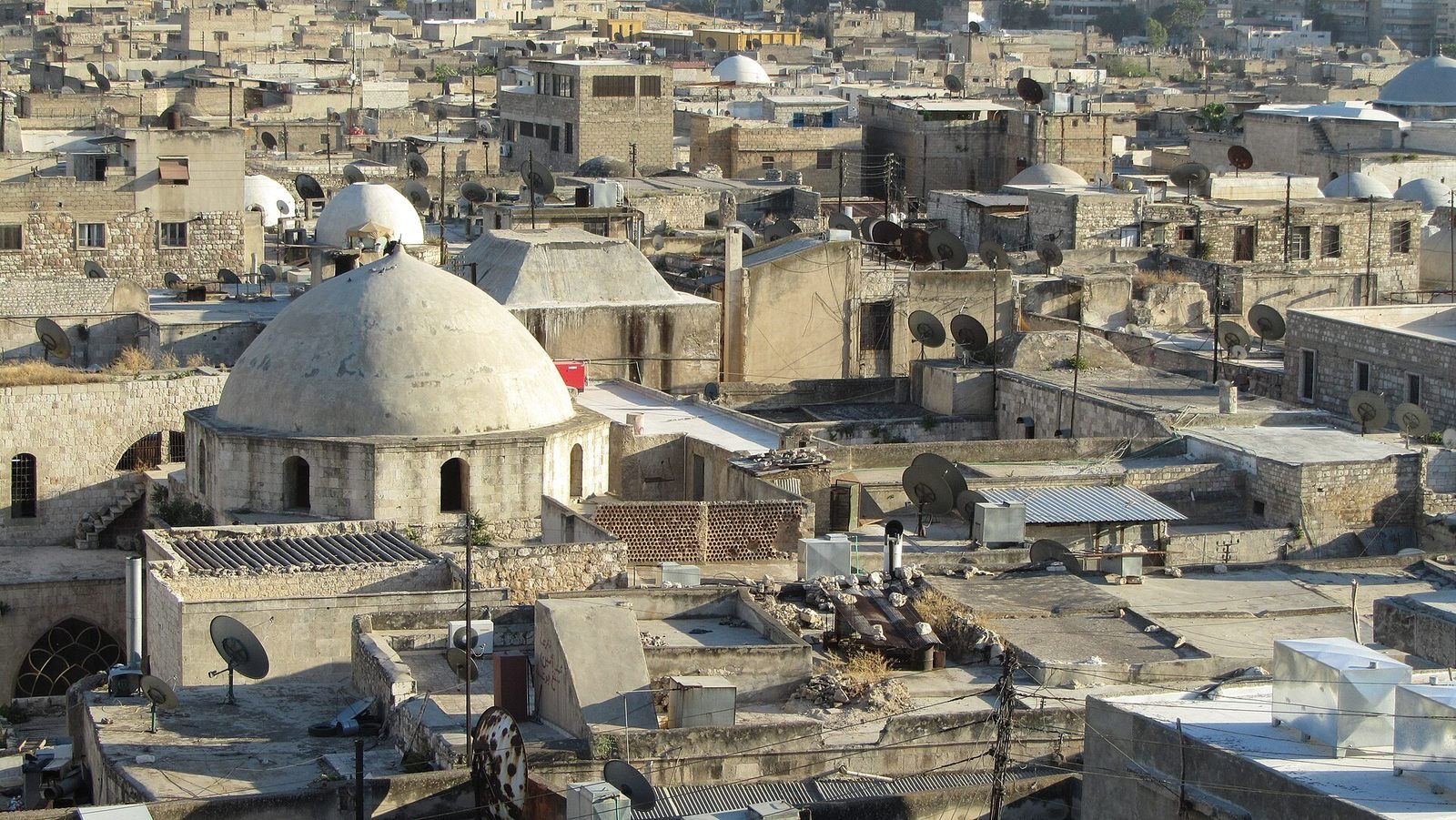
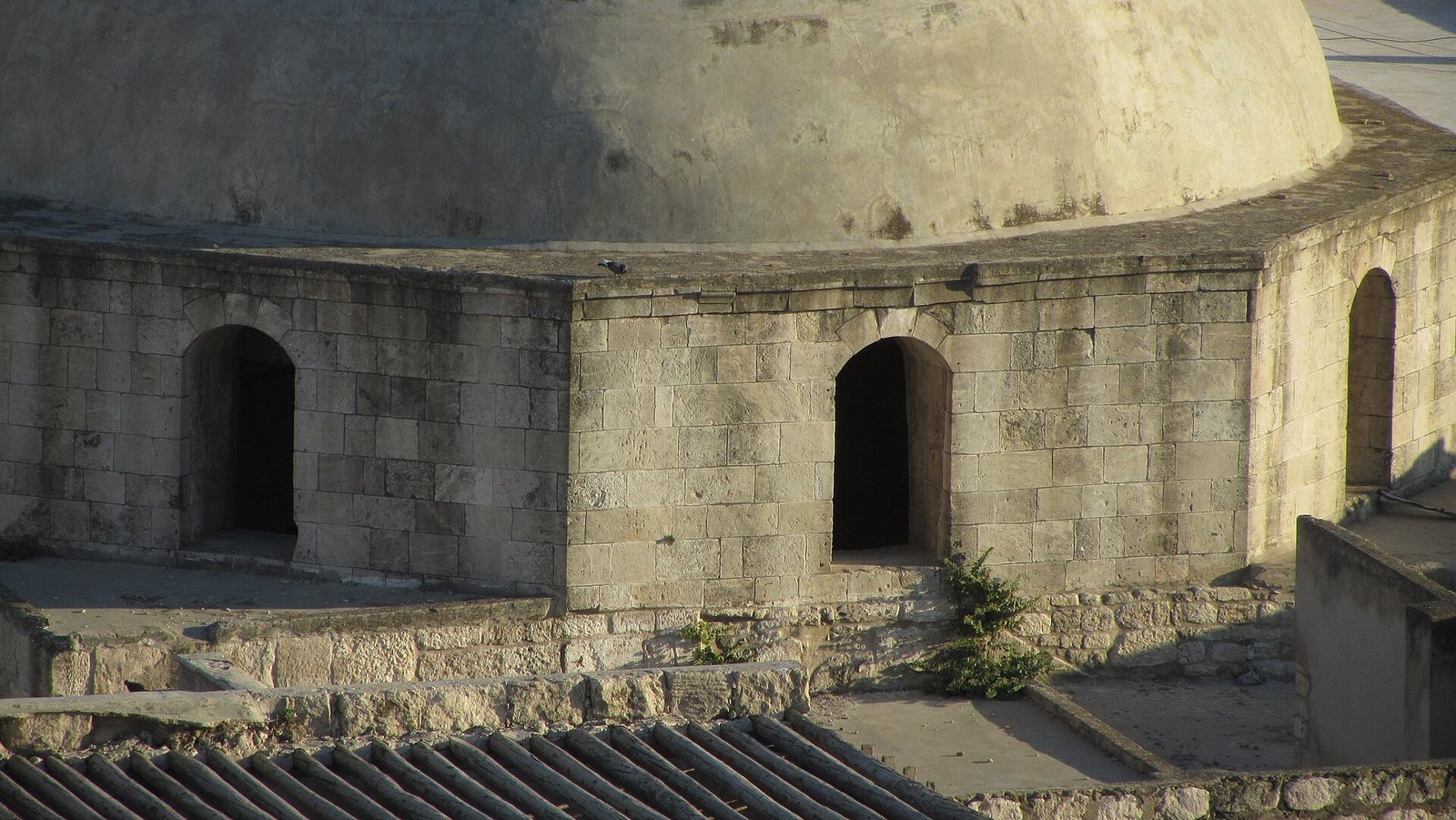
The madrasa stands in Aleppo’s Ancient City, in the al-Jalloum district opposite the western entrance of the Great Mosque. Its single-domed building incorporates parts of the earlier Christian structure.
Inherited church fabric
Portions of the fifth-century building survive within the Islamic school, preserving elements of its earlier use as a Christian church.
Mihrab
The finely made mihrab, a niche indicating the direction of prayer, has suffered some damage. Ernst Herzfeld analyzed the feature.
Baptismal font
A large baptismal font, a basin used in Christian baptism, stood at the school entrance. It was used to hold syrup for distribution and remained there until comparatively recently.