Church of Saint Procopius in Prokuplje: A Serbian Orthodox Church
Site at a Glance
- Rating
- 4.9
- Popularity
- Medium
- Country
- Serbia
- Primary era
- Medieval
- Eras represented
- Medieval, Modern
- Civilizations
- Byzantine, Ottoman, Serbian
- Site type
- Religious
- Remains
- Church
On this page13 sections
History
The Church of Saint Procopius in Prokuplje is a Serbian Orthodox church in Serbia, affiliated with the Diocese of Niš, the church jurisdiction based in Niš. Archaeological dating places its foundation in the 9th or 10th century, during Byzantine rule, probably with support from a Greek donor. Its history became closely connected with Saint Procopius after his relics were brought there from Niš in 1386.
Foundation and medieval affiliations
A church chronicle assigns the foundation to 934, while another tradition places it in the period of Samuel, ruler of the First Bulgarian Empire. The church later belonged to lands ruled by Samuel and to the Archbishopric of Ohrid, a major Christian institution in the medieval Balkans. From the 12th through the 14th century, it stood within Serbian territory.
The surrounding district was known by different names across successive periods: Roman Hammeum, Byzantine Acmeon, the Slavic district of Toplica, Serbian Prokopia, and Turkish Orkuba.
The relics of Saint Procopius and later rebuilding
In 1386, during the Ottoman advance on Niš, the relics of Saint Procopius were transferred to the church, which was thereafter dedicated to him. In a charter of 1395, Princess Milica, wife of Serbian ruler Prince Lazar, called Prokuplje the ‘city of Saint Procopius.’ The city’s name honors the saint.
The church was badly damaged in 1690 amid the Austro-Ottoman wars and the Great Serbian Migration, the movement of Serbs from Ottoman-held territories associated with Patriarch Arsenije III. It was rebuilt in 1734 with a loan from Ottoman lenders, guaranteed by prominent peasants from across the Toplica region.
Uprising and modern interpretations
The church suffered damage again during the First Serbian Uprising, a revolt against Ottoman rule, and was rebuilt in the mid-19th century. The damage may have occurred in 1806, when the rebel Stanoje Glavaš, a Balkan irregular fighter, liberated Prokuplje. A major restoration followed in 1906.
After Ottoman rule in the Toplica region ended in 1877, writers proposed differing dates for the church. Felix Kanitz described it as Roman, Hoddinott assigned it to the 5th or 6th century, and Mita Rakić considered it Ottoman. A church chronicle published in 1930 placed its foundation in Samuel’s period.
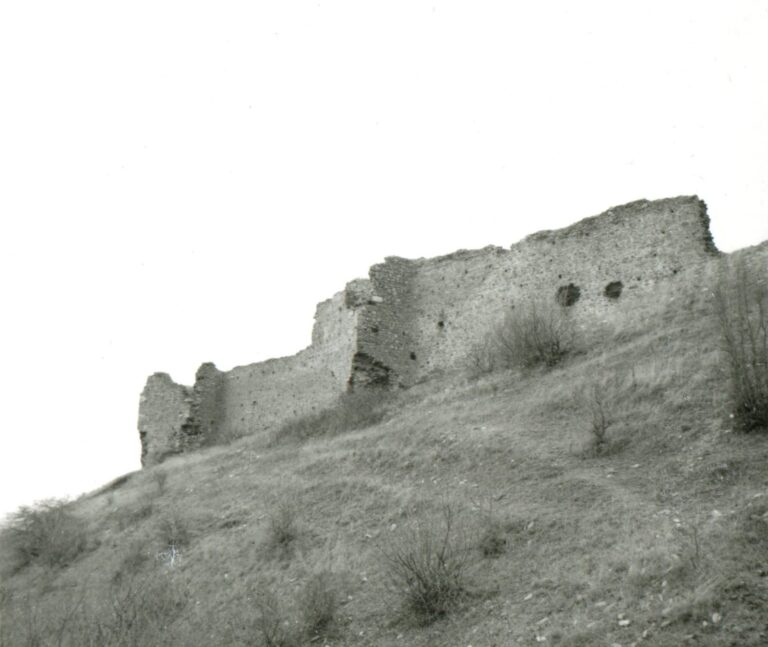
In 1983 the church was declared a cultural monument of great importance and placed under the protection of the Republic of Serbia. It forms part of a protected ensemble that also includes Hisar fortress and the Latin Church.
Remains
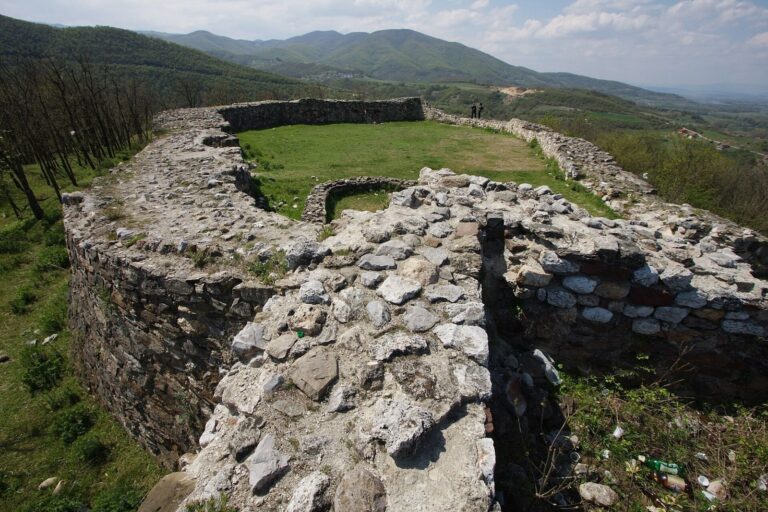
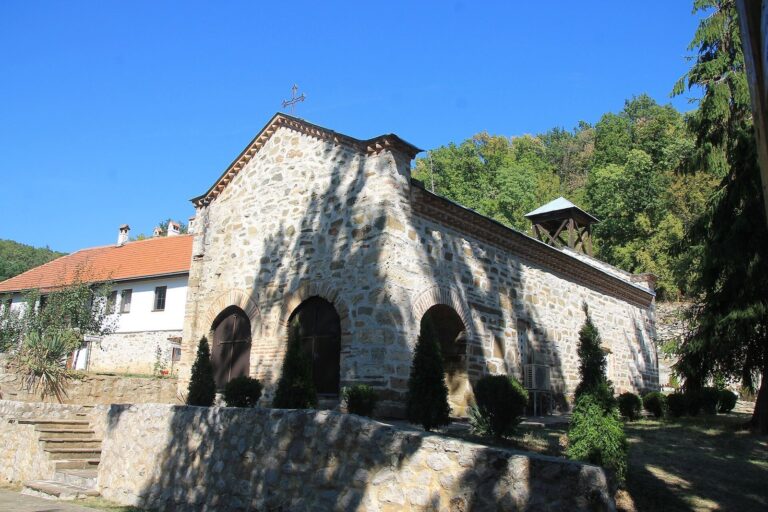
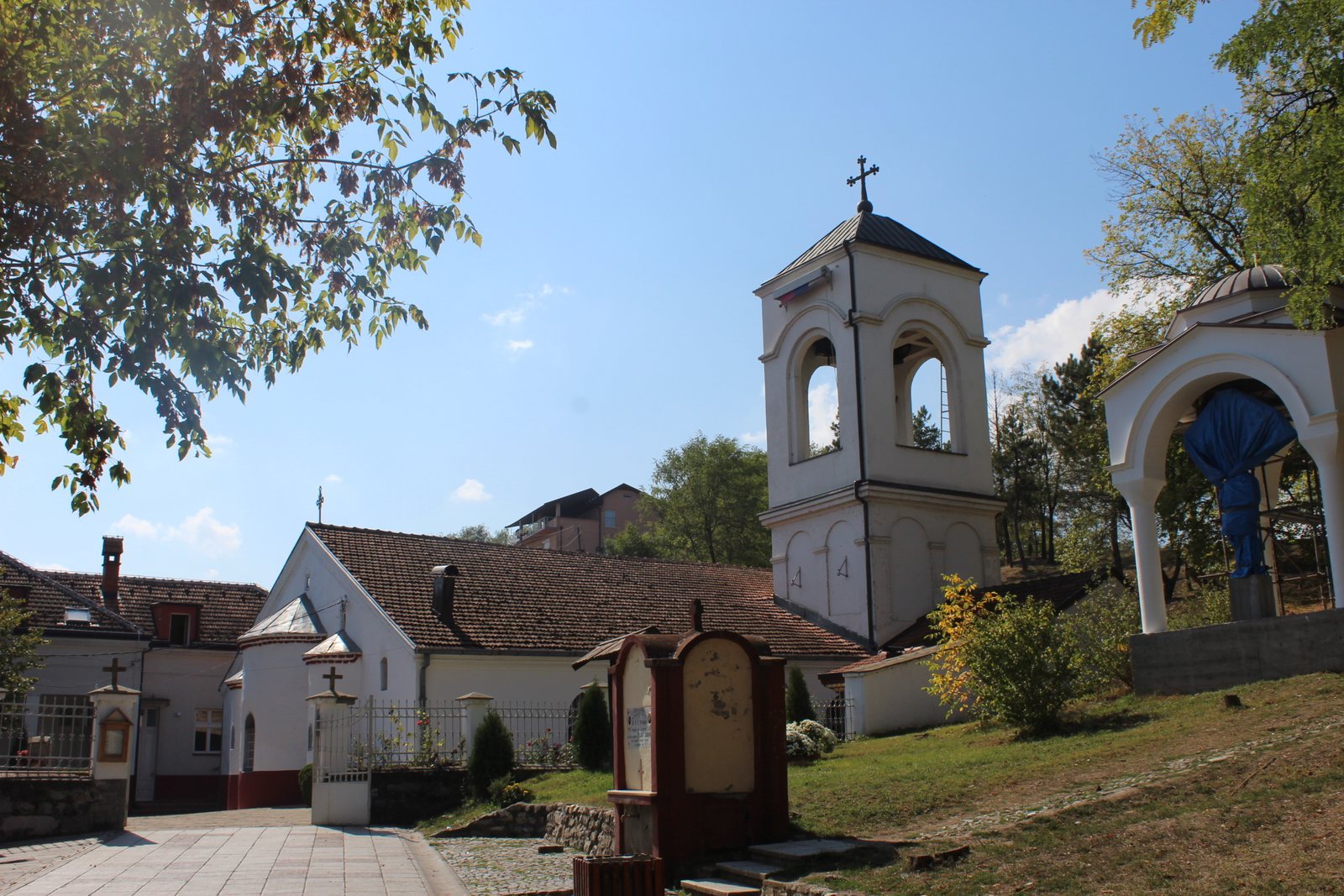
The church stands on Brana, a narrow pass near the foot of Hisar fortress and the only land approach to the hill. Its west side meets a ridge rising toward the summit. At the pass, the Toplica River turns through 180 degrees, loops around the hill on three sides, and then runs east toward the South Morava. The present church is a five-aisled basilica, a church with a long central space and flanking aisles. Its exterior combines brick and dressed stone with plastered surfaces.
Church and archaeological setting
Plan and building fabric
The earliest church was a three-aisled basilica with a narthex, an entrance space at the west end, probably built in the 9th or 10th century. Its wall foundations survive. In the first half of the 11th century, two rows of columns and half-columns formed a five-aisled building measuring about 14 by 9 metres. A third medieval construction phase dates to the 14th century. Repeated additions altered the plan, and the present church measures about 18.5 by 16 metres.
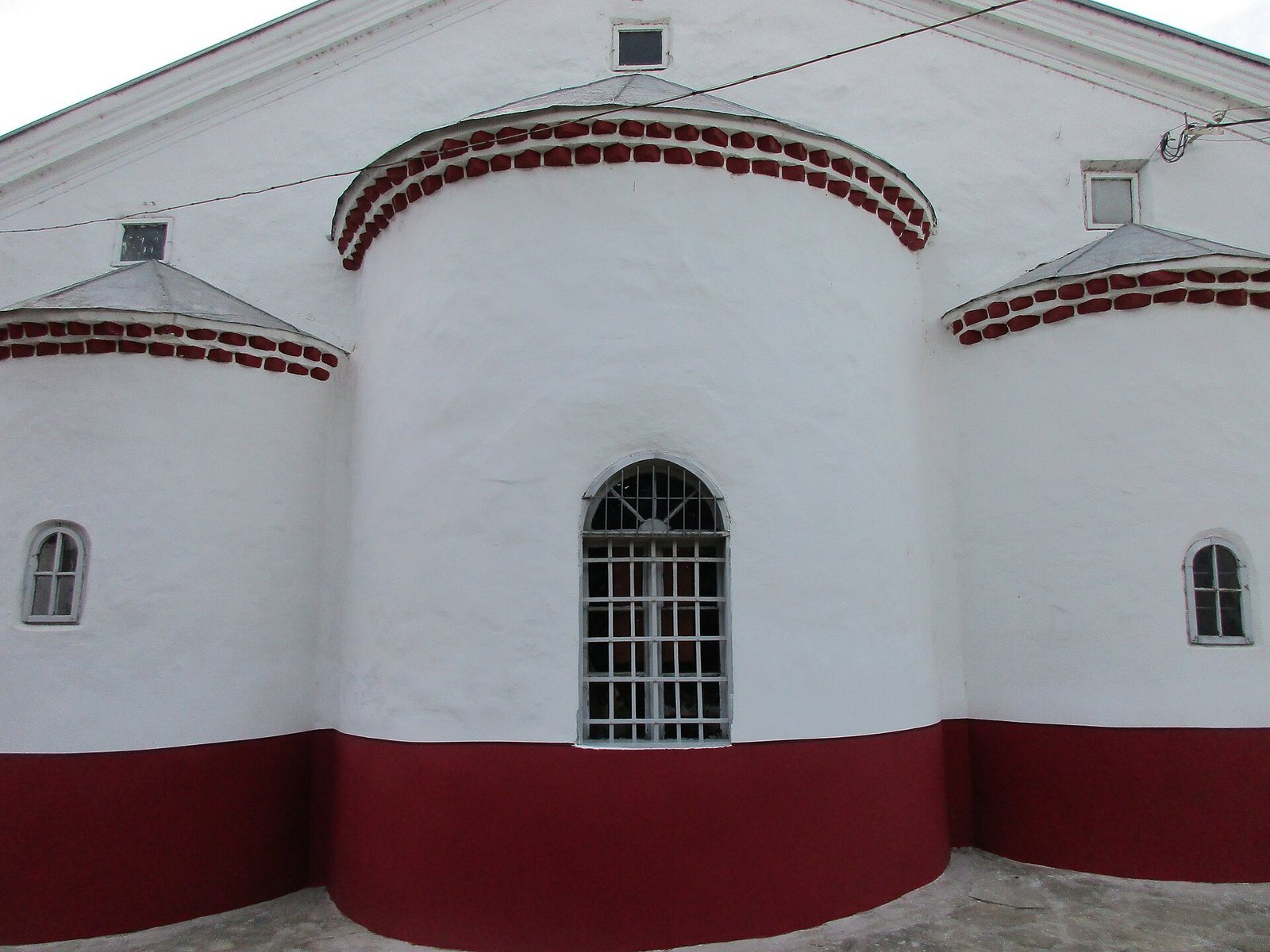
Three apses, projecting rounded ends of a church, mark its eastern side, while the narthex is at the west. The central section comprises the sanctuary, nave, or main worship space, and narthex; the central aisle is 6.3 metres high. A separate room occupies the northern side, and a concealed chamber lies to the south. Arches and massive pillars support the nave’s vaulted ceiling. Some features recall the Macedonian school, a medieval Balkan architectural tradition shaped by Byzantine influence.
Tomb of Saint Procopius
On the south side, the tomb of Saint Procopius consists of three small vaulted rooms. It may have been constructed over an earlier small structure.
Baptistery and bell tower
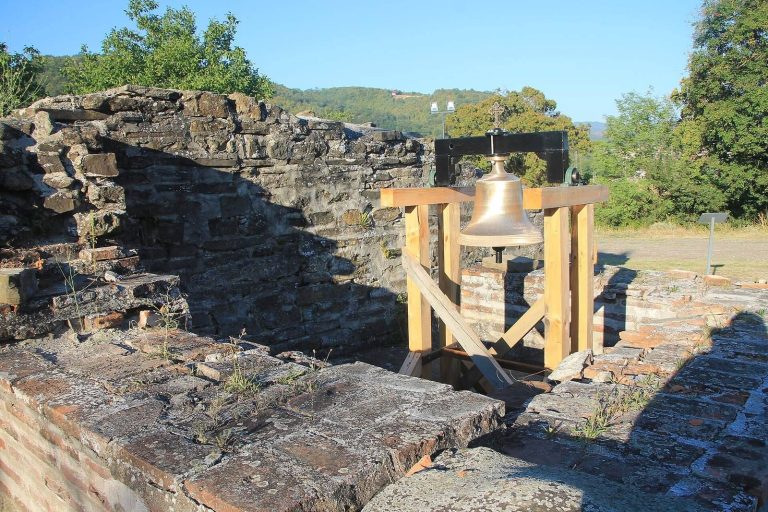
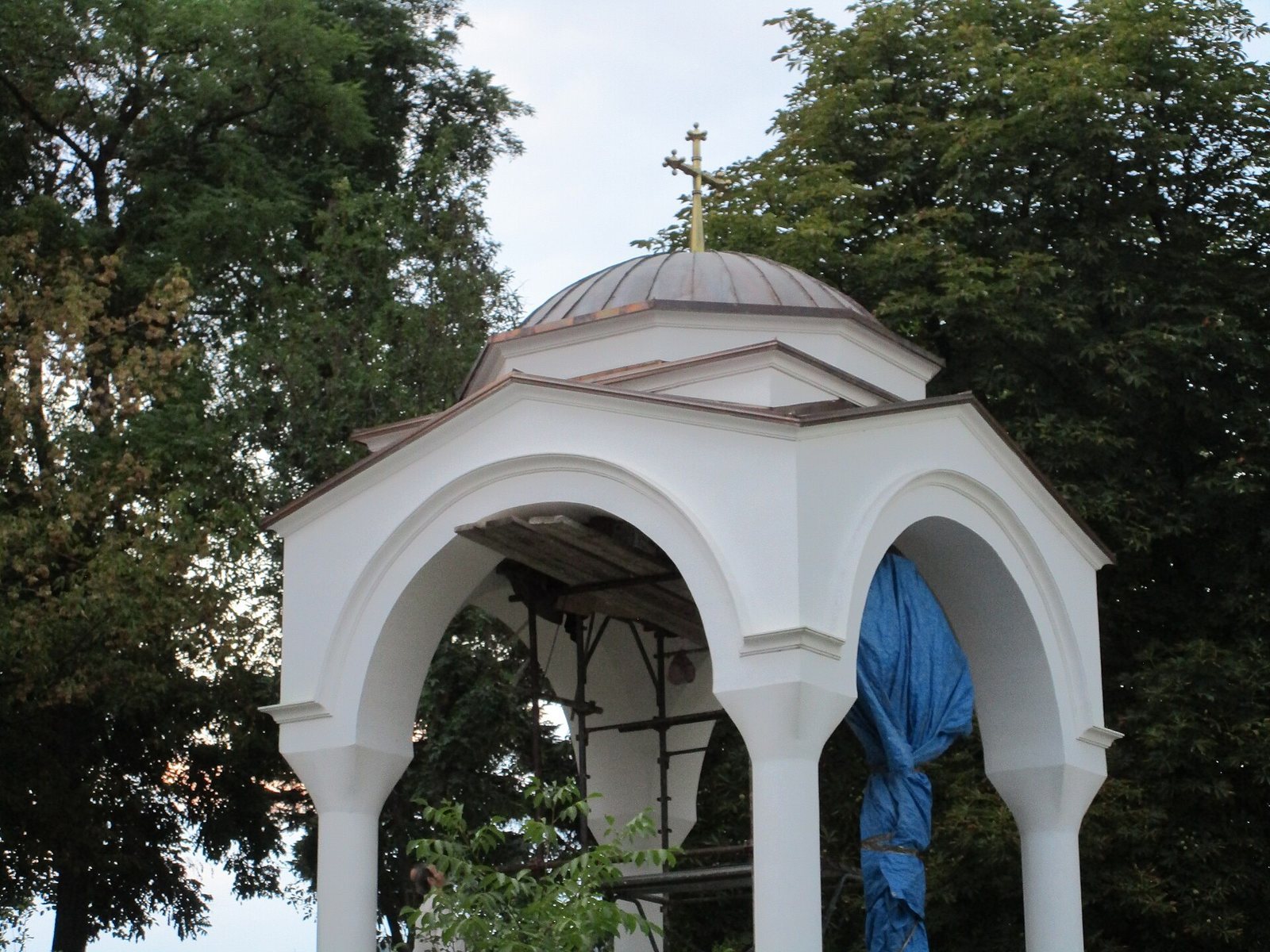
A baptistery was added in the mid-19th century and converted into a bell tower during the 1906 restoration. The tower occupies the western part of the church. In that restoration, stone slabs from the church roof were removed and reused to pave the churchyard.
Churchyard and nearby remains
Excavations in the churchyard in 2008 uncovered remains of Roman baths. Within several dozen metres, remains beneath the Latin Church include a temple to Hercules dated to the 1st or 2nd century and a basilica, a long central space with flanking aisles, dated to the 5th or 6th century. These nearby remains leave open the possibility that the church occupies an earlier building site.
Paintings and religious objects
Wall paintings
Fragments showing warrior saints have led to the suggestion that the church was painted in the 10th century. The oldest surviving painted layer is dated to the mid-18th century and lies on the vault above the central aisle of the original church. Preserved paintings span the 17th to 20th centuries. Above the entrance, a painting of a young warrior identified as Saint Procopius bears the date 1861.
Icons and relics
Kosta Nakica of Veles painted the church’s iconostasis, a screen bearing sacred images, in 1847. A 17th-century icon, or painted religious image, depicts the Virgin and Child. Other icons date to the 18th and 19th centuries, including throne icons by Nikola Apostolović from the early 19th century.
The church preserves relics of Saint Procopius and fragments of relics of Saint George. A small reliquary, a container for sacred relics, is believed to hold some of George’s relics, which were brought to the church in the late 19th century.