Temska Monastery: A Serbian Orthodox Monastic Complex in Serbia
Site at a Glance
- Rating
- 4.9
- Popularity
- High
- Country
- Serbia
- Primary era
- Early Modern
- Eras represented
- Medieval, Early Modern, Modern
- Civilizations
- Ottoman, Serbian
- Site type
- Religious
- Remains
- Monastery
On this page12 sections
History
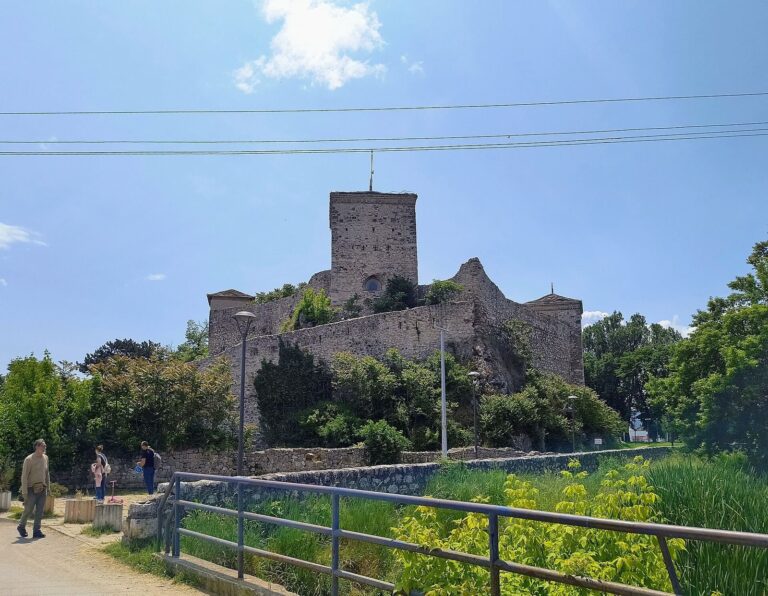
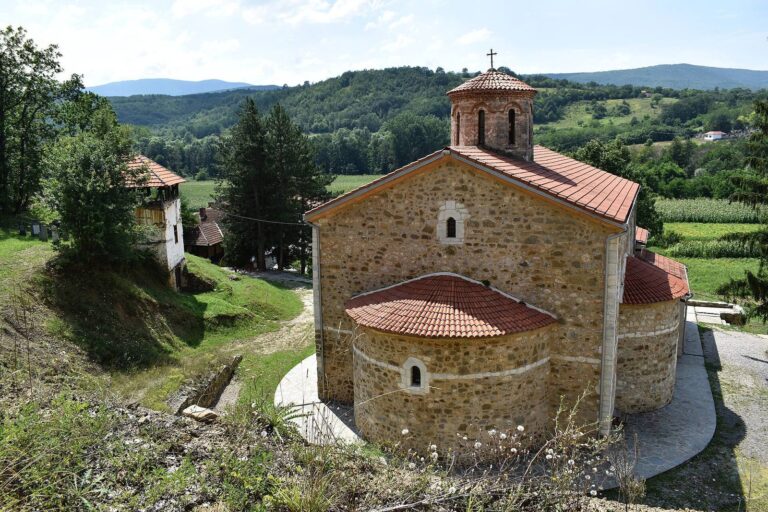
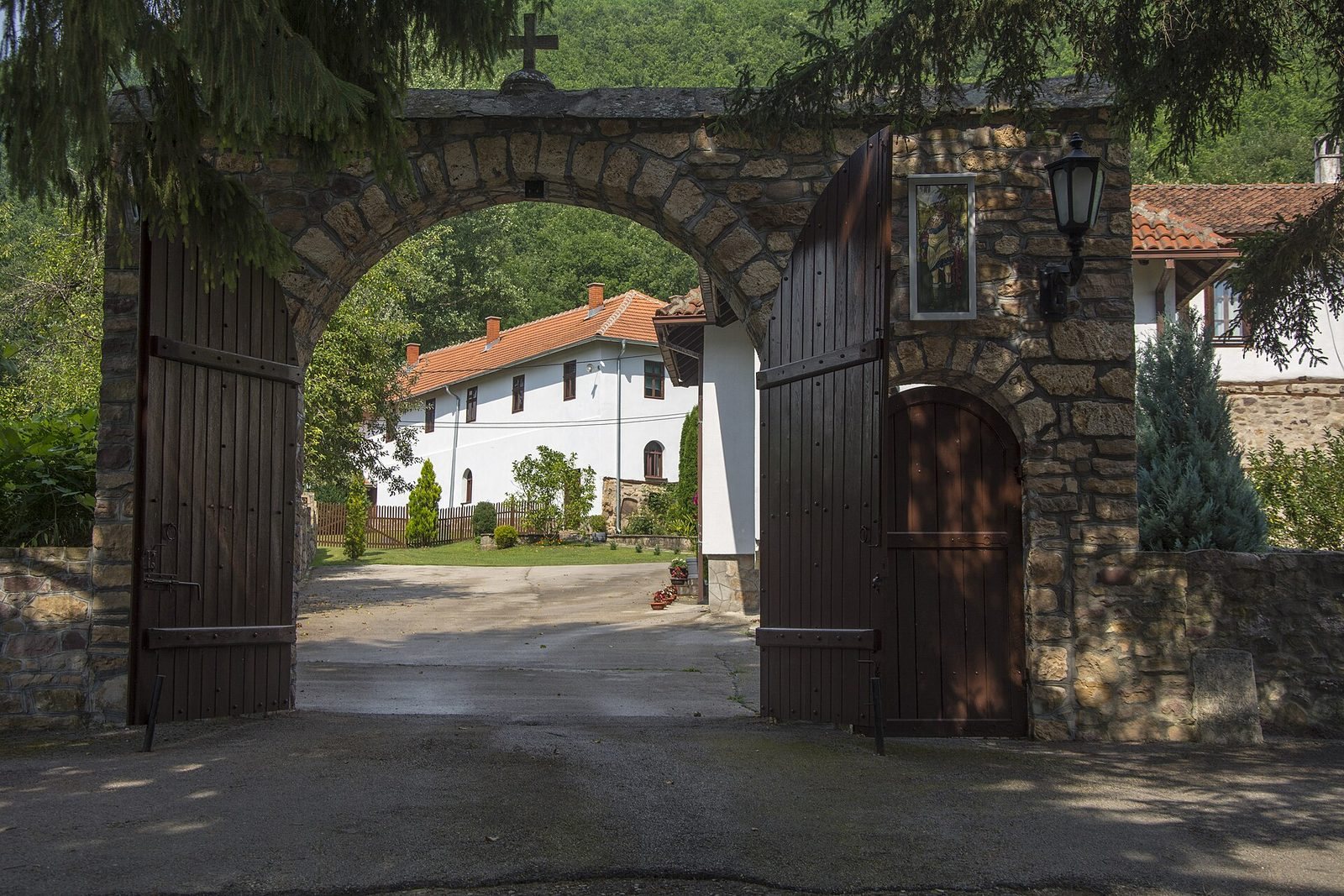
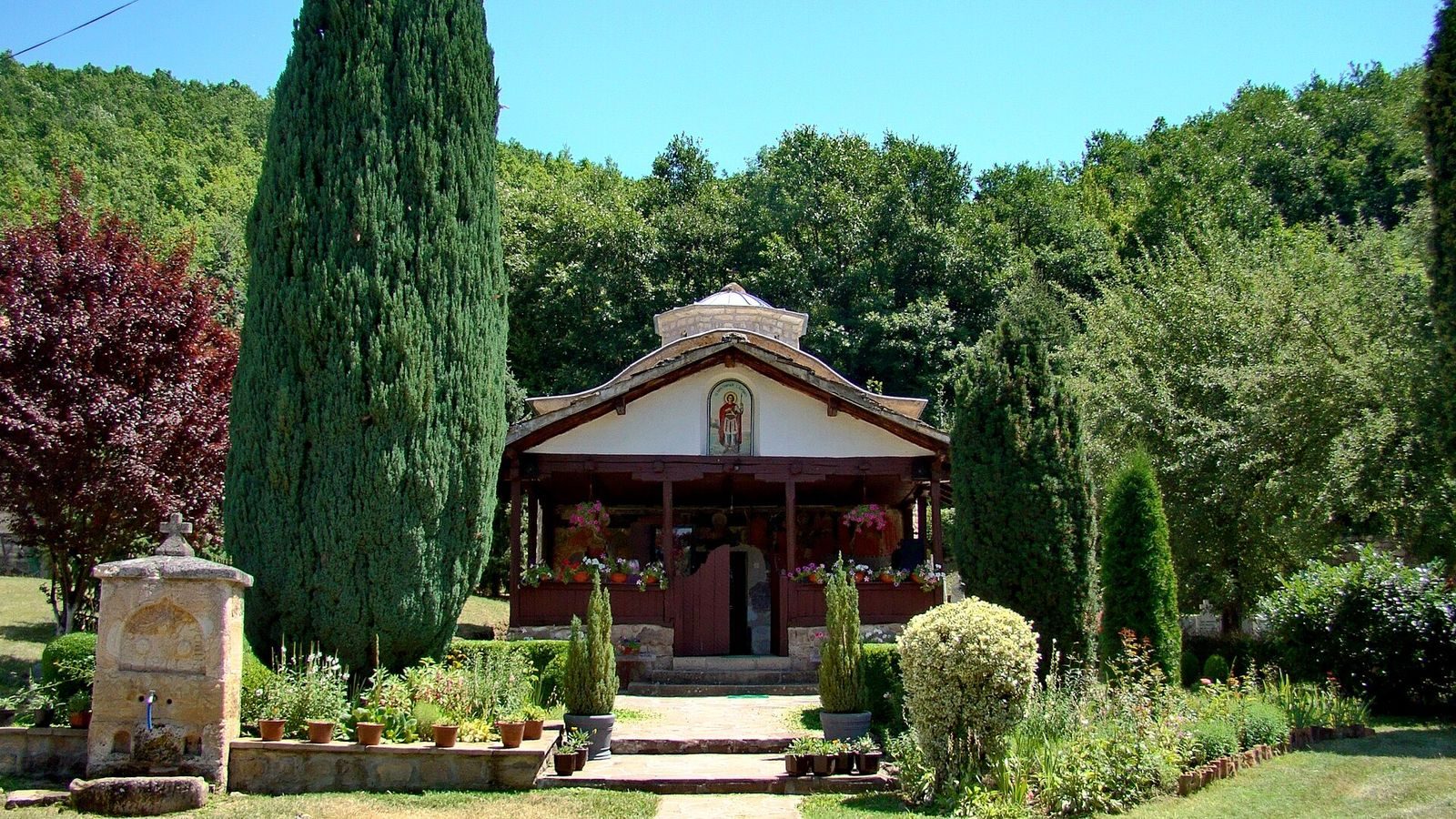
Temska Monastery is a Serbian Orthodox monastery on the left bank of the Temštica River near Temska village in Serbia. Dedicated to Saint George, it belongs to the Serbian Orthodox Church’s Diocese of Niš, an administrative church district. Its name comes from the nearby fortified town of Temac. The church may have been built in the 14th century by the Dejanović brothers, Serbian nobles related to Emperor Stefan Dušan, over the foundations of an 11th-century church. The founder of that earlier church is unknown, and the existing building was probably constructed in the 16th century. It follows the Morava style, a medieval Serbian church tradition associated with the Morava region, in a simplified form.
The church and monastery in the sixteenth and seventeenth centuries
The church’s central areas were painted between May and July 1576 under Abbot Zaharije, the monastery’s head. In 1654, Abbot Simeon oversaw the construction and painting of the narthex, an entrance hall at the western end of a church. An inscription records that the church was restored the following year.
Hungarian forces looted the monastery in 1692 during the Austro-Ottoman War and dispersed its monks. Late in the 17th century or early in the 18th, Abbot Partenije directed repairs to the monastery buildings with help from nearby villages, and a water conduit was built. In 1699 he also oversaw repairs to the church and two lodgings and had a fountain built. The monastery was ravaged again in 1737.
Learning, pilgrimage, and conflict
During the 18th century, the monastery became a center of education, writing, and pilgrimage. Its school served children from the surrounding area. In 1764, the monk Kirilo Živković composed the Temska manuscript in everyday Bulgarian; he later became bishop of the Diocese of Pakrac. Pilgrims came from different parts of the Bulgarian lands, and from the 1820s they also came from Serbia.
In 1836, Ćesarije, a monk and priest who had come from Hilandar, a Serbian Orthodox monastery on Mount Athos, established a school in the monastery’s cells. He taught local people to read and write, and a trained teacher later joined him. Ottoman forces executed both men, occupied the monastery, and burned the church after withdrawing. The school continued until 1892, when a school opened in Temska village. In the 1840s, Abbot Ćesarije supported the publication of Nayden Gerov’s physics textbook, which appeared in Belgrade in 1849.
The monastery was looted and damaged by Circassians in 1876, and the church and its wall paintings were harmed. An elderly, ill monk was thrown from a height and killed. In December 1877, Serbian forces fought Ottoman troops south of the monastery. Captain Milutin Karanović was killed on 13 December during the Serbian capture of Pirot and was buried in the monastery courtyard.
From 1871 to 1878, the monastery belonged to the Bulgarian Exarchate, an autonomous Bulgarian Orthodox institution; in 1878 it came under the Serbian Orthodox Church. In 1880, Father Dorotije was its only resident. That year, the liturgical book Triodion, printed at Târgoviște in 1649, was transferred to the National Library in Belgrade. In 1889, the monastery held 45 hectares of arable land and 27 hectares of forest.
Changes in the twentieth century
The monastery became a women’s community in the 1920s, with Russian nuns as its first members. About 40 Russian women arrived in 1928. In 1927, its Russian superior, Father Nikon, was tried in Pirot on an accusation that he had embezzled 600,000 dinars in war-damage bonds. He was acquitted on the grounds that he had acted with good intentions.
Temska Monastery was designated a cultural monument of great importance in 1948. Archaeological investigations in the complex during the 1970s took place alongside conservation of the church’s architecture and paintings. Abbess Jelena Stevanović led the monastery from 1992 to 1999. Euphrosinia Ristić took over on 2 December 1999.
Remains
The church
Plan and construction
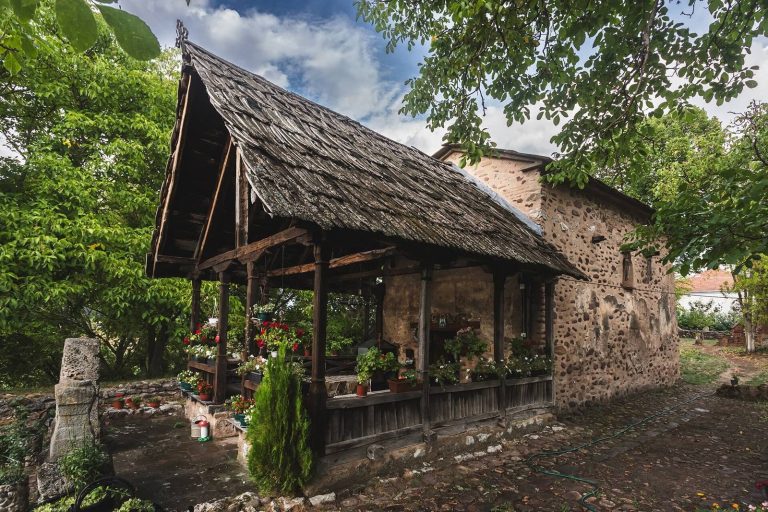
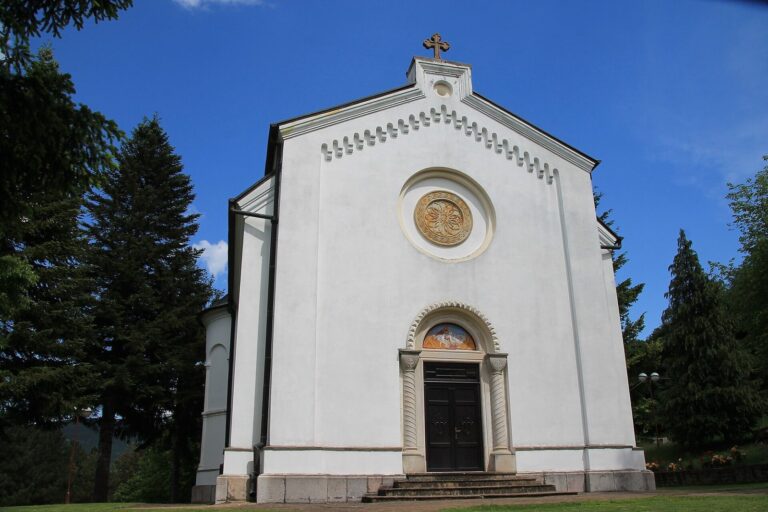
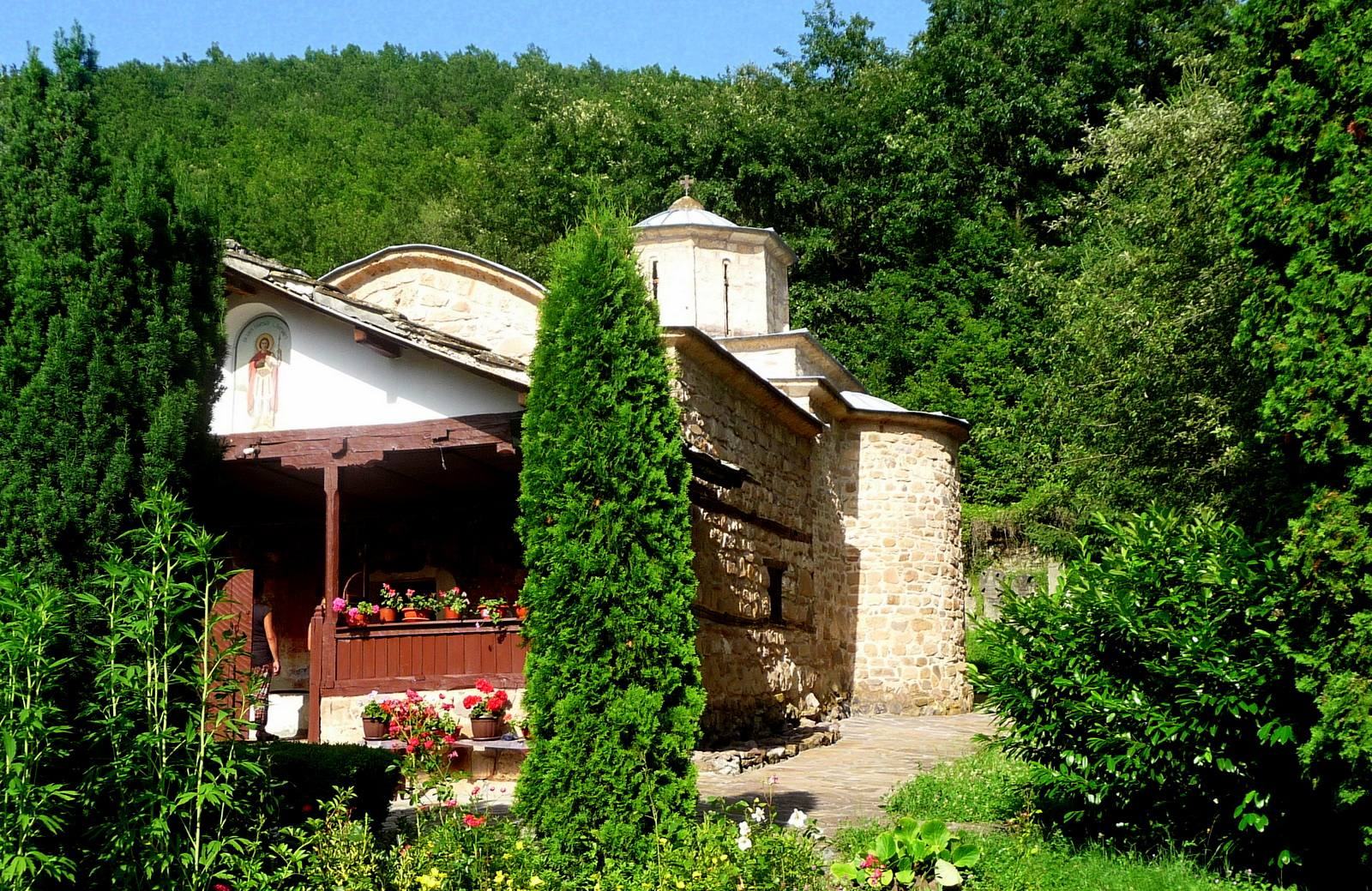
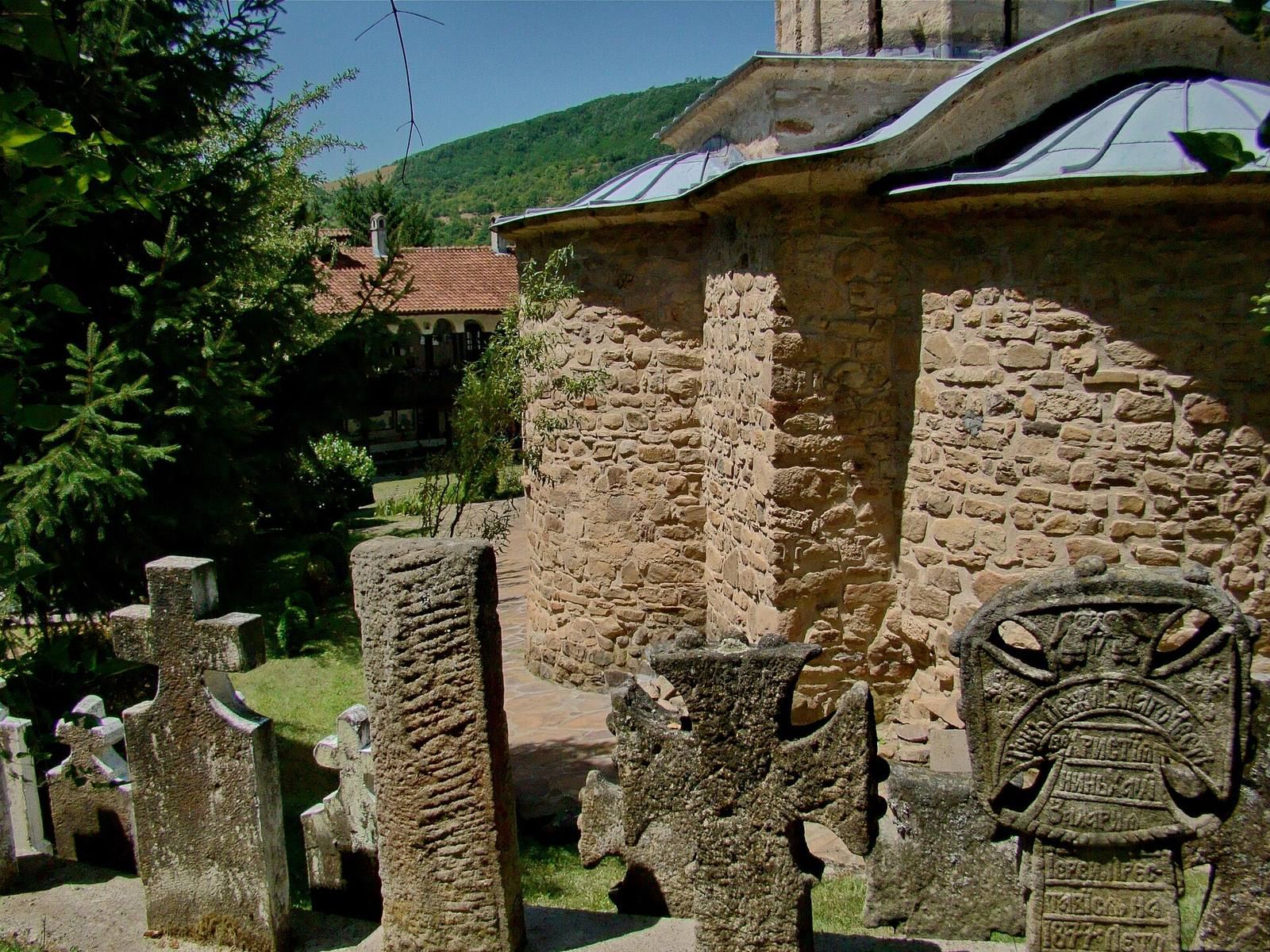
The church has a compact layout combining an inscribed cross, a cross-shaped interior enclosed within a rectangular building, with a three-apse arrangement of projecting rounded ends. The main worship space is preceded by the narthex, with a porch outside it. An octagonal dome is supported by arches. The building’s simplified Morava style gives it a distinct architectural form within the monastery complex.
Wall paintings
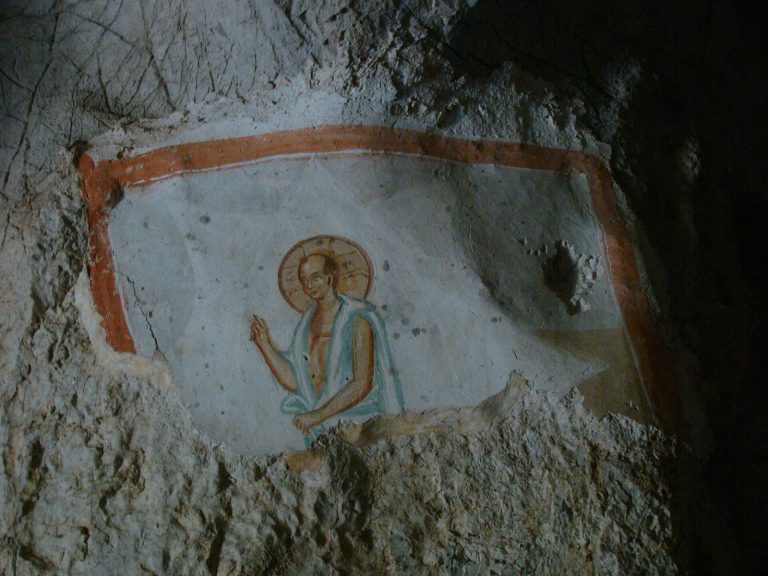
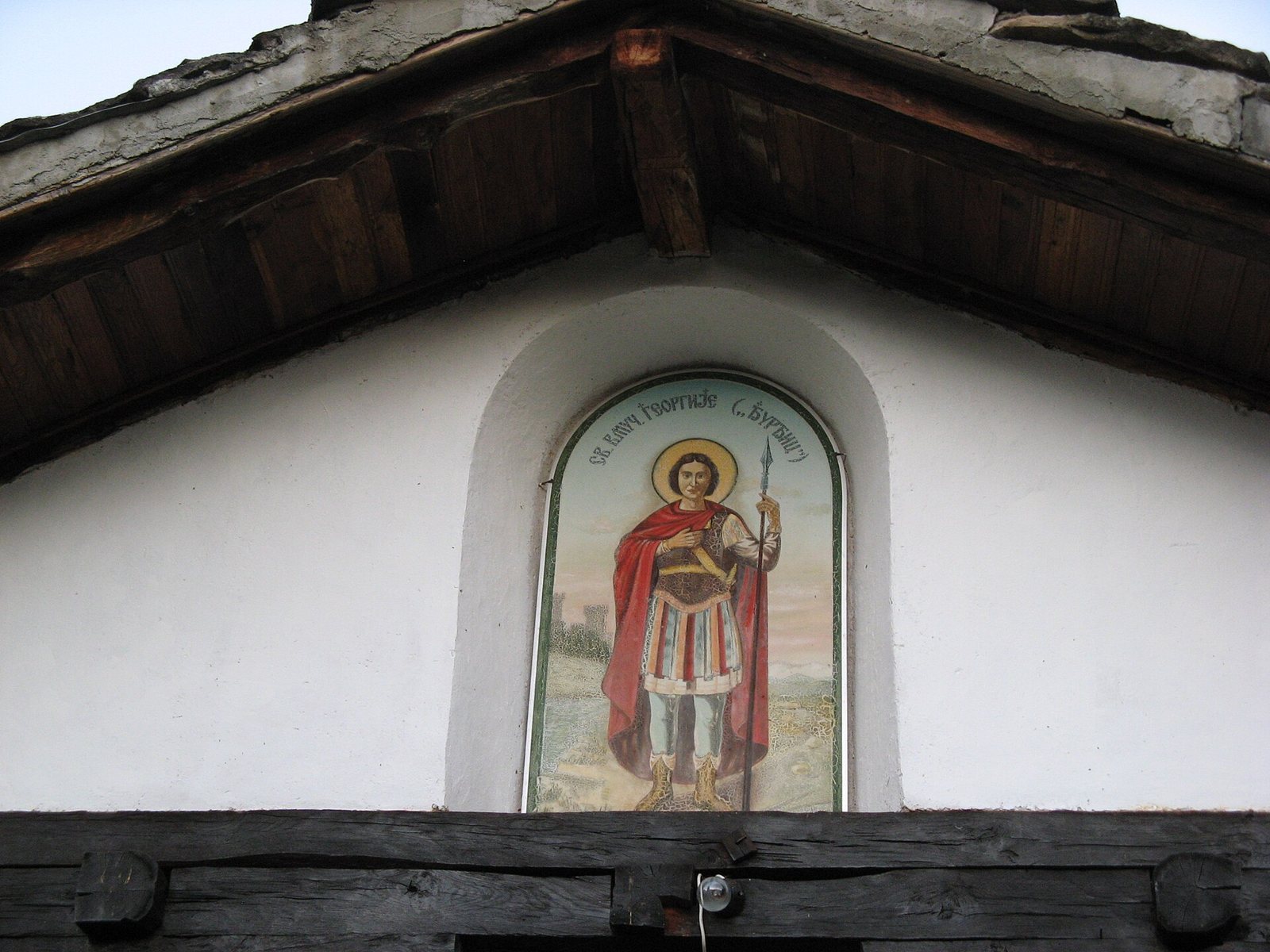
Paintings in the narthex depict episodes from the life of Saint George. The porch in front of the narthex protects paintings on the church façade. The paintings are attributed to Serbian artists who also worked in other churches built in the Morava tradition.
Guesthouses and courtyard features
Guesthouses
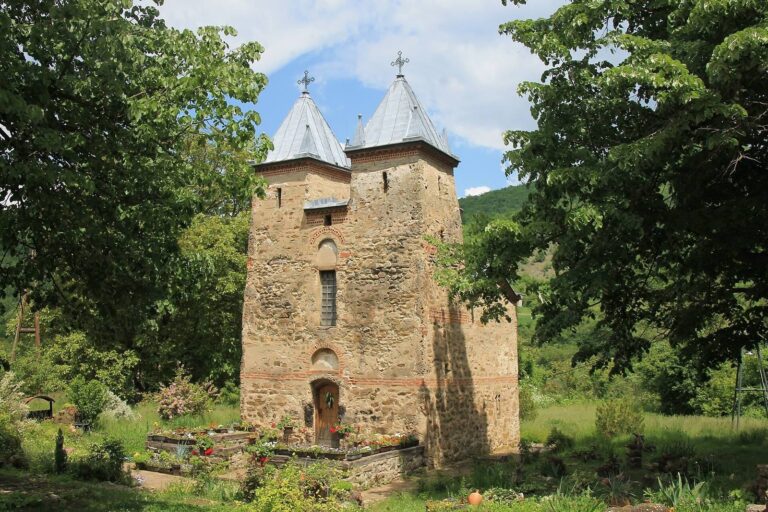
Four guesthouses are associated with the monastery. Two date to the 16th century, when it was a male monastery. A third was built in the 1920s in connection with the arrival of the Russian women, and a fourth was built in 2000 during the tenure of Bishop Irinej (Gavrilović) and Abbess Euphrosinia Ristić.
Fountain
The fountain commissioned by Abbot Partenije remains in its original position.
Karanović’s grave and memorials
Captain Milutin Karanović’s grave lies in the courtyard. A large wooden cross bearing an inscription stands over it, and his widow later erected a separate, modest monument.